
Please Don’t Keep Your Change
Spend your change
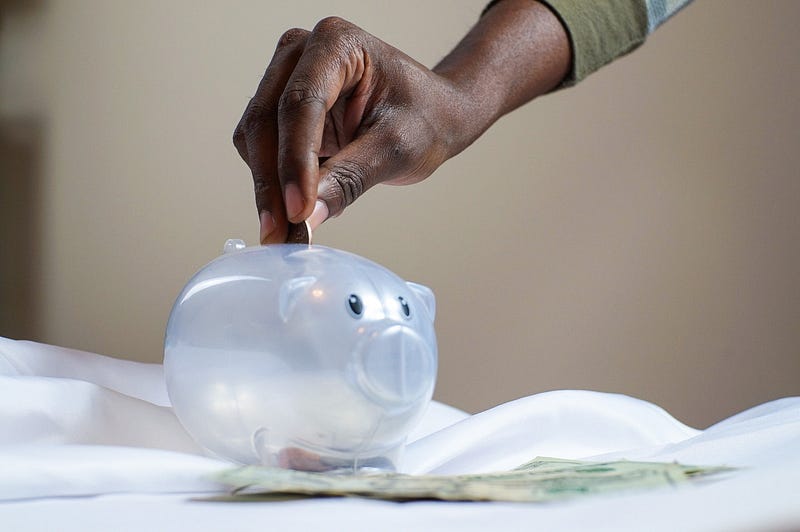
Your piggy bank is getting fat.
It’s probably so natural, to put your coins in your piggy bank, jar, or drawer that you haven’t noticed —
I didn’t even notice until I went grocery shopping recently and there was a sign on the door asking for the exact change to complete any cash purchases.
If you don’t use cash often, it is easy to miss that there’s a coin shortage in America.
According to Newsweek, Coronavirus is to blame. When the virus reared its ugly head, and businesses slowed or closed, the US Mint also reduced staff and made fewer coins.
To slow the spread of the virus, the US Mint had fewer people making money, so workers didn’t get sick and could be kept safe. We can certainly understand the need to be safe; yes? Other businesses large, small, and in between, had the same idea. The thought is rooted in this common-sense idea — let’s circulate fewer coins for people’s health and safety. We want those who are well to stay well, so America circulated fewer coins through its economy.
US Federal Reserve Chair Jerome Powell said:
“What’s happened is that with the partial closure of the economy, the flow of coins through the economy has… kind of stopped.”
Sharing coins from person-to-person came to a screeching halt because no one wants to touch coins held by someone else. No one knows where those coins have been or what they might be carrying.
Banks shared the same thinking. Remember when not too long ago, you emptied your piggy bank and coin reserves into a plastic bag and took it to the bank with a deposit slip for an employee to run through the coin counter and deposit into your account? Me too — it feels like an old-fashioned idea. The trouble, as it relates to coins, is that no one wants to touch them right now. It’s a natural side effect of a slowed economy.
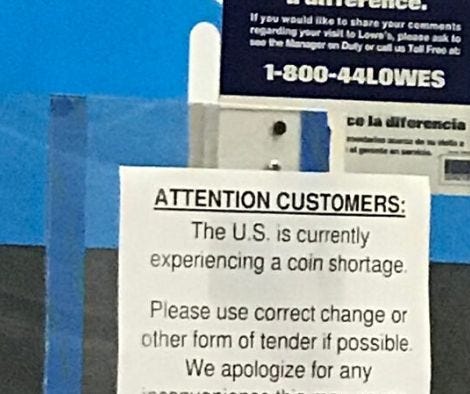
Everywhere we look, we see signs asking for exact change. At giants like Wawa, Walgreens, Lowes, and other retail chains, businesses ask for exact change when and where possible.
Also, at beaches and parks and, just about anywhere people can recreate, you’re being asked for your coins. You can overpay if you choose, but don’t expect to receive change in return. Businesses may or may not have the change to give. And if they have it, they may not want to give it. Most places still accept cards and alternate forms of currency.
The US Mint responds to the shortage by increasing coin production again. And the Mint thinks it can replenish coins in businesses fairly quickly. According to CNN, the limited supply is temporary.
Time will tell if the shortage is as temporary as the government wants us to believe. We can guess that alternate forms of electronic currency will be pursued to solve the problem.
We already have many kinds of electronic currency:
- Bitcoin
- Litecoins
- BerkShares
- EqualDollars
- IthacaHours
- StarbucksStars
- AmazonCoins
- Sweat
- Tide detergent
- Linden Dollars
- Brownie Points — not points for good deeds.
I didn’t know some of the above forms exist until I looked them up, and you might not know about some of them either. This Ted Talk by Paul Kemp-Robertson will have you up-to-date about cryptocurrency you probably don’t know about, and you’ll learn how to spend new forms too.
Spoiler alert: According to Kemp-Robertson, bitcoin is the crypto-cash king.
Will the coin shortage advance new forms of electronic currency? It’s hard to tell, but the current situation means electronic cash is ripe for development. We tend to trust businesses with the currency they are creating and we’re buying in with our dollars — so to speak.
Amazon Coin can be exchanged for Kindle apps, games, and more. Drug dealers are turning Tide detergent into “liquid gold” for people who desire to buy drugs. And Nike has you bidding with your sweat by exchanging tracking of your calorie and sweat burn for goods.
It’s brand loyalty in the making and at its finest. And, it has people trusting businesses who create currency, instead of government currency.
Wrapping up coin
The coin shortage may be temporary, or it may continue. We don’t know for sure. What we do know is that the business economy is ripe for creativity and development.
For now, please don’t keep your change. Spend it. Businesses depend on you to not keep your change.
Gain Access to Expert View — Subscribe to DDI Intel