
Playwriting Is the Soul the Writing Industry Lost
But most writers aren’t interested. Why?
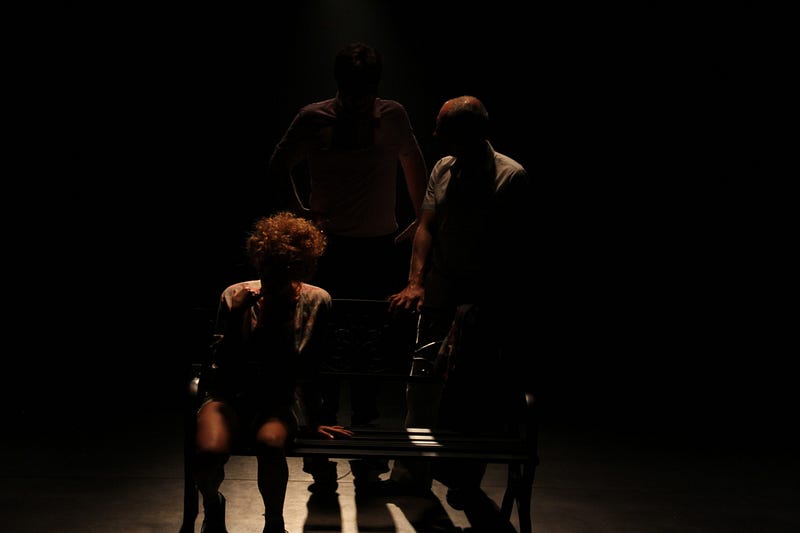
When was the last time you read a play? When was the last time you gussied up and spent a night in the theatre? Ask your average writer and most will tell you high school or college. They’ll tell you about the plays they were *forced* to read, and the stages they were forced to sit before in the name of a compulsory grade.
Most writers don’t read or write plays. More’s the pity, as playwriting offers writers opportunities that novel writing cannot. Even more significantly, it offers a sense of soul and a sense of artistry. It allows writers to express themselves in a way that novel writing cannot. Yet most writers keep chasing the prize of traditional publication. Why? Have they lost their souls in the pursuit of glory?
Playwriting is the soul the writing industry lost.
It’s inarguable that the writing industry has lost its soul. We don’t get told stories that break us anymore, that change the way we see life. Instead, we get the same regurgitated stories we have become accustomed to. Publishers and agents figure out what “works” and then hock as many cloaked versions of that same story as they can.
Playwriting is the soul that the mainstream writing industry has lost. It’s the beating heart that thuds beneath the undercurrent of paper-thin stories and surface-deep characters we have become used to in this age of modern fiction.
Many will be asking, “How?” They’ll claim they read stories all the time they connect with, characters that they root for, but there’s a different level of connection and emotion when it comes to the stage. Not only are you connecting with real people in real time, watching their stories play out in front of you — you’re watching a 4D representation of creativity. You’re watching something, made from nothing, coming to life right in front of your eyes.
Playwriting is the living, breathing soul of writing because it’s one of the few open doors left in the writing world. It’s a place where space is made at the table, where differences are celebrated (not aimed at for 3rd Quarter diversity goals), and where characters are truly alive. It’s art in motion, where the rest of the writing industry has become just that — industry; pumping out the same stories we’ve already ingested over and over and over again.
The beating heart of playwriting is missing in mainstream writing culture.
That kind of creativity is missing from mainstream fiction. Horror, YA, romance, sci-fi, fantasy, you name it. Every corner of the writing world has become contrived, methodical, and formulaic in what it offers readers and writers. But playwriting is soul. It is art. It is a true creation from the void and the final font from which truly connecting characters are born.
Creating room at the table
If there is one thing that the mainstream writing world is not good at, it’s creating room at the table for diverse voices. Sure, in the last two years (after repeated call-outs by BIPOC people) there have been concentrated efforts by agents and publishers to remedy this, but those attempts often fall flat and are limited. Despite these attempts at creating “diversity” in mainstream fiction, those who flourish there are still predominately white and from well-connected (and wealthy) backgrounds.
Getting your foot in the door — AKA getting a novel published — is a war, not just an uphill climb. Novelists have to bang their heads bloody against a million shut doors and sealed lips. Spend a little time trying to get a book published and you will quickly realize that the majority of people you encounter want anything *but* to publish your book. It’s a constant game of proving that you’re good enough.
The quality of writing barely counts. To make it as a mainstream fiction writer, you have to prove that you’re someone of merit. That you’re a celebrity in your own right.
Not so in the playwriting world.
Spend a handful of hours doing your due diligence and you’ll find a world of open doors and open hearts. People who are willing to put themselves out there to help you succeed. It’s a different world.
Here, different voices are centered. Artists, hungry for new stories, know that the differences are what makes the artistry of playwriting beautiful. Different perspectives lend themselves to new insights and new emotions. They know that including everyone in the experience of playwriting creates new audiences hungry for the tales that can only be told on the stage.
There are endless resources. Masterclasses that are open to those just putting pen and paper to page for the first time. Sure, you have to earn your dues, but you don’t have to drown in the process. There is a sea of life-vests. In the world of playwriting, you’re being rooted for, not rooted against, and that’s something sorely missing in mainstream writing.
Expanded creativity
It’s easy to get bored in the world of modern fiction. New ideas seem to be a rare concept, with most stories (be they fantasy, sci-fi, or even romance) regurgitated renditions of the same 50 stories we’ve been repeating since the dawn of time.
Over and over again we are forced to read novels that are poorly cloaked representations of the writer’s ego. You can almost see the writer sitting behind the screen saying, “Oh, yes. They’ll see. They’ll all see. I am the hero of this story and I always have been. They’ll see it now in me and this world that I’ve built.” It’s exhausting.
It’s a desert of creativity out there, with genuinely striking stories, unique stories, being rarer than a best-selling trilogy. We are awash in YA stories of twenty-something heroines and teenage coming-of-age (with magic) tales. It’s easy to become despondent in such a landscape.
Again, playwriting offers an entirely different world of imagination. Here, creativity of every kind is encouraged. Writers can tell stories of far-off lands, of historical figures, of kids coming of age in hard-scuttle environments, and in families that want them to fail. There’s a story for everyone.
More importantly, the success of a playwright isn’t as limited by the trends of the mainstream market as it is by the creativity of the writer. In the world of the stage, there is a hunger for new, for different. Put together a truly creative tale and you will fill seats. No query letters are needed. You don’t have to suffer the disdain of publishers or the deceit of agents who don’t know how to sell your work.
There’s room in the playwriting world. Room for creative stories and minds who see the world differently. And that leads to the most intriguing part of the playwriting world. A piece that is missing from so much of the modern fiction that is forced down our throats today.
Characters we care about
What is that final missing piece? What is the real beating heart of playwriting that is missing from the world of mainstream fiction? You may think it’s live-action (it’s not). Or, you may think that it’s open doors, different stories. (Again, it’s not.)
The real living, beating heart of theater is its characters. Living, breathing people you want to root for. Human stories and human souls, on display for all the world to see.
These characters, very often, are missing in the new stories we invest in. There’s lots of world-building, lots of the writer’s personal history put into mainstream fiction stories. But there aren’t a lot of characters that instantly snatch our hearts and leave us turning page after page until we come to a breathtaking conclusion.
These types of characters are the backbone of every play that makes it across the stage. After countless workshops and rewrites, they have to be. To keep an audience in their seats, they need to have a connection with the humans on the stage. They need to see themselves, and something entirely different from themselves, in one space and time.
That’s not easy to do.
For a playwright to create something the audience can invest in, they can’t just tell their story. They have to tell human stories, the good and the bad. In the first 30 seconds, they have to give the audience questions, and hints of a story that hasn’t been told yet. Whether the character is being “rooted for” or not is immaterial. They have to represent something that the audience can form a deep connection with.
Why most mainstream writers never wade into the playwriting waters.
So, why has this happened? Why has the industry lost the soul that playwriting provided? Is it agents? Is it the publishers? Writers aren’t innocent in this phenomenon. Truthfully, they are a part of it. Writers don’t write plays anymore. By and large, few of them ever pursue bringing their stories to life on the screen.
That is the deeper and far more interesting why. Writers have become complacent. they have become passive actors in the destruction of the crafts they claim to love. There is the real answer. Why aren’t writers pursuing the high arts of writing, like poetry and playwriting? It becomes obvious when you seek out the patterns.
All about the novelist (and their ego)
Let’s face it. If you’ve been a part of any “writing community” or you’ve taken a writing class, it was all about the novel. That’s the primary focus of most writers and those who aspire to be one. Fiction, fiction, fiction. Every new writer wants to write the next “Great American Novel”. They want to be JK Rowling or Stephen King. Join any writing circle and you can go *years* without so much as a mention of the other forms of writing — poetry, creative non-fiction, memoir, and (yes) playwriting too.
Most writers only care about writing fiction novels because they only care about seeing their names in light. They aren’t writing novels because they want to tell stories, they’re writing novels because they want people to know how special and important they are.
There’s a big ego problem in the writing world, and it’s one of the reasons why playwriting is so often missing from the conversation.
The mainstream writing world appeals to modern narcissism. It calls in writers who want to feel special, who think they are so uniquely talented that they can’t help but be the next “big thing”.
Why learn the art of pacing? Of character-driven stories? Of showing more than you tell? When do you have a chance to build an entire world and be followed by people who want to disappear into that world? Not so much for the playwright.
No. Playwrights are made to disappear in the background.
While actors tell their stories on stage under the limelight, the playwright paces their alley in the rear of the theatre. Many are obscured. Only known to the most ardent theatregoers and well-versed literary minds.
To write a play is to disappear. It is to dissolve one’s self entirely so that others may shine. Though the novelist bandies a following, the playwright earns momentum and respect as an artist. Artistry. That’s not as appealing to the mainstream writer who seeks glory on the Barnes and Noble shelf.
Craving for fame
Along the same lines in this war between artistry and the shining lights of a book deal is a distinctive craving for fame. Where a novelist may see their name in the lights of Hollywood and mainstream bookstore shelves, the majority of playwrights have to settle for something much, much smaller. The world of the playwright is shrunken. It is narrow externally.
Most successful playwrights are unknown to the average person.
Sure, we all know names like Tennessee Williams, Oscar Wilde, and William Shakespeare. But what about names like Marsha Norman? Stephen Jeffreys? Jeffrey Hatcher? José Rivera? These are some of the most powerful names in playwriting. They represent some of the most creative and successful artists of our age. And yet, they remain unknown to the droves of people who throw themselves behind Harry Potter novels and summer meet-cutes.
There is a craving for fame that haunts the average novelist, and it is that craving for fame that pushes them into the world of mainstream fiction and away from the world of playwriting.
Instinctually, subconsciously, they have adopted the belief that playwriting is beneath them. (If they think about playwriting at all. Ask the average writer when the last time they read or attended a play was). It’s a dead-end art form to them. Something lost to the ages. When in fact, writing plays is one of the best ways to learn pacing, character development, drama, and structure.
Many successful playwrights go on to write novels. They go on to write for the screen, and then their words do end up shining upon the lake of fame. Your average querying writer doesn’t realize this, however. They see one thing and one thing only — their name in lights. So, they pursue the shortest perceived path to that, leaving out a lifetime of other art forms that could otherwise fill them up and help them build momentum as a writer and an artist.
No real care for the craft
Let’s just be honest for a moment. Lay it all out on the table and look at the meat of the issue. Ego aside, a craving for fame (and the feeling of being “special”) discounted, let’s consider the thorn in the side of this issue. Why do so many writers reject playwriting? Why doesn’t it ever cross their minds, their desks, their souls?
Quite frankly, most people who declare themselves writers or aspiring writers, don’t have a passion for the craft. They’re not worried about mastering the way they tell stories. They don’t care about creating living, breathing characters that can grab you by the throat in the first 30 seconds. World building? It’s not so much about realism, fantasy, or any of that.
These writers have a story, sure, but once that story is done…what? For most of them, that’s it. Get it out on the page, edit it, then walk away. They’re not seeking to be the best writers they can be. They want to sell the story inside of them and they want as many people to like that story as possible.
For playwrights, it’s a little different…
Every next play is a chance to tighten up. It’s a chance to hit a new nerve in your audience, to showcase how you have grown from Point A to Point B. Playwrights are constantly in competition with themselves. Can I do better? Can I do more? Can I open that box in the corner that everyone is afraid to look at?
To be a playwright is to love the craft of writing. It is wanting to be the best possible writer you can be, to tell not just incredible stories, but to make your audience truly feel something.
That’s something missing in the mainstream writing world of fiction and novels. There, most writers compete with other writers. They want to beat their fellow writers in sales. They want to tell better stories than the people around them. They want to write better query letters. They want to get more TV and film offers.
A playwright, the greatest portion of the time, lives without that. They live in a limbo at the back of the theatre, watching the faces of those who are observing their beating heart come to life on the stage. There is no one to be “better than” in that moment, but themselves. There is nothing but the living art breathing emotion into the room.
There’s a beauty in that and an honesty, that is lacking in a lot of mainstream “writing communities” and the fiction world itself. Writers not in competition with other writers, but writers in competition with themselves.
Maybe that’s why playwrights can welcome others into their fold. Perhaps that’s why they’re so willing to kick open the doors and make space for those who have stories in their hearts. Would the rest of the writing world be better with that kind of openness? It’s not difficult to imagine.
This entire concept can best be summed up by one of the greatest playwrights of our age, Arthur Miller. He penned it perfectly when he said:
Playwriting is an oral art; it’s not an art of a writer expecting to be read but a writer expecting to be heard.
Being a playwriter is to be a writer who insists on being seen. To be a playwright is to be a writer who says, I have a story in me that is too big to be buried in a book. That story needs to live. It needs to breathe. It needs to be walked about in front of living eyes and swallowed whole for the beauty that it offers.
We live in an age when being seen, truly seen, is harder than ever. To be perceived as a person is one thing. Being seen as a writer and an artist is another thing entirely.
To do that, one must expose their soul. They must rip their hearts out of their chests and offer it up to an audience on a silver platter. Where does that courage still dwell? In your heart? In mine?
In the heart of the playwright that will live on in the spirit of the human condition.
© E.B. Johnson 2024
I am a writer, artist, NLPMP, and podcaster who helps survivors live their most creative lives. Learn more about me and my work by signing up for my weekly newsletter. Or, click the link below to learn more.