Play, Healing, and Creativity
Make your stories engaging
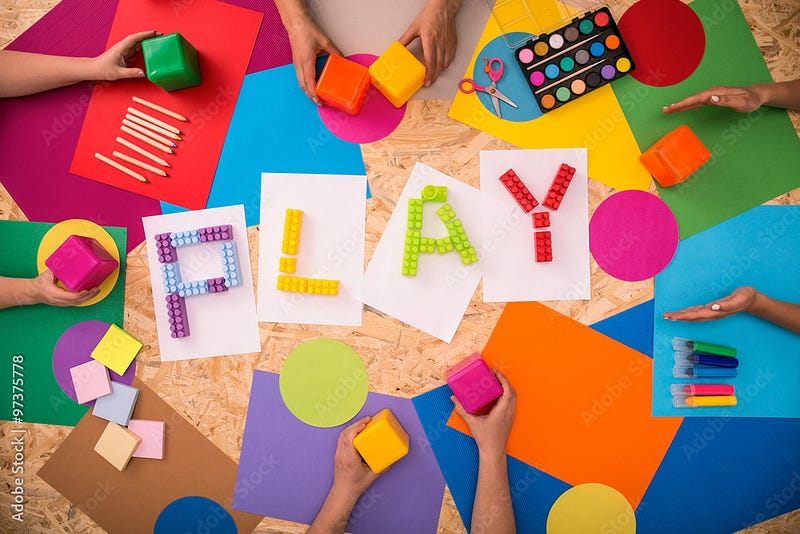
Play
Play is one of my most cherished activities. You can imagine yourself as anyone, real or fictional. You can use any supplies or objects that catch your eye and transform them into anything you want. There's no need for a plan or structure. It's like a dream, flowing in any direction your mind takes you, floating in any order your mind takes you.
Some individuals who strive for perfection and are self-critical can learn to let go and be present in the moment without imposing strict rules on themselves. The main objective is to have fun. A crucial aspect of playing is freedom. It can lose its joy or become dull, but you can take a new and exciting direction. Both children and adults should engage in play, as it offers ample opportunities for learning and personal growth.
Play Therapy and Healing
A child's or adult's struggles can become more apparent when using play therapy as a therapist. During play therapy, characters can help individuals process their feelings.
During a play therapy session, a client wanted to make a collage. She cut out images from magazines and could not paste them on cardboard. When working with someone in play therapy, attention to small details can be significant. I noticed she resisted gluing the images, which led me to believe there might be a commitment issue. But she eventually cut out some pictures and shared some information about them. I made some guesses to see if my thoughts would add more meaning to the situation.
My thoughts resonated with her feelings. As our session ended, she expressed that she was not yet ready to glue the images onto the cardboard provided, and instead, she wanted to keep them in my office. We found a special place for them.
She avoided working on the collage for the next month and said nothing about the pictures. In sessions, she looked to ensure the pictures she cut were still where I put them, but she ensured the images and cardboard were safe. Several [ weeks later, she came into our session in tears. She told me that she had to either quit therapy or reveal what was happening to her.
She told me that I could read the meaning of the pictures well and that she thought it would only be a matter of time before I knew her to secrete. She disclosed that when she was a little girl, she saw two young neighbors molesting each other. She had felt so guilty for not telling anyone about what she had found. Observing the molestation became a heavy weight on her for many years. We discussed the situation, and she was able to come to terms with it. Moving forward, she seemed like she felt lighter and less burdened.
Play and Creativity Through Life
Watching children pretend and play makes it easy to notice children being creative. Much research has shown that developing play and acting is the foundation of creativity. Russ et al. (2013) note that pretending space becomes open-ended, allowing children various creative. Freedom enables anything to happen.
Studies show that play and creativity are essential from childhood through adulthood. Laughing always helps one’s mood. Playing helps adults continue developing creatively and releases stress and tension.
Writer's
Writer's block can be assisted by play. When feeling stuck, play with ideas and stories. Please don’t take it too seriously. If you work spontaneously, you may go beyond the block.
Reference
Gaut, B. (2010). The philosophy of creativity. Philosophy Compass, 5(12), 1034–1046.
Kippers, E., Lehmann-Warmer, A., McPherson, G., & Van Geert, P. (2019). Children’s creativity: A theoretical framework and systematic review. Review of Educational Research, 89(1), 93–124.
Kurt, L., Kurt, W., & Medaille, A. (2010). The power of play: Fostering creativity and innovation in libraries. Journal of Library Innovation, 1(1).
Russ, S. W., & Wallace, C. E. (2013). Pretend play and creative processes. American Journal of Play, 6(1), 136–148.
Sinsinawa, S. (2014). Pretend play enhances creativity and imagination. Journal of Arts and Humanities, 3(1), 70–83. (2014)


