
Plastic: Wrapped or Trapped?
Plastic is a good servant but a bad master!

Our relationship with plastic
Plastic is indispensable!
We all use it voluntarily or involuntarily.
But what is plastic? From whence did it originate? Why was it created?
How is it made and why is it so in-destructively destructive?
We create and consume more plastic than ever!
Plastic is littering our oceans, cities, and waterways.
With its use, we are poisoning the environment, plants, marine life, and each other.
Our dependence on plastic contributes to health problems for one and all!
The Environmental Protection Agency, (EPA) states that plastic components make up more than 12% of municipal solid waste.
This amount has drastically increased since the 1960’s when consumption was at a mere 1%. Mass production of plastic increased significantly during the 1950s, drastically setting the stage for our current crisis.
Global production of plastic polymers increased from around 1.5 million tons in 1950 to 322 million tons by 2015 and those numbers continue to rise. It is estimated that during 2010, between 4.8 and 12.7 million tons of mismanaged land-based plastic waste entered the oceans.
A staggering amount.
What is plastic?
Plastic — a chemical substance produced by changing the composition of natural products or by the synthesis of primary chemicals utilizing components from oil, natural gas, or coal.
The term “plastics” encompasses all the various types of polymers.
Although there are many different types of polymers, plastics are generally lightweight with varying degrees of tensile strength. Plastics can be molded, extruded, cast, and blown into a limitless variety of shapes, as well as films, foams, or even drawn into fibers for textiles.
Many types of coatings, sealants, and glues are actually plastics, too.
For plastic creation, carbon atoms usually form chemical bonds with hydrogen, oxygen, nitrogen, chlorine, or sulfur. These chemical reactions can and will determine the strength, durability, and malleability of plastic.
When the connections of atoms result in long chains, like a string of beads, the polymer is called thermoplastic.
Thermoplastics become soft on heating and harden on cooling, and are able to repeat these processes many times.
Where did plastic originate
Plastic that we would come to know and depend on was created by Alexander Parkes in 1862.
Created from an organic material called Parkesine. Parkensine is made from a mixture of chloroform and castor oil, a substance as hard as horn, but flexible as leather.
It is capable of being cast or stamped, painted, dyed, or carved.
Parkesine was itself a derivative of cellulose an insoluble substance that is the main component of plant cell walls. The cellulose once heated could be molded and then retained its’ shape upon cooling. Rubber along with several other materials served as the precursor of plastics we would come to know and love.
Why do we need plastic?
Plastic is a very resilient material that has cemented its’ position among the hierarchy of materials of modern life.
Without a doubt, it has served us well in our personal, professional, and medical institutions. Its usefulness cannot be downplayed.
Plastic is —
- Efficient: the packaging saves space, is lightweight, has energy, greenhouse gas emissions. Providing seal, insulation, LED lights, and much more.
- Financially prudent: Improves the shelf-life of so many goods and products making it economically feasible.
- Safe: shatterproof, can be molded to seal for safety and usefulness.
- Hygienic: keeps items free from contamination, has prevented so many infections especially in the field of medicine, e.g. one-time use syringes. Sterility that would not be possible otherwise.
- Secure: Can be Thermo sealed and molded for complete security, e.g. child-proof items, needles, blood tubing, medicine bags, containers, etc.
- Durable: Is relatively thin but can be extremely durable.
- Versatile: Can be transformed in a variety of ways. It can be blown, injected, or Thermo molded. This means it can be used to package liquids and solids. It can be decorated and colored as needed.
- Recyclable: plastic packaging can be recycled many times to create new products.
Plastics or metals?
- A standard plastic bottle holds 20 fluid oz whereas a standard aluminum can hold only 12 fluid oz.
- An aluminum can hold just one serving while a plastic bottle usually has 2.5 servings.
- Plastic containers can be resealed to maintain freshness, aluminium cans cannot be resealed at the present time.
- Aluminum cans do not contain bisphenol A (BPA). BPA is found in plastic bottles.
- Both plastic and aluminum can be recycled. However, only 10 percent of bottles are recycled when compared to 50 percent of cans.
- Cans also are more efficient to recycle than bottles. Once the aluminum has been produced, it can be recycled over and over again.
- Bottles use more energy because they require the use of petroleum, a limited resource that is in demand in other industries.
- Both cans and bottles, if not recycled, may take more than 400 years to decompose in a landfill.
The role of plastic in climate change: Can we afford the cost?
The plastic pollution crisis is overwhelming our oceans and poses a significant and growing threat to the Earth’s climate.
Current levels of greenhouse gas emissions from the plastic life-cycle threaten the ability of the global community to keep global temperature rise below 1.5°C.
With the petrochemical and plastic industries' plans to increase oil and plastic production, the problem is on track to get much much worse.
If plastic production and use, grow as currently planned, by 2030, these emissions could reach 1.34 gigatons per year — equivalent to the emissions released by more than 295 new 500-megawatt coal-fired power plants.
By 2050, the cumulation of these greenhouse gas emissions from plastic could reach over 56 gigatons, 10 to 13 percent of the entire remaining carbon budget.
Nearly every piece of plastic begins as a fossil fuel, and greenhouse gases are emitted at each stage of the plastic lifecycle:
- Fossil fuel extraction and transportation.
- Plastic refining and manufacture.
- Managing plastic waste.
- The ongoing impact of plastic once it reaches the oceans, waterways, and landscape.

Dangers
The dangers of microplastics and human health is a ‘fluid’ field, continuing research suggests potential particle, chemical, and microbial hazards.
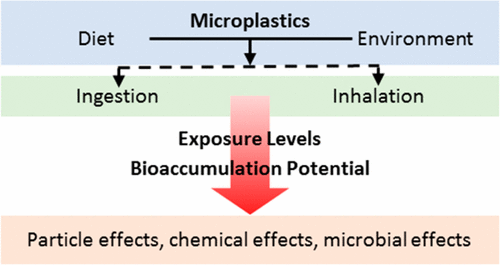
Once inhaled or ingested, microplastics may accumulate and exert localized particle toxicity by inducing an immune response.
This could be hyperproduction of the inflammatory responses or subjugation allowing the foreign particles to accumulate causing diseases.
Chemical toxicity could occur due to the localized leaching of microplastic components and absorbed environmental pollutants. Chronic exposure is anticipated to be of greater concern due to the cumulative effects over time.
This is expected to be dose-dependent and speculative as concrete scientific evidence of exposure remains presently unavailable.
On land
Black plastic, used in everything from children’s toys, food packaging, cell phone cases, and thermos flasks appears to be particularly dangerous.
Plastic is often sourced from recycled electronics that contain heavy metals, e.g. cadmium, lead, mercury, and phthalates.
Phthalates are a group of chemicals used to make plastics more flexible and harder to break. They are often called plasticizers.
Even in trace amounts, these chemicals may contribute to serious reproductive and developmental issues.
BPA has come under scrutiny due to a possible link to health risks that may include cancer. Bisphenol A (BPA) is found in polycarbonate plastics.
Plastics labeled with the number “7” are likely to contain BPA. It is also used to coat metal products such as food cans and bottle tops.
Most plastic bottle manufacturers insist that plastic bottles are safe, but consumer advocate groups support legislation that would ensure the removal of BPA from plastic products.
The success of consumer groups can be seen in the increasing number of manufacturers who voluntarily are removing BPA from baby bottles as small amounts of BPA can transfer from the packaging into foods and drinks.
At sea
Growing evidence shows that some fishes and animals find plastic, the organisms growing on it appealing. Birds that rely mostly on odors produced by phytoplankton to help to find food, inadvertently consume bits of plastic.
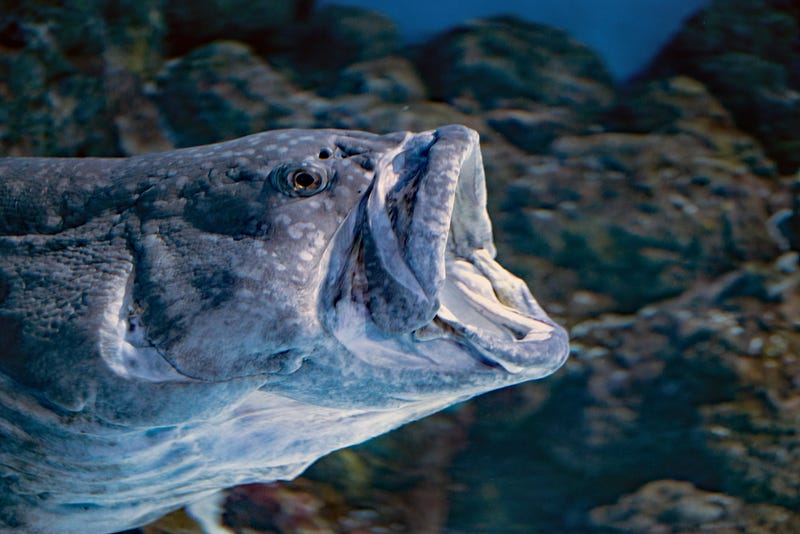
Anchovies and Corals will often consume bits of plastic as food. The color and appearance of the plastic fool them into seeing plastic as a food source.
Some animals will directly eat plastic, then we as humans who consume their flesh unwittingly are also caught up in this terrible food web.
Marine creatures large and small were found entangled, trapped, or dead with evidence of plastic as the culprit.
This means that humans, too, consume plastic from the seafood we eat.
Recycling plastic
Plastic is primarily landfilled, recycled, or incinerated.
Each stage produces greenhouse gas emissions. Landfilling emits the least greenhouse gases on an absolute level.
In fact, more than 40 percent of plastic is used only once before it is thrown away, where it lingers in the environment for a long, long time.
It often breaks down into smaller and smaller particles, called microplastics, which can be ingested by both animals and people.
Plastic is recycled at just 8 % per while glass industries recycle 33.9%, the glass packaging institute, and metal industries recycle 30% per the EPA.
Humans are buying more plastics; cups, straws, etc., using more and more plastic products, and only recycling approx. 8%.
Current estimates address only the one percent of plastic at the ocean’s surface.
Emissions from the 99 percent of plastic that lies below the ocean’s surface cannot yet be estimated with precision. Significantly, this research showed that plastic on the coastlines, riverbanks, and landscapes releases greenhouse gases at an even higher rate.
In January 2018, China decided to stop the influx of most plastics from developed countries. A handful of other Asian nations have since followed suit.
Developed nations are now unsure of what to do with their plastic waste while landfills continuously pile up!
Final thoughts
The amount of plastics produced is difficult to calculate due to many different sources, locations, and methods of transportation.

Pollution within the marine environment is now ubiquitous.
Emerging research has been finding a correlation that these microplastics negatively affect organisms, ecosystems, humans, and socioeconomic sectors such as tourism, aquaculture, and navigation.
Plastic remains a necessary evil in these modern times, however, there should be a more responsible use of plastics, greater legislation, and greater limitations.
We need more education beginning at the kinder level, and more care is shown in the continued use and recycling of plastics.
There is much research to be done and the public should be informed of the findings on a continuous basis so that the necessary adjustments can be made.
As guardians of this planet, we must use its’ resources responsibly.
It is our duty to leave a world worthy for our children.
A place in which they can thrive, not a fetid cesspool unfit for habitation.
Sources & Pictures Cited.
Environ. Sci. Technol. 2017/doi.org
IPEN (International Pollutants Elimination Network)
Center for International Environmental Law (CIEL)
Environmental Protection Act (EPA)
Encyclopedia Britannica
Thank you all for reading and for your support. You may join me by clicking the links below.