
Plastic is Polluting Your Malleable Mind
Chemicals in plastics harm brains, not just bodies
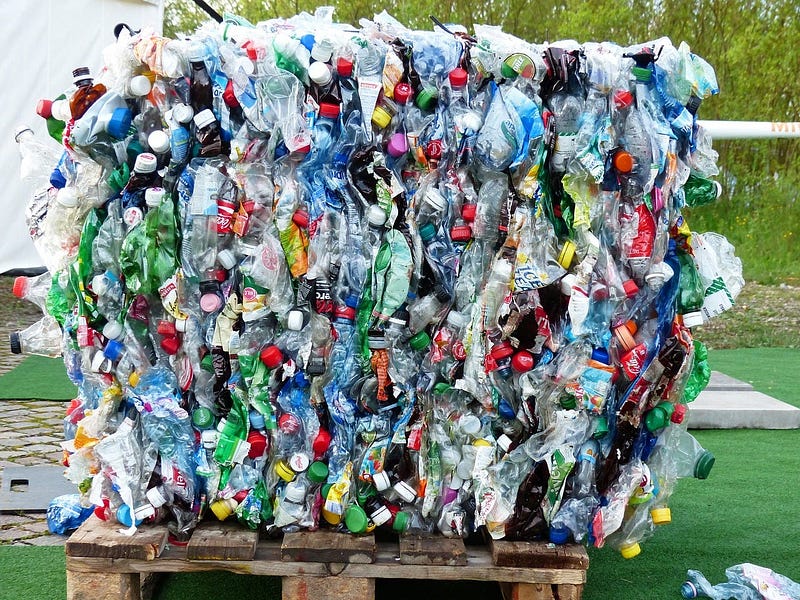
Petroleum-based plastics permeate our lives and poison us. We see photos of the Great Pacific Garbage Patch and hear reports of microplastics contaminating the air, water, and soil of even the most remote areas. These chemicals disrupt our endocrine systems, contributing to diabetes, obesity, and reproductive problems.
But it’s not just our bodies. Plastics are even warping our behaviors.
The word plastic means “capable of being molded.” But now our very brains are being molded by our exposure to plastics. Dozens of studies link higher body levels of chemicals from plastics with a higher likelihood of developing ADHD and autism. Administering these same chemicals to rodents produces the same kinds of disturbed human behaviors. In particular, two classes of chemicals added to plastics — phthalates and bisphenols — harm developing brains.
Health expenses directly attributable to plastics cost the US more than $249 billion a year, according to a 2024 paper by NYU School of Medicine pediatric endocrinologist Leonardo Trasande and colleagues. This is likely an underestimate, because it measures diagnosed illnesses caused by plastics. These chemicals are likely causing a greater spectrum of problems, subtly sickening us and causing impairments in our physical and mental health that don’t register as full-blown diseases.
Plastic proliferation
Chemists developed petroleum-based plastics more than a century and a half ago. Early plastics were lighter (reducing transportation costs) and more easily shaped than most metals, glass or wood, but were rigid and brittle. The widespread addition of plasticizers, chemicals that increased the flexibility, durability, and transparency of plastics, in the post-WWII years kickstarted the pervasive use of plastics in packaging, construction materials, and toys.
Manufacturers use phthalates to make polyvinyl chloride and other plastics. Most polyvinyl chloride (PVC) pipes, automotive plastics, wiring insulation, medical tubing, vinyl flooring, hoses, plastic sheets and films used for packaging contain phthalates, as do many plastic toys. Phthalates are also added to adhesives, detergents, lubricating oils, soaps, hair sprays and nail polish.
The most prevalent bisphenol, bisphenol A (BPA), lines many of the cans for storing food.
During production, these “plasticizers” are mixed in with, but not chemically bound to the plastic. That means phthalates or BPA can escape into the environment, or leach directly into people, during any of these stages:
- manufacturing
- usage
- recycling
- disposal
Although recycling in general is a good way to reduce use of resources and conserve energy, recycling old PVC can lead to an increased release of phthalates and other plasticizers.
Bodies absorb phthalates through direct skin exposure, as well as from eating and drinking food and beverages wrapped or stored in plastic. BPA exposure occurs mainly through food consumption. Even people living in remote, non-urban areas have at least some traces of these plasticizers in their bodies.
Compared to some other classes of plasticizers, phthalates and BPA are not “forever agents”, rather they decompose within hours or days. But most of us are constantly re-exposed, on a daily basis, because these chemicals are so prevalent.
Phthalates and BPA are also highly fat soluble. Our bodies need to chemically modify them, usually through a chemical process called glucuronidation, to excrete them in the urine. Being fat-soluble also means that they are particularly good at penetrating that large fatty organ, the brain.
Plasticizers during pregnancy
In a recent meta-analysis, 92% of published studies found an association between exposure to phthalates during pregnancy, and the likelihood of a child developing ADHD. Another overview, examining a range of environmental pollutants, identified the three agents most strongly linked to later development of ADHD: phthalates, BPA, and lead. Phthalates have been linked to impairments in a number of neurodevelopmental processes, resulting in conduct problems, and poorer vocabularies. Bisphenol A exposure is associated with subsequent hyperactivity, anxiety, and difficulties with emotional control and behavioral inhibition.
Defenders of the plastic industry point out that not every study found an association between plasticizer exposure and ADHD. Publication bias, whereby journals are more likely to approve articles demonstrating measurable results, may be more likely to be published than research that found no effect.
But, of note, many of these studies found connections between phthalate exposure and neurodevelopment problems at doses lower than what is considered “safe”. Also, most studies only examined a few types of phthalates, measured them at only a few points during pregnancy, and examined only a narrow range of brain or behavioral outcomes.
The scientific practice of studying only a narrow range of exposures and outcomes makes it likely that we will miss detrimental effects from phthalates or BPA.
Biologists use the term “critical period” to indicate that the ability of outside factors to alter development may be restricted to certain periods of time. Critical periods in the nervous system usually occur when crucial neurons are forming, moving into position within the brain, or establishing connections with other brain cells. A chemical might have toxic effects during the critical period, but have negligible effects earlier or later in development. Studying chemical exposure outside of the critical period could erroneously lead to the conclusion that the chemical had no negative impact.
Some studies suggest that while fetuses may be particularly vulnerable to the effects of plasticizers, exposure of these chemicals to children or even adults can lead to negative effects.
Not only is time of exposure to toxins important in these studies, but when behavioral outcomes are studied can also determine the likelihood of finding an impact. Human brains continue developing long after birth. One study looking at the effects of maternal exposure to phthalates didn’t detect a heightened rate of attention problems in their children until adolescence. If they had stopped the study in childhood, this effect would have been missed.
Furthermore, studies looking for the effects of a single agent oversimplify reality, where almost everyone is exposed to multiple environmental pollutants simultaneously. Exposing pregnant rats to phthalates and other chemicals found different negative neurologic effects from single agent exposure than from their combined administration.
Studies linking exposure of pregnant women to phthalates or BPA with higher rates of ADHD or autism in their children, can at most show an association. However, when researchers intentionally expose some test rodents to plasticizers, and others to placebos, and demonstrate biologic problems in those given the chemicals, we have a strong case that plasticizers actually cause these negative health impacts.
One recent study even indicated that even with equivalent environmental exposure to phthalates and BPA, individuals with a genetic predisposition to ADHD might also wind up with higher blood levels of these toxins. The glucuronidation system responsible for clearing the blood of phthalates and other contaminants actually consists of dozens of different enzymes, each focusing on binding glucuronic acid to one specific type of chemical. In those with ADHD, most of the glucuronidation system functioned well, except for the very specific enzyme needed to clear phthalates from the blood, which was impaired.
How might phthalates harm the brain?
Having established the connection between phthalate exposure during pregnancy and behavioral problems in offspring, how might that process occur? Several possible mechanisms exist, any or all of which may be at play in any given individual.
Phthalates have been shown to have all of these biologic effects, all of which impact the brain:
- endocrine disruption — sex hormones affect the brain
- lipid synthesis — brain receptors are embedded in lipid membranes
- suppression of neurogenesis — fewer neurons are made
- suppression of synaptogenesis — neurons don’t connect to each other
- thyroid disruption — thyroid hormone affects the brain
- growth hormone — also affects the brain
- inflammation — impairs neural communication, kills brain cells
- epigenetic — which brain genes are methylated and turned on or off
I don’t have ADHD, why worry?
Exposure to phthalates and BPA contributes to the risk of developing ADHD. But 90% of kids, and probably 96% of adults, don’t have ADHD, so do the rest of us even need to worry about this?
To begin with, ADHD occurs on a spectrum of severity. We know that beyond those with the full-blown condition, there are at least as many individuals with milder ADHD, what are termed “sub-syndromal” forms of the condition. We know that most individuals who develop ADHD have a strong genetic propensity to do so, but that environmental conditions also play a role. The genetic risk comes from hundreds of genes each playing a tiny role in increasing the likelihood of developing the wiring of a brain with ADHD.
The neuro-atypical brain circuitry in those with ADHD leads to greater difficulty in directing and sustaining attention, more challenges in resisting impulses, physical restlessness and fidgeting, and reduced ability to manage time, direct the flow of thoughts, or manage emotions. Actual performance in any moment entails the interaction of those brain circuits with a multitude of other factors, such as fatigue, motivation, anticipation, intelligence, peer pressure, training and education.
Our best understanding is that the detrimental biological effects of the phthalates and BPA, from switching certain genes on or off, to contributing to brain inflammation, to affecting how hormones (sex hormones, thyroid hormones, growth hormone) act on brain circuits, to disruptions in the generation of cell membranes, neurons, and neuronal synapses, all contribute to wiring the brain in a slightly atypical way.
Exposure to these chemicals makes it more likely that someone with a high genetic risk for ADHD actually does display the condition. But these forces also push many who have a somewhat lower risk into developing the condition. And many who had fairly low genetic risk may wind up with sub-syndromal forms of ADHD.
Although the degree to which each of our mothers was contaminated by phthalates or BPA varies, none of us seem exempt, and recent generations have faced greater exposure. And even with equivalent exposure, some developing brains will be more vulnerable than others. The impaired glucuronidation pathway for eliminating phthalates, mentioned above, is one form of such increased vulnerability.
But none of us live in a bubble. And in this day and age, the bubble, made of either plastics or detergents, would probably contain phthalates. All of our brains probably have some degree of impairment, however slight, from our chemical exposures.
Neuroplasticity to the rescue?
As findings from brain research have filtered into popular awareness, neuroplasticity became one of the buzzwords of the past decade. Neuroplasticity simply means that even after our brain circuitry has been established, it has at least some ability to change. To some extent we can modify interactions between neurons: generating new connections, ending old ones, and strengthening or weakening existing connections. In some cases we can even make new cells.
Plasticizers impair some of this neuroplasticity. But we can reduce our exposure by minimizing the use of plastics in our choice of food storage, clothing, packaging, toys, and building materials. Heat increases the release of plasticizers, so avoiding microwaving or cooking with plastics is particularly important. We can rely more on glass, wood, stainless steel, and natural fibers.
We can lobby our governments to more carefully regulate the flow of plasticizers through our lives. We can contribute to Defend Our Health and other organizations that strive to remove synthetic toxins from our world. We can encourage the development of plant based plastics.
Plastics have enabled considerable advances in our living conditions from medical treatment, to housing, to food availability and safety. But they are also poisoning us. We need to be both clever and flexible in readjusting how we employ them in this world.