
Plant Medicine Versus Psychedelics: A Basic Introduction to Ayahuasca for the Western Mind
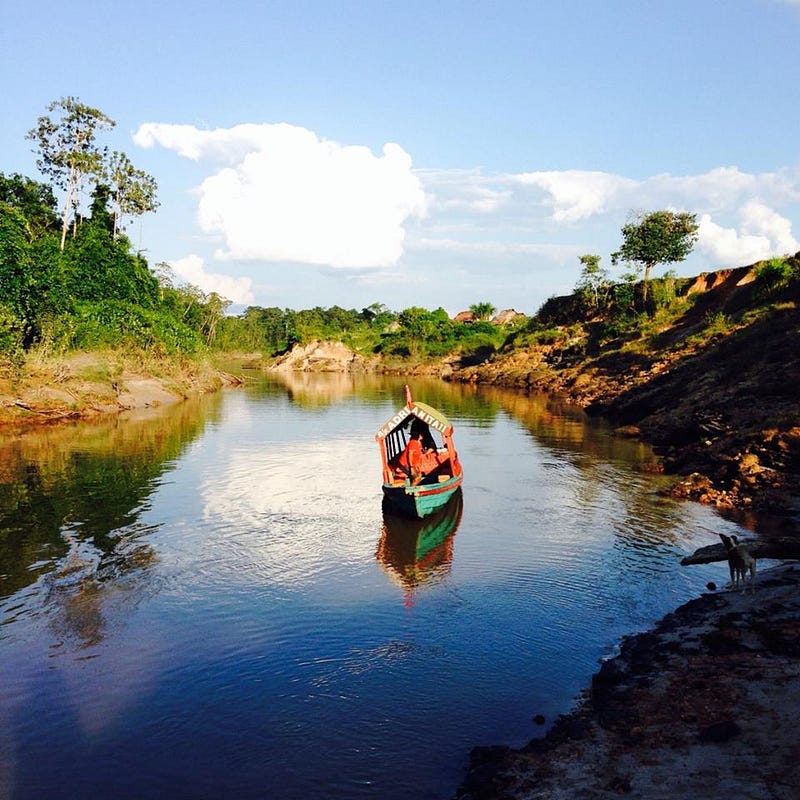
Many of us are familiar with the South American Amazonian medicine known as Ayahuasca, or “vine of the soul”. As the name describes, She is a vine full of potent cosmic medicine that can treat a range of illnesses stemming from physical, emotional, mental, energetic, or spiritual origins. Her home is in the jungles of the Amazon river, a place which eternally blossoms with boundless life and death.
I have never encountered such a vividly alive environment in my life, nor have I ever come across such a visceral and multidimensional healing experience until I met her.
As I have grown in my relationship with Ayahuasca, from patient to student, I have received many responses from friends and family as well as the general Western culture that tend to follow the same theme: a misunderstanding of who she is and a general hegemonic presumption of how she works. Many people ask me what to expect or they tell me that they don’t want to take any “drugs” or say that they think Ayahuasca would bring them out of touch with reality and further confuse them, or that they knew someone who drank it and all they did was throw up. Behind all these concerns is a sense of worry or doubt and the same assumption that this medicine is a mechanic reaction to the human physiology which has no consciousness or vested interest in our well being.
In response, I’d like to start a discussion that illuminates Western interaction with this medicine as explicitly as possible in a way that creates space. This isn’t to shame anyone or to become any sort of authority over who Ayahuasca is or how to interact with her. This is purely an informative piece to assist the understanding and decrease the fear of an increasingly popular medicine which has been subject to much confusion.
With that said, I’ll start by suggesting that Ayahuasca is not a psychedelic drug.
LSD and psilocybin mushrooms became an anchor to Western counterculture of the ’60s and continue to be an explorative element of the psyches of individuals around the world. Especially in Western countries, “psychedelics” have grown into a wide range of substances — breaking sheeple free from the monotonous paradigms of a heavily conditioned world — one tab, stem, or pill at a time. Psychonautic culture has become quite popular in the metropolitan underground; students, working professionals, and even parents will casually take MDMA, set a night for DMT, or regularly consume the dearly beloved, THC. Psychedelics — “Psyche”, meaning mind and “Delos” meaning manifesting — have transformed our society so enslaved beings (literally or metaphorically, your choice) can awaken to their true power. While the conversation as to whether or not psychedelics are healthy or should be legal is a whole controversy in itself and is not the point of this article, it is important to point out something: the psychonautic culture is just that, it’s a culture. And with every culture, there are underlying beliefs. There’s no issue with that, of course, but there is a misunderstanding when we assert psychedelic paradigms into the realm of Ayahuasca and other ceremonious plant medicines. While I have some basic understandings around the history and traditional uses of psychotropic plant medicine like mushrooms and Huachuma (San Pedro), I don’t have the background to speak for those medicines so I will stick with Ayahuasca.
Associating Ayahuasca with psychedelic drugs is understandable since the medicine brew is classified as a schedule 1 drug by the United States DEA, meaning that there is a high potential for abuse and there is no acknowledged medicinal benefit (I wholeheartedly argue against this claim, see footnotes). It also is a “hallucinogenic” substance that can affect our serotonin neurotransmitters by introducing dimethyltryptamine, which explains the so-called visionary “psychedelic experience”.
But Ayahuasca is not a chemically synthesized substance nor are the specific compounds extracted to produce a particular effect the way LSD, smokable DMT, or MDMA are. She is not something to be spontaneously taken to trip out in a forest like the way mescaline and psilocybin have been used in our culture. She is a conscious awareness who, when treated with respect, can work absolute miracles of healing. This is all to say that there is a deeper intelligence working with an individual during their experience that provides them with precisely what they need, rather than what they want. As opposed to an experiential “drug” that’ll give you a certain flavor of a high, the main focus of Ayahuasca is on your wounds, fears, ancestral trauma, karma, cleansing (energetic and physical), and spiritual growth.
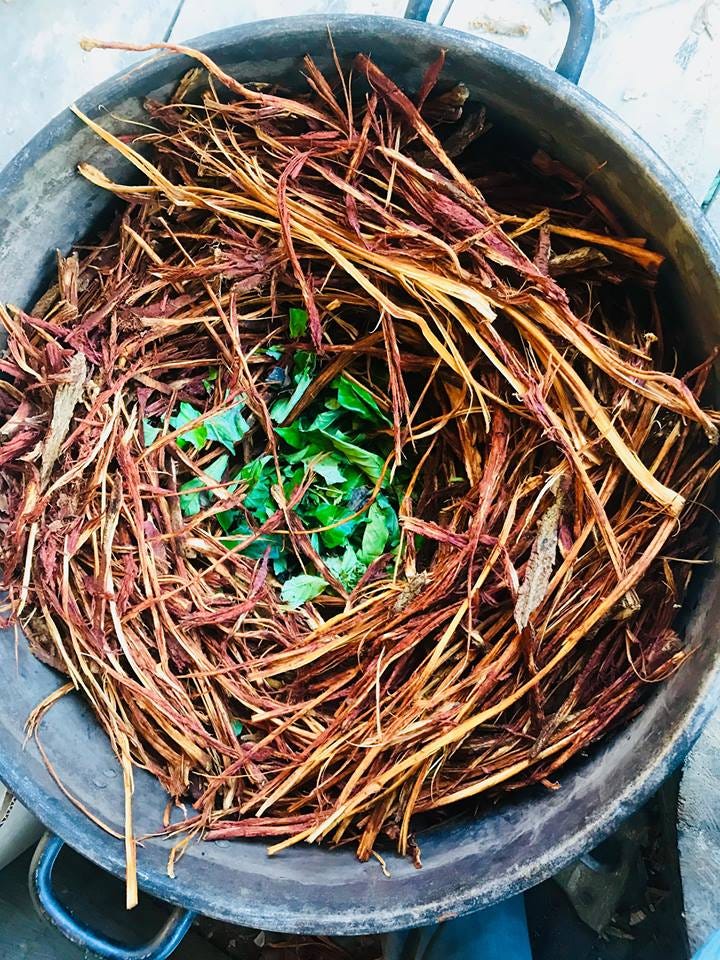
And for the many, many, many people who feel afraid at the idea of an Ayahuasca ceremony; it’s natural to be concerned, skeptical and nervous about how something will affect you, but there is a purpose for what you may experience, and as long as you are with a Curanderx with integrity and proper training, you are safe and the medicine is holding you with grace. It may be comforting to know Ayahuasca is also known as “The Mother”. She can take infinite forms but many of us who have met with her consciousness know those motherly qualities of her: tender, nurturing, loving, guiding, and gentle.
I have also had many people tell me they’d like to “try” Ayahuasca as a sort of ‘check’ off their bucket list. This is spiritual/substance tourism. This type of intention is not worth the environmental and social burdens which Western Ayahuasca tourism creates. Would you “try” chemotherapy? Would you “try” a rehab facility? Would you “try” meditating or fasting for extended amounts of time beyond your comfort zone? What HEALING or lucidity are you trying to achieve? Or is the type of “trying” more seeking for the next high? And the funny thing about Ayahuasca (which, of course, can be true for some psychedelics as well) is that she gives us what we need, not what we want. I have experienced and witnessed many people be “disappointed” with the lack of visions or fantastical experiences. She knows when she is being abused.
So what can you expect? How she will interact with you is dependent on many variables. On a physical level, other plants that are added to the brew will provide varying effects. Chacruna leaves provide the necessary alkaloids for our brains to receive the dimethyltryptamine, providing more “light” and visions while purgative plants like tobacco will intensify vomiting or diarrhea in order to cleanse the body and mind thoroughly. Their influences can also be seen on an energetic level but an even clearer example of how energy impacts an Ayahuasca experience is the use of icaros or plant/spirit medicine songs. Curanderxs will sing or whistle healing frequencies into the pot throughout the medicine making process and during the ceremony. If you are working with someone who does not bring in those frequencies legitimately, it can make quite a big difference (and can be dangerous on ceremony). I remember when I was first working with my teacher, there was a day she brought us out to prepare the medicine. She told us to sing to the pot. We were out there for some time and got easily distracted by our own conversations and human dramas. Neglect, stress, and even anger all went right into the pot! That night, almost nothing happened on ceremony with that medicine we made. There was some purging of course, but even with a powerful Curandera, none of us experienced any visions or solid insights other than “be mindful of what you put in the pot”.
But most importantly, what I want people to understand about the medicine is that, as long as she was prepared by a trained Curanderx walking the true path of light, the spiritual element is the most fluid variable of someone’s ayahuasca experience. The medicine will give you what you need and what each individual needs is different. You give two different people the same exact medicine brew and their experiences could easily contrast each other like polar opposites. There have been times when I have taken the same amount as others and I felt the most intense physical and emotional experience filled with stress and difficult memories, nauseated until dawn while someone else had beautiful visions and reassuring insights and drifted into a pleasant ayahuasca-dream state. The next night, with the same medicine and amount, our experiences had switched. This is an interactive experience, not a substance consumption. It is like going into heavy-duty therapy with an actual being on the other side trying to help us find our way. And our intentions with going into therapy in addition to how willing we are to heal will make all the difference. What you put in is what you get out. And often, what we get out is not what we expect.
Most of us can expect to purge, as most of us (probably 99.9%) from the West have endured generations of trauma and a life filled with subconscious, collective, physical, and energetic crap. Vomiting is the most common form of release and energetic vomiting (or “dry heaving”) is also frequent as well as diarrhea. Sometimes we go out both ends at once! I know I do… It feels good after you get over the initial shock of it. But every element — the purging, the way you purge, the memories that come up (or don’t come up), the insights we do or don’t have are all an intentional part of the process.

So, in essence, Ayahuasca is not a psychedelic drug. She is a gateway to our deepest healing, she confronts us with our deepest fears, and she is a reflection of the Curanderx who is working with her. There are many overlaps, of course, between psychedelia and Ayahuasca but I think there is so much more room for beauty, joy, freedom, and love from this medicine when we engage with Her as that: La medicina.
Footnotes:
Check out these sources for research on Ayahuasca healing
Talin, P., & Sanabria, E. (2017). Ayahuasca’s entwined efficacy: An ethnographic study of ritual healing from “addiction.” International Journal of Drug Policy, 44, 23–30.doi:10.1016/j.drugpo.2017.02.017
Anderson, Brian T. “Ayahuasca as Antidepressant? Psychedelics and Styles of Reasoning in Psychiatry.” Anthropology of Consciousness, vol. 23, no. 1, 2012, pp. 44–59., doi:10.1111/j.1556–3537.2012.01056.x.
Heaven, Ross. “Plant Medicines and Shamanic Healing.” Positive Health, no. 147, 1 May 2008, pp. 9–12