
Plant-Based Diets
Some inconvenient truths

Let me start off by saying that if someone wants to eat only plants, for whatever reason they have, it is completely fine with me. But when misinformation is spread as truth in the hopes of converting others to a nutritionally inferior diet under the guise of science, well, I don’t think that’s right.
There is a lot of plant-based propaganda out there — and here on Medium. Much of the propaganda is obvious to those who understand the limitations of the type of research typically done in the field of nutrition science. Research from which valid conclusions of causation can be made (Randomized Controlled Trials (RCTs)) are wildly expensive and require controls that would be difficult, if not impossible, to maintain over a long period of time.
Overreaching the Research
Because of the expense and difficulties of RCTs, most research in nutritional science relies on observational research. Observational research typically utilized a series of questionnaires administered to thousands of people over a span of maybe 20 years that asks questions about diet and behavior. At various points in time, the researchers will look at various health outcomes in those participating in the research (incidence of various health conditions like heart disease, Type 2 diabetes as well as how many people died). They then look to see which foods and/or behaviors are associated with those health outcomes.

Observational research is a very “weak” form of research. So little is controlled for in this type of research that one cannot make a valid conclusion with respect to the causation of any associations that might be found in the data. Maybe those who had a heart attack tended to eat more meat than those who hadn’t had a heart attack. But maybe those who had a heart attack also smoked more and exercised less and drank more beer.
Because so many other factors could have influenced having a heart attack, you can’t really pin the outcome to any one factor. But the plant-based propaganda does.
Nutrition
Then there is the misinformation regarding the nutrient content of a plant-based diet. Healthline lists 7 nutrients you can’t get from plants (https://www.healthline.com/nutrition/7-nutrients-you-cant-get-from-plants#1):
· Vitamin B12
· Creatine
· Carnosine
· Vitamin D3
· Docosahexaenoic acid (an omega-3 fatty acid)
· Heme iron
· Taurine
Healthline points out that there are supplements for all of these nutrients available to vegans. But the fact that one needs supplements for a given diet points to the fact that said diet is nutritionally deficient.
In addition to missing nutrients, the nutrients found in plants is often not very bio-available. That is, for example, a plant might contain protein, but it’s a protein humans can’t digest. One issue here is the way protein is defined: the grams of protein per 100 grams for food shown on a typical Nutrition Label is based on the amount of nitrogen in that food — it’s the “crude protein.” But as the USDA points out, not all the Crude Protein in food is useful (or bio-available) to humans — the amount that is bio-available to humans is referred to as True Protein. With this in mind, you’d think that Nutrition Labels would show True Protein, but they don’t — they show Crude Protein. Maybe the following example will provide a sense of why the labels show Crude Protein:
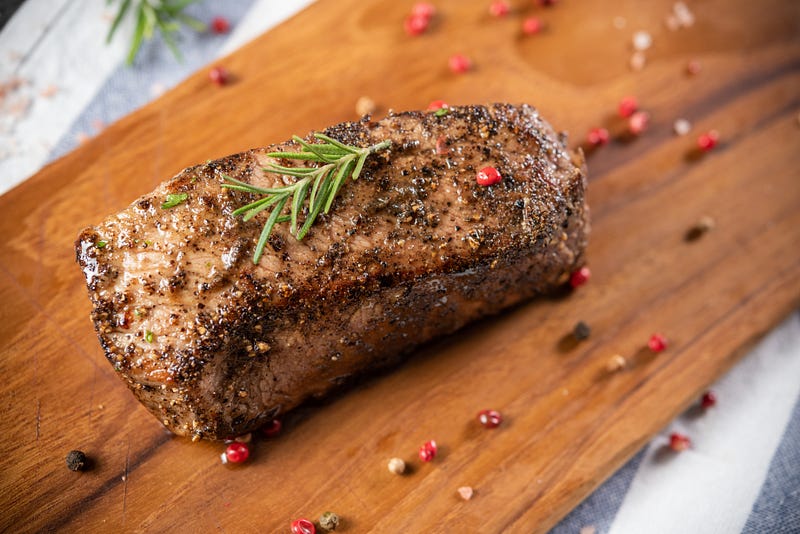
Let’s compare the protein in 100 grams of cooked beef and 100 grams of cooked navy beans. The beans beat out the beef on Crude Protein — 22.5 grams vs. 21.3 grams. 76% of the bean protein is digestible for a total of 17.1 grams of digestible protein. For the beef, 96% is digestible, for a total of 20.4 grams of digestible protein. Then you have to look at the bioavailability of that digestible protein. For the beef, for the initial 21.3 grams of protein, only 14.1 grams are bioavailable; for the initial 22.5 grams of protein in the beans, only 5.3 grams are bioavailable. So to get the same amount of bioavailable protein as 100 grams of cooked beef provide, you’d need to eat 266 grams of beans. So, no — looking at Crude Protein does not give you the complete picture.
When it comes down to it, plant-based food is not required in the human diet. All the nutrients you need can be found in animal foods. In fact, the human body needs less of the various vitamins found in plant food when plant foods are avoided. This is because plant-based foods bring with them a lot of oxidative stress that requires anti-oxidants to neutralize. Animal-based diets create less of this stress and therefore require smaller amounts of anti-oxidants. Interestingly, saturated fat has anti-oxidant properties when eaten as part of a low-carb diet.
All science aside, it just defies common sense to think that eating a food upon which our species depended for most of its existence would somehow be bad for us. Some experts consider that humans didn’t evolve to eat meat, humans evolved because we ate meat.
What coincides with human chronic disease (getting back to science) is a reliance on carbohydrate as a source of energy. To rely on a non-essential nutrient for most of our daily energy seems like a recipe for disaster as such a diet, by necessity, reduces the amount of essential nutrients we ingest.
Save the Planet!
The plant-based lobby likes to scare people into not eating meat by saying animal production is unsustainable and is destroying the planet. Ironically, if animals were taken out of the food system, the soil for crop growth would soon turn unusable.

It is true that we depend on plants for life. Plants are the only things on Earth that can combine sunlight, water and carbon dioxide and make it into food — carbohydrate (and oxygen). Unfortunately, the most abundant type of carbohydrate on the planet is cellulose — a carbohydrate that is not digestible by humans — which is of no nutritional value to humans. In fact, no vertebrate contains the enzyme necessary to break down cellulose (cellulase). The breakdown of cellulose is dependent on micro-organisms that produce cellulase.
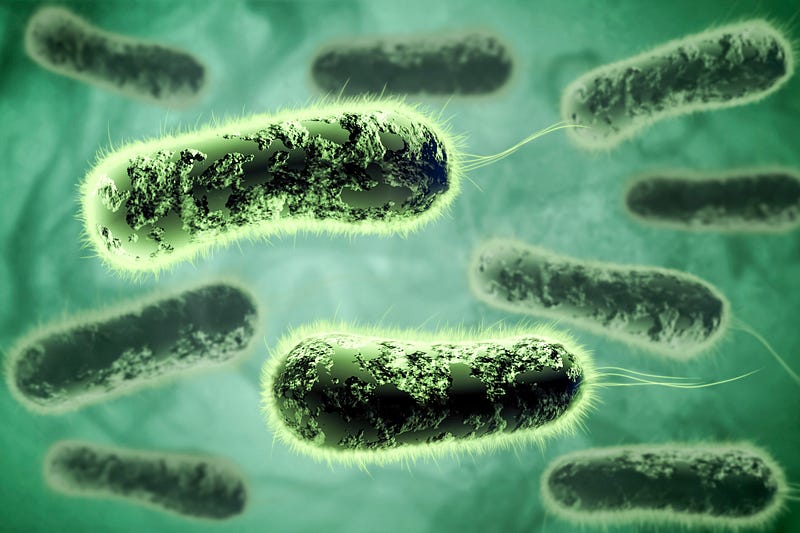
It turns out that the gut biome of ruminants contains the microbes that produce cellulase. So animals like cows and goats and bison can take the carbohydrate that is unavailable to humans and convert it to food that is bioavailable to humans — i.e., meat. In fact, the ruminant protein we eat (those of us who eat meat from cows, bison, etc.) comes from the microbes that digest the cellulose eaten by those animals. The animals themselves don’t utilize the cellulose — they live off their microbiome that lives off the cellulose.
Plant-basers will point out that it takes about 55 kg of fresh pasture (grass) to produce 1 kg of milk. And that’s true. But the 55 kg of grass is undigestible by humans and is not grown on land that would support crop agriculture. Food for beef cattle is largely based on food that either humans can’t digest, or don’t want to eat (imperfect vegetables that don’t pass producer quality controls that would otherwise end up in a land-fill). So the propagandists tell parts of the truth and forget to mention the inconvenient facts associated with the bit they like.
Vegans also like to claim that animal agriculture uses too much land and that we need that land to feed people. The inconvenient truths here are that:
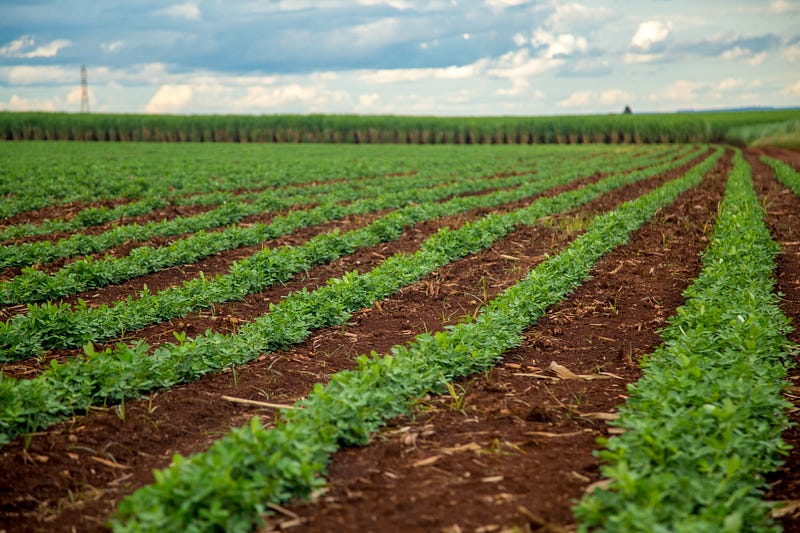
1. Only 4% of the Earth’s surface is cultivatable (while rangeland and forests account for 14% and 10%, respectively)
2. Only about one-third of the cultivatable land on the planet is currently being used to raise crops for human consumption. So there is a lot more to be used.
3. Livestock is typically not raised on land suitable for raising crops. It is typically raised on rangeland and forests.
When it comes to carbon capture, grazing systems are the best method of carbon capture we have today–and arguably the only viable method we have today or for the foreseeable future.
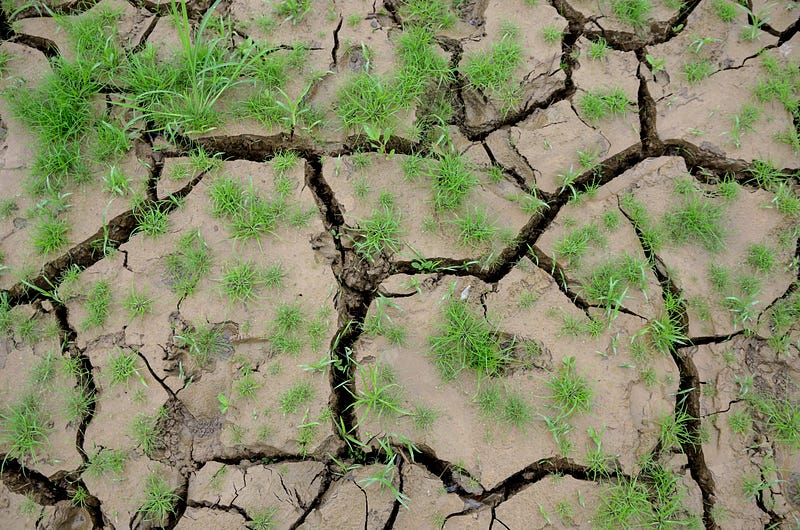
The very nature of crop cultivation harms soil quality — it takes nutrients from the soil and puts it into the plants. Thus, soil quality becomes depleted under crop farming — often requiring chemical or animal fertilizers to add nutrients back into the soil before crops can be grown again. Soil quality degradation also impacts water quality and the ability of the soil to prevent depletion due to runoff.
Grass cover on rangeland improves soil quality while providing a renewable food source for the animals that graze it.
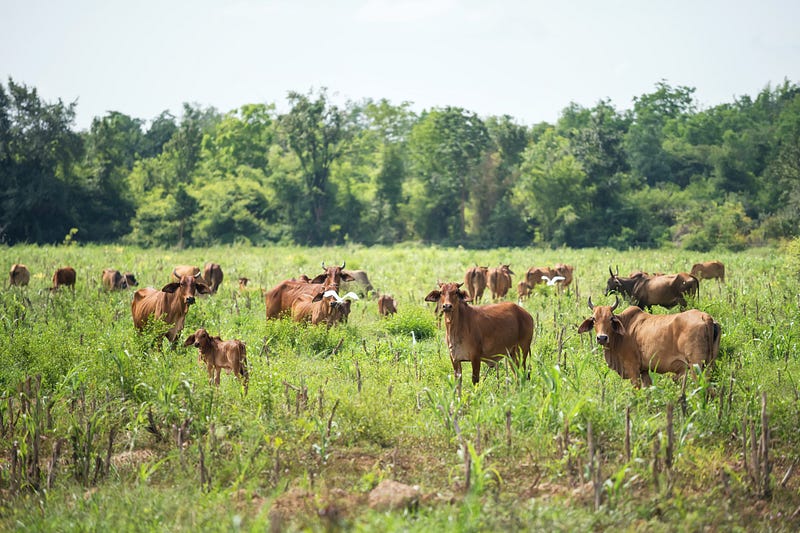
We need animal agriculture to save the planet. It has been estimated that 9% of greenhouse gasses come from total agriculture: 4% from animal agriculture and 5% from crop agriculture. If greenhouse gasses are your worry, moving to a world-wide all-plant diet will drive up greenhouse gasses.
Animal Welfare
One area in which I agree with plant-based crowd is that of animal welfare. It would be great if the animals I eat were treated better during their lives and just prior to being killed. I support efforts by animal advocates like Temple Grandin who look to make the various aspects of animal agriculture less stressful for the animals.
It would also be great if plant agriculture could be done in a way that didn’t kill millions of rabbits, mice and other animals — not to mention billions of insects — in obtaining our plant-based food. This is something else that is often overlooked, or at least not mentioned, by the plant-based crowd.
So, eat only plants if you like — be sure to take your supplements, or, have good health insurance. Just please don’t distort the truth to get others to follow a nutritionally deficient philosophy.
I wrote a book about nutrition, metabolism and weight management based on the information I used to lose nearly 50% of my body weight. It’s all based on science and it’s available on Amazon. See my profile page for more details, if you are interested.
References
https://www.healthline.com/nutrition/7-nutrients-you-cant-get-from-plants#1
Ottoboni & Ottoboni, The Modern Nutritional Diseases and How to Prevent Them, 2013
Hancock, D. Storing Carbon and Building Soil Organic Matter Through Grazing Management, 2016
All images licensed via Freepik.com


