
How to Plan Your Writing Retreat on Amtrak
Prepare for an adventure. And be ready to write — for real.
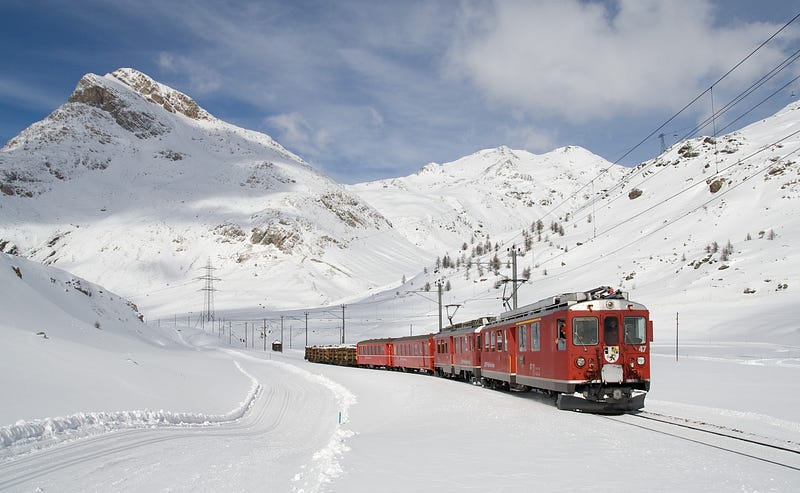
Our life is a constant journey, from birth to death. The landscape changes, the people change, our needs change, but the train keeps moving. Life is the train, not the station. — Paulo Coelho
“The restlessness and the longing, like the longing that is in the whistle of a faraway train. Except that the longing isn’t really in the whistle — it is in you.” — Meindert DeJong
Have you ever taken a long Amtrak journey?
I’ve taken almost every major Amtrak route in the United States, including traveling cross-country multiple times. In coach, and also in a sleeper. My first journey from Seattle to Syracuse in 1996 happened after a bout of flying phobia (after a horrendous TWA snowstorm landing) and have continued the practice since.
When hearing I was about to travel from Seattle to Boston one time, a friend said wistfully, “train rides make me feel a sweet melancholy.”
I agree.
This is one of the many reasons a long Amtrak ride is perfect for a writing retreat.
What You’ll Gain From a Train Writing Retreat
- Limited access to wifi, despite what Amtrak tells you. You can use data, but good luck during long stretches of wilderness.
- Mostly friendly people and a sense of camaraderie (for reference, I’m an ‘able’-bodied, cisgender white woman, so keep that in mind). This is not like taking the bus.
- Characters for your books, if you write fiction.
- Uninterrupted thinking and writing time.
- Plenty of time to take naps and zone out, meditate, or whatever.
- Inspirational scenery — spectacular and mundane. Even mundane scenery becomes special when you’re on the train.
Let’s move on to the logistics, shall we? We’ll cover coach versus sleeper, what to pack, and how to write. I’m basing this on the 46-hour Seattle-to-Chicago route, though much of it applies to other routes as well.
Coach or Sleeper?
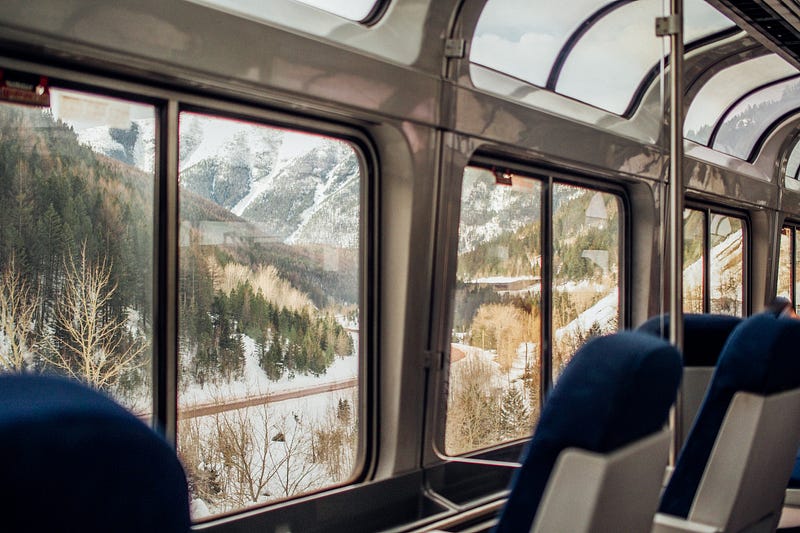
I use miles to book a sleeper when I can because I can lie flat to sleep. That’s the number one reason to get a sleeper. And if you treat it like you’re getting a hotel room while traveling, then the expense might seem less (though it can still be pricey!). If you’re not considering the cost, here are the pros and cons of each method.
Sleeper Pros
- Relative quiet.
- Access to free coffee, water, and treats, and often a lounge car for sleeper passengers (depends on the route).
- Meals included (food is slowly improving).
- Don’t have to deal with constantly changing seat partners.
- You get to sleep on a flat surface.
- More space if you need that for writing.
- Access to a shower — you’ll be on there for three days.
Sleeper Cons
- Unless you’re very outgoing and chat with everyone in the lounge car, you kind of miss out on the camaraderie of the journey, even if you have your meals in the dining car.
- Some east-coast routes, like Chicago to Boston, have these weird sleepers where you have a toilet and sink in your room. I suppose it’s more convenient than going down the hall, but I don’t like sleeping next to the toilet.
Coach Pros
- Camaraderie. You meet endlessly interesting people, whether you talk to them for six hours. It’s not like the plane. It’s different, especially because things frequently go wrong on Amtrak — usually nothing major, but definitely worth a story or a chat.
Coach Cons
- The opposite of all the pros of the sleeper.
- No blankets or pillows (they used to do this, and may still on a few routes).
- Chairs that recline, but not quite far enough — just two more inches would do it!
- Variation in coach temperatures — sometimes freezing at night, so you’re in trouble if you don’t have extra clothes to throw over you.
- People getting on and off at night at random times. If you’re traveling by yourself (recommended if this is a writing retreat), sometimes the attendant will move you so families sit together. In my experience, if you’re under 40, they’re more likely to move you — because they assume you need less sleep? Ha! Or maybe they think you’re less likely to complain.
- You’re on your own for food. Bring plenty. There is usually a little store where you can buy coffee, microwavable pizza, and other things for cast-iron stomachs. You can also have meals in the dining car, but you’ll need to pay for those and sit with others (this may be important for shy people or introverts).
- Hygiene. The attendants do their best to keep those bathrooms clean, but with so many people using them, they can get…a little funky. But you just get used to it. As for washing, I use wet wipes and bring a washcloth so I can wash my hair in the sink.
Digression: washing your hair in the sink on Amtrak. Amtrak toilets are slightly larger than airplane toilets but are the same design. If I want to wash my hair, I save a coffee cup from the lounge car and use it to wash my hair in the sink. I do not recommend this technique when the train is moving! Wait for a longer stop, but not so long they turn the power out.
Don’t be dissuaded by the coach cons! Seriously — they’re all part of the adventure.
What to Pack
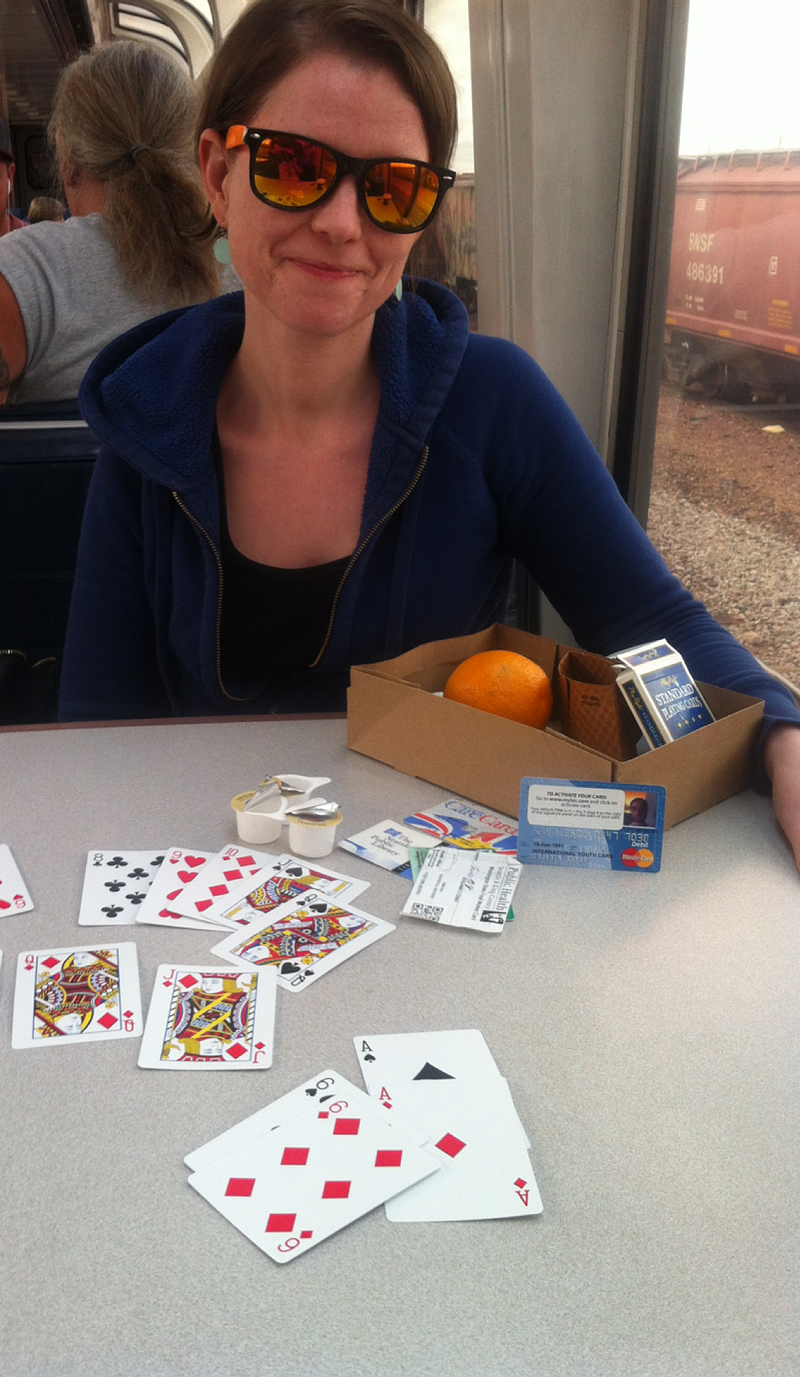
I love packing lists and will resist the temptation to list everything I pack. Instead, I offer a few suggestions of things beyond the basics (clothing, medicine, your computer, etc.).
- Backup charger: Some trains have outlets next to each chair, but some do not. Even if your train has them, you might get stuck next to a broken outlet and have to spend hours in the lounge car while it charges (I’ve tried using the shaver plugin in the bathroom. It doesn’t work). Of course, this could be a blessing in disguise because you’ll be forced to write on paper.
- Noise-canceling headphones: This is a must if you’re riding coach. Three days of train noise will wear on you, so even having them on without music or podcasts will save your sanity. If you’re like me, sometimes you’ll want to crank up the music, so this is a good way to do that. Besides, they’re a good sign that you’re working and do not want to be disturbed.
- Warm clothing/pillow: Even if you’re traveling in the summer, the train cars get cold at night, so you’ll need something to keep you warm. I’ve had to resort to pulling out extra clothing and draping it over me, which had the unintended effect of keeping away new passengers from my seat — which meant I could stretch out across two to sleep. As for a pillow, I don’t bring one with me, but I have a packing cube that I can stuff clothes in to make a perfectly adequate pillow. Socks are also a must, even if you just use them at night.
- Hygiene items: As I mentioned before, I bring a travel towel or washcloth to wash my hair. You may not want or need to do that, but I recommend you do bring wet wipes or a washcloth for bathing (more environmentally friendly — you can dry it in the seat pocket in front of your seat). If you don’t, the upside is you won’t have many companions.
- Food and water: This is important in a sleeper, but vital in coach. If you have a hearty constitution and can live on the food in the dining car and lounge car (the little store), then go for it. You can wander down to the lounge car if you want snacks, but the cost of food can add up quickly. I suggest you pack plenty of healthy-ish, snack-like food like various bars, durable fruit, crackers, nuts, and water. You must buy water if you’re in coach, so bring at least some with you. I always seem to underestimate how much I need, so I end up rationing by day two. You will occasionally be stopping in a major city where you can run into the station and find a coffee stand, but don’t count on it, especially if you’re running late (Havre, Montana, has an ice cream machine, and Minneapolis/St. Paul has a coffee stand if you get up early).
- Pens and paper: Sometimes something will go wrong and you cannot use your computer. Better to have pens and paper with you, just in case. Perhaps you’ll be inspired!
Planning Your Writing
Those preliminaries were important because if you can’t sleep or eat, you probably will be too grumpy to write!
Let’s understand basic train setup (this is for the Seattle-to-Chicago route):
Back of the train: coach cars
Middle of the train: lounge car (including store) and then the dining car
Front of the train: sleepers
The dining car is the dividing line between coaches and sleepers. It’s not a good place to write because they need the table space.
If you’re in a sleeper, you can write in your cabin or the lounge car. If you’re in coach, you write at your chair or you write in the lounge car.
The lounge car is certainly scenic, but it can be an awkward place to write. People are coming and going, playing games, chatting, and often wanting a seat. If you sit at a table, prepare to be joined by a few people, many of whom may want to chat.
Writing in your chair or in your sleeper will probably be your preferred option. Your chair has an airline-like fold-down table you can use on smooth patches of track. If it gets bumpy, then you’ll need to take a break.
If you’re writing in your sleeper, you’ll have a little fold-out table that’s much more stable than an airplane one, plus a seat opposite to stretch out. It’s ideal.
Note about motion sickness: If I read in a car on or a bus, I get nauseous. I have had motion sickness once or twice on the train, but I’m not sure why. I’ve traveled across the United States without any motion sickness, so you will probably be fine. If you’re worried, read this article before you go.
Why It Works
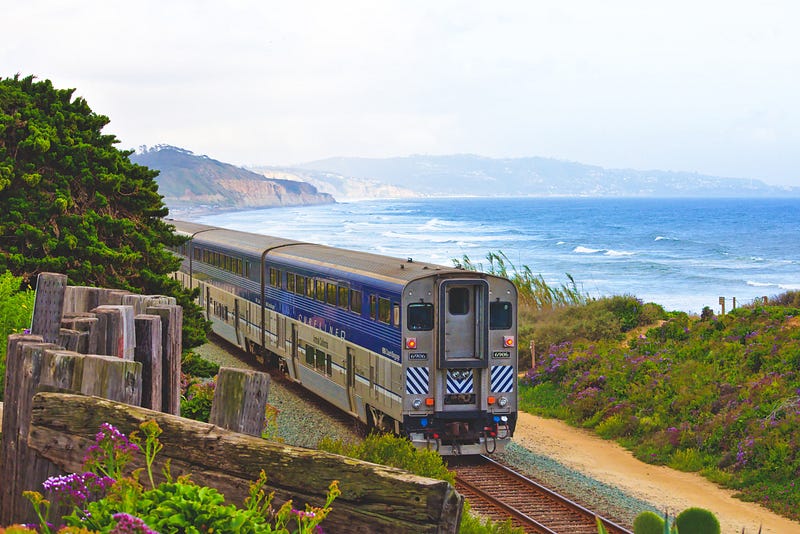
So you might wonder what’s so great about writing on the train given the setup I described above. Besides the list at the beginning of this article, being on a train for multiple days creates a kind of dream-like, flow state.
You have no appointments, no phone calls, no one asking for your attention.
“I like trains. I like their rhythm, and I like the freedom of being suspended between two places, all anxieties of purpose taken care of: for this moment I know where I am going.” — Anna Funder
Even if you struggle with resistance that first day, your brain will realize at some point you’re stuck on this train for a while, so why not make the best of it? Remember that thing called boredom? Your brain will soon realize it prefers writing to boredom, even if you intersperse it with chatting or beautiful scenery.
And then the words will flow. You’ll be out of your regular schedule, so your idea that you cannot write in the afternoon will be turned on its head. And guess what? You might even write through the afternoon and then enjoy watching the sunset over a glass of wine.
You have nowhere to go.
Nothing to do.
Except to write.
Find out more at the autistic traveler. If you’re an academic writer, join my Monday Writing Sprint podcast.