Plan 2020 with a 1920 Family Photo
Study an old family portrait: What can your ancestors teach you? What happened to them? What worked and didn’t?
The amazing thing about the 2020s is we can find so much about the 1920s, the era when media (including radio, film and movies) exploded. That media helps us see our relatives from 100 years ago and learn from them.
Find a family photo from that time period and study it: These are your ancestors. Much of what you are (your gifts and weaknesses) you inherited from them. How do you look like them? How did they live and die? What has really changed and not changed?
If your life is a puzzle, your ancestors are puzzle pieces offering clues
“Choose things in your life that will endure, that are a pleasure to use,’’ Marney Morris, founder of Animatrix, the first interactive design company, explains. “Classic clothes never go out of style. Furniture should get better with age. Choose things because they delight you, not because they impress others. And never let things be more important than your family, friends and your own spirit.’’
How far has the world — and your family — come in 100 years?
The beautiful gift of looking at your life from a 100-year perspective is you know how the story played out long-term. For America, for example, we know the 1920s were “Roaring’’ with unprecedented prosperity.
We also know the 1920s followed the Great War (World War I) and ushered in the October 1929 stock market crash that brought in the global Great Depression of the 1930s and the Second World War of the 1940s.
A macro, global, bigger picture helps: My great-grandparents all came to America from Poland (which was literally wiped off the map and enslaved from 1795 to 1918). Poland regained its independence after World War I.
The Poland of 1920 is now best remembered for two world-shaping events that occurred in that small, revived nation, sending sparks through the whole world for decades to come:
The Miracle on the Vistula.
Soon after World War I, Poland had to fight to live. The Soviet Union and its global plans for communism began in 1917 and by 1920, the Russian Soviets and Poland were at war.
Soviet founder Vladimir Lenin planned to run through Poland and move on to a defeated war-weary Germany, taking over Europe.
The Miracle on the Vistula occurred in August 1920. More than 5 million Russian Soviets plowed through Ukraine and Poland and were at the Polish capital of Warsaw ready for victory when the miracle happened.
The Poles turned everything around and defeated the Soviets, pushing them back into Russia for another 19 years (the Russians got their revenge on Poland with the 1939 German/Russian invasion of Poland that triggered World War II, leading to a 40 year Cold War that followed).
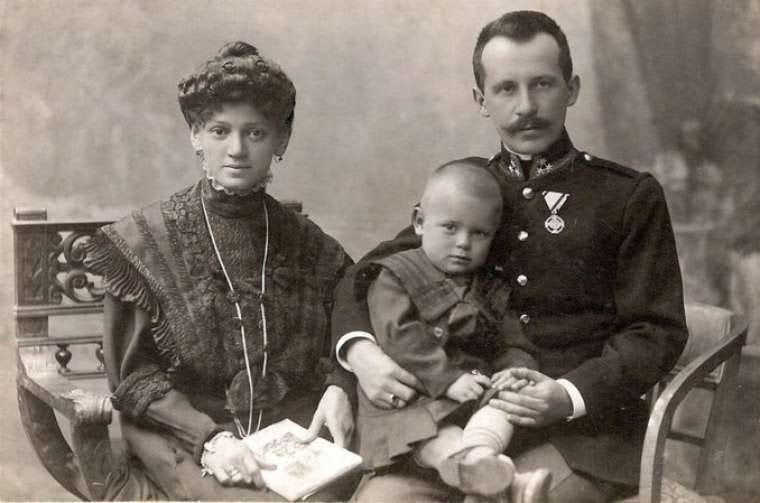
2. The birth of St. John Paul the Great. May 18, 1920, brought the birth of the boy who became the most famous Pole (and one of the most famous Catholics) in history.
Born in a free Poland during Poland’s glory years of the 1920s, Karol Wojtyła was starting college when the Germans invaded. His respected elders (from professors to priests) were sent to concentration camps as part of an effort to remove Poland’s “head” (the leaders who influenced others).
The evil of the war and the void of leadership transformed Wojtyła from wanting to be an actor to knowing he needed to become a priest. From 1978–2005, he would be the second longest-serving pope instrumental in the collapse of Soviet communism and numerous teachings (his combined writings are the equivalent of 20 Bibles) that continue to impact the Church today.
Back to a family photo…
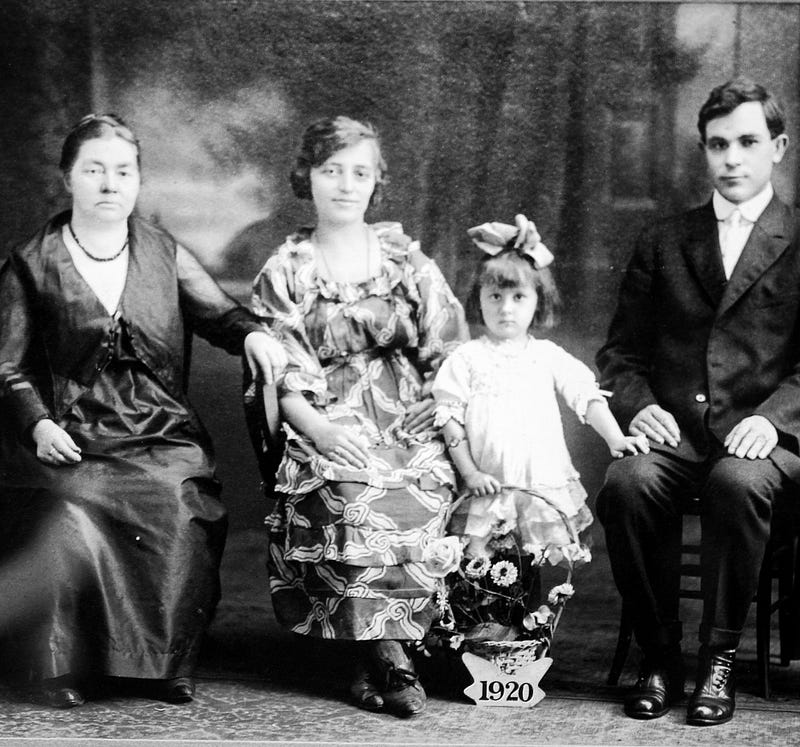
The 1920 photo above shows my Grandma Helen at age 4 with her parents Victoria (then 21) and Antoni Polec (then 35) and Victoria’s mother Helena (then 49).
A century later, I know “the big picture’’ of how life went for each of them.
My great-grandfather, a millwright (high precision craftsman) made enough at the early Ford Motor Company to return to Poland, investing in hotels. He died there in 1937, two years before World War II began.
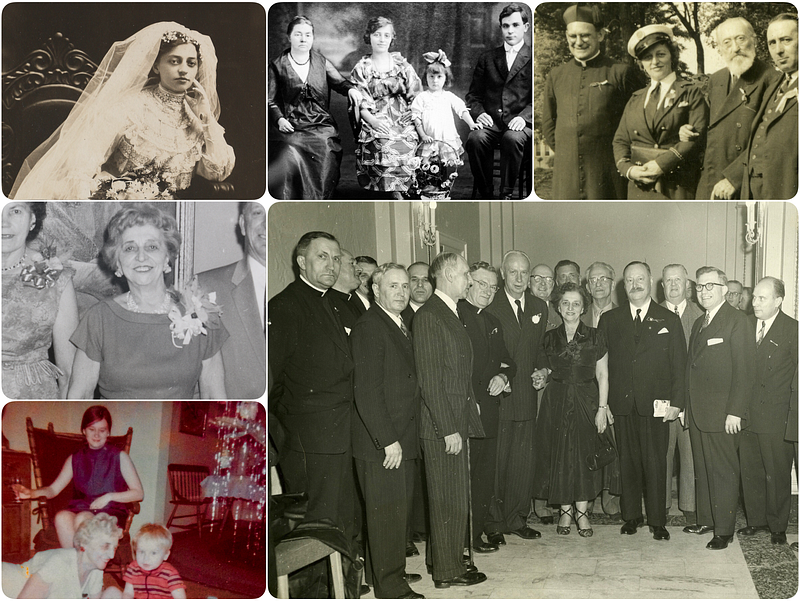
My great-grandmother (who I still remember well even though she died when I was five) was a “mover and shaker’’ in our family and in Michigan Polonia throughout her life.
No one in my family says a woman or newcomer can’t do anything because we know what my great-grandmother did as a young immigrant a century ago.
She knew how to get things done and taught us things that were passed on generation after generation (see photo collage).
My great-great-grandmother Helena literally raised my dad for the first 11 years of his life, watching him daily, making him fluent in Polish and English.
My grandmother worked — and worked — for both a daily newspaper and the local school board, also a force of will who terrified anyone who went up against her.
In 500 years, your descendants won’t be asking…
One or five centuries from now, your descendants won’t know or care whether you achieved your New Year's resolutions, how much money you were paid or even what you did for a living.
They’ll want to know whether you had a good life, whether you did something that they can learn or grow from knowing.
Dr. Forest Witcraft was a national leader in the Boy Scout movement, who wrote “Within My Power’’ in 1950. In that famous essay, he focuses on boys but these words apply to all who influence future generations:
“I am not a Very Important Man, as importance is commonly rated. I do not have great wealth, control a big business, or occupy a position of great honor or authority. Yet I may someday mould destiny. For it is within my power to become the most important man in the world in the life of a boy. And every boy is a potential atom bomb in human history…They are the makers of history, the builders of tomorrow…A hundred years from now it will not matter what my bank account was, the sort of house I lived in, or the kind of car I drove. But the world may be different, because I was important in the life of…’’