
Plagiarism begins at home.
Zelda Fitzgerald on her words. (The Commonplace Book Project)
The Commonplace Book Project is a daily post based on Ray Bradbury’s advice to aspiring writers: read a poem, a short story, and an essay every day for 1000 days. These posts start with a quote and go wherever the rabbit hole leads. Follow The 1000 Day MFA publication so you don’t miss a thing.
(Disclaimer: This post includes affiliate links. When you click one and buy something, it helps to support Ninja Writers without costing you anything extra. Thanks!)
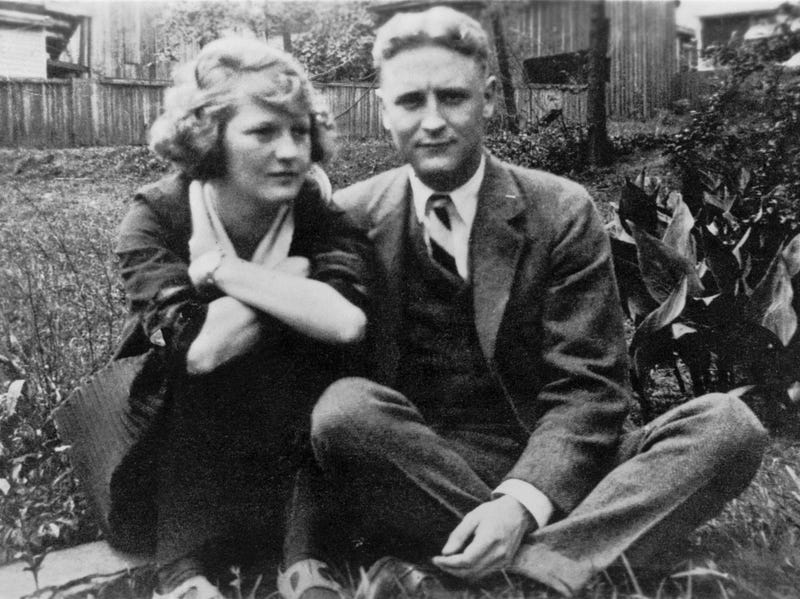
“It seems to me that on one page I recognized a portion of an old diary of mine which mysteriously disappeared shortly after my marriage, and, also, scraps of letters which, though considerably edited, sound to me vaguely familiar. In fact, Mr. Fitzgerald — I believe that is how he spells his name — seems to believe that plagiarism begins at home.” — Zelda Fitzgerald, The New York Tribune
Famously, Zelda Fitzgerald (as she was coming out of anesthesia) hoped that her baby girl would be a beautiful little fool. Her husband immortalized the phase by giving it to Daisy, speaking of her daughter, in The Great Gatsby.
Mr. Fitzgerald appropriated his wife’s writing fairly often. The quote at the top of this post is Zelda’s response to a newspaper reporter when asked about her husband’s book, The Beautiful and Damned.
He was an alcoholic. She was mentally ill. But the two of them sparked bright, didn’t they? They embodied an age that glorified youth. They had more money and fame than was good for them. And they told stories that made the world fall in love with them
The stories still make the world fall in love with them, nearly a century later.
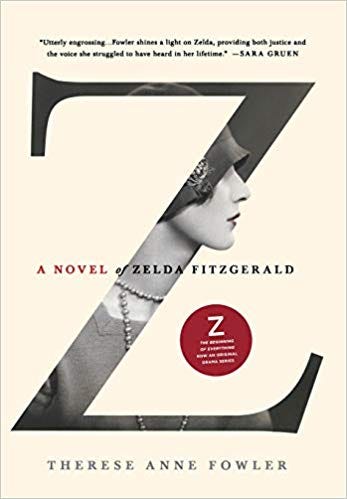
As I wrote this, I started to re-watch Z: The Beginning of Everything. If you’ve never seen it, it’s totally binge-worthy. You won’t be able to stop once you get started. It perfectly shows F. Scott Fitzgerald’s desperation to be a writer — a famous writer — and what he took from Zelda to get there.

It’s based on Z: A Novel of Zelda Fitzgerald by Theresa Anne Fowler.
I’ve added two books to my reading list. The first is a collection of letters between the Fitzgeralds called Dear Scott, Dearest Zelda: The Love Letters of F. Scott and Zelda Fitzgerald.
The second is a book of her collected writings, including her only published novel, Save Me The Waltz.
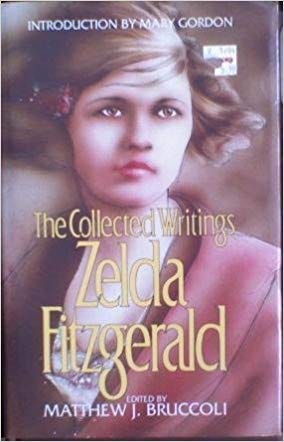
Save Me The Waltz is a dramatization of her marriage. It outraged her husband, who wanted to use the material in it for his own book, Tender is the Night. Hers was a commercial failure and his harsh criticism were rough on her already delicate mental health.
Zelda spent her last years being treated for what was called schizophrenia. This article in the New York Times suggests that today she probably would have been diagnosed as bipolar.
The New Yorker published a short story Zelda wrote when she was a teenager, just before she met her future husband.
Cornelia gazed out of the window and sighed, not because she was particularly unhappy, but because she had mortified her parents and disappointed her friends. Her two sisters, younger than she, were married and established for life long ago; yet here she remained at thirty years of age, like a belated apple or a faded bachelor’s button, either forgotten or not deemed worth the picking.
She was a sensory writer with a lyrical style. I’m excited to read some of her letters, especially. They must have been something.
Zelda wanted to be an artist in her own right. When she was 27, she took up dancing — something she hadn’t done since childhood. She was too old to be as successful as a ballerina as she could have been when she was younger, but she worked hard at it.
And she painted.
Today’s Poem:
The Staying Up All Night F. Scott Fitzgerald
The warm fire. The comfortable chairs. The merry companions. The stroke of twelve. The wild suggestion. The good sports. The man who hasn’t slept for weeks. The people who have done it before. The long anecdotes. The best looking girl yawns. The forced raillery. The stroke of one. The best looking girl goes to bed. The stroke of two. The empty pantry. The lack of firewood. The second best looking girl goes to bed. The weather-beaten ones who don’t. The stroke of four. The dozing off. The amateur ‘life of the party.’
Thanks for reading and clapping (to let me know you enjoyed it!) If you’d like to get these daily doses of inspiration in your inbox, fill out the form below.
Shaunta Grimes is a writer and teacher. She is an out-of-place Nevadan living in Northwestern PA with her husband, three superstar kids, two dementia patients, a good friend, Alfred the cat, and a yellow rescue dog named Maybelline Scout. She’s on Twitter @shauntagrimes and is the author of Viral Nation and Rebel Nation and the upcoming novel The Astonishing Maybe. She is the original Ninja Writer.


