
Place Your Bets, a Velociraptor vs a Modern Bird
Spoiler: Velociraptor dies
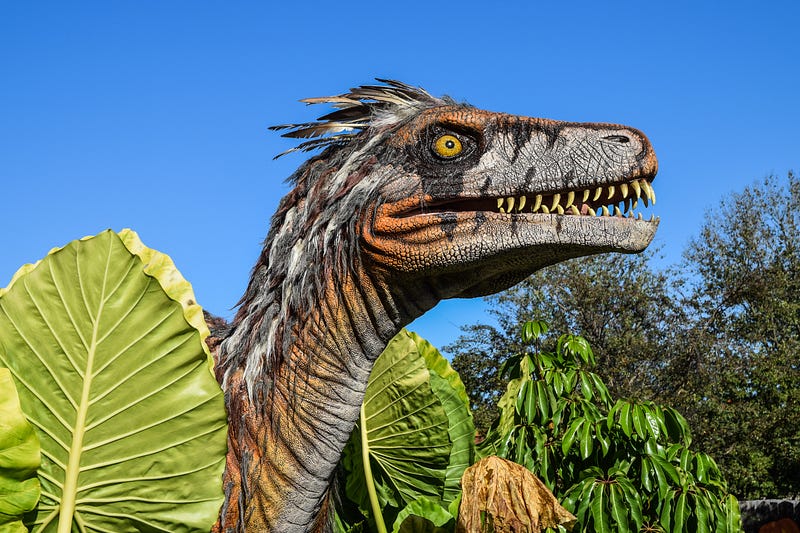
Unless you’ve been living under a rock for two decades, or in North Korea, which is basically the same thing, you’ve might have heard of the 1993 movie: Jurassic Park — directed by Steven Spielberg. That movie featured dinosaurs of all shapes and sizes. The film was an iconic masterpiece that fueled the imaginations of future paleontologists and civilians alike. The CGI might not have aged very well according to today’s standards, but it still left a mark on me personally. Now, there were two cool dinosaurs in that movie — three if you were into that “SprayingUmbrellasaur” — : one was the Tyrannosaurus rex or T-rex, and the other one was the Velociraptor. Velociraptors were these terrifying human-sized man-eating death lizards that walked on their hind legs, and can open doors.
I was a big fan of those Velociraptor fellas when I was a little boy, which is precisely why — in my twenties — when I went to the Royal Tyrrell Museum in Drumheller, Alberta to see all the fossils, I was disappointed beyond relief.
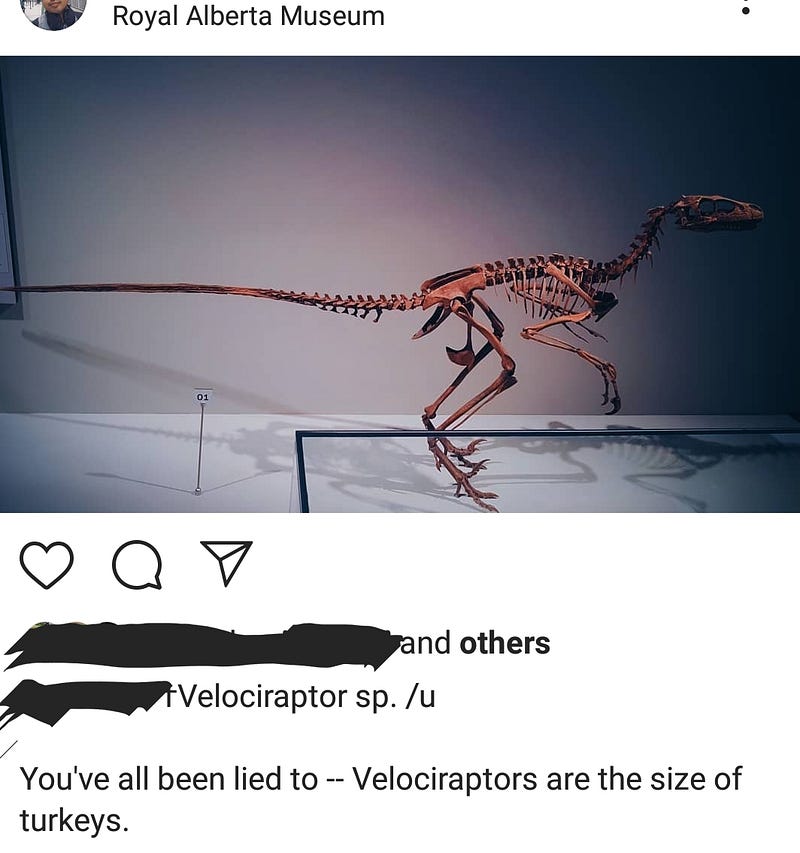
I came up to this little sorry excuse of a dinosaur skeleton and even posted my frustrations on Instagram. These dinosaurs weren’t the human-sized terrifying lizards of death that pop-culture made them out to be, these things were just oversized beakless chickens with a small box cutter on their feet — and I don’t even think they can open doors.
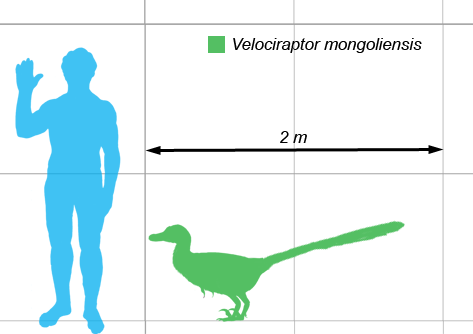
My dreams of seeing human-sized death stabby stabby lizards were crushed on the spot. Well, until I heard about Cassowaries.
The Cassowary
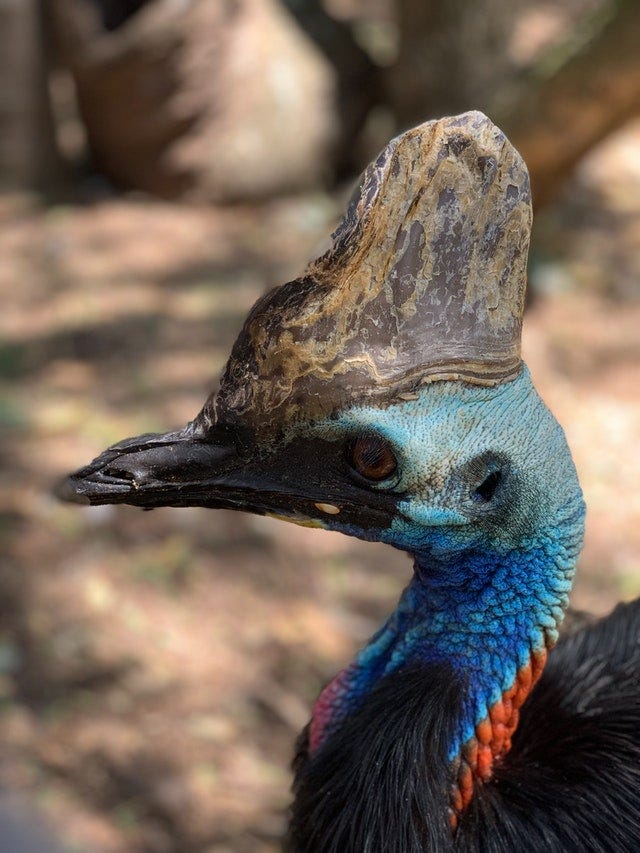
Cassowaries are large flightless birds native to the tropical forests of New Guinea, nearby smaller islands, East Nusa Tenggara, The Maluku Islands and to northeastern Australia. They belong to a group called ratites, which are flightless birds without a keel(cartilage attachment for wing flap motion). Cassowaries are omnivorous, but they prefer to feed mainly on fruit.
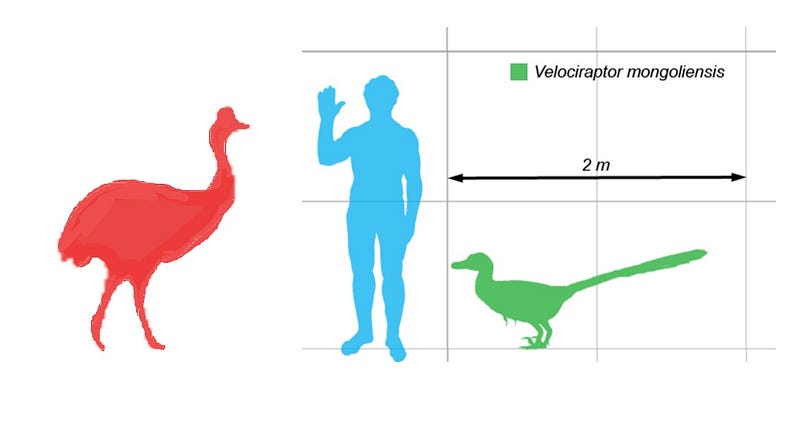
Some of you might be thinking, “well, these guys aren’t dinosaurs, it’s not the same thing”. Well my friend, contrary to popular belief, dinosaurs did not go extinct. Birds are dinosaurs. Infact, there is now a growing consensus in the paleo community that most of the previously discovered dinosaur fossils may in fact have had feathers, otherwise how could species found in the Antarctic Circle or the cold north have survived the harsh winters.
Cassowaries are very wary of humans, but if provoked, they are capable of inflicting serious, even fatal, injuries to both dogs and people. The cassowary has often been labeled “the world’s most dangerous bird” according to the San Diego Zoo’s website. They can grow up to stand 6-feet tall and weigh up to 120 pounds. They can slice open any prey or potential threats with their powerful kicks and long claws — possibly can even tear down doors.
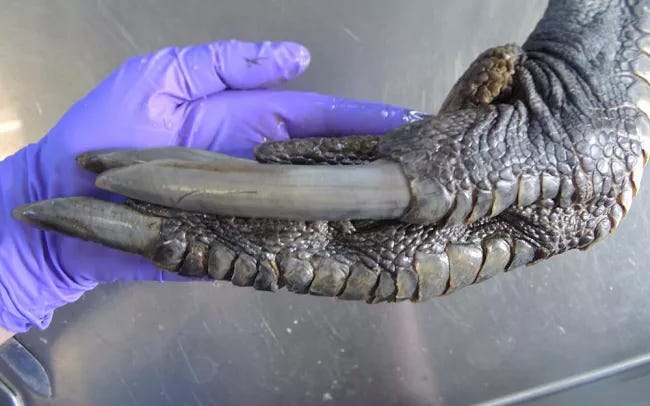
Ignoring the dangers of being in the presence of these animals can be dangerous and sometimes fatal. In 2019, one “Florida Man” who kept a Cassowary as an exotic pet on his farm learned this the hard way and was tragically killed by it.
Where to get Velociraptors
Intact Dinosaur DNA is impossible to find given that all of the genetic material from millions of years ago gets destroyed and replaced with minerals over time. However, suppose we let loose on science and didn’t care much for the ethicacy of any genetic experiments; we can, in theory “recreate” a velociraptor — with very limited fidelity of course. We have genetically and successfully manufactured many plants and animals in the past, so it is very possible to create a creature that do have any semblance to a Velociraptor. We already have the necessary materials, we can map genomes and edit specific genes to do whatever we want. We know what part of the genetic code encodes for what. It’s sort of like LEGO.
Humans are also very capable of creating genetic material from scratch aka synthetic life, but it’s very difficult to create a real functional organism that doesn’t end up destroying itself, so scientists can use a base animal, which will be our sort of “canvass”. It’s something relatively close to a Velociraptor, maybe a turkey or a chicken and then modify it to lose its beak, grow some scales, probably even claws, and we can give it the ability to open doors.
The behavioral patterns will be the only tricky part since we have no idea how they lived their lives millions of years ago. There is also little to no evidence that the Velociraptors were even pack hunters as the 1993 movie suggests, but we can take some liberties and infer from what we see in existing animals today. Also, if we ever find extraterrestrials that have observed our planet for millions of years, aka the Zoo Hypothesis, they might have some valuable insight in the behaviors or even DNA of some dinos, which is pretty horrifying and cool at the same time.
Showtime
Okay, so we have the means now. What’s gonna happen if they were pitted against each other. Well, it’s exactly what you’d expect, the Cassowary can just end it in one kick. I mean, a regular guy can easily take down a turkey, but not a Cassowary as seen in this Youtube video:
That said, I don’t think we're gonna see Dinosaurs vs Modern Bird fights breaking out anytime soon, but I’d certainly pay top dollar to see one.
thanks for reading


