Pixar’s ‘Storytelling Rules’ Will Turn You into a World-Class Storyteller
Rule number 10 is mind-blowing
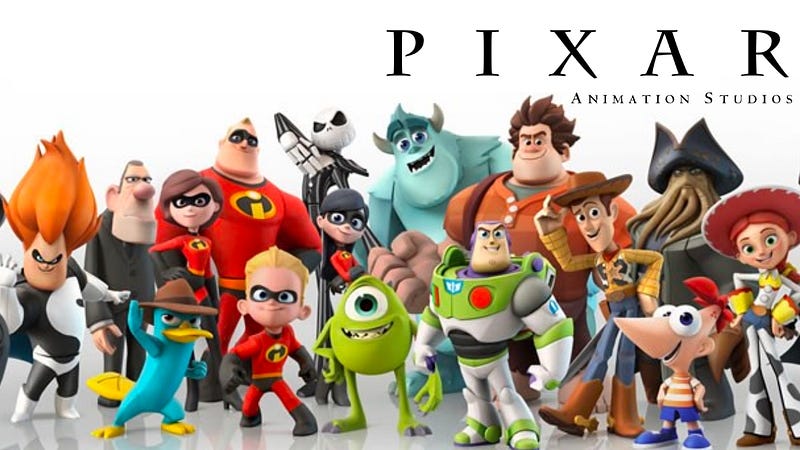
In 2006, Disney CEO Bob Iger and Pixar CEO Steve Jobs sat in an Apple conference room to discuss their respective companies' futures.
Before negotiations, Steve and Bob took a trip to Pixar studies. There, Bob saw first-hand the creative capacity and raw talent Pixar had on offer.
Pixar were light-years ahead (Pardon the pun) of the completion, and Bob knew Disney had to make a move.
A history of innovation
Upon visiting Pixar studios, Bob was blown away by what he saw:
“What I saw that day left me breathless- the level of talent, creativity, storytelling and technology. It was a culture that anyone in a creative business, in any business, would aspire to.”
On his trip, Pixar’s creative team showed him some behind-the-scenes footage of the movies they were working on.
‘Up, Cars, Ratatouille, and Wall-E, to name a few. All four movies went on to gross over $500 million apiece.
Steve and Bob developed a friendship, and ultimately, in 2007, Disney acquired Pixar for $7.4 billion. Disney agreed that Pixar would retain its entire workforce, with the hope of ensuring the Pixar culture survived.
Since that day, Pixar Studios has been the world's leading animation company. Multiple films, including Frozen, Finding Dory, and The Incredibles 2, have surpassed $1 billion at the box office.
Pixar's storytelling secrets were always considered a mystery. That changed in 2011 when storyboard artist Emma Coats shared' 22 Rules for Storytelling.’
Thanks to Emma Coates, here are Pixar's 22 rules for crafting a compelling story.
Highlight as your life depends on it…
Pixars Storytelling Rules
- You admire a character for trying harder than their successors.
2. You gotta keep in mind what’s interesting to you as an audience, not what’s fun to do as a writer. They can be very different.
3. Trying for a theme is important, but you won’t see what the story is actually about til you’re at the end of it. Now rewrite.
4. Once upon a time there was ____. Every day, ____. One day____. Because of that, _____. Because of that,____. Until finally____.
5. Simplify. Focus. Combine characters. Hop over detours. You’ll feel like you're losing valuable staff but it sets you free.
6. What is your character good at, and comfortable with? Throw the polar opposite at them. Challenge the. How do they deal with it?
7. Come up with your ending before you figure out your middle. Seriously. Endings are hard, get yours working up front.
8. Finish your story, let go even if it's not perfect. In an ideal world, you have both, but move on. Do better next time.
9. When you’re stuck, make a list of what WOULDN’T happen next. Lots of time the material to get you unstuck will show up.
10. Pull apart the stories you like; what you like in them is a part of you, you’ve got to recognise it before you can use it.
11. Putting it on paper lets you start fixing it. If it stays in your head, a perfect idea, you’ll never share it with anyone.
12. Discount the 1st thing that comes to mind. And the 2nd, 3rd, 4th, 5th — get the obvious out of the way. Surprise yourself.
13. Give your characters opinions. Passive/ malleable might seem likeable to you as you write, but it's poison to the audience.
14. Why must you tell THIS story? What’s the belief burning within you that your story feeds off of? That's the heart of it.
15. If you were your character, in this situation, how would you feel? Honesty lends credibility to unbelievable situations.
16. What are the stakes? Give us a reason to root for the character. What happens if they don’t succeed? Stick the odds against.
17. No work is ever wasted. If it’s not working, let go and move on — it’ll come back around to be useful later.
18. You have to know yourself: the difference between doing your best & fussing. Story is testing, not refining.
19. Coincidences to get characters into trouble are great; coincidences to get them out of it are cheating.
20. Exercise: take the building blocks of a movie you dislike. How’d you rearrange them into what you DO like?
21. You gotta identify with your situation/ characters, can’t just write ‘cool.’ What would make YOU act that way?
22. What’s the essence of your story? Most economical telling of it? If you know that you can build out from there.
In brief
Storytelling starts in the mind but gets shaped by the readers. To create something memorable, you have to build tension, draw out plots, and think your way through the obvious. No one wants boring.
Start at the climax and work towards it. Don’t be afraid to give your characters polarising opinions. What's likeable to you may not be good for the protagonist.
Seek clarity on how you feel and how you want your readers to feel. Emotions are the glue that holds your stories together.
Original rules posted by Emma below:
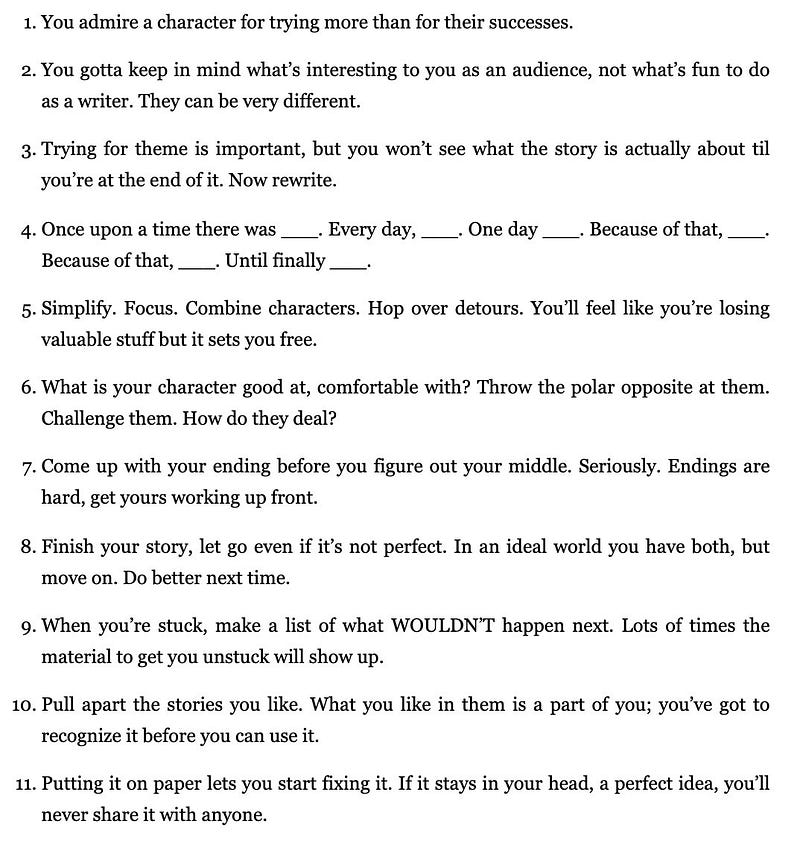
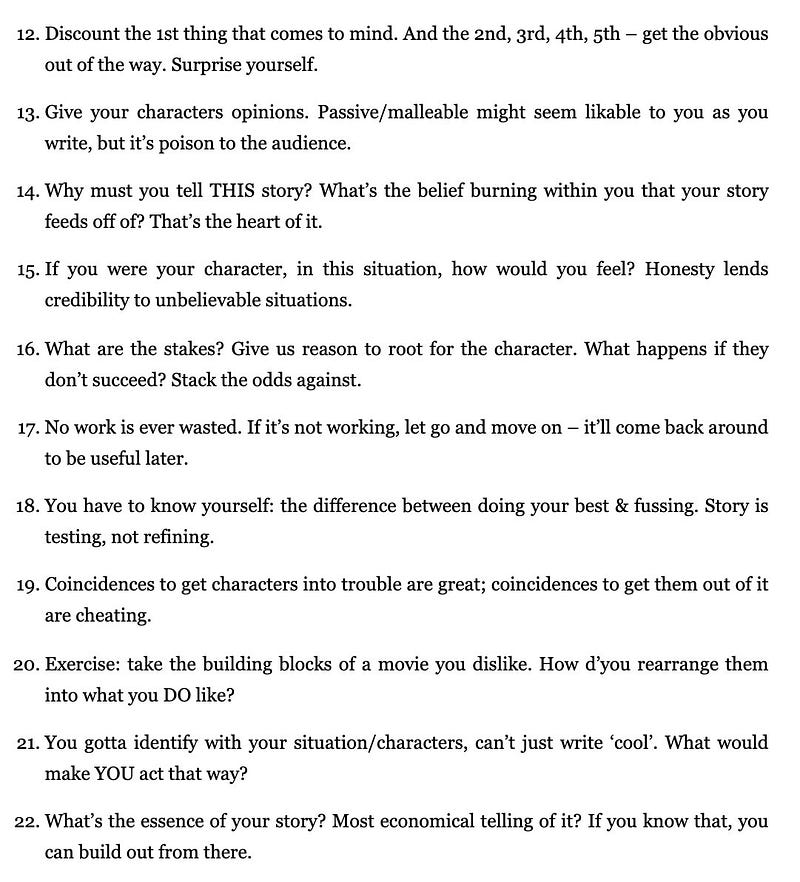
Thank you to Emma for making these possible. Over a decade later, they’re still as powerful as the day they were written.
I put everything I’ve learned about writing into a three-part email sequence. Sign up here to receive it. Unsubscribe anytime.