
TRAVEL TALES
Pitching a Tent in the Wilderness of the Southern Alps
And sleeping next to a crystal-clear mountain river in New Zealand
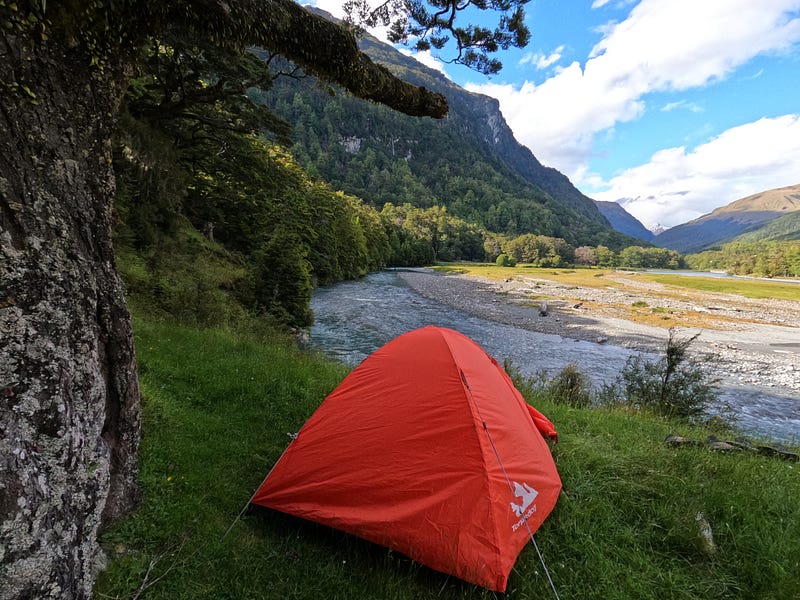
The noise of the flowing river is the only constant sound reaching my ears. Now and then some birds are chirping in the trees behind our tent but they become silent soon. The cries of the seagulls stopped with the setting sun and so did the rain.
While I had been dreaming of exploring New Zealand for a few years now, the kind of exploring I wanted to do in the country required us to get some additional equipment.
We’ve done many multiple-day hikes in Europe already, but we’ve never had to carry our bed with us as we stayed in huts which provided all that. While there are plenty of huts in New Zealand, they have nothing to do with the luxurious mountain huts you can stay in the Alps.
Off we went shopping during the week of Black Friday specials in Queenstown. Sleeping bags and sleeping mats alongside some other camping equipment we bought, but we couldn’t settle on a tent so we decided to just borrow one.
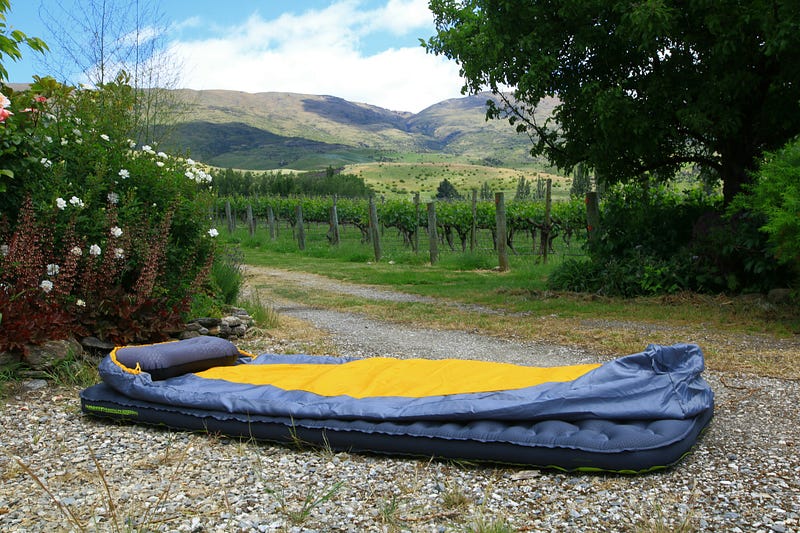
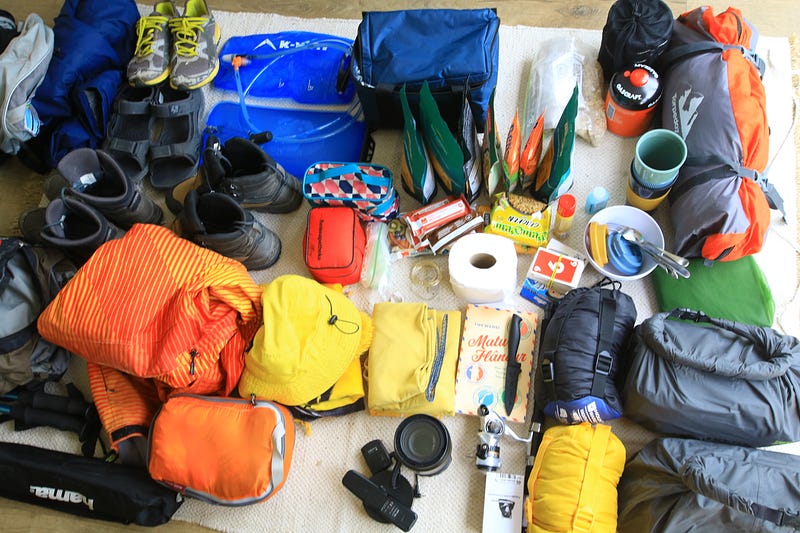
Yes, that was a lot of stuff that all came together and as usual, David kept on saying I was packing too much while I wouldn’t back down on my first aid kit, book and camera equipment.
We packed together as David was worried I’d sneak in some extra unnecessary stuff and loaded the backpacks more or less evenly. On Tuesday morning, we threw them into the car and drove to work.
It was noon when we left the place and headed into the mountains. We quickly drove through Wānaka and then left the civilization behind us as we were passing countless cattle and deer farms on our way into the Southern Alps.
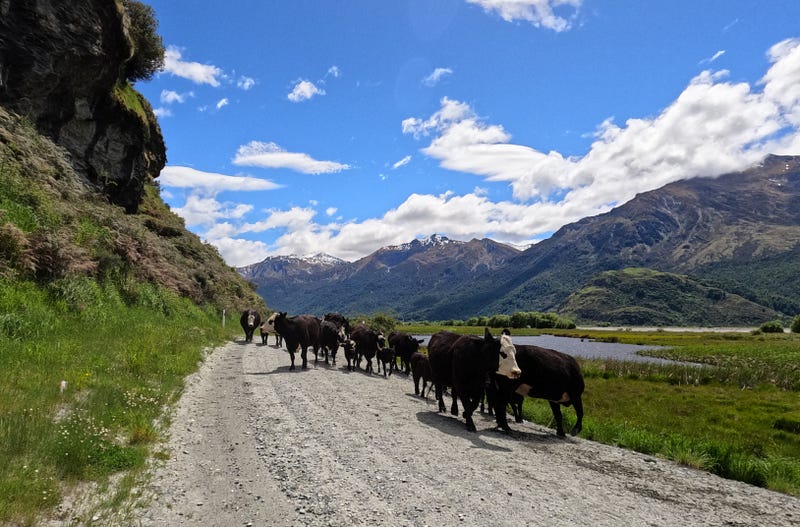
We were following the gravel road with our tiny Toyota Vitz in the hopes we could get to the parking lot which was said to be the starting point of our hike.
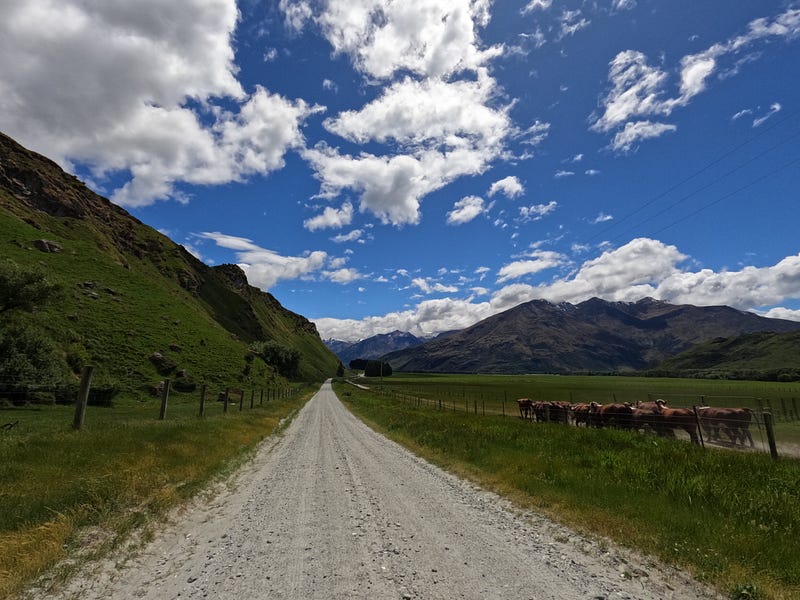
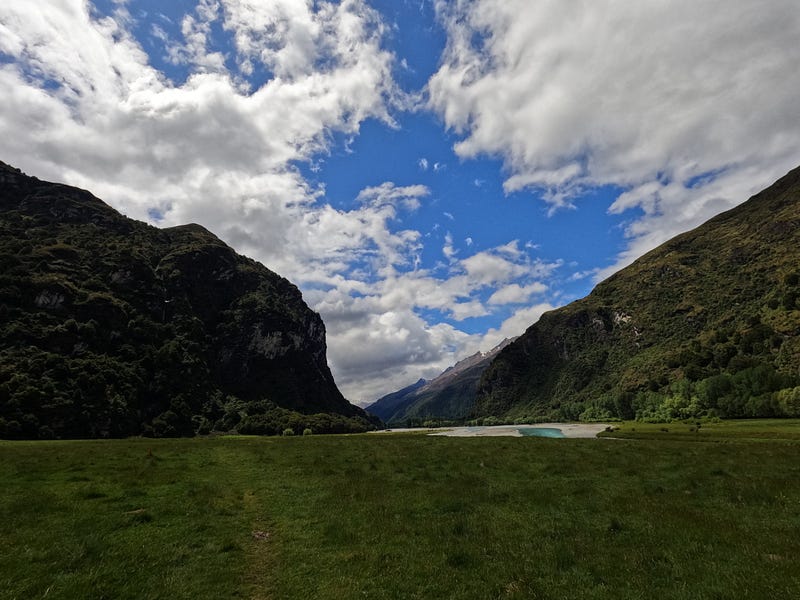
We had to cross a ford, as they call here small streamlets flowing over the road, and soon reached the parking lot next to the suspension bridge leading across the strong flowing but beautifully colored turquoise-blue Matukituki River.
Applying one layer of sunscreen and one layer of insect repellent, we then lifted our backpacks and turned our backs toward the last sign of civilization we should be seeing for the next 48 hours. Three cars parked on a grassy patch.
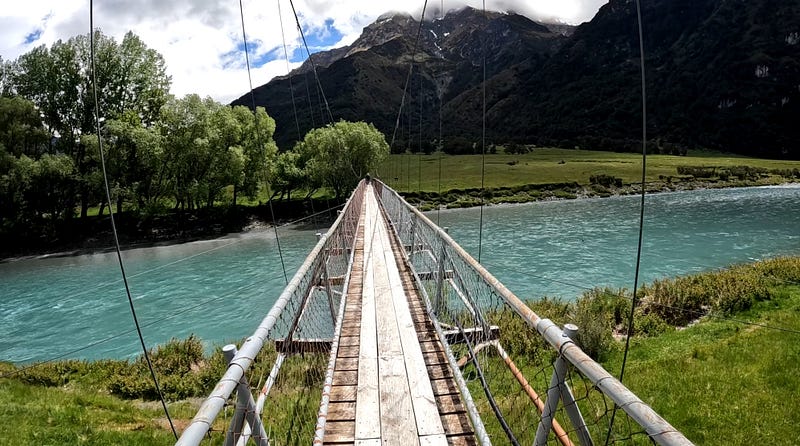
While we had intended on camping just on the piece of land behind the bridge as we had expected to arrive rather late after work, we now noticed this wasn't an option as the area was fence-free but still private land occupied by cattle.
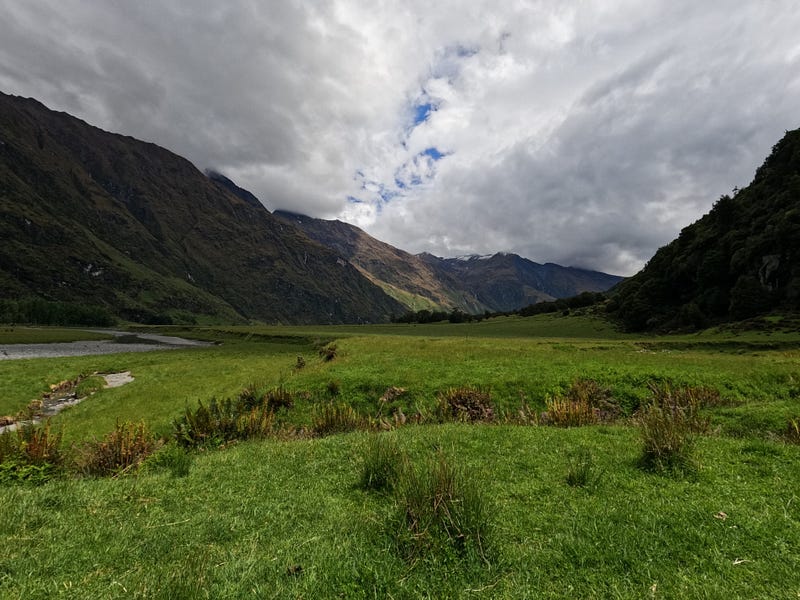
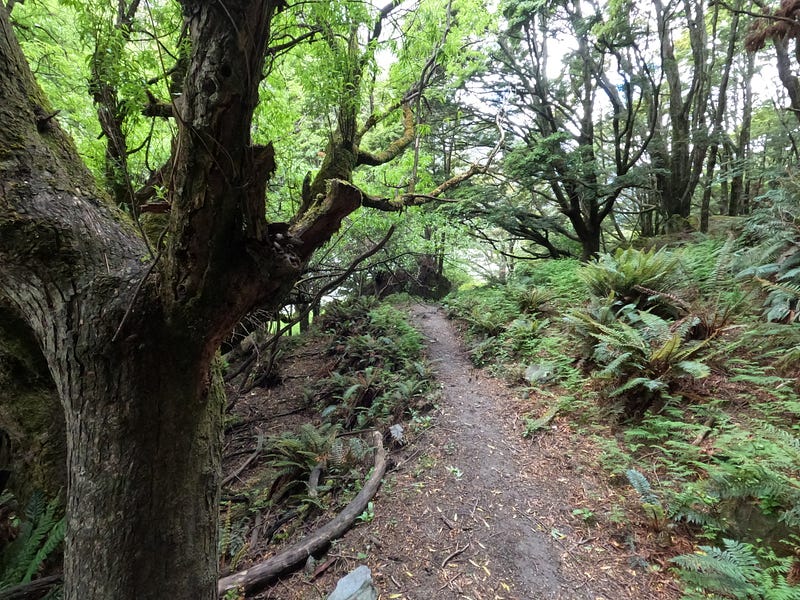
As it was still early in the afternoon, we simply continued to follow the trail toward the East crossing the meadow and then entering a stunningly beautiful pristine beech forest.
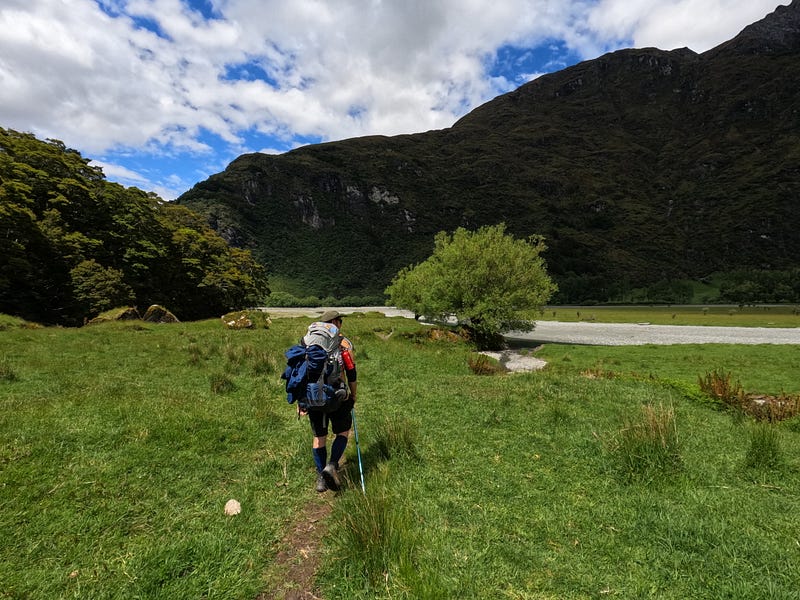
Birds were chirping in the trees above our heads and the steady sound of the flowing river just to our right sounded so peaceful as we stepped across rocks and roots.
Ferns were covering the forest floor while fairytale-like ancient trees with thick but gnarled stems were lining the narrow trail. Looking up, we could see a variety of leaves cresting a lush forest canopy.
We left the forest just as the first animal gate forced us to stop. We were aware of the rules. You leave every gate as you find it. And in case you are wondering, no farm gates in New Zealand are locked. They just have a chain hooked around anyone can open and close.
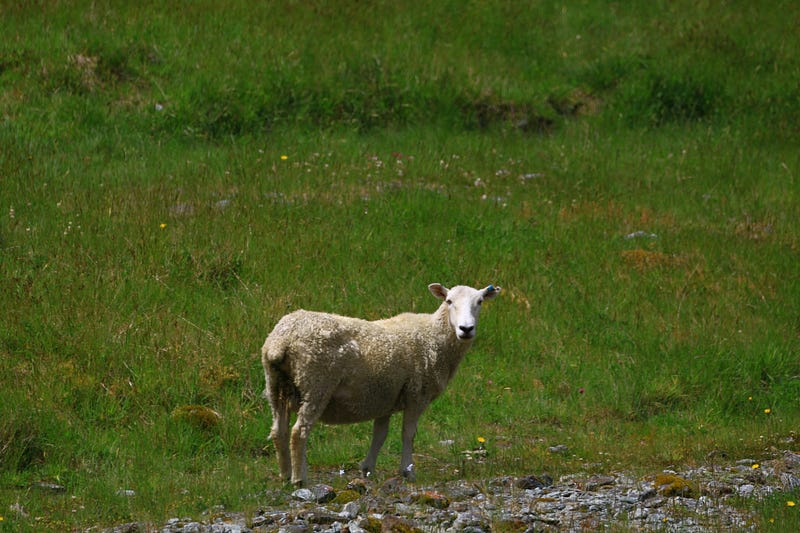
We passed meadows where either sheep or cattle were grazing or both of them mixed. Some ditches in the gravel road were filled with water but we could walk around it.
Only when another small river was flowing over the road I saw no way around taking my shoes off and wading through the water. While I had my hiking boots and socks already in hand, David kept on walking downriver looking for a place to cross - with his shoes still on.
A small argument happened as I said to him he shouldn't get his shoes wet now, at the beginning of our trip and he responded harshly he wouldn’t get wet as he stepped into ankle-deep water.
I had arrived on the other side already and was putting my socks back on when I saw how the water got deeper where he walked and shouted a comment across. He responded he didn't get any water into his shoes and added that the spray I had put on his shoes worked like magic as they came out dry from the water.
I swallowed my next sentence as he was telling me not to spray our hiking boots the day before our flight from Germany. I ignored his opinion and sprayed them regardless. Which ended up being a good choice as this wasn't going to be our only water crossing.
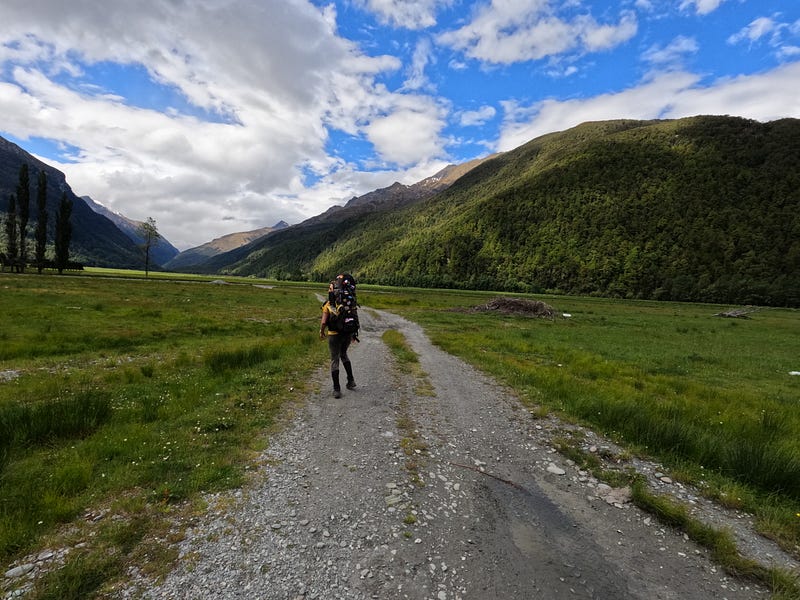
Our packs were slowly getting heavy and we sat down for the first time catching our breath and giving our backs a break while watching more sheep, cattle and geese by the river.
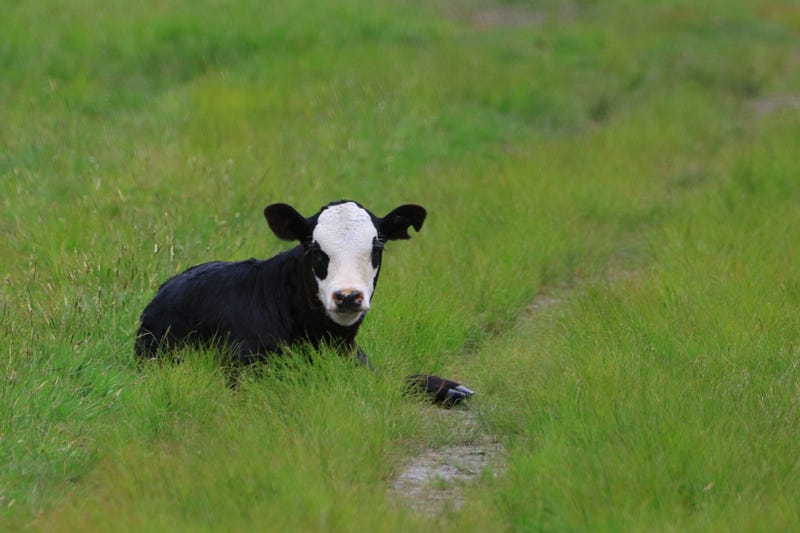
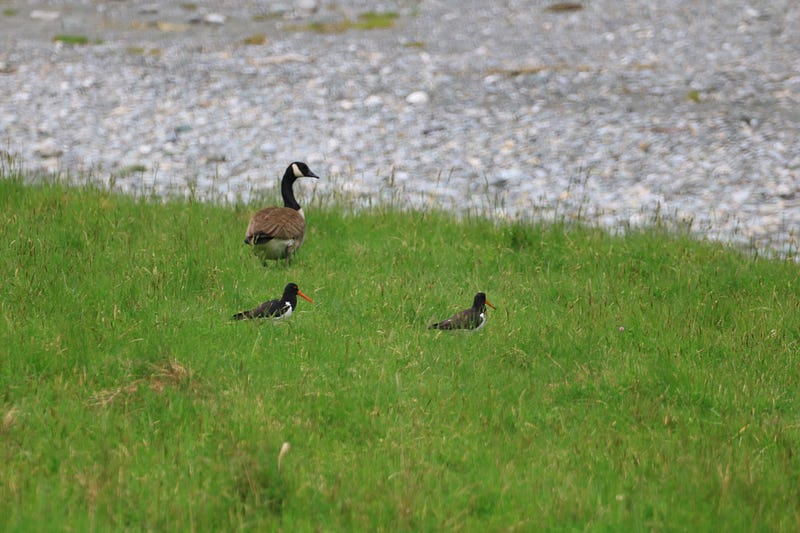
Back on the way, we passed two guys who had been hunting in the valley telling us about great camping spots just behind the suspension bridge. I didn't know about another bridge deeper in but we were happy to hear this as all we saw were fenced cattle farms and no space or place to pitch a tent.
Also, those two hunters were the last humans we would see for another 48 hours from then on. The valley was ours.
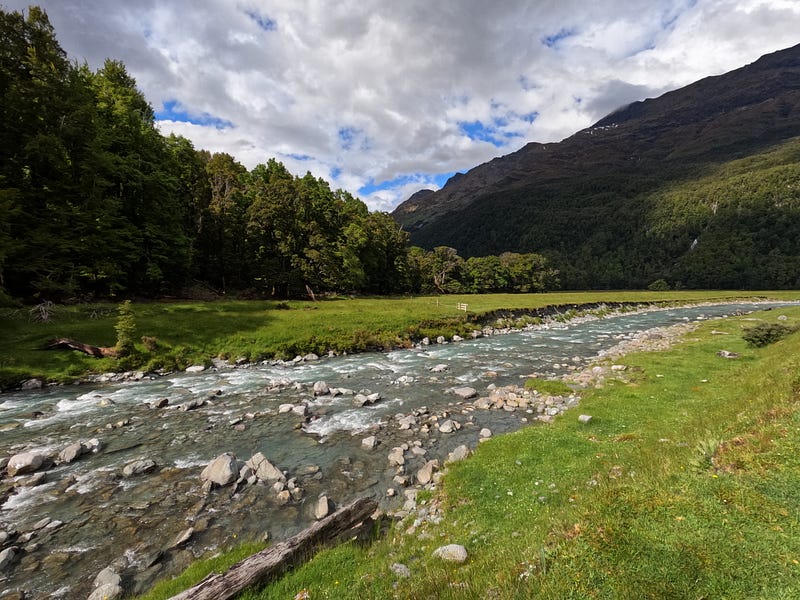
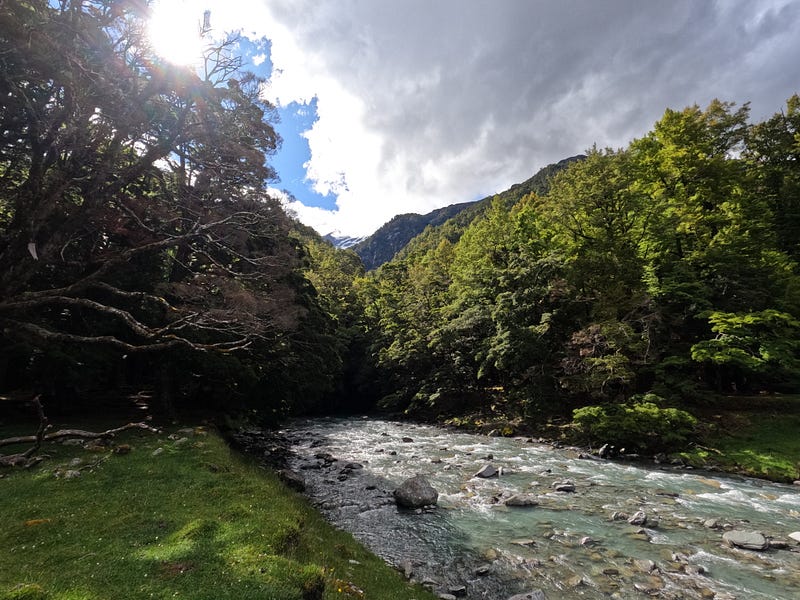
While we both felt the weight of our backpacks as we were walking across the seemingly endless cattle farms, we were at the same time pulling ourselves to the wilderness which was beginning just there, by the next river crossing.
Looking at the size of the river we were glad these guys said bridge as I might have turned around otherwise. Just a few steps into the forest we saw the tiny but mighty bridge.
A sign was telling us it was okay to have two people on the bridge but with three on it, she would break. We took no chances and walked one after the other across not without stopping in the middle and looking down into the deep gorge filled with crystal-clear blue water.
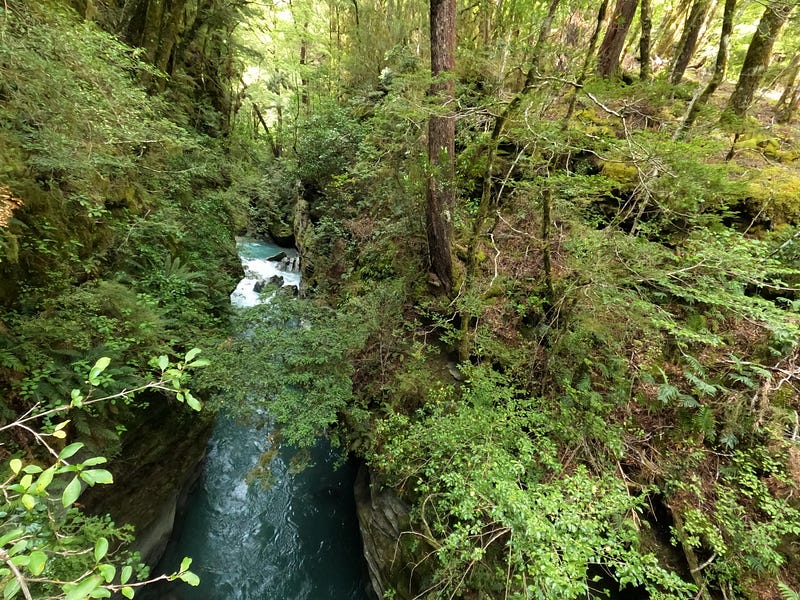
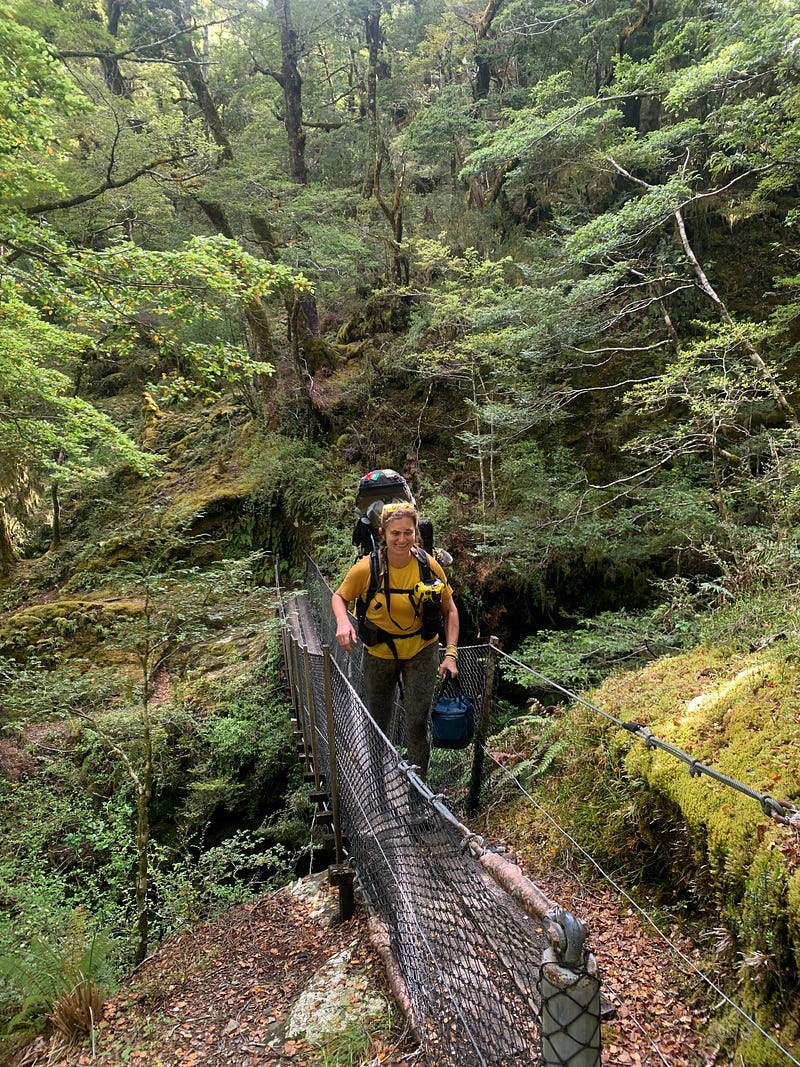
We now reached the point from where the guys told us we could find camping locations and also where I had hoped to find a place as the valley soon would turn into a gorge with all sides covered in trees which would leave much space for a tent.
I walked ahead across the meadow and into the forest when I knew already where I wanted to camp. I saw the edge of the forest on an elevated plateau and was sure there would be some flat ground up there.
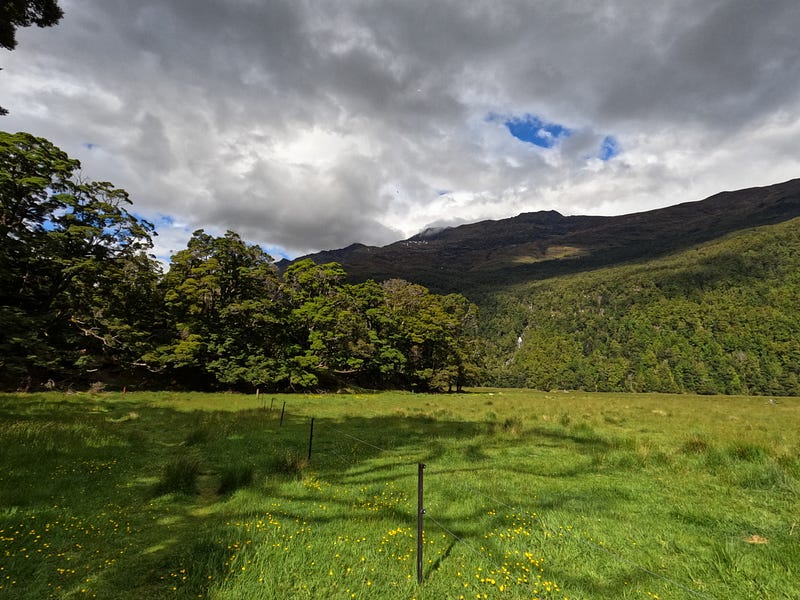
Leaving my backpack next to the trail, I headed toward the river to scout out the area.
This was when I fell in love with the place.
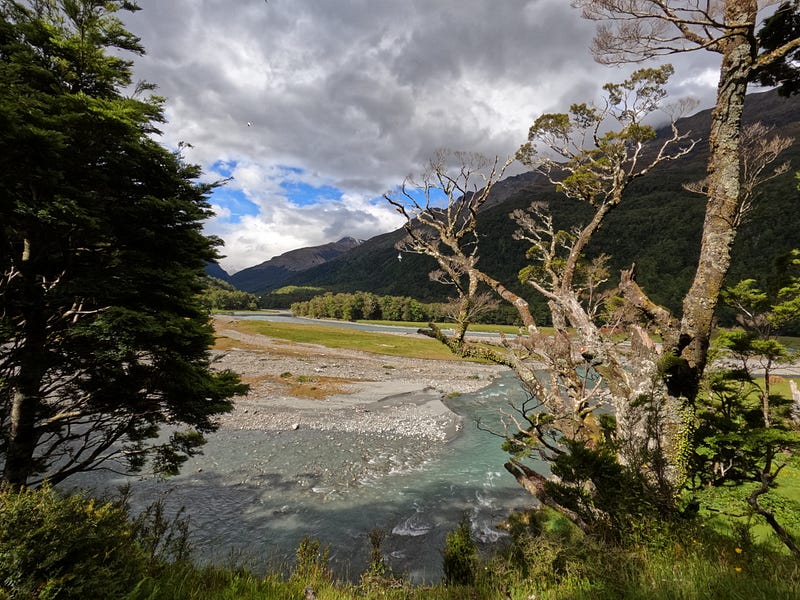
Right where the Matukituki River was splitting into two arms and taking a bend around the forest, a small plateau was lifted from the riverbanks offering not only protection from potential high water levels but also a soft bed hidden from any potential hikers.
It didn't take much to convince David of my selected location, who was long over carrying his heavy pack and would have settled anywhere if you'd asked him.
But while he was just happy to put his load down, I was smiling from one ear to another watching the group of seagulls resting on the island between the two river arms and then spotting a family of Canada Geese first waddling across the rocks and then sliding into the water.
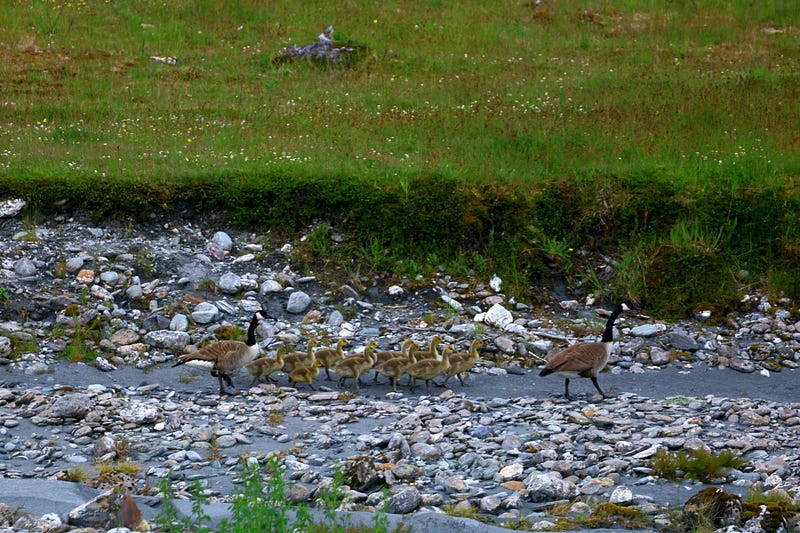
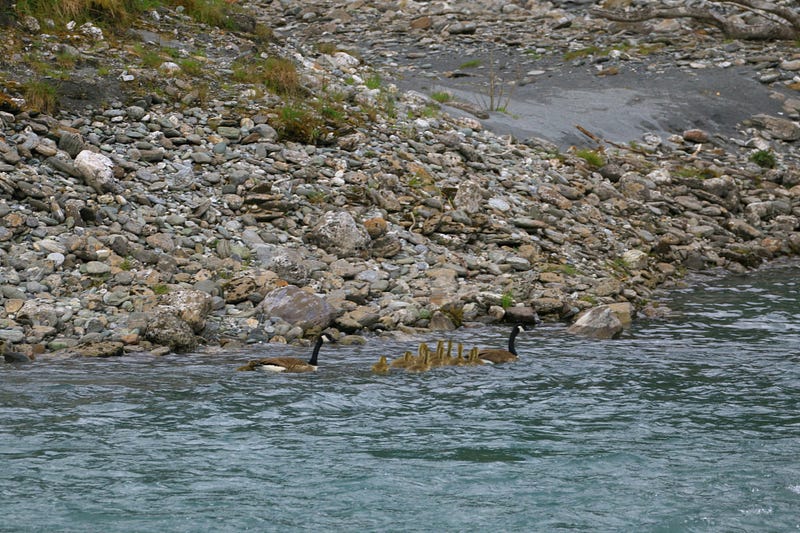
It didn't take us long until the tent was standing and we knew we had a safe place for the night. But with still lots of daylight left, we walked along the edge of the plateau until we found a safe place to descend to the river which would be our water source for the duration of our wilderness camp.
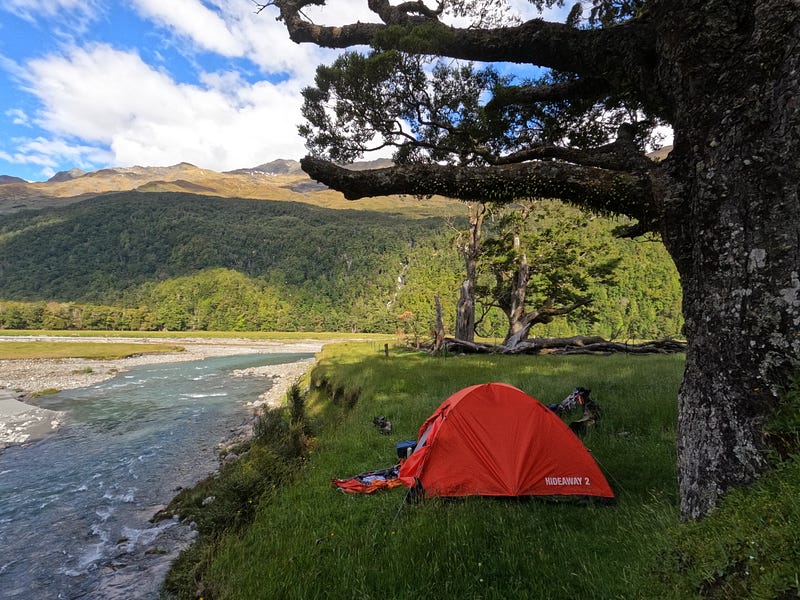
Yes, camping like this is very much legal in New Zealand. As long as you stay off private property and camp a minimum of 200 meters away from hiking trails. And don't forget to leave no trace but some bent blades of grass.
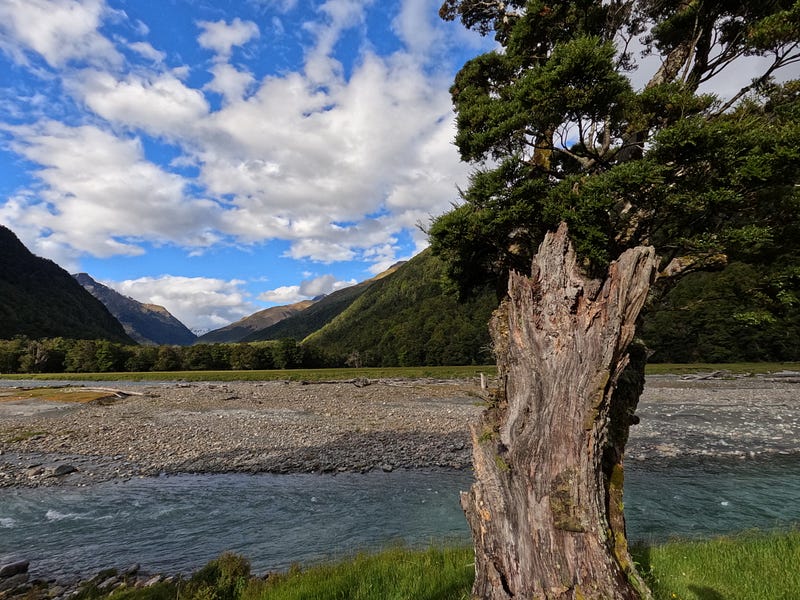
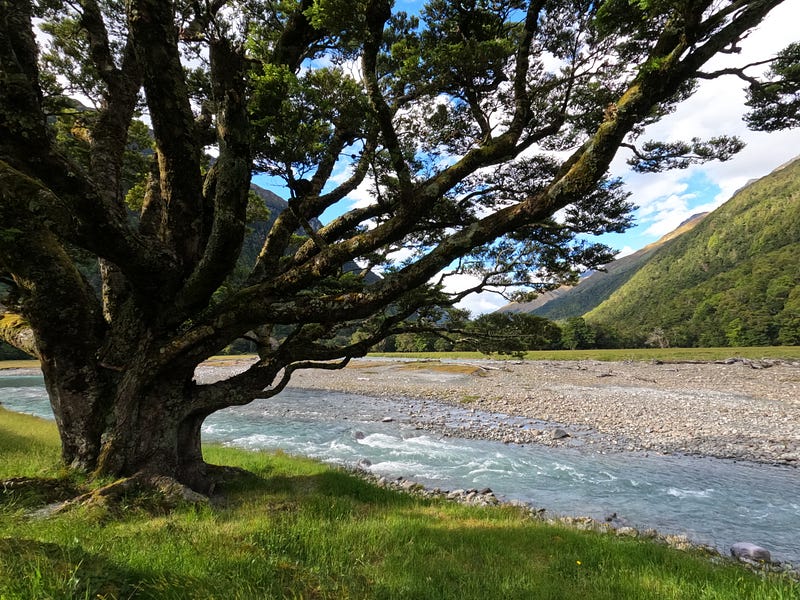
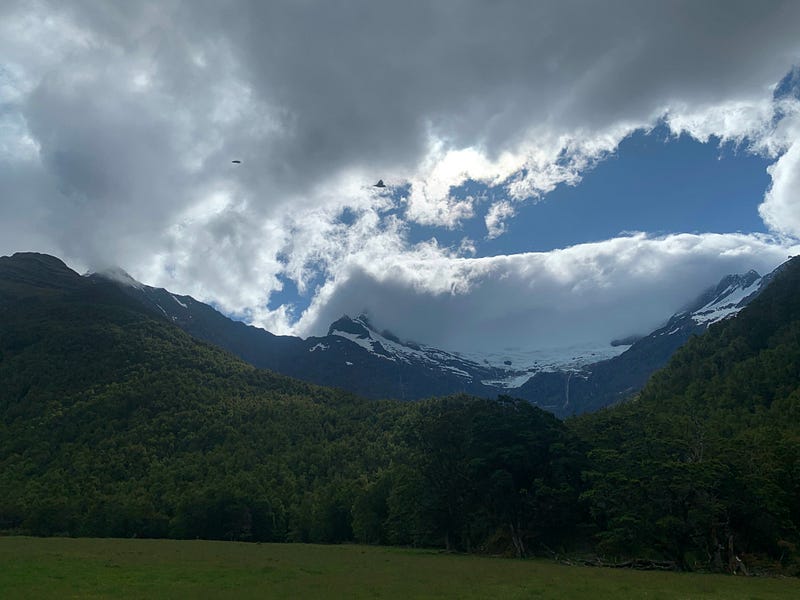
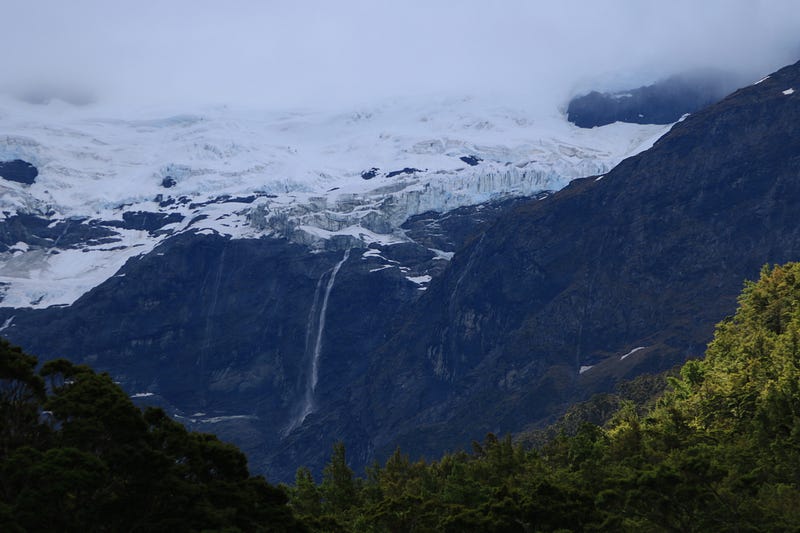
When we reached the riverbank and turned around to look at the camp, we stayed with our mouths wide open gaping at the majestic glacier hovering above the lush green forest.
Cascades of waterfalls were running down the cliffs leaving the glacier and entering soon after the thick beech forest. The same water we'd be drinking the next few days. Crystal-clear but ice-cold.
Excerpt of my journal written in the evening
I still can’t believe it. I’m lying in our tent overlooking the East Matukituki River as it winds down its way from the narrow gorge covered in beech trees. Far ahead I can see some snow on the mountains but all nearby slopes are covered in the lush green of the native forest.
Letting my eyes swerve across the landscape, I spot more and more waterfalls splashing down in the thick forest. And they are just there with no people and no crowds holding up their phones at the constant falling of water. These waterfalls are barely even noticed by anyone.
Just ahead of us, the river widens out and splits into two arms leaving a huge sandbank covered in rocks and partly overgrown with grass in the middle of the floodplain.
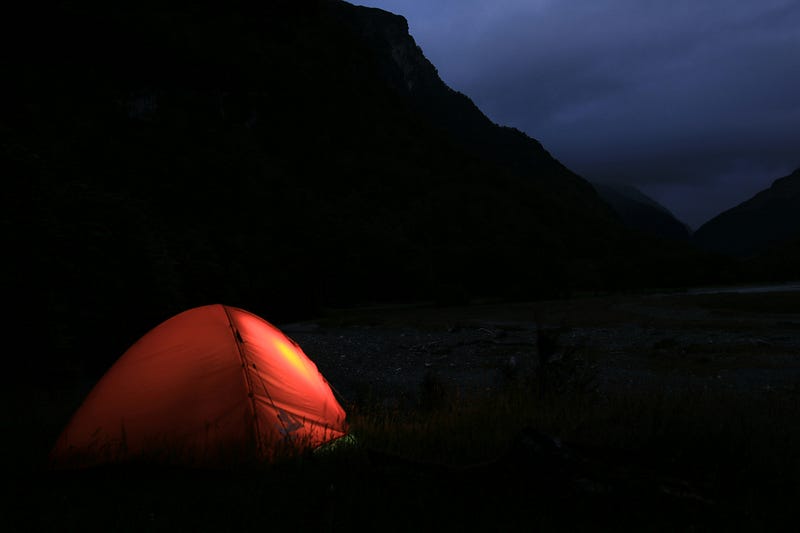
We pitched our tent right next to the river a few meters elevated on the edge of a meadow. While David said earlier today he wanted to have the opening of the tent downwind and I agreed to it, once we decided on this camping location, I ignored the agreement from earlier.
The tent was going to open toward the river and the valley. Into the wind. No discussions accepted.
And it seems we’re lucky. After a few raindrops earlier, the night calmed down. No wind and no more rain.
A new sound just appeared. Someone is snoring next to me. I guess this means it is time to sleep.
If you’re interested in my New Zealand adventures, subscribe to my newsletter to stay updated or check in on my new list regularly. Join my email list here if you would like to read more photo essays.
Shutterstock | Instagram | YouTube | Mailchimp | Amazon | Redbubble