TRAVEL | LGBTQ+
Pink Money, Mental Health, & the High-Yield LGBTQ+ Travel Industry
Uncovering the reciprocal relationship between travel, identity, and mental health
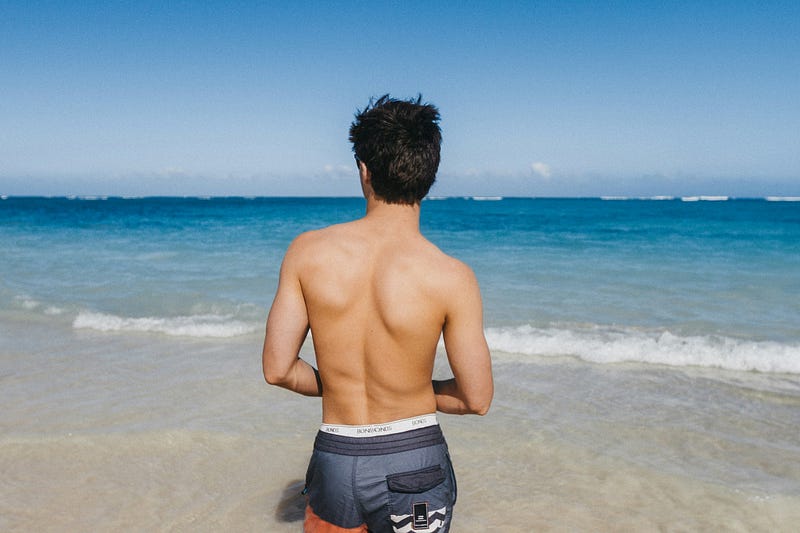
The liquid stung my mouth as I swallowed the first gulp. A sweet but tangy taste rested on my tongue as the beer wound its way into my body. Content, I put the Corona bottle down on the table with a relaxed thud; not too loud and not too carefully. The sun coated my forearm, and I took a deep breath as the warm sensation filled my soul.
I looked into my handsome husband’s eyes through his sunglasses. He was just smiling and taking in the ocean view. Seeing him so relaxed at this moment affirmed our decision to stay here just a few hours longer.
The crowded beach was packed with hundreds of people. Families, couples, locals, and tourists were seizing the beautiful hot day. On the right, a volleyball game was in progress, while off to the left, a mother and father helped their toddler take what may have been her first steps ever on a boardwalk along the ocean.
In the distance, I spotted two men walking. Carrying small knapsacks and short shorts, one was wearing a belt bag and the other confidently navigated the challenge of loose-fitting flip-flops as he strolled along the main road. It was easy for me to recognize this was a gay couple.
There were many gay people in this Spanish beach town. I had never been anywhere that felt so integrated and casual despite that fact. Here, LGBTQ+ people were as much a part of the social structure as the couple with the toddler. Built-in and accommodated.
My partner and I had chosen our beach destination because we knew we would feel safe. We even chose a hotel that catered specifically to gay people. Not only had one of my friends raved about this cute town years earlier due to a big gay bear party that happens there annually, but we knew we wanted to go somewhere that holding hands in public wouldn’t get us in trouble.

The steps that led to our travel decision felt very personal to my husband and me. However, thousands of queer people around the world are making similar travel decisions every day, and this has surprising implications for the global economy and the mental health of the queer community, implications that might not seem obvious at first glance.
The Financial Incentive to Market Towards Pink Money
When conducting an interview a few years ago, I was introduced to the concept of pink money. In the 1980s and 90s, queer people would mark their money with a pink highlighter to communicate that the queer community supported an organization — and to bring awareness to the purchasing power of the community as a whole. Essentially, pink money refers to the collective purchasing power of the LGBTQ+ community.
Since that time in the 80s and 90s, and especially due to great strides in social progress, corporations across the globe have taken note of pink money.
The purchasing power of the queer community is roughly around US $4.7 trillion annually.
Even though corporate interest in the queer community has had some not-so-fun implications (i.e. Rainbow Capitalism and/or Chick-fil-A), marketing toward pink money has been built into the business strategy of savvy organizations. In an article released in 2023 by UK-based LGBT Capital, an asset-management firm and investment advisor, the purchasing power of the queer community is roughly around US $4.7 trillion annually.
4.7 trillion dollars is not an amount you can sneeze at, even on the global scale. Not only that, Generation Z, the next cohort already making its way into financial data, has a larger proportion of members who identify as non-heterosexual, with estimates predicting their earnings to surge to $33 trillion by 2030. As for travel, Pink Money is expected to contribute $568.5 billion to the tourism industry by 2030.
Travel Has Positive Mental Health Outcomes for Queer People
Having an impact on the tourism industry and establishing the queer population as a financial force to reckon with on the world stage is, however, not the reason we travel. Unsurprisingly, our queer identities can shape our travel decisions. Surprisingly, those decisions can have an impact on our mental health.
In a study published in Current Issues in Tourism, researchers surveyed a sample of over 473 cis/trans queer people who self-identified as lesbian, gay, or bisexual. The findings have fascinating implications for the mental health of our LGBTQ+ community.
…for queer people travel signifies an opportunity to construct and enhance identity.
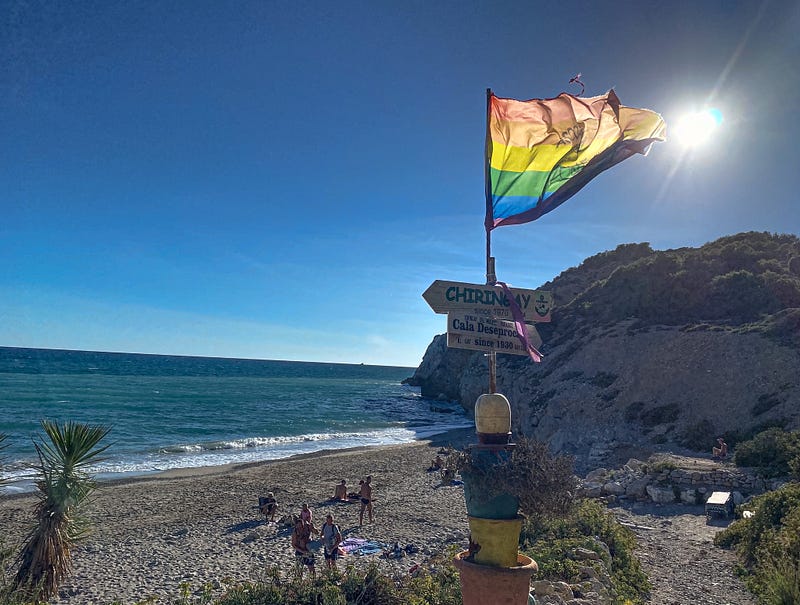
The researchers tried to uncover the psychological processes that lead to queer travelers’ decisions. They found that travel can build our resilience and strengthen our wellbeing.
The theoretical foundation used by the researchers drew from the field of social psychology, specifically from “Identity-Based Motivation Theory” (IBMT). IBMT proposes to explain how our identities (e.g. parent, student etc.) influence our decisions. For example, IBMT could suggest that a person who identifies as LGBTQ+ would be motivated to travel to a certain location because of that identity.
However, the research goes deeper than that. For example, the researchers linked queer travel to the concept of psychological resilience, defined as:
An individual’s psychological ability to function well, thrive or recover amidst adversity.
One of the study’s conclusions is that queer people can essentially affirm our inner identities through travel. That affirmation, whether it be through boosting our self-confidence or connections with the fellow LGBTQ+ community, makes us feel good, and that in turn helps build up our resilience against any challenges we may encounter in other areas of our lives.

Let’s dig into this idea. Imagine you’ve spent the vast majority of your life living where you stick out like a sore thumb because of your gender identity or sexuality. Maybe you have a few allies, but you ultimately feel alone because no one else experiences the world quite the way you do. You become a target for bullying. You feel shame and depression. This life is all you have known.
You know that there is nothing wrong with you and that it is possible to belong to this world.
Then you decide to travel to San Francisco, since you’ve heard it’s a friendly place for people who share your identity. You walk around the gay neighborhood where every store seems to wave a Pride flag.
You see and meet people who express themselves the way you do. Whether it’s the store clerk who recommends a book on gay rights or someone at a bar who flirts with you for the first time, you’ve found people who don’t make you feel like a black sheep. They see the world the way you do and don’t punish you for it.
You feel seen.
When you travel back home, you have new knowledge and experience. You know you are not alone. The next time you feel that there might be something wrong with the way you think or act, you remember meeting people who think and act the same way. You know there’s nothing wrong with you and that it’s possible to belong to this world.
The next time an insult is hurled at you by someone who sees you as less than, you feel less alone than you did before you travelled. Knowing you are not alone gives you the strength to brush it off.
This is called psychological resilience!
The potential this unlocks is immeasurable.
The research just discussed is important for the LGBTQ+ community, because many queer people could benefit from travel. Travel allows us to access safe spaces where we can explore and experience queer culture, and for some, reinvent themselves. These experiences in turn help LGBTQ+ travelers maintain and enhance their resilience and wellbeing, something many in our community need.
One thing that this all makes clear is that creating opportunities for queer travelers is a win-win. It benefits the travelers and the communities who host them.
This is just like the win-win that occurs when a society/culture opens up to accepting queer people. When broad acceptance occurs, a whole segment of the population suddenly becomes activated to be the best version of themselves.
The potential this unlocks is immeasurable.
If you enjoyed my article and want to read more as I write, please subscribe to email updates on my profile page by clicking the envelope under my photo.
If you want to support my writing you can always buy me a coffee (for which I and my caffeine addiction would be grateful) ☕ by clicking this link.