
Picking up the Pieces After a Soldier’s Suicide in Iraq
What I had to do as his psychiatrist and how it all affected me

I’ve learned suicides make a statement to those who remain: “This person found being among you unbearable and lost hope that would never change. Now there’s peace.” Most don’t want to understand that message. They refuse to listen or shame the person’s memory or call the act a sin. But a few hear it and can’t stop listening.
For some soldiers, often already struggling with overwhelming stressors, its message can become a siren song. It mixes with the impulsivity of young men and women and the ubiquity of weapons in a combat zone to create high risk.
In 2008, I was the only psychiatrist on a U.S. Army base outside Mosul, Iraq. There were about four thousand soldiers living there, in a variety of units, from transportation and logistics to armored calvary to special operations. I was part of an Army Combat Stress Control Unit (Army-lingo for a mental health team) that worked across northern Iraq. Our local team consisted of me, two social workers, and three enlisted technicians.
Our job was to keep soldiers functioning and engaged in their jobs as best we could. Removing someone from Iraq was always a last resort, and difficult. Only a doctor could recommend it, not a nurse or psychologist or social worker. Then the soldier’s commanding officer had to agree and provide at least one other soldier to escort the mentally ill, and now stigmatized, soldier as far as the American military hospital in Germany. There were no psychiatric wards for U.S. military personnel in Iraq or Kuwait. If the commanding officer agreed, I then had to make the arrangements for transportation from our remote base to a nearby military hospital, such as in Mosul or Balad.
The process often frustrated me. I had to convince commanding officers that a mental health disorder, something they couldn’t see like a broken leg, required them to lose a soldier. Then I had to persuade medical and flight logistics workers that a soldier’s mental illness required evacuation but that soldier remained safe enough to travel on a routine, non-medical flight. In our part of Iraq, the Army medical leadership refused to transport soldiers with mental illness in a medical helicopter. They didn’t believe their problems warranted the time or fuel or risk.
I’d been in Iraq two months before my patient killed himself. In that time, I arranged two medical evacuations for severe thoughts of suicide that didn’t respond to the treatment our small team offered.
In the week after Darren killed himself, I had to evacuate three soldiers. All of them were already patients of mine, and so it felt like we were both giving up on our work together. They’d understood his suicide’s message, and couldn’t resist it. Fortunately, the company commanders on base appreciated the dangers of a mental health crisis after Darren’s suicide. None of them questioned my recommendations.
One soldier worked in the same unit as Darren. He had PTSD from prior deployments and had sought out returning to Iraq, thinking it would resolve his symptoms. I found that many soldiers suffering from PTSD believed that returning to a combat zone would somehow heal their sense of disconnection from everything around them back in America. But as most with PTSD discovered, returning to a war zone only made this soldier feel worse. He came to me a few days after the suicide agitated more than I’d ever seen him. He said it was because he understood why Darren had killed himself. It scared him that the suicide made sense. He felt like his back was “now up against the wall.” I feared if I didn’t get him out of Iraq, he might kill himself or someone else. His company commander was already worried about him, and agreed to send him home.
The second was a medic who worked at the base’s small medical clinic. I’d been treating her for at least a month. She told me how she’d seen Darren’s face, and to her, he’d looked so peaceful. She envied him because all his troubles had ended. She couldn’t get that imagined peace out of her mind. I’d been working hard to help her, but we both became helpless against her growing hopelessness.
The third soldier had never met Darren. She’d only heard about what happened. Years earlier, another psychiatrist had diagnosed her with borderline personality disorder. Typically, soldiers don’t remain in the military with that diagnosis, but the Iraq war had caused army recruitment and retention to plummet. She’d struggled with friendships since her arrival to Iraq, and now Darren’s suicide had inspired her. Dying sounded less painful than life. She’d decided to walk out into a mine field on the edge of our base. Her sincerity startled me. I told her commanding officer she’d reached the top of my list of soldiers on base most likely to commit suicide. He agreed to my recommendation.
It took days of calls and paperwork to get all three of them sent out of Iraq. I believed, and still do, the military leadership there made the process difficult, frustrating, and exhausting to keep it from happening too much. Leaders outside mental health care, both non-medical and medical, often expressed fears that soldiers would “line up outside a shrink’s door” to go home if it seemed easy. That attitude simply showed their biases against mental illness, and, I believe, their anger at soldiers who threatened or actually killed themselves.
Days after Darren’s suicide, the chaplain on base wanted to hold a memorial service. The chain of command balked. Normally, if a soldier died in Iraq, there was an outdoor, public service with gun salutes. Darren’s chain of command said they didn’t want to celebrate a suicide. They feared its message and wanted to silence it.
Many soldiers in his unit expressed frustration with their decision. Then two weeks after his death, his chain of command allowed the service, but it would be closed, small, and indoors. Only soldiers in his company could attend. Our Combat Stress Control Team, including me, wasn’t invited.
Our boss on base contacted the commanding officers up Darren’s chain of command. First the company commander, then the battalion commander, and then the brigade commander’s aides. The brigade commander himself was often hard to reach, because he commanded over six thousand soldiers spread across Iraq. Eventually, the chain of command agreed to two of our techs attending to provide support to soldiers there, but I still couldn’t go. For me, their decision meant they blamed me. My presence would reek of his suicide and remind others they too could reject the Army and life and their requirements.
I wanted an opportunity to mourn Darren’s loss with others. I wanted us to say good-bye together. The refusal to allow that left me frustrated. And deep down, part of me feared they were right it was my fault. If so, I should have hidden in my office in shame to keep from spreading suicide like a contagion.
I was a Navy psychiatrist deployed with an Army unit. So far in my time with the Army, I’d learned its leaders prided themselves on having an “open door policy.” That meant soldiers could come to them and voice concerns. I’d also seen that it pained most of those same leaders to allow such visits to occur.
I asked my boss to call the brigade commander’s office back and tell them I’d like to exercise his open door policy to discuss the situation with him. I requested to get an appointment on his calendar.
Within a day of my request, I was approved to attend Darren’s funeral. Months later, at a meeting about something else, I respectfully asked the brigade commander why he hadn’t wanted me to attend Darren’s funeral. He denied any knowledge of the decision. Maybe one of his aides had made it. Maybe he just didn’t feel he had to explain himself to me. I’ll never know.
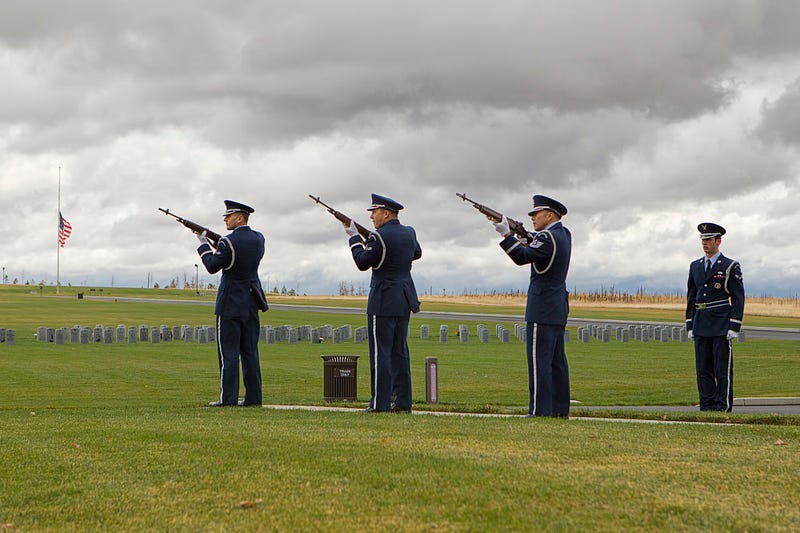
The memorial service was in a makeshift chapel with seating for fifty. It was standing room only. I believe all of his company, over one hundred soldiers, attended. The chaplain played recorded music over a speaker system and then spoke of how Darren was remembered as a comedian, the life of any group. He had many friends in his unit and on the base. Tears of loss rolled down my face as I mourned him with others.
As I listened, I thought of him looking at me on a bench at our clinic. He’d sat there a few hours before he killed himself. We’d made eye contact, but he didn’t ask to speak or see me. I learned later he was there for the anger management class I’d referred him to. But he didn’t go to it. He returned to his unit and the killed himself as his unit prepared for a mission. I’ll never know if he’d already decided to die by then or if something triggered an impulsive act. All we had about his final state of mind were his words on a note: “Sorry Sarge, I just can’t see the light at the end of the tunnel no more.”
I still have the program from his memorial service. I sometimes look at it, but don’t like to. It’s still too painful.
While I fought to attend his memorial service and to send severely ill soldiers home, I continued to treat others. I helped them process Darren’s suicide and the feelings it brought up about their own risk of doing it. During the weeks that followed, our team also had to prepare for three different inspections because of the suicide. So many inspections gave a sense that something terrible emanated from our clinic. Perhaps the suicide was our fault, and leaders had to make sure we weren’t spreading it. Our commanding officer came from a nearby base, partly to provide support but also to see how we were caring for soldiers. Another inspector was the senior Army psychiatrist in Iraq. If there were a device to detect any lingering suicide in our clinic, I’m sure he would’ve wanted to use it. The final inspection I remember in the most detail because it entirely focused on me and my care of Darren. The Army and Navy decided to have the senior Navy psychiatrist in Iraq review my care of him.
This psychiatrist was a reservist, which meant I didn’t know him from Navy hospitals back in America. Before he arrived, our commanding officer told me not to worry about the review. Others had already read my notes (without my knowledge or permission because they were in an electronic system) and felt everything was in order. For this official review, there were set steps he was supposed to follow. I was told the review would consist only of a record review and interview. But he would sit in judgement of me and my care of Darren. Did I misdiagnosis him, prescribe him the wrong medication? Did I miss a warning sign? My anxiety grew as the day approached for his arrival. The night before, I couldn’t sleep.
It turned out the senior Navy psychiatrist ignored the scope of his investigation and did whatever he wanted. He interviewed other providers in our clinic about me. He interviewed Darren’s commanding officer and friends in his unit. My supervisor felt he was a bull in a China shop.
His interview with me lasted several hours over most of a week. He went through my notes and a questionnaire Darren had completed, and asked me line by line what I meant or what I thought Darren meant: “He checked here that he’s married. What did he mean?” Sometimes he seemed to disagree with me about my own notes. But ultimately, he found I’d treated Darren appropriately and met standard of care.
That was relieving professionally, but not personally. In my mind, I still held myself to blame for Darren’s death and then for the consequences that I was witnessing from it on the base. Fortunately, shortly after the investigation cleared me of any wrongdoing, my command released me to go to Qatar for four days of Rest and Relaxation. I was able to coordinate the trip with another Navy psychiatrist I’d trained with who was in another part of Iraq. It was good to see him. We shared our miseries together. He hadn’t lost any patients there, but was regularly mortared and rocketed. Explosions had killed soldiers near where he slept, and he struggled with the chance of it happening to him. It was good for both of us to see each other and try to relax.
I left Qatar alone again with my thoughts of Darren. I had feared what would happen next with my patients. Over the remaining three months, no one pressured or second-guessed me more than myself. I struggled to make sure others felt their lives remained bearable. Fortunately, there were no more suicides, but the pressure to prevent them crushed me. I didn’t understand at the time how most of that pressure was unnecessary, because, like my colleague experiencing the rockets falling around him, whether someone decided to commit suicide remained largely out of my control.
It’s taken me years to deal with the effects of that deployment on myself. Like most in the military, even though I shoved down my feelings, they still affected me. I was suicidal when I first returned from Iraq, and then developed inexplicable medical problems. I struggled with isolation, irritability, and nightmares. The struggles my patients with PTSD faced sounded similar to my own, including my own struggles with stigma.
Studies show that nearly 60% of service members with mental health concerns don’t seek treatment, often because of stigma. Even though I was back at Walter Reed and could have accessed mental health care for myself, I never considered doing so because of stigma. I didn’t want to be a shrink who needed a shrink, even though I encouraged my colleagues and subordinates to seek out their own therapy to deal with the day-to-day struggles inherent in our work. I imagine it’s the same in other professions: police officers, pilots, etc. Shame remains powerful, and as stigma continues, suicides in the Army continue.
Nearly a decade later, when I retired from the Navy, a psychologist said after evaluating me: “You know you have it too, right?” I didn’t want to accept I have PTSD from my experiences and from listening to the traumatic stories of thousands of service members over twenty years. Even as someone who fought against stigma in the military, I suffered from it for myself. But I embraced the reality of my own PTSD and took care of myself. Now, sharing my experiences has also been healing. It’s stopped any lure of that feeling I can’t change and no one can help me. For a long time now, I’ve had no need for suicide’s message. I see light at the end of my own tunnel, and know if I continue to work at it, I can make it there.


