
"Our old fax machines seem to be more secure than our sophisticated technology to safeguard the patient information — As of 2018 — Not because of bad technology, but because of bad strategy!" — Adam Tabriz, MD.
Physician Practices, And Fax Machines: Orthodoxy Or Retort?
Are There Better Options Than Fax Machines For Medical Practices Today? — That Is The Question!
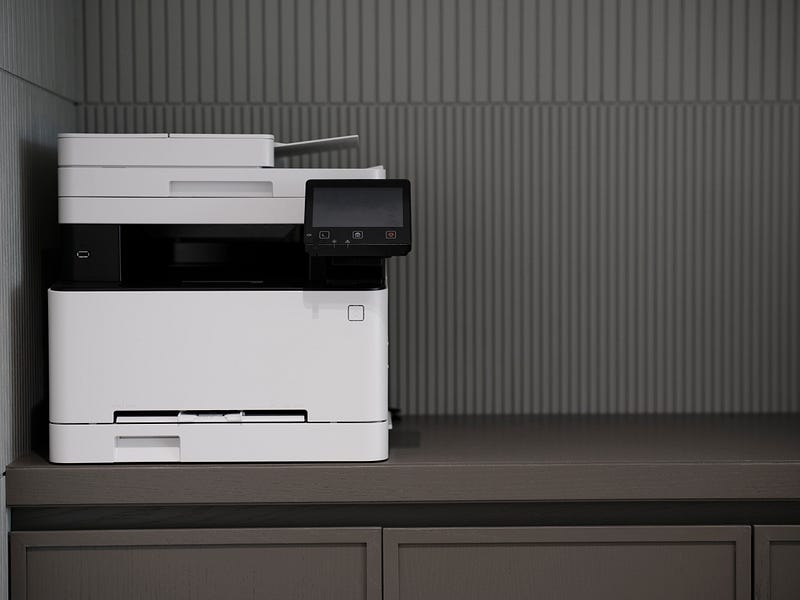
Resistance to adopting various technologies by people is one of the most controversial issues affecting our time and history. Most of us may be familiar with phrases our parents and grandparents used:
In the good old days, we did not have a calculator and did all of our complex mathematical calculations on paper and even better. Or, those who decline to use digital news still prefer daily newspapers delivered to their door.
Without a doubt, those who resist adopting new technologies in their daily lives had parents who said they did the same when adapting what they were fighting to give up.
Generations have passed, resistance after resistance, and technology has prevailed. The ultimate difference was the delay in the adoption. Such uncertainty can be detrimental, particularly within the current healthcare domain. But, negative attitudes around adopting new technologies are never without reason.
Many have a negative opinion of a particular technology, like past experiences, worry of losing a job, health concerns, loss of freedom, and privacy, which can be pretty diverse.
Fax machines had their share of delays before they could find their way through the medical clinic doors.
The history of fax machines dates back to 1846 when Scottish inventor Alexander Bain worked on chemical mechanical fax-type devices. Since then, technology has had to go through stages of utilities in various industries only to be taken up by physician practices. Even then, it was probably the force of increasing necessity to get prior authorization from insurance companies to treat patients that led medical practice to adopt fax machines.
After decades of using the good old fax machines, some medical procedures are reluctant to give them away, just like those who refuse to give up newspapers for internet-based information.
Convenience And Efficiency May Be Not An Ultimate Factor, But They Are A Big Factor In Holding On To Fax Machines.
Technologies are here for a reason. To make human life healthier, efficient, secure, productive, and convenient. Or if they flop, not creating life opportunities at less not to burden their lives further.
Logically, when we look at the inception of the fax machine, we can notice that initially, there may not have been much use for them, as medical care settings were more straightforward and unsophisticated.
In medical practice and healthcare, amid increasing administrative burdens and the status quo of insurance billing practices, physicians had to find a tool to help them thrive, even though it went against their will.
Today, too, physicians are facing a similar yet much bigger dilemma.
Amidst the increasing complexity of insurance reimbursement schemes, physicians must adopt a technology that meets such reimbursement criteria.
Indeed, medical practices that refuse to give up paper medical records to the Electronic Health Record (EHR) Systems get away with using Fax machines to a certain extent.
Even those who have adopted EHR systems still, at large, use fax machines for tasks like getting authorization from insurance companies to treat patients or share records with another physician. Then again, that is not going to suffice even if it does now because fax machines won't provide convenience and efficiency to physician practices anymore. That is like when the telephone and simple paperwork failed before Fax machines found their space on the clerk's desk.
The primary concern today is whether physicians must give up the Fax machine.
The issue is that current solutions seem more inconvenient than fax machines.
According to the American Medical Association, those factors like information overload, slow system response times, disproportionate data entry, inability to navigate the system quickly, note bloat, dread of missing something, notes geared toward billing, and not patient care.
Electronic Health Record Systems are some of the most significant contributors to physician administrative burden and burnout. And since EHRs are the technologies replacing the Fax machines, indirectly will also contribute to the physician's resistance to giving up Faxing. Moreso, some of the new technologies are costly and highly lack user-friendliness.
Fax machines are transparent and reliable, unlike modern systems with proprietary hidden algorithms and workflows. That is the source of the biggest concern to "Blackhat thinkers" such as physicians. That is a genuine concern in the medical realm, and why still over 70% of medical clinics and hospitals use Fax machines in some form or another. That is a considerable number given our technological achievements in the health information arena in recent decades.
One can scream loud the buzzwords and rhetorical slogans like how technology can improve physician practices and how much they will miss out if they don't give up Fax machines and embrace modern EHRs. But at the end of the day, the physicians and the patients have to make the ultimate sacrifice by putting up with solutions that make their lives less constructive and saddled.
Physicians and patients deserve to control their destinies, yet most current solutions deprive them of flexibility, transparency, and options.
So, in the face of that, why should they adopt a system with which they are not comfortable and acquainted?
Fax machines are the backbone of medical clinics' logistics, even though they are outdated and deficient. But they still work and fulfill their tasks.
Fax machines won't be around forever, as they will reach the faith that occurred to cassette players and video recorders during the 1990s. But, it can't happen in the insurance and billing industry terms. It could happen with physician and patient-friendly systems. The insurance industry can also speed that up by implementing transparent, automated, standardized prior authorization protocols. Then, the incentives to give up Faxing insurance documents to more reasonable technologies will outweigh physician opposition.
But, I wonder if insurance companies want a transparent and convenient patient care authorization process, not to mention caring about physician and patient comfort.
All in all, the use of Fax machines by medical practices today is more about retorting to the best of what they can embrace, not a usual orthodoxy as we read in history.


