
Photojournalist Documents Her Own Damaged Family
Amanda Mustard’s ‘Great Photo, Lovely Life’ takes us into a family ruptured by sexual abuse

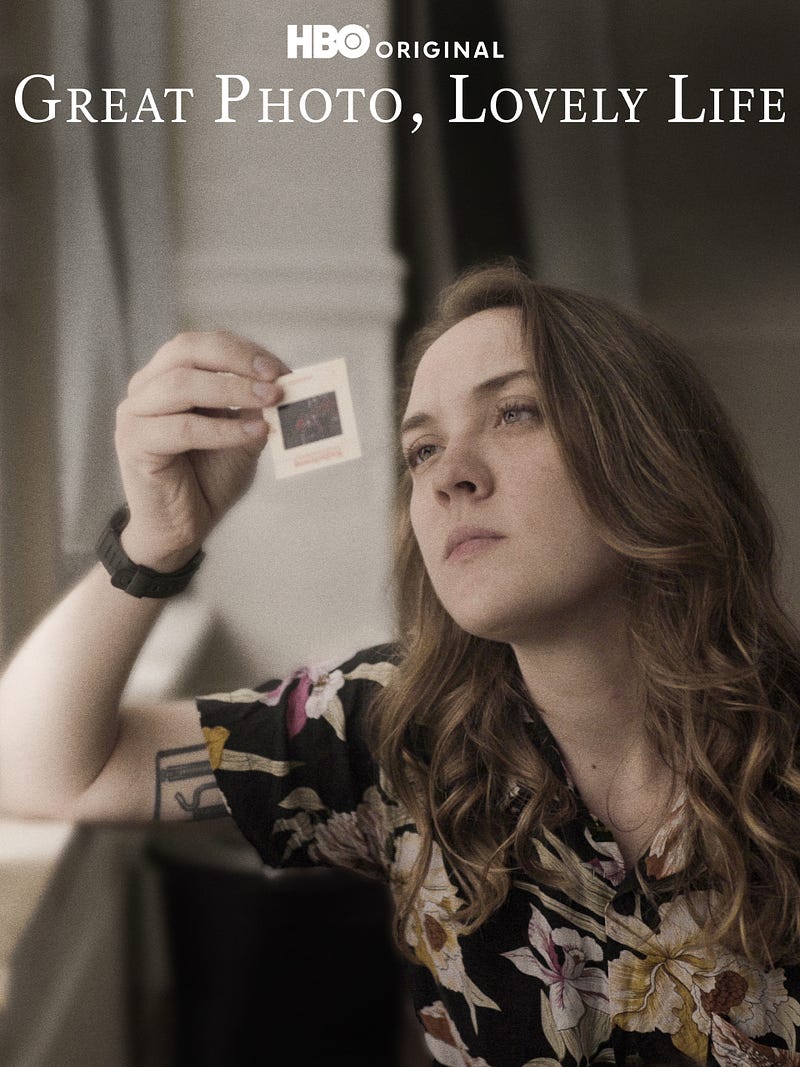
‘Great Photo, Lovely Life’ (2023), directed by Rachel Beth Anderson and Amanda Mustard. Produced by Ark Media and HBO Documentary Films. Full credits available here.
There are few things worse than having your life destroyed by somebody who is supposed to take care of you. When this occurs over several generations, the damage is exponentially greater.
Amanda Mustard had the courage to come home from a career of documenting global societies to open the wounds in her immediate family. Some would say she is pouring salt in those wounds; others might say she is cauterizing them.
Amanda Mustard and her older sister Angie grew up in a family still nominally led by their grandfather, Bill Flickinger, a chiropractor who lost his license because of multiple complaints of sexual abuse registered by his patients. Still he escaped trial and imprisonment until, during his subsequent career wandering the US in an RV with his loyal wife, selling stuff at fairs, he attempted to rape a young neighbor who actually blew the whistle on him. He was convicted but only served two years.
In the course of the film, with her mother Debi’s help, Amanda goes into old files to identify her father’s possible victims in the time he was working as a chiropractor. She sends letters asking if they would like to make contact with her. She apologizes for any ways her grandfather might have hurt them.
Ultimately one victim is willing to come forward for the film (a number of others talk with Mustard off camera). ‘Bonnie’ and Amanda return to the Pennsylvania chiropractic office where Bonnie was serially abused from the age of four, often when her younger siblings were in the room with her and her mother was just outside the door, in the outer office.
The scene where Bonnie and Amanda sit down with the current chiropractic generation, at the Herd Chiropractic Clinic, to discuss Flickinger’s abuse decades earlier is maddening and heart wrenching. Bonnie must forgive, the doctor urges her, because otherwise she cannot heal. He and his wife then force Bonnie and Amanda to enter a touchy-feely prayer circle with them, for a chat with Jesus. It is as creepy as it sounds. If anything, Bonnie’s wounds have indeed been ripped open.
Early in the film, before we know the extent of his crimes over the decades — which include having been quietly dismissed from a previous clinic — we meet Amanda’s grandfather Bill in his then-retirement home. He is jolly and charismatic, joking with the other residents. When Amanda asks him gently in private a few questions about his history of abuse, he seems to answer straightforwardly.
And that is where one of the most chilling of the film’s several lessons enters. Sure, he replies; he never meant to hurt anyone. He believes in God. He believes God forgives all sins. And the girls — well, they pretty much threw themselves at him. They liked it.
That’s when we start to understand that Amanda’s sister Angie was one of his victims, not just once, as her mother has believed, but numerous times, as she was left at their house to be babysat, and as she was sent on summer trips with her grandparents in their RV.
So there is the film’s second lesson. Even when abuse is singular (almost never) and includes just one perpetrator and one victim, the ripples move outward to everybody in the family, in the school, in the community. Everybody. And everybody is damaged in some way. And the damage is explosive when the abuse is denied or covered up.
Angie and her mother Debi have never discussed Angie’s abuse. Angie has grown up with a deep distrust of her mother for allowing her to stay with her grandfather — for allowing her to be anywhere in his vicinity. Debi allowed herself to believe that after a single incident in which she caught her father abusing her little girl, she put an end to it and it would never happen again. She allowed herself to believe that her mother would protect her granddaughter, despite the palpable evidence that her mother knew of her husband’s patterns of abuse — for heaven’s sake, he is fired for this.
Not to mention that, of course, Debi herself was abused by her father Bill. How could that not have happened?
So the abuse, the secrets, and the lies replicate themselves over generations and destroy relationships and whole families. Debi has been part of the exploration project until, near the end of the process, after Angie finally confronts her, she just can’t take it. She will not take responsibility for facilitating the abuse, however unwillingly or unwittingly. Not only does she shut down communication with her daughters, she buys an RV (shades of her parents) and leaves her home town.
It hurts. The whole thing hurts. One of the most effective dimensions of the film is the series of discussions and confrontations, particularly with Bill, as he moves rapidly toward the end of his life in seedier and seedier assisted living facilities, and of course with Debi.
I found myself responding as our society responds. I wanted them to back off, to leave it alone, to say what’s done is done — to carry that damn camera out of the room.
But that is the problem. I carry that problem of squeamishness, the drive to look away, inside me. And I have worked with survivors. I have professional training in understanding PTSD that people carry after sexual abuse and violence.
And I’m going to argue that I am not alone in that first impulse to wish it away, despite my rage and horror and empathy with the survivors.
In addition to our stubbornly persistent cultural misogyny, that unwillingness to force the truth — that anxious desire to play nice, no matter what — is why we have allowed generations of children to fall prey to monsters like Bill Flickinger: men who at best admit that they have a disorder that they just haven’t been able to control. Whoops. Too bad.
The film is powerful in bringing home those lessons:
— that unrepentant men like Flickinger live long lives while the flotsam of their destructive behavior floats unheeded around them;
— that the guilt of collusion, no matter how well intentioned or sparked by fear, corrodes all those around the abuser;
— that it takes immense courage to challenge the narrative — even that of an old, sick, altogether pathetic perpetrator.
The film is shot with one camera, in addition to footage from phones and video chats and audio from voice messaging. It is completely appropriate that this photojournalist uses family portraits, snapshots, and old video clips to take her viewers back into the lives of the family. We see the melancholy and pain behind children’s forced smiles. We see Bill’s wife’s ‘brave’ front of the loving, loyal wife (until Debi swoops down to Florida, where her mother is dropping weight from stress, anxiety, and untreated cancer, and spirits her away from her domineering husband to live her final months in Pennsylvania). Oh — Bill’s wife’s birth name was Selesta, but Bill didn’t like it, so he renamed her Lois. Another erasure of identity by a man who rode roughshod over everybody in his vicinity.
I found an article discussing negative reactions to ‘Great Photo, Lovely Life.’ I skimmed the reactions, hoping that they weren’t part of our cultural package of denial. In fact, they seem to have been mostly from people who do not understand that the film itself is a profound critique of this culture of denial and coverup. Some of the critics, for example, hated the prayer circle, as I did. They seem to believe that the filmmaker was using religion to justify sexual abuse. I think they missed the moment when Amanda looks at her camera person with raised eyebrows, one of the only ruptures of the fourth wall in this agonizingly personal film.
I am grateful that ‘Great Photo, Lovely Life’ has found a wide distribution not only through Max but also additional streaming services. I am grateful for Mustard’s courage in filming this story, participating in it, and allowing it to remain unfinished, like, alas, most abuse stories.
The more survivors who find their experiences echoed and their anguish validated, the more we may be able to stop turning away as the abuse flourishes in our own neighborhoods, schools, churches, and homes.