
Philosophy of Science #1: Applying Aristotle’s Arguments to Data Science
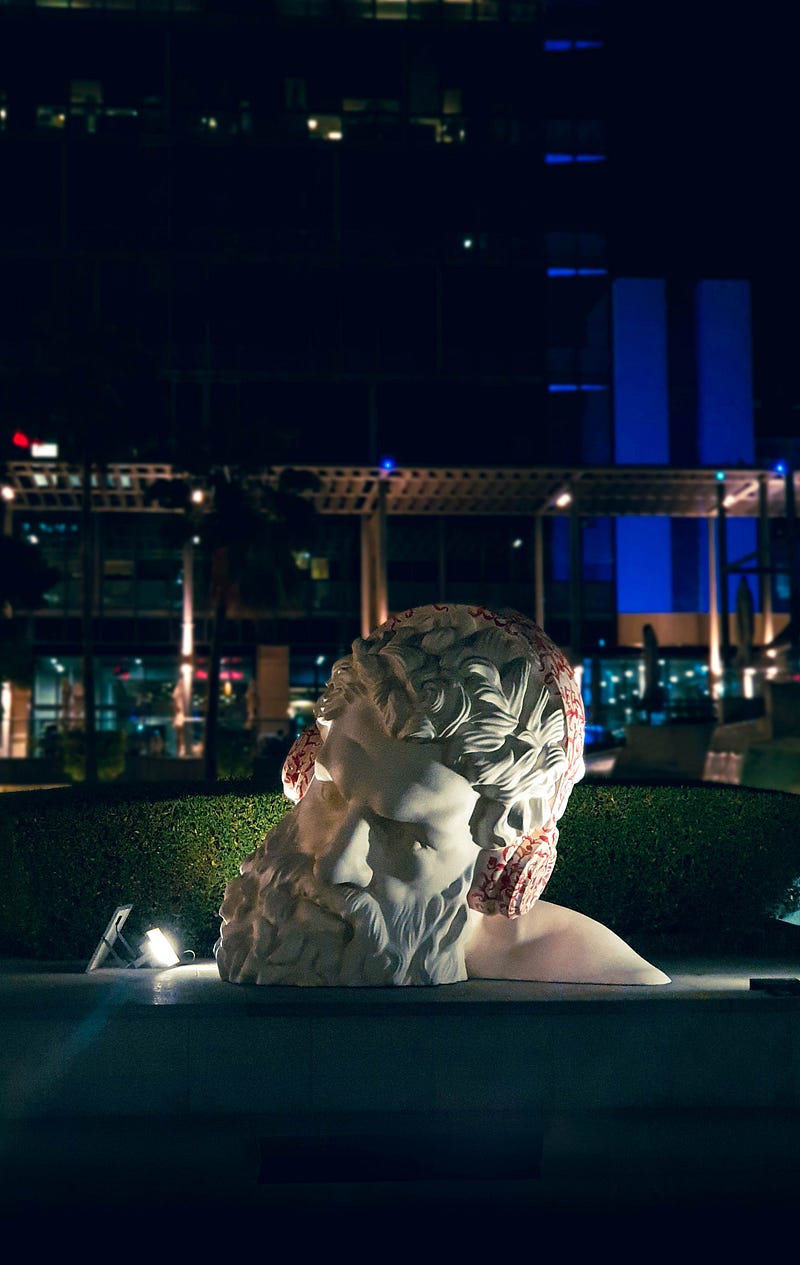
Who is Aristotle? Well, let us get our friendly GPT3.5 (Turbo) to answer this question:
Aristotle was a Greek philosopher who lived from 384 BC to 322 BC. He was a student of Plato and became a teacher to Alexander the Great. Aristotle is considered one of the most influential thinkers in Western philosophy and made significant contributions to logic, metaphysics, ethics, politics, and biology. His ideas have had a profound impact on Western thought and continue to be studied and debated today.
He died at the age of 62 (or 61 if he had yet to celebrate his birthday for that year). In those days of old, life expectancy was between 25–28 years. And there was a reasonable chance of reaching 60 years. In the modern context given that the average life expectancy is 85 years in the year 2020 in Japan, today, he would have died at the age of 100 or probably beyond that: it is very rare that a human lives beyond 120 years of age.
Of course, the argument here is not about how we manage to survive longer. It’s about chance — one being the changes in the likelihood of longer life expectancy over centuries and two being the probability of reaching a certain age in which chance plays a greater role.
If this discussion is treated as a five-course meal, I have just given you the starter. The idea that people live longer over passing centuries is supported by the Bayesian view which suggests that the likelihood of people living beyond 100 years starting from 300 BC increases as more data is gathered, and the probability in which a person can live beyond 100 years can be ascribed to by-chance in any given context — now, past or ancient.
However, Aristotle’s argument is not technically about the frequentist view or the Bayesian view.
I chanced upon his Physics book 2, particularly sections 4 to 6. He laid out the explanation for the existence of ‘chance’ and ‘spontaneity’. In our modern context, we can loosely define spontaneity here as ‘luck’. His writing answered the question ‘Are chance and spontaneity the same?’ and ‘What is chance and what is spontaneity? And what causes them?’
What truly caught my attention was his argument on cause. Quoting him from the translated text:
A man is engaged in collecting subscriptions for a feast. He would have gone to such and such a place for the purpose of getting the money, if he had known. He actually went there for another purpose and it was only incidentally that he got his money by going there; and this was not due to the fact that he went there as a rule or necessarily, nor is the end effected (getting the money) a cause present in himself-it belongs to the class of things that are intentional and the result of intelligent deliberation. It is when these conditions are satisfied that the man is said to have gone ‘by chance’. If he had gone of deliberate purpose and for the sake of this-if he always or normally went there when he was collecting payments-he would not be said to have gone ‘by chance’. It is clear then that chance is an incidental cause in the sphere of those actions for the sake of something which involve purpose. Intelligent reflection, then, and chance are in the same sphere, for purpose implies intelligent reflection. — http://classics.mit.edu/Aristotle/physics.2.ii.html
In another text, the translation works out to be quite similar to the one given by MIT:
A man is engaged in collecting subscriptions for a feast. He would have gone to such and such a place for the purpose of getting the money, if he had known. He actually went there for another purpose, and it was only accidentally that he got his money by going there; and this was not due to the fact that he went there as a rule or necessarily, nor is the end effected (getting the money) a cause present in himself — it belongs to the class of things that are objects of choice and the result of thought. It is when these conditions are satisfied that the man is said to have gone by chance. If he had chosen and gone for the sake of this — if he always or normally went there when he was collecting payments — he would not be said to have gone by chance. It is clear then that chance is an accidental cause in the sphere of those actions for the sake of something which involve choice. Thought, then, and chance are in the same sphere, for choice implies thought. — Complete Works (Aristotle). Jonathan Barnes, Princeton University Press, Princeton, N.J. 1991.
I won’t go deep into the English definition of incidental cause and accidental cause. For the purpose of this discussion, I’ll use the term accidental cause based on the following distinction made by GPT:
An incidental cause is a cause that is not directly responsible for an event but may contribute to it. On the other hand, an accidental cause is an unforeseeable and unintentional cause that leads to an event or an outcome. In other words, incidental causes are related to the event in a minor or indirect way, while accidental causes are the result of chance or fate.
What is very clear here is that chance is an accidental cause. It is unforeseeable and unintentional — at least from the expected events. For example, a tree fell onto a car during a storm. Of course, we could have thought that it might happen during a storm. But it was not expected and there’s no way we can foresee the falling of that particular tree onto that particular car while driving. Unless there’s any visible sign or reason to believe that there is a relationship between the frailty of the tree, the exact timing in which the car passes the tree, and the intensity of the storm, we can say that the tree fell onto the car by chance. Not just fell onto any car but fell onto the car.

Aristotle made it clear that the action in which chance is observed has to come from action and action implies choice. People have to choose an action to proceed and chance can’t exist in mindless action. The argument is straightforward — chance only occurs when a non-chance event that is made by choice happens. And over here, Aristotle made a valid point about choice implies thought. By logic, we are saying that ‘chance’ is observed when thought (for action or actions) exists.
So what are we looking at when we apply this argument to data science? Previously, I mentioned hypotheses and how a 20-page exposition of the hypothesis and a one-liner hypothesis fail to serve their purpose simply because they are either beyond the reach of testing the hypothesis due to lengthiness or too simplistic when it comes to deriving the truth. Based on the arguments made by Aristotle and a short discussion made by me, we can tackle this challenge in hypothesis testing (not solving it) by identifying chance in the hypothesis. For example, we can limit the following hypothesis:
The number of green apples coming from 100 countries specifically chosen by country of origin in the twentieth pick during twenty rounds of picking in an Asian supermarket is not related to the demand for green apples in the market.
to:
The number of green apples coming from 2 countries chosen in the twentieth pick during the twenty rounds of picking in a supermarket is not related to the demand for green apples in the market.
Notice that I narrowed the source of green apples from 100 countries to 2 countries. And it is obviously by chance that we simply pick a green apple from a specific country in the twentieth pick. Why not a green apple from China? There are also green apples coming from other 99 countries and if we truly pick a Chinese green apple, it is likely due to chance playing a greater role. To observe chance in a way that is practical to the business realm and applicable to the scientific inquiry, we make sure that narrowing down the countries answers the business problem and produces results based on the source of green apples coming from 2 countries that have equivalent statistical power to the scenario whereby the source of green apples comes from 100 countries.
Are we saying that we want to limit chance? Not quite true. We are blending both science and philosophy together, resulting in an effective solution to business problems. And if the choice to pick apples in a supermarket implies thought, then evidently thought implies intelligence. And we can make use of this intelligence to identify the observation of chance in any accidental cause.
Aristotle also made the distinction between chance and spontaneity (again, spontaneity is luck in our daily language — loosely speaking). Quoting him:
They differ in that spontaneity is the wider. Every result of chance is from what is spontaneous, but not everything that is from what is spontaneous is from chance.
In this paragraph, Aristotle made it clear that the result of chance is from anything spontaneous, but not all that result from anything spontaneous comes from chance. We observe spontaneity in an unexpected manner, and we also observe chance when we pick a green apple in the twentieth round and 19 red apples in the first nineteen rounds (assuming we really don’t know the mix of apples in the basket), but we don’t observe chance in picking a green apple in the twentieth pick when one apple in a basket that contains just all red apples suddenly just turn green spontaneously. Hence, in his further explanation, chance is appropriate for agents that are capable of action and not spurious events.
There is an added argument from Aristotle about spontaneity and chance being posterior to intelligence and nature. I frankly won’t want to go too deep into it, but it is worth knowing that our universe comes about due to spontaneity, and by that, we know there’s intelligence as the prior cause of it. There was intelligence when the universe was created.

In summary, we extend the discussion about chance, non-chance, hypothesis testing, and p-value by bringing the study of science and philosophy closer. Thoughts come into play when events happen and action which is the result of thoughts, implies intelligence. Intelligence is not spontaneous but it could result in something spontaneous. Chance can be observed when action (and by that, we imply intelligence) is not spontaneous, and the data on hand shows us that non-chance explains most part of the rejection in the null hypothesis. Whichever is spontaneous cannot be said to happen by chance unless action with intelligence is involved in most parts of the event that comes with accidental cause.

Daniel started off his career as a senior list researcher with a British publishing firm. Back then, his role involved contact sourcing through the internet and performed data entry into the Microsoft Dynamic CRM system. (Microsoft Dynamic CRM 3.0) Progressively, he explored the option of using Visual Basic scripting within excel to automate the contact sourcing process.
He successfully developed and implemented the scripts, leading to 95% increase in data entry efficiency. He then moved on to take on the role of a CRM executive with Fuji Xerox Singapore.
As a CRM executive, he liaised with third party vendor for technical enhancement of the CRM system (Microsoft Dynamic CRM 4.0 and 365). He also performs functional enhancement of the CRM system for hundreds of end users.
His notable achievement was the development of the CRM boy that led to 98% improvement in data quality and data integrity in the CRM system. Following his Masters studies in Consumer Insight with Nanyang Business School, he took on the role of an Analytics instructor with Singapore Management University. He prepared class notes and technical walkthrough, and taught Analytics to the undergraduate students from various disciplines. Subsequently, he took on various roles as consultants in the consultancy, manufacturing and information technology industries in Singapore.

He travelled to Paris, London, Sri Lanka, Japan and Malaysia to fulfill his role as a consultant. The cultural and professional exchanges between local and overseas data analytics had given him a very good overview of the expectations and motivations from people around the world. He also had a chance to relocate to the United States for one year, particularly focusing on Operations Management.
Prior to his current freelance status, he took on the role of the Data Science Lead in a Singaporean software company. His primary role was to develop Artificial Intelligence using logic, data science and machine learning techniques through in-depth, full-stacked scripting. He also developed customized Reporting for his customers. In his point of view, 95% of today’s reporting can be automated, which can free up staff from daily manual work.

He holds a Bachelor of Science in Marketing (BSc. Marketing Pass with Merit) from Singapore University of Social Sciences (in which he graduated as a Valedictorian), a Master of Science in Marketing and Consumer Insights (MSc. Marketing and Consumer Insights) from Nanyang Technological University, a Doctor of Business Administration (DBA) from Swiss School of Business and Management.


