
Philosophy As We Know It Is Dead
Philosophy is not flourishing, it is letting us down.
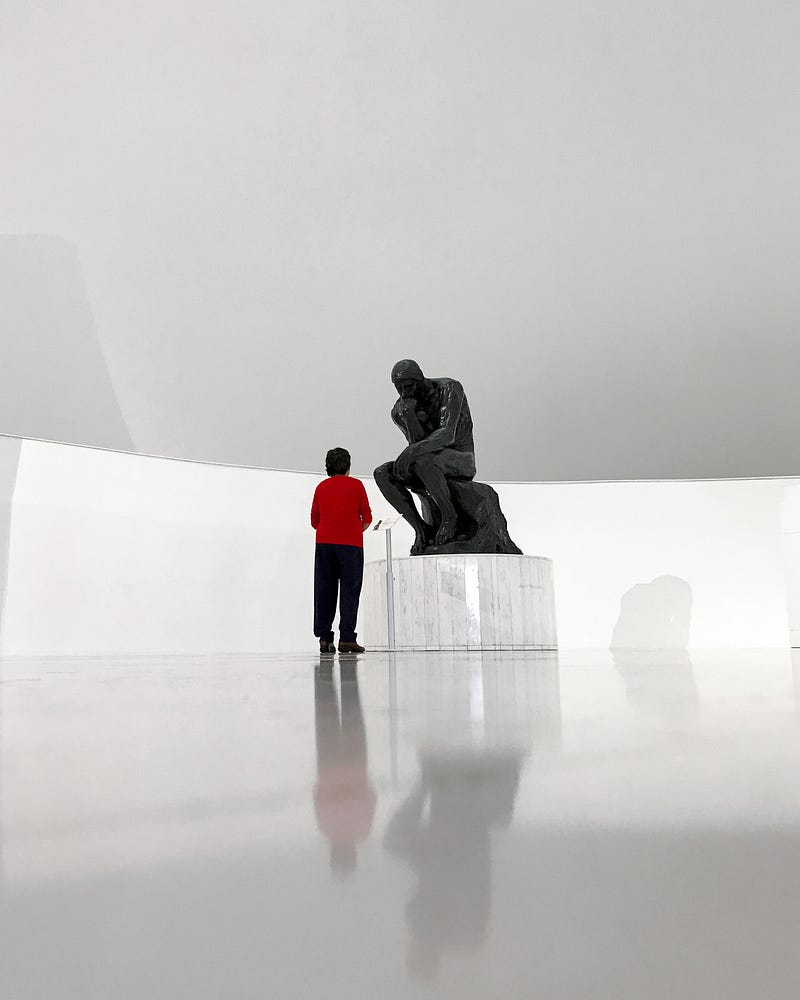
What is the significance of philosophy in the 21st century? In the past, philosophy was regarded as the high art of seeking and finding meaning in life and the world. However, philosophy has lost touch with how we live and approach the world, and as a result, it has lost its impact on society.
In her article Ten great female philosophers: The thinking woman’s women, Camille Paglia, professor of Humanities at the University of the Arts (Philadelphia,) states that:
“In modern times, religion among the educated classes in Europe and North America has lost ground, and intellectuals are neglecting the basic human need to find answers. Philosophers are now at the margin. Philosophy has shrunk in reputation and stature — it’s an academic exercise”.
There are two questions to be answered: Is philosophy still needed in today’s world? And if so, how can it restore its meaning?
The Inability To Show What Constitutes Today’s Philosophy
An overview of contemporary philosophy has the particular problem of grasping its subject matter — how late Arthur Schopenhauer or Friedrich Nietzsche, for example, were received; Bernard Bolzano, for instance, would have fallen into oblivion without Edmund Husserl.
A further problem lies in the selection and interpretation — philosophy of the present means dealing with philosophers who are still alive or have recently died. Often a substantial part of the work has not yet been published. There are prominent philosophers such as Hilary Putnam, who changed their positions significantly during their literary work. However, the question of where the actuality for the present time lies by the wayside in this old-fashioned way of philosophizing.
In other words: Why cling to the old if it no longer reflects the reality of today?
I agree with Camille Paglia when she says that:
“The last truly important movement in the world of philosophy was existentialism, in the post-war Paris of Jean-Paul Sartre, Albert Camus and Simone de Beauvoir. There have been theories of language since then, but without the profound insight of the best philosophy. Post-structuralism and post-modernism, by their slippery relativism, have destroyed the concept of philosophy. No one cares about philosophers — cultural criticism has come to the fore. Media and glitzy pop culture dominate now, and people need help to negotiate and survive it.”
Has philosophy lost its claim to deal with the practical implications of our daily lives, or has it, at least in the western world, never been able to detach itself from this idea of the small circle of white men?
It must nevertheless be the goal of philosophy to concern itself with fundamental problems. As a guideline, philosophy must give a thought construct in which people can find themselves. Today, it appears that political goals and propaganda are surpassing philosophy. This is probably also the point of contact to existentialism. If there was a desire to redefine oneself after the Second World War, then there would have to be a renewed desire for identity constructs in the present day, wouldn’t there?
The Quest for and Fabrication of Identity
Provided that we have access to the internet, we can now access information at a speed never seen before. From the comfort of our home, we can crawl into all corners of the internet, while always being bombarded by news, content, and information. From these scraps of information, we can assemble an identity that allows us to survive in today’s fast-paced world.
The individual gathering of information to assemble a possible identity is a reality that philosophy has to deal with. Where can existing concepts of being offer individual support, and where is this approach outdated?
However, this is only one side of the problem. We also have to deal with the modus operandi of philosophy. It is no longer appropriate to wait for explanations derived from the teachings of dead men. We are running out of time. From today’s point of view, philosophy must become faster, more agile, more diverse, and above all, more audacious.
The Pain of Having to Define Yourself Endlessly
It may well be that today’s world’s collective confusion is based on the fact that we absorb too much information too quickly and cannot classify it, or only partially. But if we have access to information and use it, why shouldn’t the goal survive in this world? It is how we approach the world today.
It is precisely in this fundamental inability of philosophy that leaves us in the lurch. Philosophy is useless if it cannot grasp today’s pain of constant judgment, pain, and pressure to defining ourselves. It is letting us down by not responding to reality. As long as today’s philosophy lacks the radical practical relevance, pace, and political bite we desperately need today, it can only be viewed as a relic of a vanished age of much slower and rhetorically formal inquiry.