
Philip Didn’t Want The Job
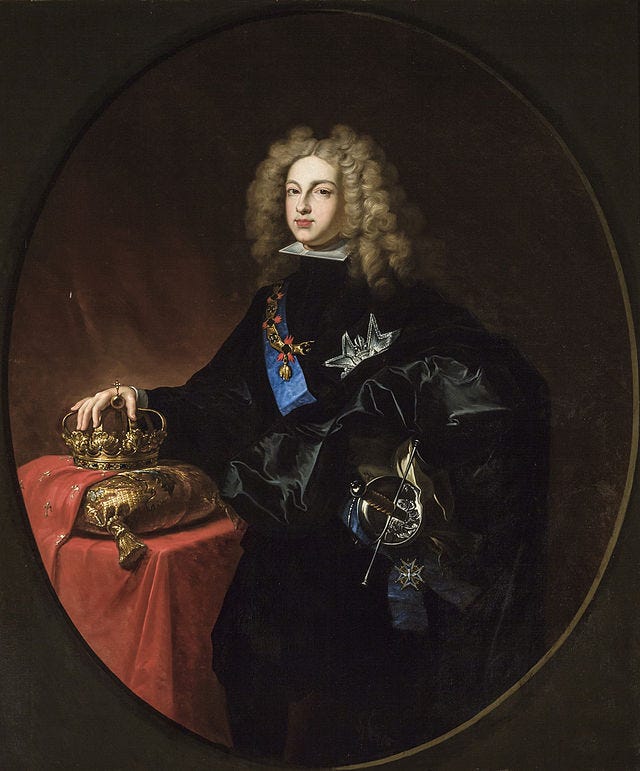
A moody French teenager takes the Spanish throne
.jpg)
Things were looking dire for the Hapsburg Dynasty in Spain. King Charles II had struggled his whole life to fill his kingly role on the Spanish throne. He was hampered by poor health and the inability to produce an heir.
In the late 1690s, it was clear that alternate plans had to be made. Charles himself knew that he wasn’t going to last much longer. The lack of a clear succession was bound to devolve into an ugly fight for the throne. He made a will, revised it, and revised it again.
His primary goal was to pass on the kingdom with all its territorial possessions intact. Many competing proposals for succession bargained away land Spain had fought hard to keep all these years.
In 1700, unable to eat solid food and near his deathbed, Charles decided on a successor. It was controversial, to say the least. He tapped a young Frenchman, Philip, Duke of Anjou, grandson of the French King Louis XIV, and great-grandson of the Spanish King Philip IV.
This decision would shift the balance of power in Europe. Charles II, a member of the Austrian Hapsburg Dynasty, appeared to be giving Spain away to the House of Bourbon in France. To mollify the Hapsburgs, Charles included a clause stipulating that Philip was disqualified from also taking up the French throne if, by chance, it would become available to him in the future. Philip was far from first in line for the French throne, so this possibility seemed remote.
None of that mattered to the Hapsburgs. They saw it as a capitulation, named their preferred successor (The Austrian Archduke Charles, son of Holy Roman Emperor Leopold I), and prepared for war against Spain and France.
Philip Goes to War
Charles II breathed his last on November 1, 1700, and Philip took the Spanish throne as King Philip V according to plan. He was seventeen years old and, until this moment, had lived an easy life as a member of the French royal family. He did not speak Spanish and had no inherent interest in Spain.
It didn’t help that the Hapsburgs made good on their threats and mobilized armies against Spanish territorial possessions in northern Europe and Italy. Add to this the ossified Hapsburg bureaucracy in Spain itself, which conflicted with the more reform-minded notions of Philip’s French advisors. It would have been a difficult first day at the office for even an experienced statesman.
The science of mental health being what is was at the time, we will never be sure what ailed the young King Philip. The first sign of trouble was in 1701 when he had his first depressive episode. He retreated to his chambers for days and would see no one except his doctors. It was about this time that he was recorded as saying:
I would rather go back to being Duke of Anjou, and I can’t stand Spain.
One of the sources of his anxiety and depression was his lack of female companionship. At least, that was one of the things he complained about. To this end, his grandfather, King Louis XIV of France, secured him a bride, Marie Louise, daughter of the Duke of Savoy. She was thirteen years old.
Marie Louise brought a brief period of stability and fulfillment in Philip’s life. When he ran off to his chambers, it wasn’t just to cry into his pillow. What surprised many was how mature she was for her age, helping to manage the young king’s daily agenda and assuaging his constant anxiety. Private letters between the two confirmed the tender, loving relationship that rapidly developed between them.
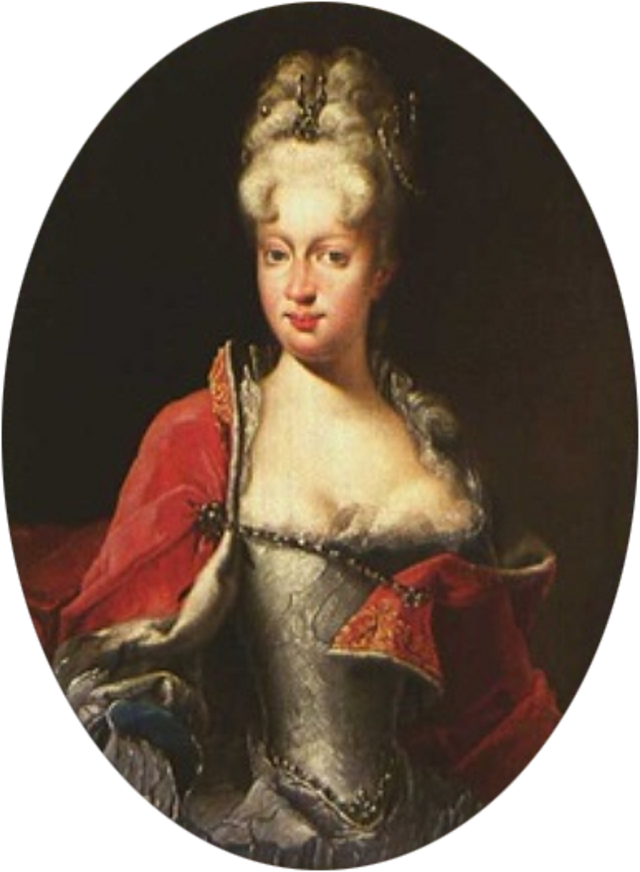
The immediacy of war also galvanized him. On Spain’s first real military action in Italy, he personally rode with his forces against the allied Hapsburg army.
Over the next decade, extraordinary effort was required of Philip as the War of Spanish Succession, as it became known, dragged on. The Hapsburg armies eventually threatened Spain, even occupying the capital, Madrid, for a short period. He oscillated rapidly between hyperactivity and withdrawal. It was often a matter of how long he had spent away from his queen and whether the issues before him were active military actions or just bureaucratic.
At his best, even when France itself tired of the war and Louis XIV seemed on the edge of withdrawing support for his grandson in 1709, Philip was quoted as proclaiming:
I shall never give Spain up so long as I have life. I would rather perish fighting for every piece of its soil, at the head of my troops.
This was a far cry from how he had spoken nine years earlier when the Spanish crown had been first placed on his head.
But at his worst, he retreated into isolation and self-pity. He sometimes attended meetings while hidden behind a curtain, which must have been frustrating for his generals, advisors, and foreign diplomats. Or he would not appear at all, making the queen his spokesperson (even more frustrating).
Peace Comes, But His Struggles Continue
Fortunately, at least for Philip, Spain was not completely overrun by Hapsburg forces, though it emerged from the war bruised and weakened. The end came in 1713–15, with the signing of agreements summarized as the Treaty of Utrecht. The terms were generally unfavorable to Spain. Among other indignities, Gibraltar had been lost to the British, forever to be a thorn in Spain’s side. With his dying wish of keeping the kingdom intact, the deceased Charles II was surely rolling in his grave.
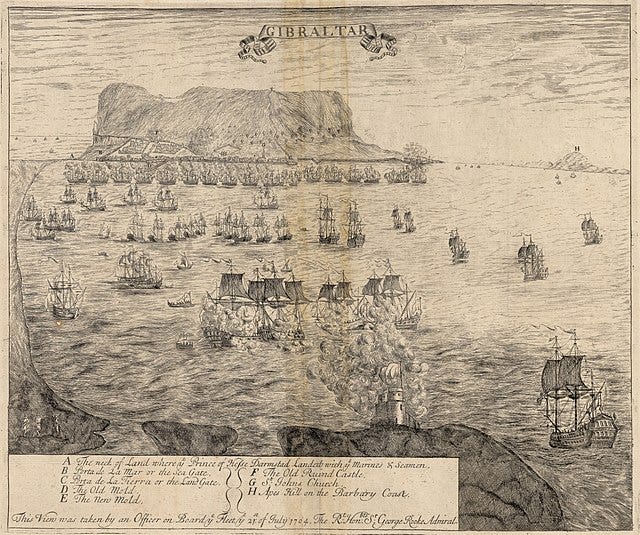

For Philip, now in his early 30s, the end of the war also ended the only part of being king that excited him. Now, it was all boring matters of administration and governance.
Marie Louise, his inseparable companion, tragically died of tuberculosis in early 1714. Knowing how badly Philip might fare alone, a new queen was quickly sought, and he was remarried within seven months. His new wife was Elizabeth Farnese, a young Italian woman and niece of the Duke of Parma. Interestingly, she quickly and effectively filled the role vacated by Marie Louise, acting as advisor and comforter to Philip.
With fifteen years on the throne, one could imagine that Philip had matured into his leadership role. However, knowing how much personal initiative he gained is impossible. He relied far too heavily on his queens as a proxy. In the years after 1715, he was often still at a loss when confronted with his duties, retreating for extended periods and letting administrative matters stay unresolved.
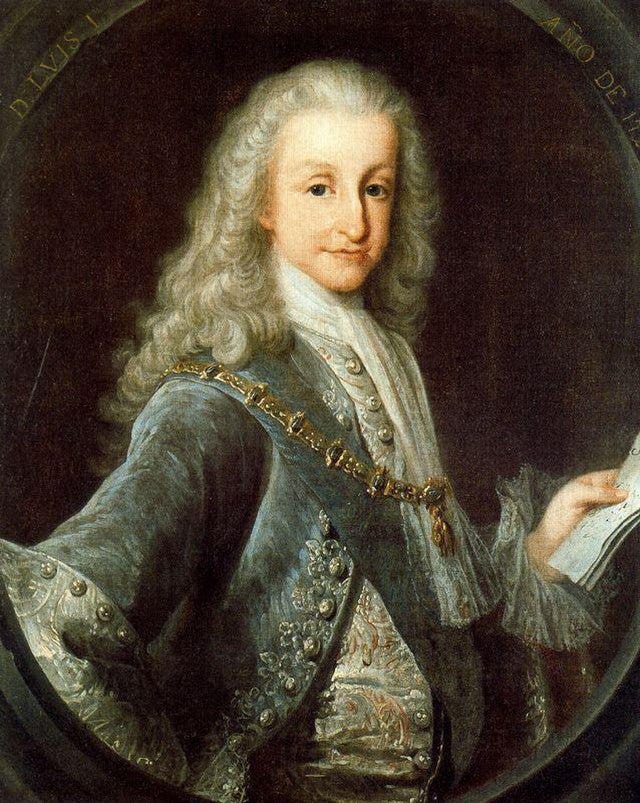

His lack of enthusiasm was evident after a development in 1724. Louis I, his eldest son with Marie Louise, had just turned seventeen. Philip immediately stepped down and placed Louis in charge. It was clear in retrospect that abdication had been on his mind for a long time. But to his sorrow and frustration, Louis died of smallpox seven months later, and Philip had to take back the throne.
Leaving A Questionable Legacy
King Philip V would rule until his death at the age of 62 in 1746. Throughout his years as king, he only showed enthusiasm for his job at a few moments during the War of Spanish Succession. Otherwise, it is abundantly clear from the sources that he would rather never have been sent to Spain at all. He was uncomfortable with the needs and expectations of his assigned kingdom. He disdained Spanish food and local entertainment and never learned the language. And his moodiness, surfacing within his first year as king, continued unabated to his deathbed.
Ominously, it was a trait he passed on to his son Ferdinand, who would be the next king of Spain.
Sources:
- Allonville, Charles-Auguste d’, marquis de Louville. Mémoires secrets sur l’établissement de la maison de Bourbon en Espangne. Paris. 2 Volumes, 1818.
- Baudrillart, Alfred. Philippe V et la cour de France. Paris. 5 Volumes, 1890–1900.
- Kamen, Henry. Philip V of Spain — The King Who Reigned Twice. New Haven: Yale University Press, 2001.
- Kamen, Henry. Spain in the Later Seventeenth Century 1665–1700. New York: Longman Group Limited, 1980.
Thank you for reading! And thank you to the editors at Teatime History. Please check my profile for other articles at Brad Yonaka.