
ALPHABET TRAVEL CHALLENGE
Petra: Jordan’s Historic Cave City
A to Z of my favorite travel destinations — P is for Petra
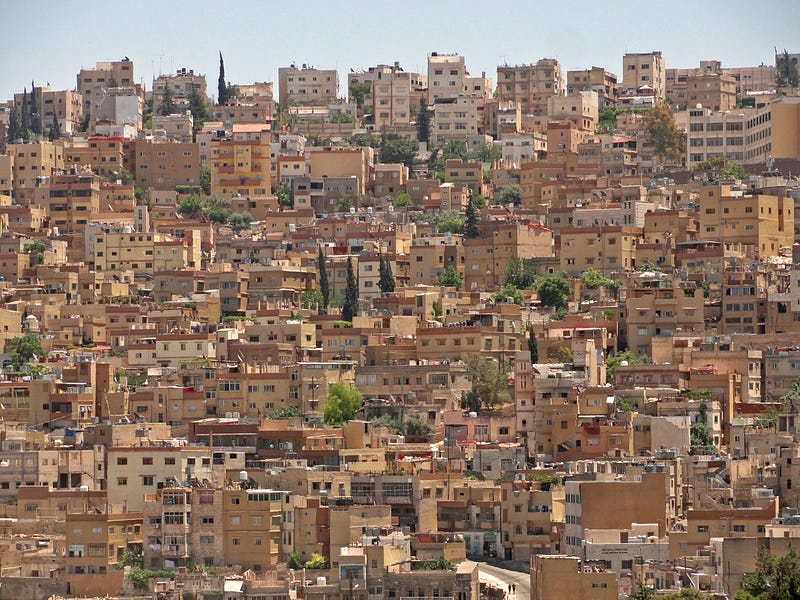
Jordan is often overlooked as a destination in the middle east but it shouldn’t be. Its neighbors may get more attention. Consider Egypt, Israel, West Bank, Syria, Iraq, and Saudi Arabia. So it’s remarkable what a calm and peaceful country it is, despite the wars and political strife all around it. Jordan is safe, sophisticated, and clean and it has been spared any of the violence that has plagued many of its neighbors.
One of the highlights of any visit to Jordan is Petra, one of the world’s most famous archeological sites and which is nothing less than awe-inspiring.
I visited soon after the Arab Spring. Normally during peak tourism season, 10 to 15 thousand people will pass through Petra on any given day, maybe only half or a third of that during low season, but on the day I went only 20 tickets had been sold in the first half hour of the ticket office opening. That is unheard of and devastating for the hundreds who depend on this UNESCO Heritage site to make a living. Eventually, a few bus tours arrived but the total was still far below what they are used to.
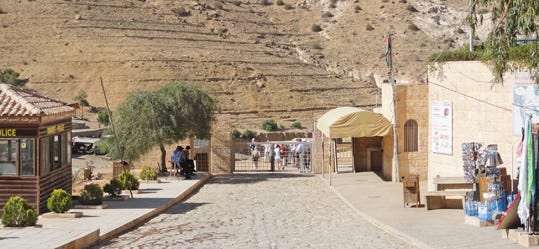
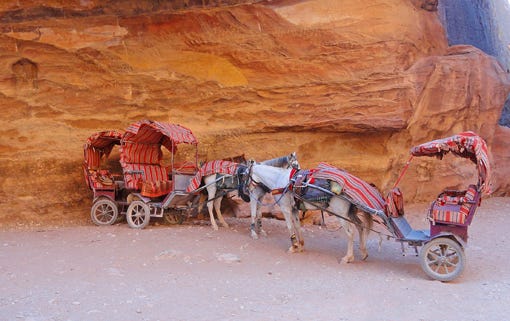
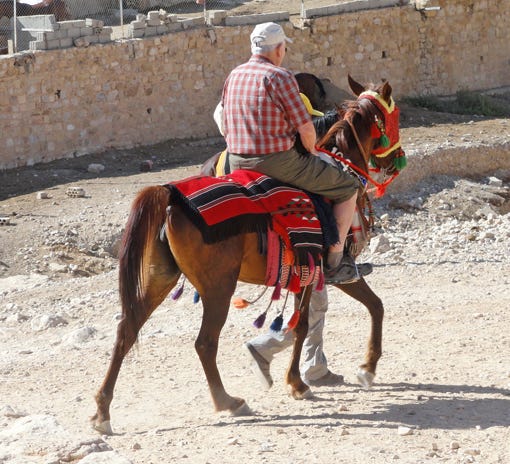
As you walk down the cobblestone path to the wall of rocks you are given a choice of riding a horse or taking a horse-drawn rickshaw… or you can walk it. I decided to walk the 30–45 minutes through the Siq, a passageway through the walls of giant rocks. I was overwhelmed by the natural beauty.
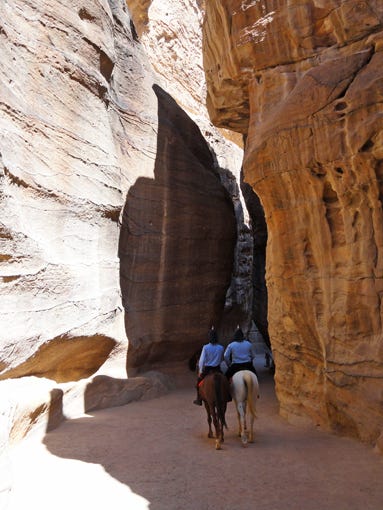
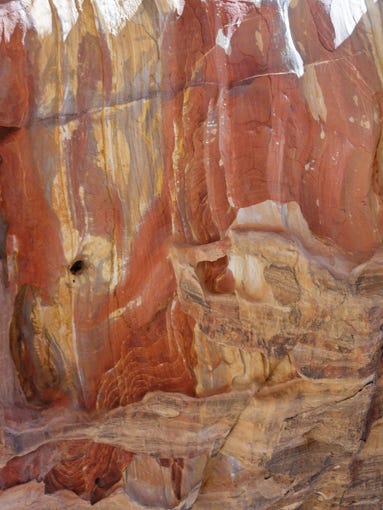
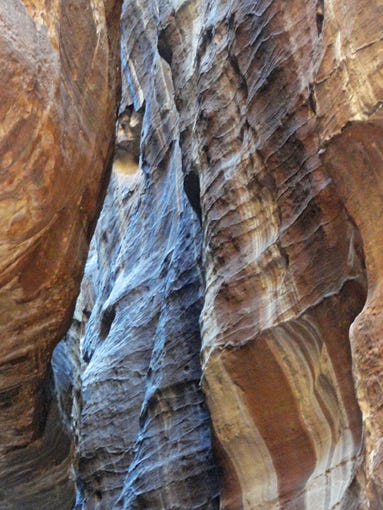
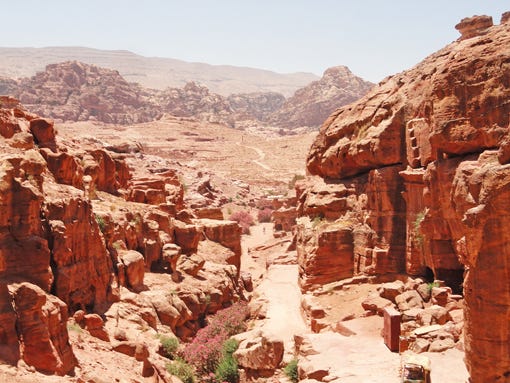
The walls of the passageway are all sandstone, layered with different elements to create ribbons of color and abstract designs; yellow from sulfur, red from iron, white from limestone, and black from basalt.
Soon I began to see caves bored into the rocks of this ancient Nabataean city (na-BUH-TEE-an.) My guide Mahmoud explained there were 3 classes of housing; small caves for the worker class, sometimes stacked on top of each other like a prehistoric apartment complex, medium-sized for the middle class, and large caves ornamented with carved decoration surrounding the entrances for the wealthy traders and royalty.
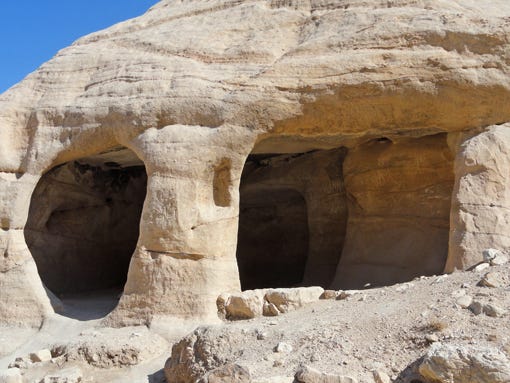
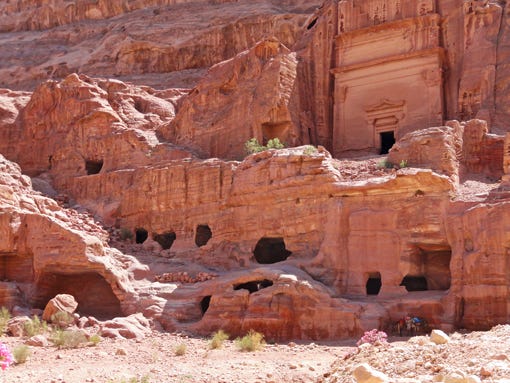
The caves served as homes for the inhabitants of the city, dating back to the 6th century BC (although there is evidence that Neolithic civilizations lived in the area as far back as 7000BC), and when they died, the caves became their tombs, their bodies buried under the floors while their families continued to live over top of the graves.
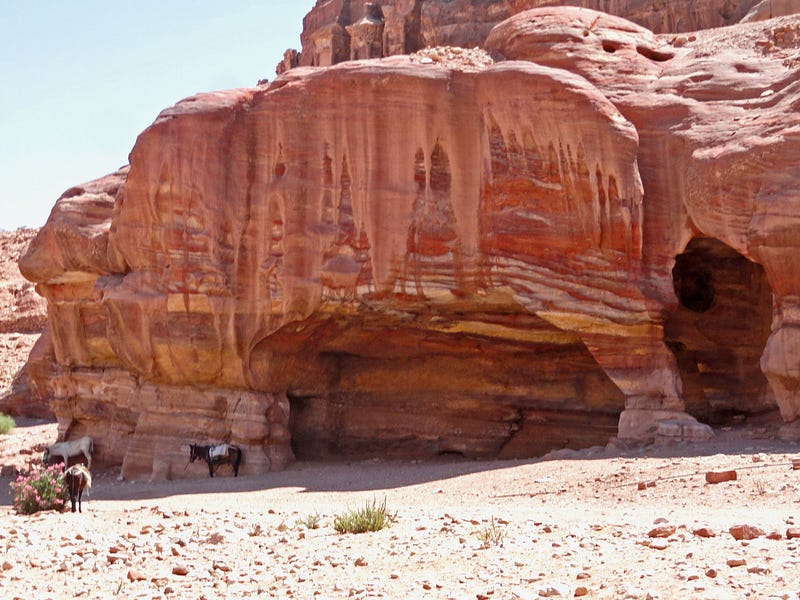
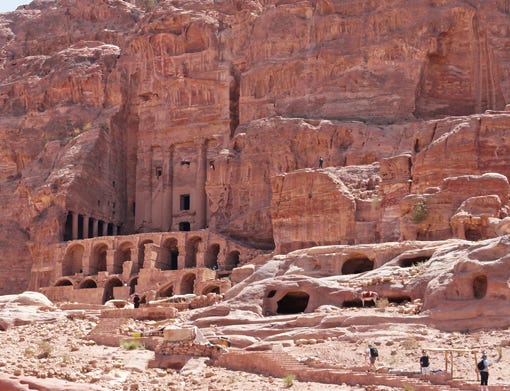
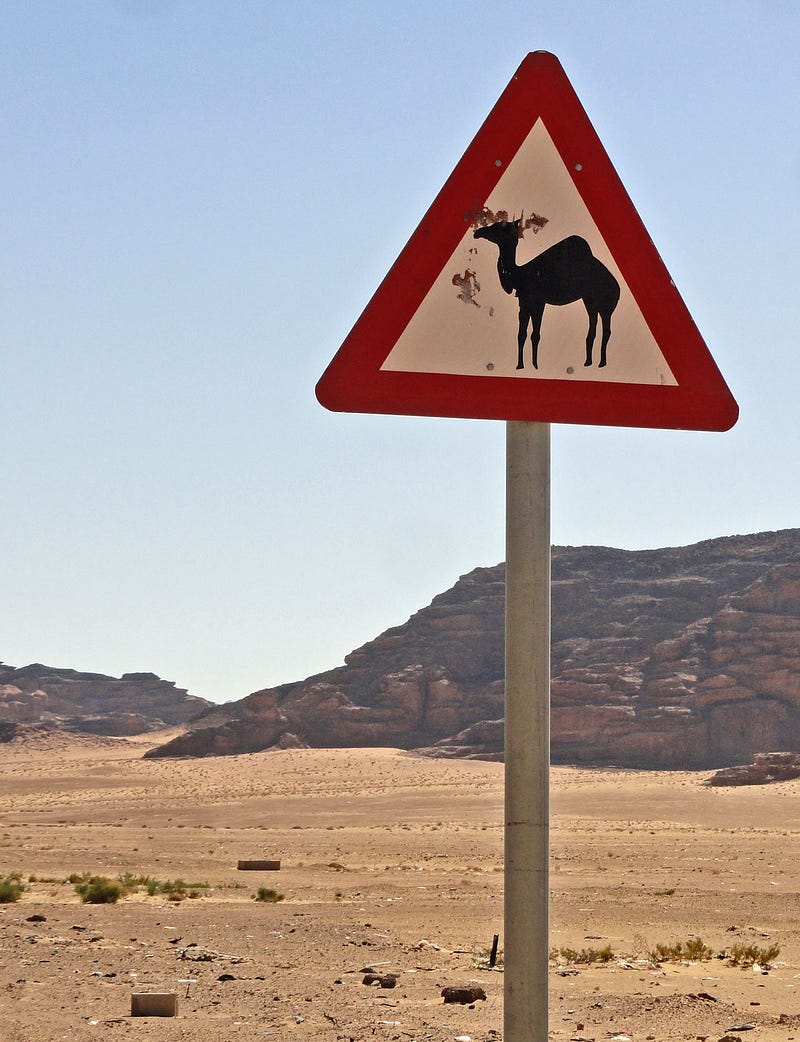
35 thousand graves have been uncovered but it’s believed 100 thousand residents inhabited the city that served as a major stopping point on the camel caravan route. Traders would pass through the community on their way to Arabia, Egypt, and beyond. Descendants of the Nabataeans actually lived in the caves until the late 1980’s when it was closed off and turned into a heritage site for tourists.
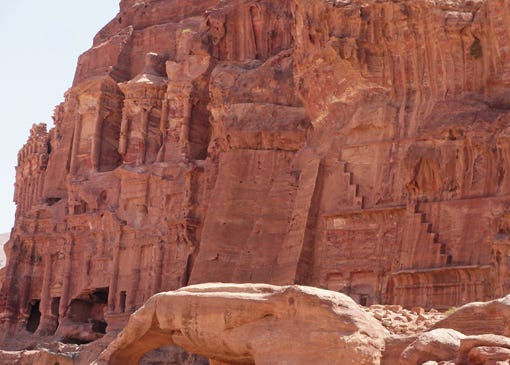
Unlike others evicted from their communities, Jordan’s late-King Hussein developed a new city for them just to the west of Petra, with new homes, modern schools, and medical centers.
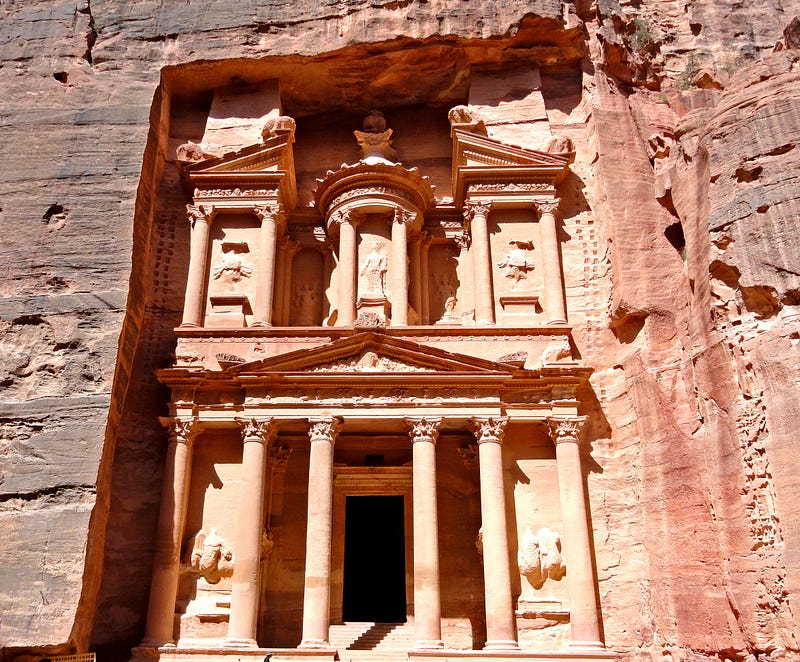
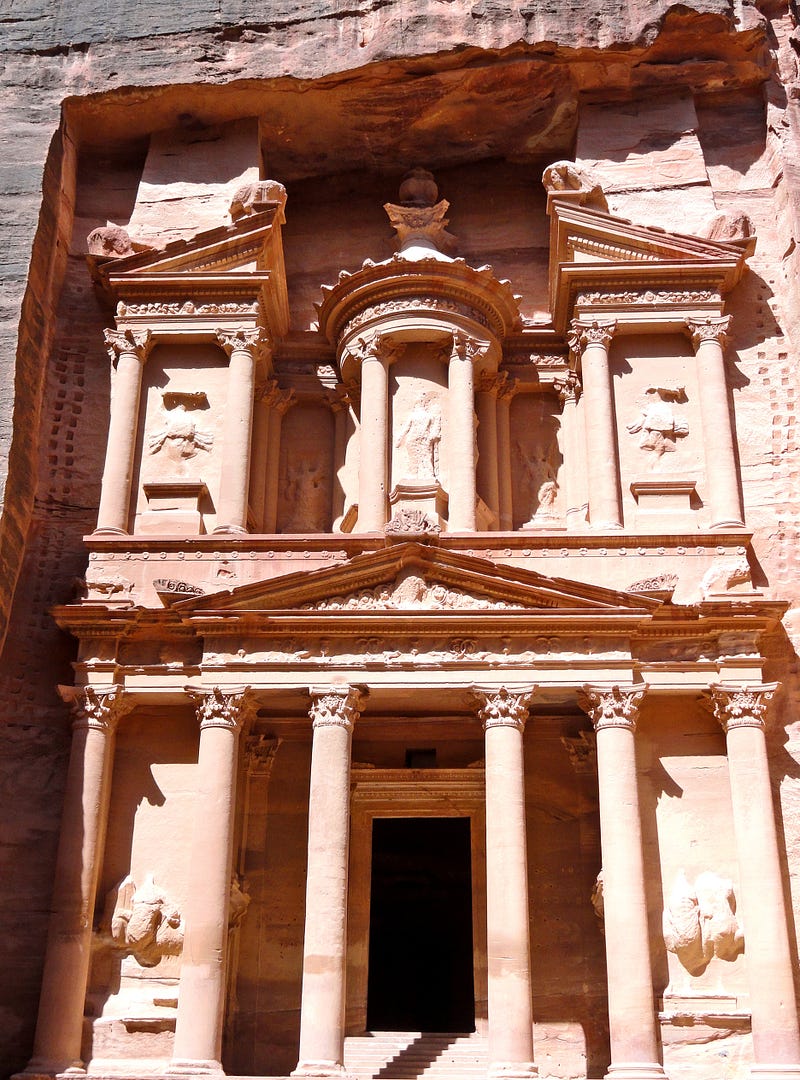
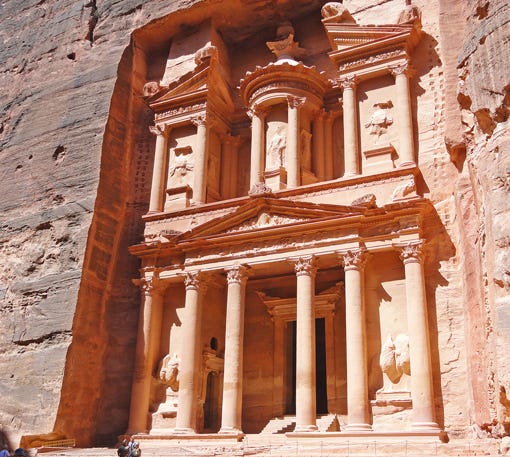
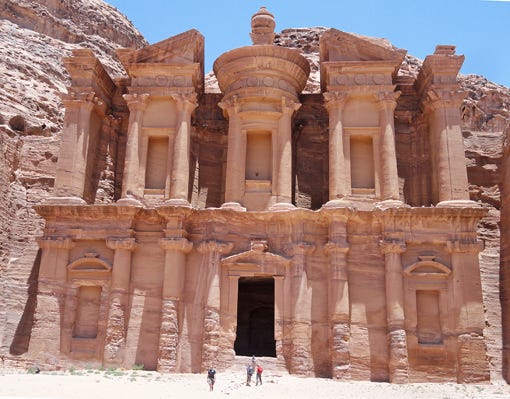
While the history and architecture of Petra are fascinating it is not until I stepped through the open courtyard before the Treasury that I became awestruck. I first saw between the carved rocks, an image that grew the closer I got. A magnificent and elaborately decorated structure that is carved right into the face of a mountain.
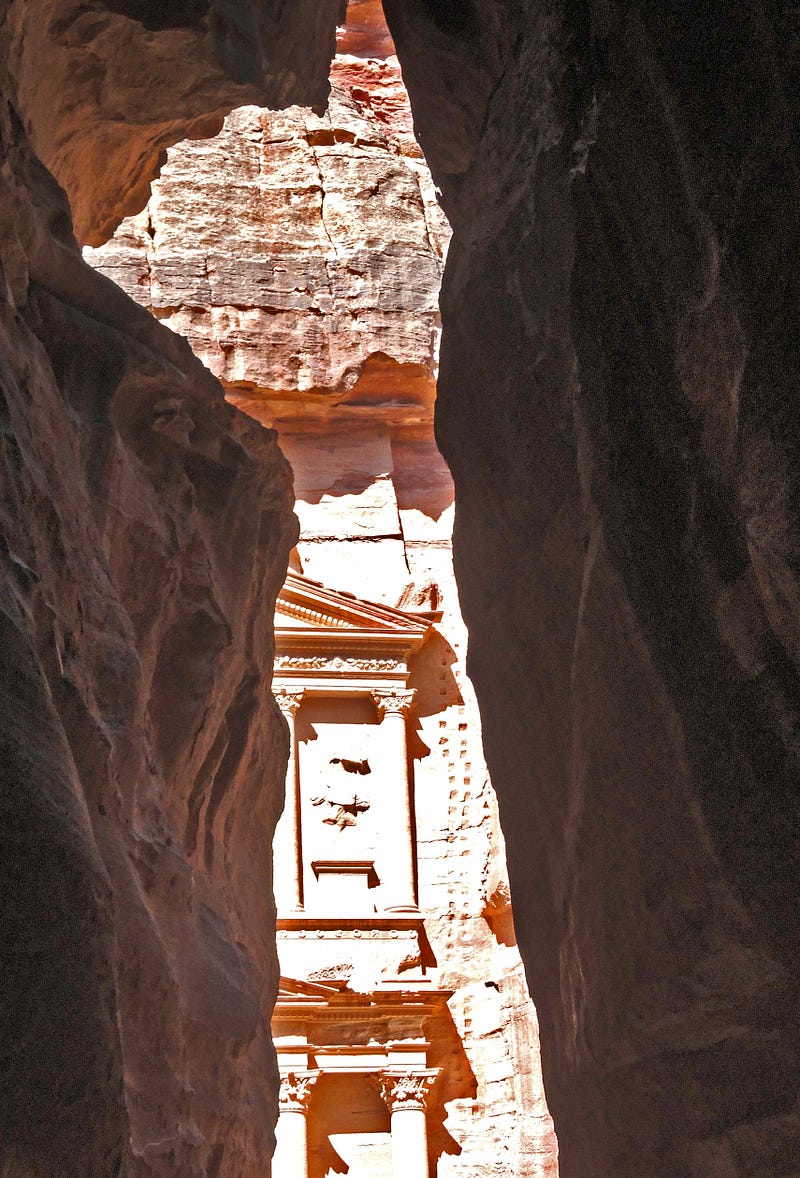
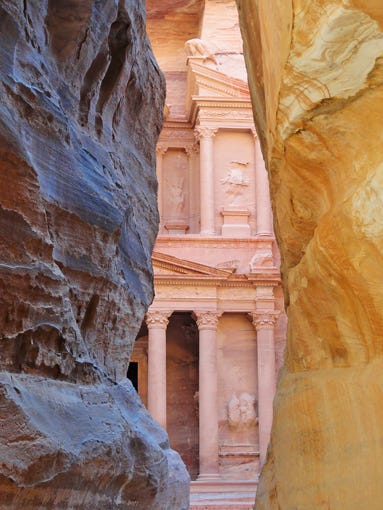
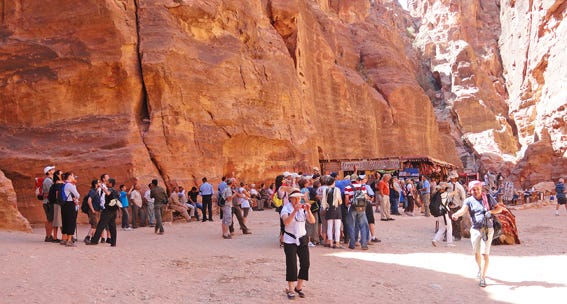
Tourists scrambled around in front of it snapping photos, riding camels or just sitting back at the on-site restaurant for some much-needed refreshment in the desert heat, all gazing up at this massive monument to ancient ingenuity. It’s still not clear what it was used for or why it was called the Treasury. It was constructed around the 1st century BC. Some believe it was a treasury for documents. Others believe it was a temple since a graveyard was found beneath it. Whatever it was. It is stunning and hard to believe that it was carved into a wall of stone.
Some people end their tour at the Treasury, but there is still so much more to see and experience. The Street Of Facades is just beyond the treasury, considered Petra’s downtown with dozens of caves cut into both sides of the road, some simply holes bored into the rocks, others elaborately carved structures built for royalty.
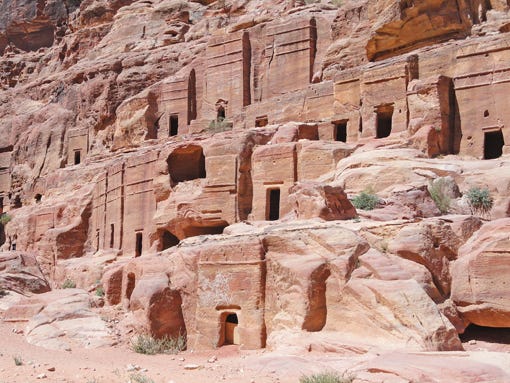
It’s even more amazing when you are told you are walking on top of the rest of the city. There is still much to be discovered just a few meters below with excavation work continuing today.
Another highlight is the Monastery, the largest in Petra. But just a warning it’s not an easy climb. It’s near the end of the pathway and is all uphill. I climbed thousands of steps while keeping an eye out for donkeys and mules clipping past us carrying tourists. They had assumed that a ride up would have been easier than walking but hearing the screams and yelps from a tourist bouncing past us, echoing up the mountain, made us realize even a ride up is not without its negative side.
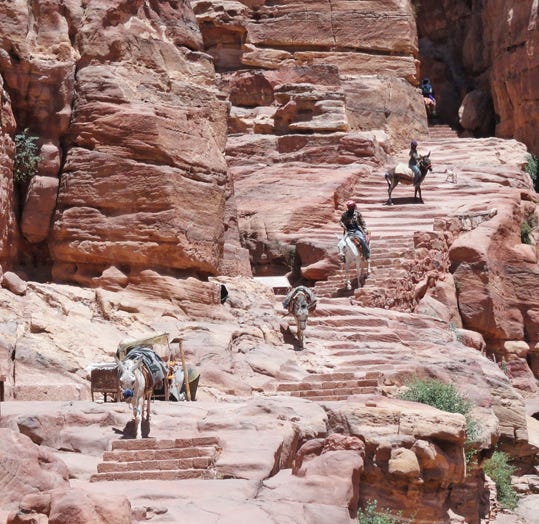
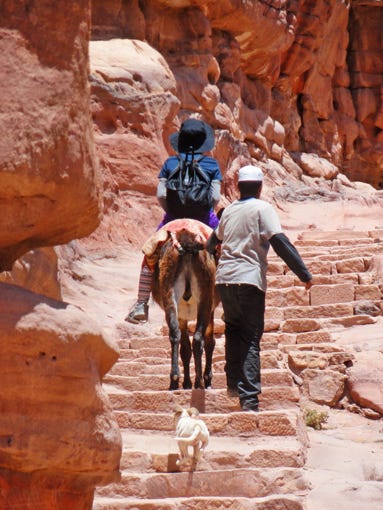
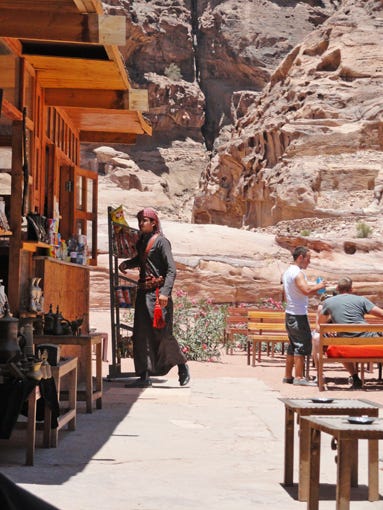
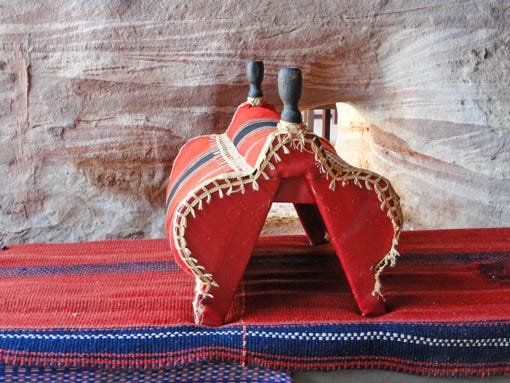
When you reach the Monastery there is a rest stop, with brightly covered couches separated by camel saddles, where you can buy something cold to drink or a snack to help you climb the last couple hundred meters to the summit for a spectacular view of the valley below and before the long climb back down.
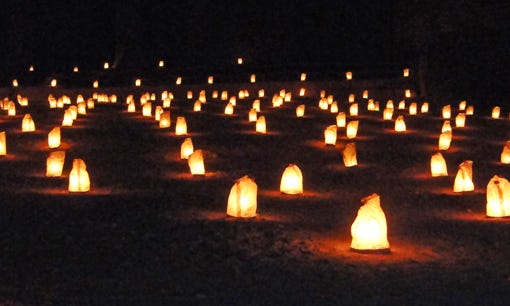
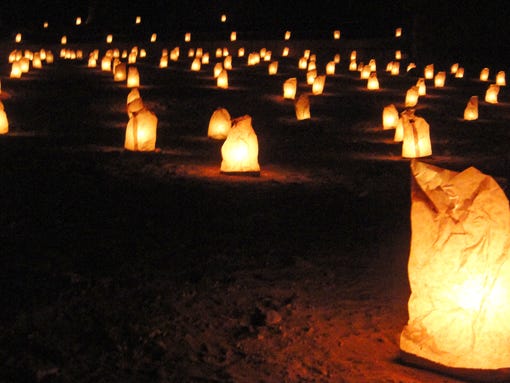
While Petra by day is spectacular, Petra by night is magical. I joined a crowd gathered at the front gate at 8:30 pm when the guide arrived to escort everyone inside. The pathway through the Siq is lined with hundreds of candle lanterns marking our way to the Treasury.
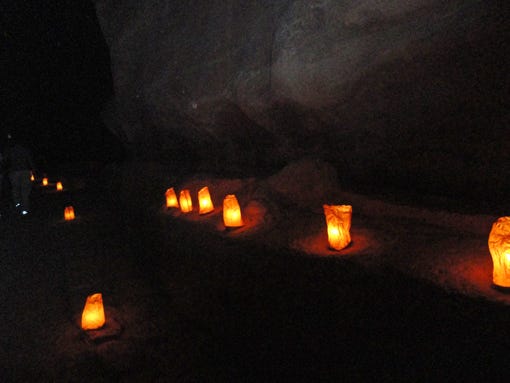
At first, everyone was talking all at once, the din growing louder as people tried to carry on a conversation, their voices echoing off the rocks. I stayed up front with the guide who was getting more and more frustrated by the noise. He told them to “shush” a couple of times but it was pretty much ignored, especially among the over-excited kids. He whispered to me that he wanted us to enjoy the experience and not miss it by talking the whole way.
Finally, a guard emerged from one of the passageways and told everyone to be quiet and keep the camera flashes to a minimum… just enjoy the moment. That certainly helped. Sometimes we need to be reminded of that.
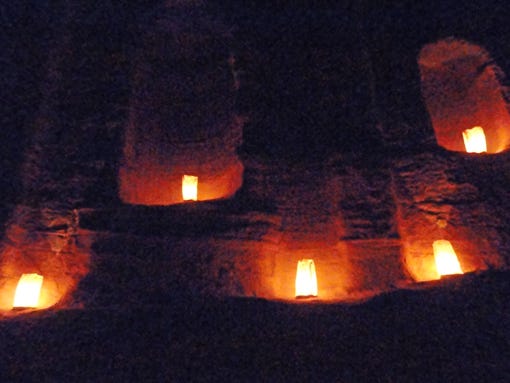
As you look up you can see a million stars through the slivers of sky visible where the rocks almost meet. It’s easy to get lost in your own thoughts. It’s almost zen-like except for the crunching of hundreds of feet over the sand and the fact you have to pay attention to your step so you don’t slip on one of the stones used to pave the ancient road.
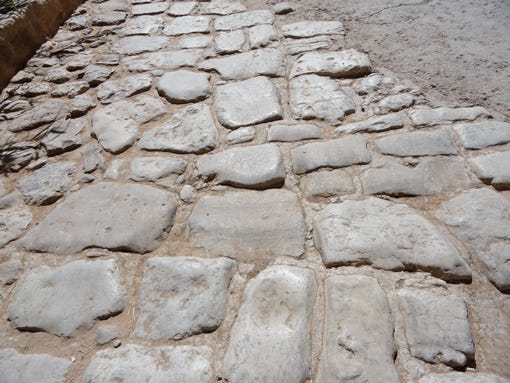
Just as we turned the last curve, there before us was the Treasury, silhouetted by a field of hundreds of candle lanterns on the ground. Workers had set out rows of carpets in front of the lights and we all took our places to wait for what would happen next. It was almost quiet except for the hum of hundreds of whispered conversations. Still, we were able to gaze into the lights or stare up at the ghost-like silhouette of the treasury or sit back and scan the sky for the constellations overhead.
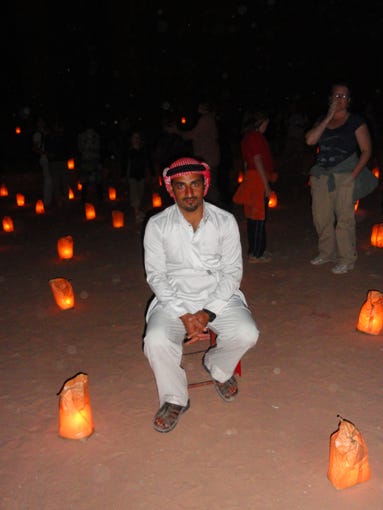
One of the workers came by with small plastic cups of tea just as one of the entertainers took a seat in the center of the candles and began to play. He performed a haunting and mournful song played on an ancient stringed instrument that sounds much like a violin, singing along, his voice echoing off the cliff walls to create perfect acoustics. The folksong lasted several minutes and was mesmerizing. When he finished another performer began to play a small flute-like instrument that resembled a piccolo, beginning slowly, the tempo picked up as he moved into a wedding celebration tune.
It was an emotional experience that must be seen by every visitor to Petra. Just remember it is supposed to be a romantic, almost religious experience. Behave as you would in a church with respect, reverence for the natural beauty, and above all silence to truly appreciate Petra By Night.
Thank you for reading. For more of my favorite travel destinations, you can check out my list of stories:


