Petra — Lost City of Jordan
One of the New seven wonders of the world.
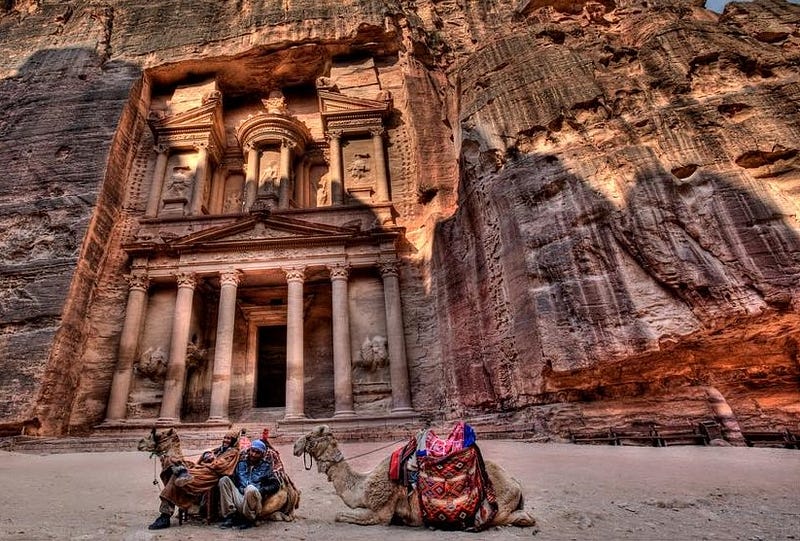
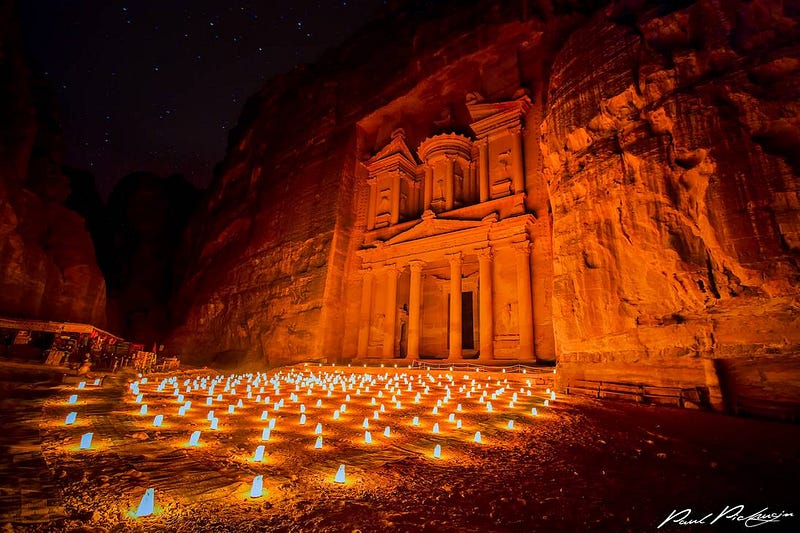
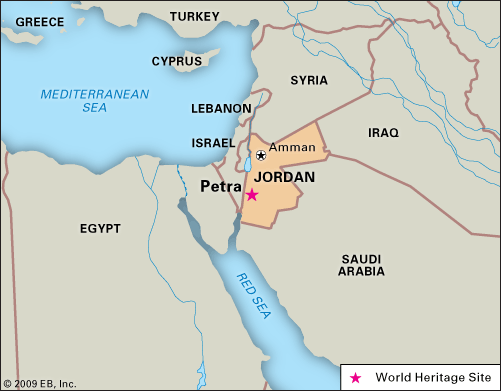
Petra or Raqmu as it is called by locals is today a UNESCO-protected city in southern Jordan and a famous tourist destination. But in the past location of this enchanting city was known only to Bedouins, who used the city as their stronghold. Bedouins closely guarded the location of their secret city for centuries.
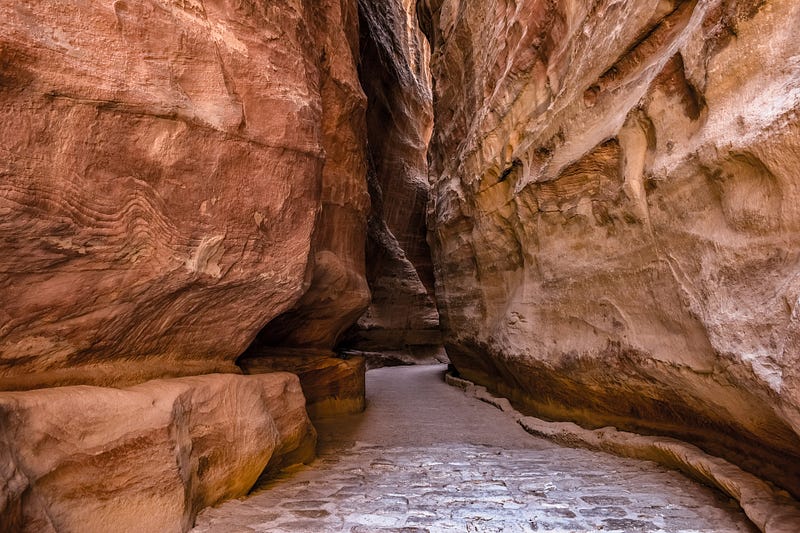
Petra is located in the middle of a desert. It can be accessed via a narrow canyon called Al Siq. Inside, visitors are impressed by tombs and temples carved into pink sandstone cliffs. This natural phenomenon gave Petra nickname the “Rose City.”
A short history of Petra
Petra is established around 300 B.C. as the capital of the Nabataean kingdom.
Nabataeans are now believed to have originated in Arabia, arriving in Petra as nomadic merchants around the fourth century B.C. Petra quickly flourishes due to two key factors — location along trading routes and abundance of freshwater in the heart of a desert.
Petra reaches its peak in the first century BC and although the city acknowledges the Roman government, it remains largely independent.
In 106 AD Roman Emperor Trajan annexed Nabataean territories without a fight into the Roman Empire. Petra becomes the capital of the new Roman province of Arabia Petraea.
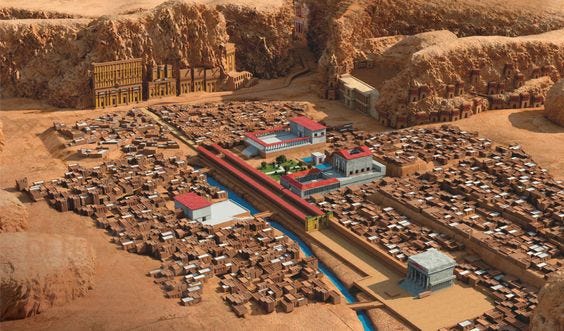
Following the breakup of the Roman Empire, Petra becomes a provincial capital under the Eastern Roman Empire, known also as the Byzantine Empire.
In 363 AD strong earthquake seriously damages many city structures, including advanced water collection systems. At the same time caravan trade is declining due to other trade centers such as Palmyra and more favorable sea trading routes. Petra, now far from its former glory and splendor, is slowly getting abandoned.
In 700 AD Petra, now only a little village, is conquered by Muslims.
In 1096, during the First Crusade, the Christian king of Jerusalem, Baldwin I, occupies Petra and it includes Petra in the barony of Karak.
In 1187, after Saladin defeats the Crusaders, Petra returns to Muslim hands. The city is now almost deserted.
In 1812 Johann Ludwig Burckhardt becomes the first European for centuries to enter Petra. Disguised as a Muslim pilgrim, he correctly identifies the ruins as the city of Petra.

What made Petra rich?
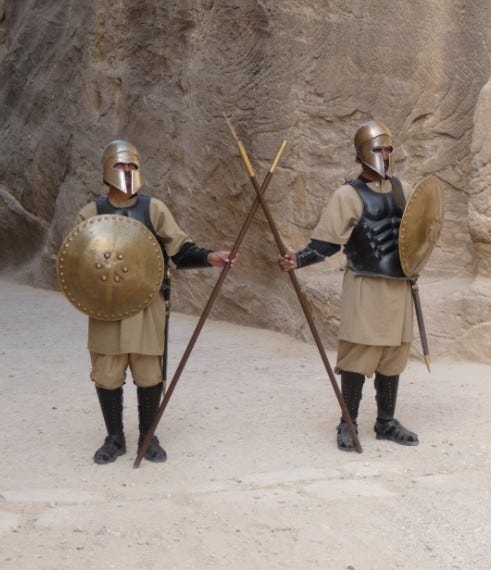
At its height, Petra was one of the most lavish cities in the world — more Las Vegas than Athens. Petra was the Middle East’s premier emporium. City drew influences from the East and from the West, creating buildings in Greek style with decorations from India.
Nabataeans were unusual in the ancient world for their lack of slavery, for the prominent role women played in political life and for a democratic approach to governing. They were poor soldiers, but extremely good merchants.
Merchants whose income dropped were fined by the government.
The prosperity of the Nabataean kingdom and its magnificent capital, Petra, rested on the trade routes that passed through the city. Petra established a monopoly on caravan trade. Petra was a hub for trade.
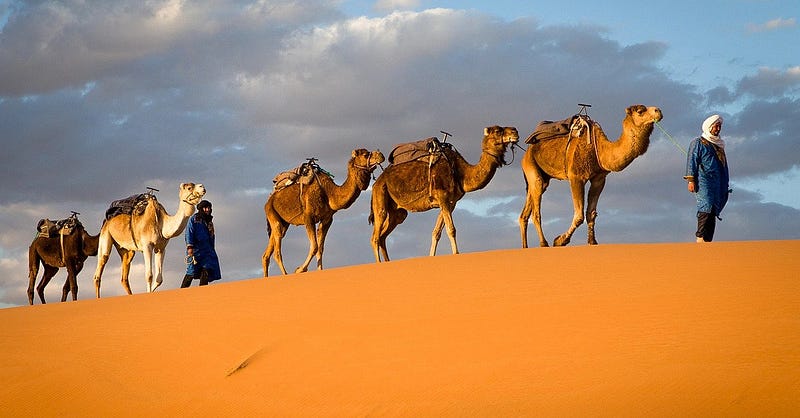
From Yemen came incense, aromatic plants such as myrrh, and aloe — essential ingredients in perfume and medicine. Spices came from India, silk from India, while bitumen from the Dead Sea was essential for shipbuilding across the Mediterranean. Vast caravans of dromedaries poured through Petra on their way to the lucrative markets of Rome, Alexandria, and other cities of the Mediterranean.
Desert weary, merchants willingly paid their tolls, not only to enjoy the protection of the city but to stock up with that most precious resource the Petra could offer: freshwater.
How did Petra get water?
Petra was a real oasis, a little Las Vegas with huge consumption of water. So how they got an abundance of water in the middle of one of the dryest deserts on Earth?
Nabataeans cultivated vineyards, olives, wheat, and barley. They build gardens with flowers, pools, fountains, and even a canal. Archeologists calculated that the inhabitant had around 8L/person/day. At its peak, the city was home to 35.000 people. So how did they manage to get so much water?
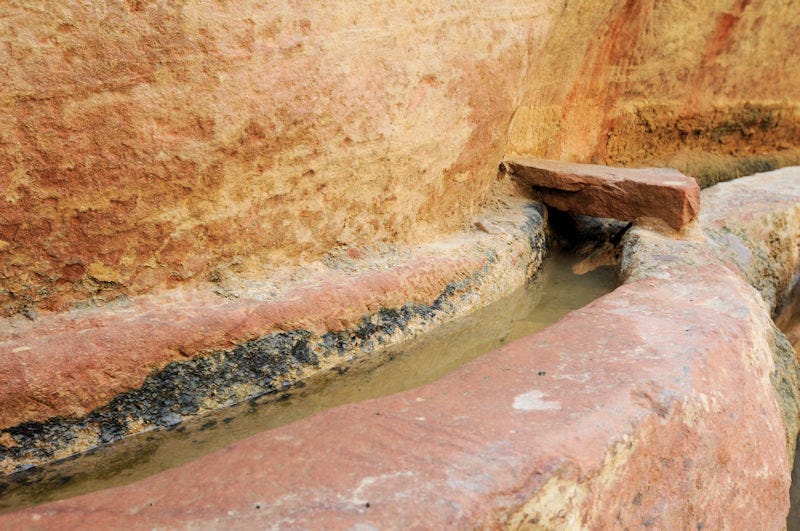
Petra owned an engineering treasure for that time — a complex water engineering system, made of dams, aqueducts, and 40 huge underground reservoirs (9 meters deep) to collect the water from the once-in-a-year huge flash floods, reservoirs to collect little water from the rain and hundreds of kilometers of terracotta pipelines to connect with faraway water springs.
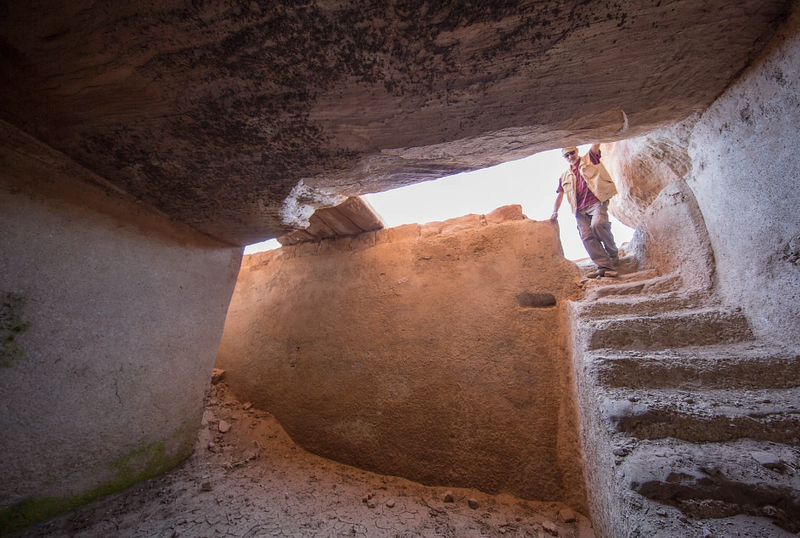
For Nabataeans it was said they were able to squeeze water out of a rock .
Of course, this is an exaggeration, but still a testament to the skill of Nabataeans to collect water in such a dry climate. The key to their success was a pristine knowledge of nature and terrain.
Petra had sediment removal ponds for drinking water. In such ponds, particles in water would slowly settle to the bottom and thus make water potable.
In the middle of a city was located a giant pool measuring 60 meters across and 2 meters deep. This pool caught extra water during the flooding.
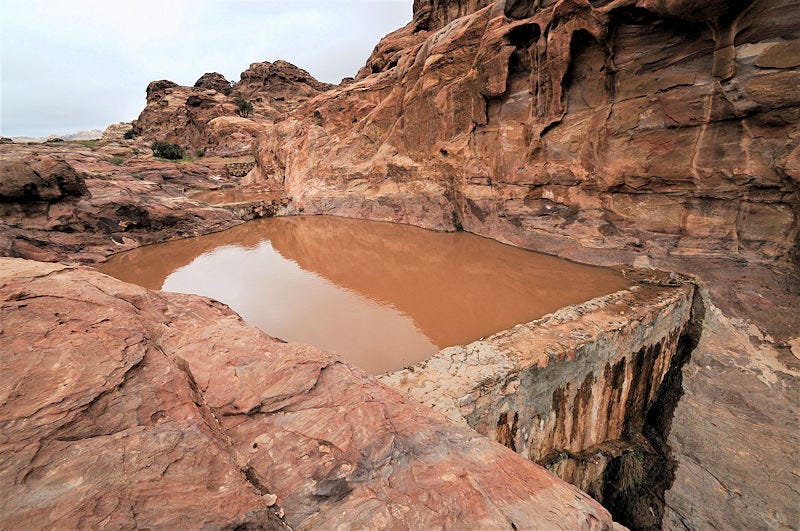
Nabateans created their water collection structures so that they would be invisible to invaders and could be found only by those who knew of their presence.
They chiseled channels into the sides of the mountain, trailing the water flow into cisterns and dams for later usage. They built stone walls and pillars to prevent water from evaporating and keep the water cool. Underground cisterns were lined with waterproof cement to prevent the water from seeping into the earth.
Ancient Nabataeans used bypass tunnels to control destructive floods that poured into Petra each winter. These tunnels would direct runoff to other underground cisterns for later usage.
Who found Petra?
In the Middle ages, Petra was abandoned and became a closely guarded secret of Bedouins, Arab nomads living in the desert.
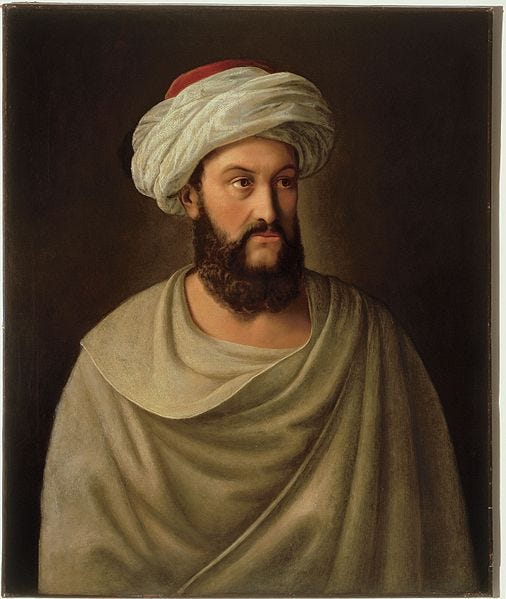
Petra was discovered in the West only in 1812 by Swiss explorer Johann Ludwig Burckhardt.
Johann was infatuated with the Arab world and he heard stories of a lost city in the middle of the desert. In 1809 he left for Syria where he spent 3 years perfecting his knowledge of the Arabic language and learning Muslim customs.
In 1812 he assumed the moniker Sheikh Ibrahim ibn Abdallah, an Indian-born student of the Koran, and joined a group of Bedouins on the road from Syria to Cairo. Johann needed to be extremely cautious. If his true identity was discovered this would mean certain death.
During travel, he encountered rumors of ancient ruins in the middle of a desert.
He explained to Bedouins he wanted to see Petra to fulfill a pious vow — sacrificing a goat at the tomb. Bedouins guided him through a narrow passage into the lost city.
He was the first European to have entered Petra for many centuries.

Petra is today a popular tourist destination. Every year thousands from all over the world go to explore Petra — one of the New seven wonders of the world.
We travel for romance, we travel for architecture, we travel to be lost.
— Ray Bradbury