avatarRhonda Carrier

Free AI web copilot to create summaries, insights and extended knowledge, download it at here

2337

Abstract

ax is a flowering plant endemic to Western Australia. “The flowers ooze nectar and are highly attractive to bees and pollinating insects, particularly on a warm late winter or spring day. They also have a sweet, honey fragrance.” (<a href="https://www.flowerpower.com.au/garden-advice/gardening/geraldton-wax/">source</a>)</p><figure id="2691"><img src="https://cdn-images-1.readmedium.com/v2/resize:fit:800/1*0G4LMWApVy00-wXU4YZTzA.jpeg"><figcaption>Geraldton wax flower (photo by author)</figcaption></figure><p id="dab8">The beautiful banksia was another flower we saw. Banksia belongs to the family Proteaceae. Southwestern Australia contains the greatest diversity of banksias, with 60 species recorded. They are also an important part of the flora of Australia’s eastern coast. Few banksias are found in the arid regions of Australia or the eastern coast's rainforests. (<a href="https://www.anbg.gov.au/banksia/">source</a>)</p><figure id="7633"><img src="https://cdn-images-1.readmedium.com/v2/resize:fit:800/1*FFZOQqOF2S2kGu99DdyyTw.jpeg"><figcaption>Banksia flowers (photo by author)</figcaption></figure><p id="70a7">Areas of Kings Park include the tall beautiful Eucalyptus trees, also called the gum trees. Eucalyptus is a genus of more than 660 species of shrubs and tall trees of the Myrtle family, native to Australia, Tasmania, and nearby islands. (<a href="https://www.britannica.com/plant/Eucalyptus">source</a>)</p><figure id="0ed6"><img src="https://cdn-images-1.readmedium.com/v2/resize:fit:800/1*W1w04dhb9ikG78noa9-jLw.jpeg"><figcaption><i>Eucalyptus or gum trees (photo by author)</i></figcaption></figure><p id="20b9">The beauty of having so many native bush plants and trees is that we saw several types of native birds living and nesting in the trees and feasting on the native bush plants.</p><p id="1fe9">I was especially delighted to see a kookaburra sitting in an old gum tree. It was sitting silently waiting and watching for a fish in the water under the tree branch. I didn’t hear its call but I’ve been singing ever since then: “Kookaburra sits in the old gum tree, Merry merry king of the bush is he. Laugh, Kookaburra, laugh, Kookaburra, Gay your life must be!”</p><figure id="a542"><img src="https://cdn-images-1.readmedium.com/v2/resize:fit:800/1*I_TgAurSuaOEuvOodapEOw.jpeg"><figcaption>Kukaberra

Options

sitting in an old gum tree (photo by author)</figcaption></figure><p id="9c1b">We saw some beautiful Pink and Gray Galas and Twenty-eight parrots. They didn’t stop long enough for me to get a photo but you can view them online here: Gala <a href="https://www.pinterest.com.au/pin/771311873669303629/">photo</a> and Twenty-eight <a href="https://incubator.wikimedia.org/wiki/Wp/nys/Darlmoorluk_(Twenty-eight_Parrot)">photo</a></p><p id="32f1">A magpie stopped close by on the grass and stood quietly while I took its photo. The magpie (<i>Gymnorhina tibicen<b>) </b></i>is a common bird found often in backyards. Apparently, they have a wide variety of calls but this one stood silently hoping for a handout. Peanuts possibly or some other snacks? It was certainly willing to pose.</p><figure id="a65f"><img src="https://cdn-images-1.readmedium.com/v2/resize:fit:800/1*qDQuqUYO6aBN2fnEgi0jtw.jpeg"><figcaption>Magpie (photo by author)</figcaption></figure><p id="37cc">We spotted a tiny bird sitting on a tightly constructed nest. It is a Gray Fantail (Rhipidura albiscapa), also known as a Land Wagtail. It is a fast-flying bird that eats bees and dragonflies. It uses stolen spiderwebs to tie grass blades together to make its nest. (<a href="https://birdwatchinghq.com/birds-of-western-australia/">source</a>) What a beautiful nest.</p><figure id="630e"><img src="https://cdn-images-1.readmedium.com/v2/resize:fit:800/1*nT69CywFSTQTFfwhpV6_Iw.jpeg"><figcaption>Gray Fantail on its nest (photo by author)</figcaption></figure><p id="c9a1">The gardens were beautiful but so were the views of the Swan River and Darling Range in the distance.</p><figure id="661b"><img src="https://cdn-images-1.readmedium.com/v2/resize:fit:800/1*FTabcLGSR3Y_7Apb-jLXLQ.jpeg"><figcaption>Swan River view (photo by author)</figcaption></figure><p id="c0e6">If you get to Perth, be sure to visit Kings Park. Besides the beautiful gardens, you can visit the State War Memorial, the Royal Kings Park Tennis Club, and a reservoir. Plan to spend several hours admiring the flora and fauna and the views.</p><p id="bfe0">I’m not the only one enjoying Kangaroo Paw flowers: <a href="undefined"><b>Marcus</b></a><b> </b>saw them growing in Singapore. <a href="https://readmedium.com/the-kangaroos-paw-bd070a2c35ee"><b>The Kangaroo’s Paw</b></a></p></article></body>

Perth’s Kings Park Bushland Flowers and Birds

Kangaroo Paws, Kookaburras and more
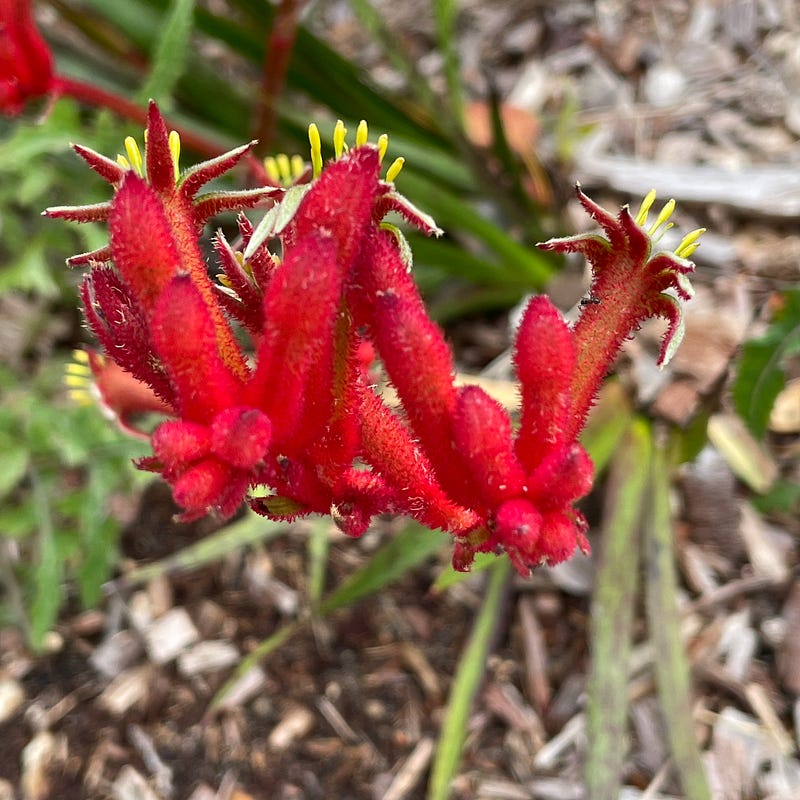
Red Kangaroo Paw flowers (photo by author)

We visited Kings Park overlooking the Swan River and the Perth central business center. It is a popular spot to visit in Western Australia with over five million visitors annually.

The beauty of the park is that it is a combination of botanical garden and native bushland flora. The park is home to over 324 native plant varieties and 80 bird species. (source). I will focus on a just few of the ones that caught my attention.
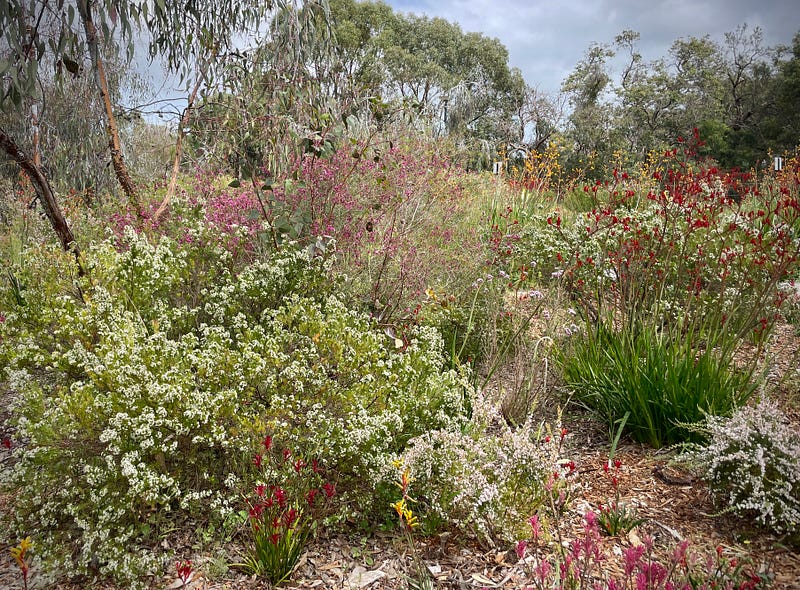
Kings Park Bushland flora (photo by author)

The tall (1.5–2 M) red kangaroo paw flowers caught my attention as soon as we started walking through the bushland area. It is named kangaroo paw because its shape is similar to a kangaroo’s paw. It grows best in sunny locations. It can tolerate a variety of soil types. The nectar-rich flowers are attractive to wildlife. It sounds like a plant to add to every garden in Western Australia.
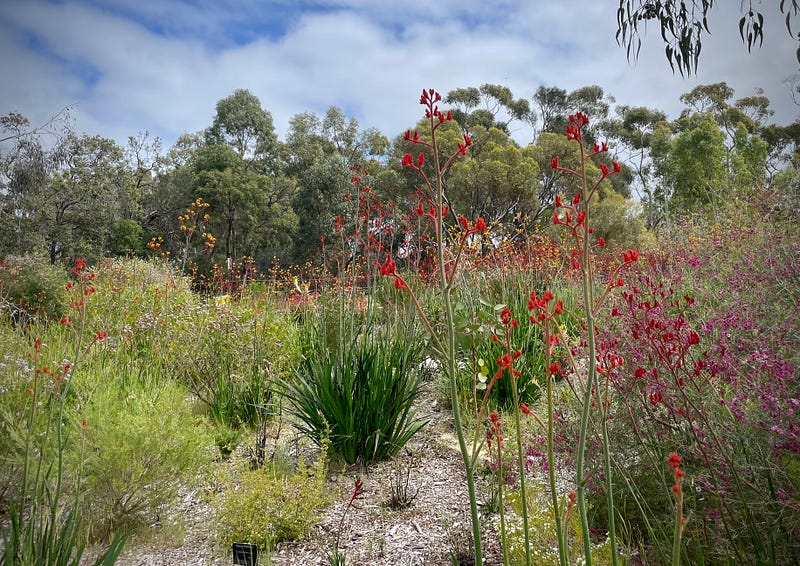
Red Kangaroo Paw flowers and other bushland flora. (photo by author)

I discovered as we toured the garden that there are varieties of kangaroo paw flowers in other colors. Our host this week in Perth is a gardener. She said the shorter red and green kangaroo paw flower (Anigozanthos Bush Revolution) is native to this area, so it is the one most likely to be found in the surrounding bushland.
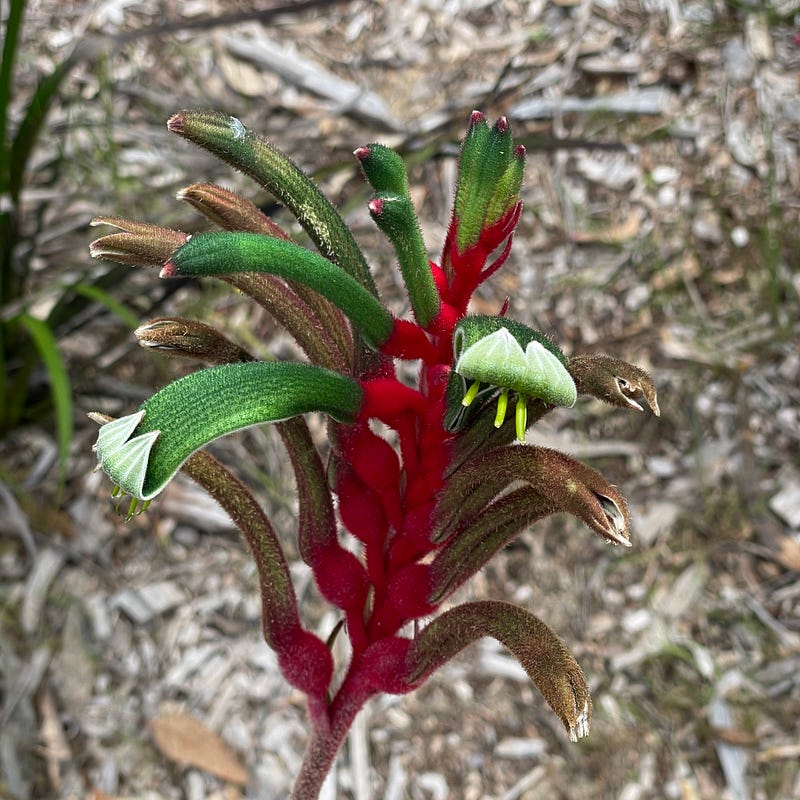
Bushland variety of Kangaroo Paw (photo by author)

Another lovely flowering plant we saw was the Geraldton wax flower (Chamelaucium uncinatum). Geraldton wax is a flowering plant endemic to Western Australia. “The flowers ooze nectar and are highly attractive to bees and pollinating insects, particularly on a warm late winter or spring day. They also have a sweet, honey fragrance.” (source)
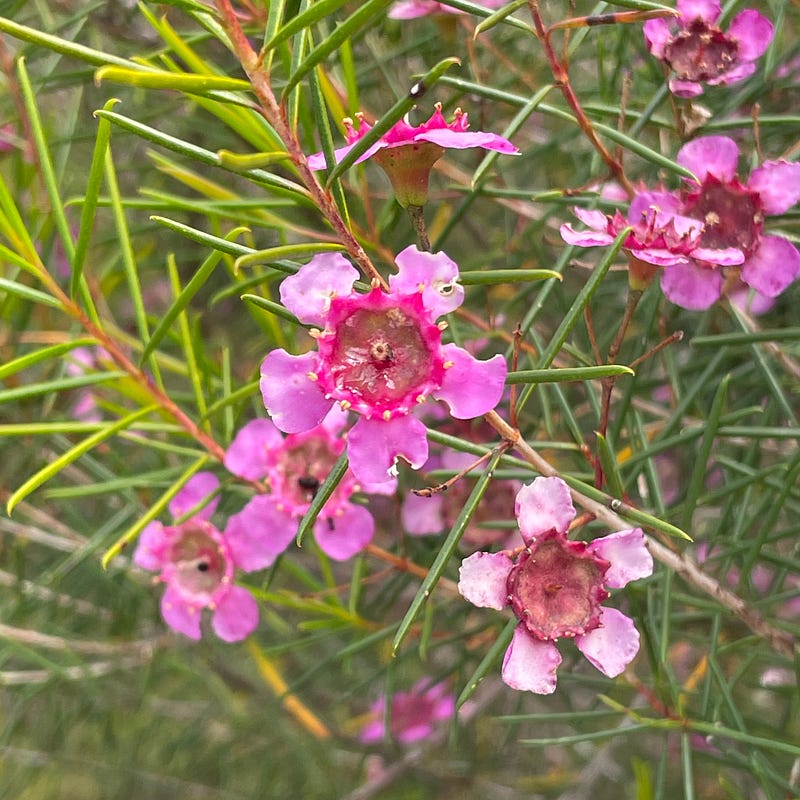
Geraldton wax flower (photo by author)

The beautiful banksia was another flower we saw. Banksia belongs to the family Proteaceae. Southwestern Australia contains the greatest diversity of banksias, with 60 species recorded. They are also an important part of the flora of Australia’s eastern coast. Few banksias are found in the arid regions of Australia or the eastern coast's rainforests. (source)
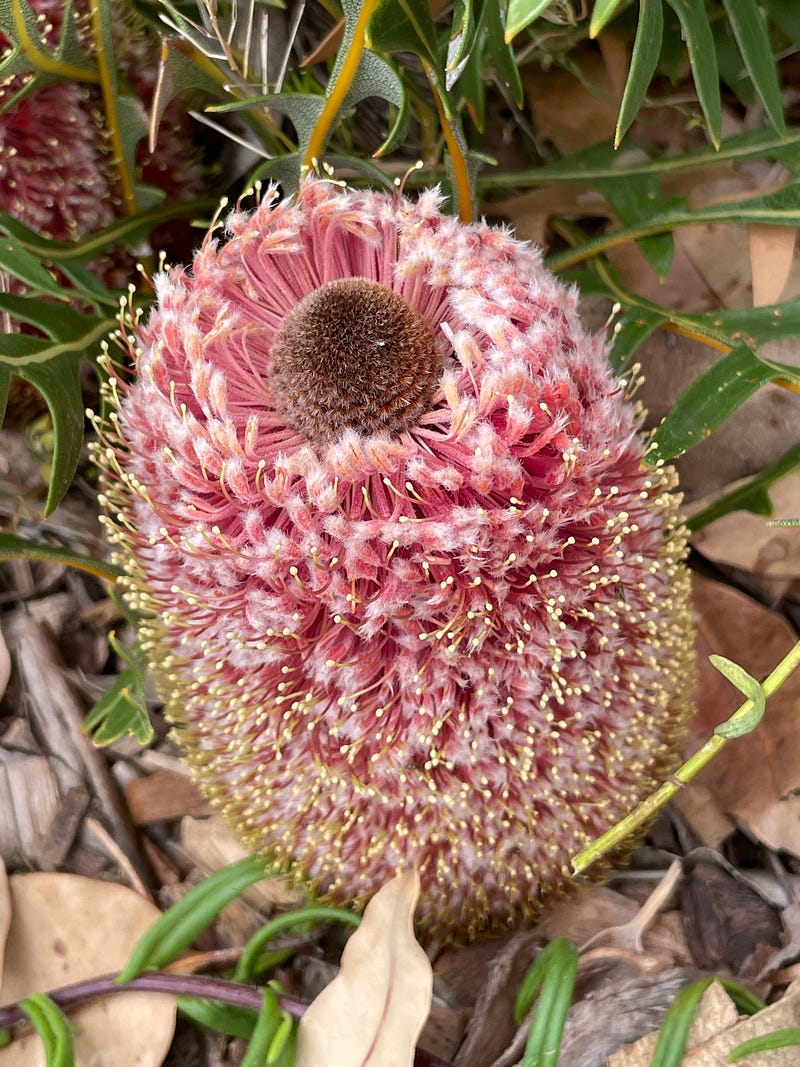
Banksia flowers (photo by author)

Areas of Kings Park include the tall beautiful Eucalyptus trees, also called the gum trees. Eucalyptus is a genus of more than 660 species of shrubs and tall trees of the Myrtle family, native to Australia, Tasmania, and nearby islands. (source)
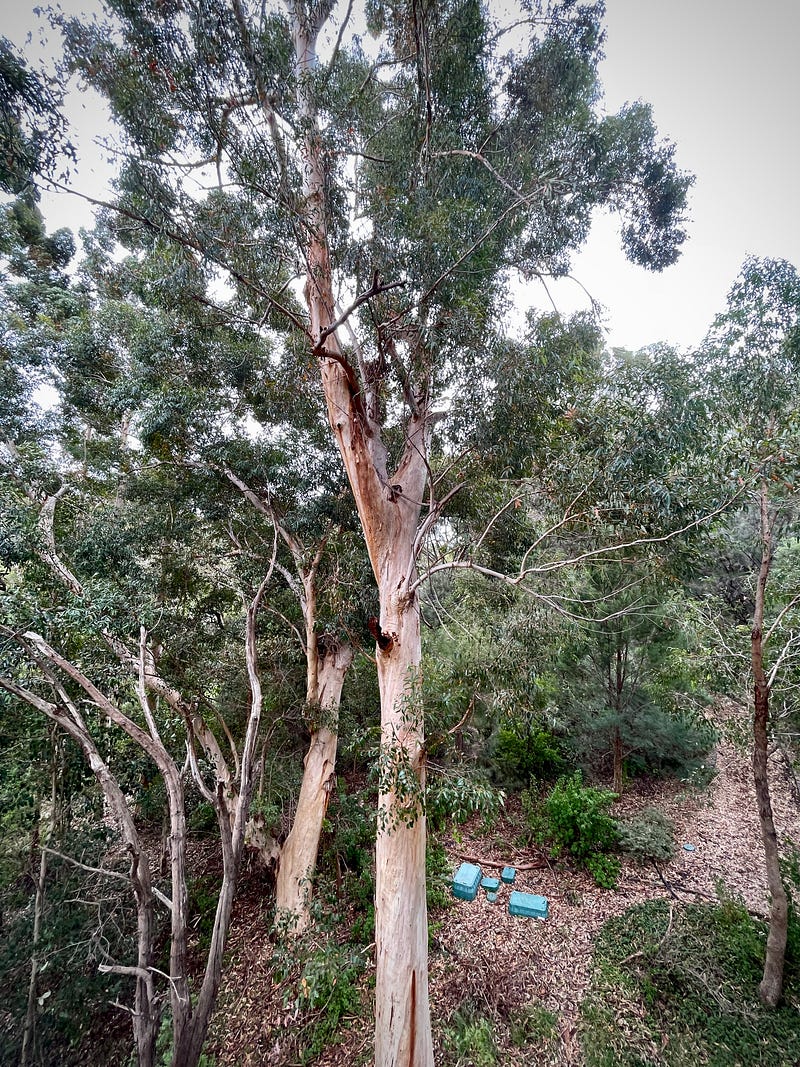
Eucalyptus or gum trees (photo by author)

The beauty of having so many native bush plants and trees is that we saw several types of native birds living and nesting in the trees and feasting on the native bush plants.

I was especially delighted to see a kookaburra sitting in an old gum tree. It was sitting silently waiting and watching for a fish in the water under the tree branch. I didn’t hear its call but I’ve been singing ever since then: “Kookaburra sits in the old gum tree, Merry merry king of the bush is he. Laugh, Kookaburra, laugh, Kookaburra, Gay your life must be!”
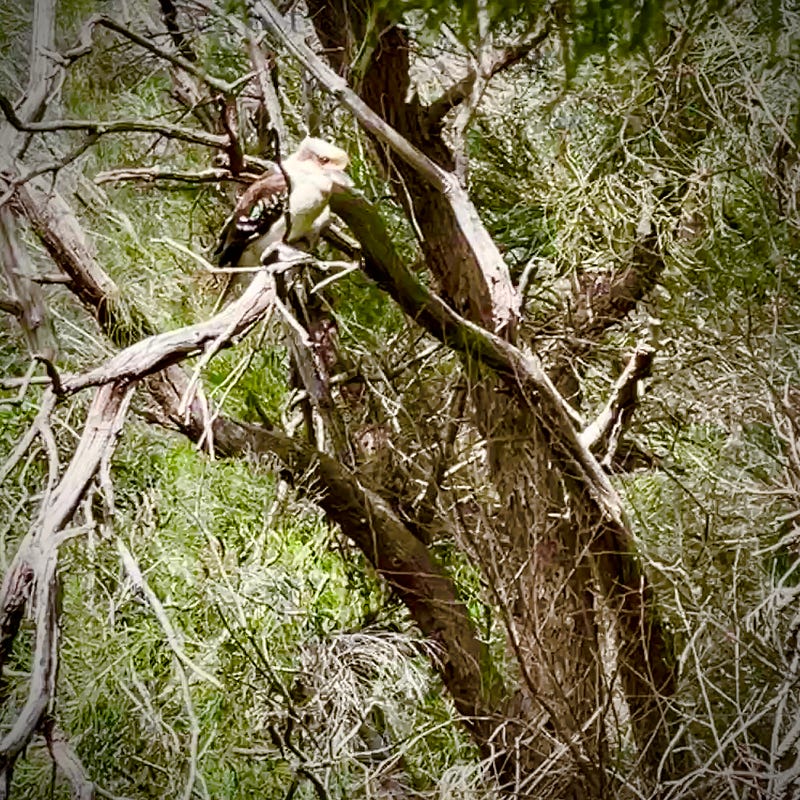
Kukaberra sitting in an old gum tree (photo by author)

We saw some beautiful Pink and Gray Galas and Twenty-eight parrots. They didn’t stop long enough for me to get a photo but you can view them online here: Gala photo and Twenty-eight photo

A magpie stopped close by on the grass and stood quietly while I took its photo. The magpie (Gymnorhina tibicen) is a common bird found often in backyards. Apparently, they have a wide variety of calls but this one stood silently hoping for a handout. Peanuts possibly or some other snacks? It was certainly willing to pose.
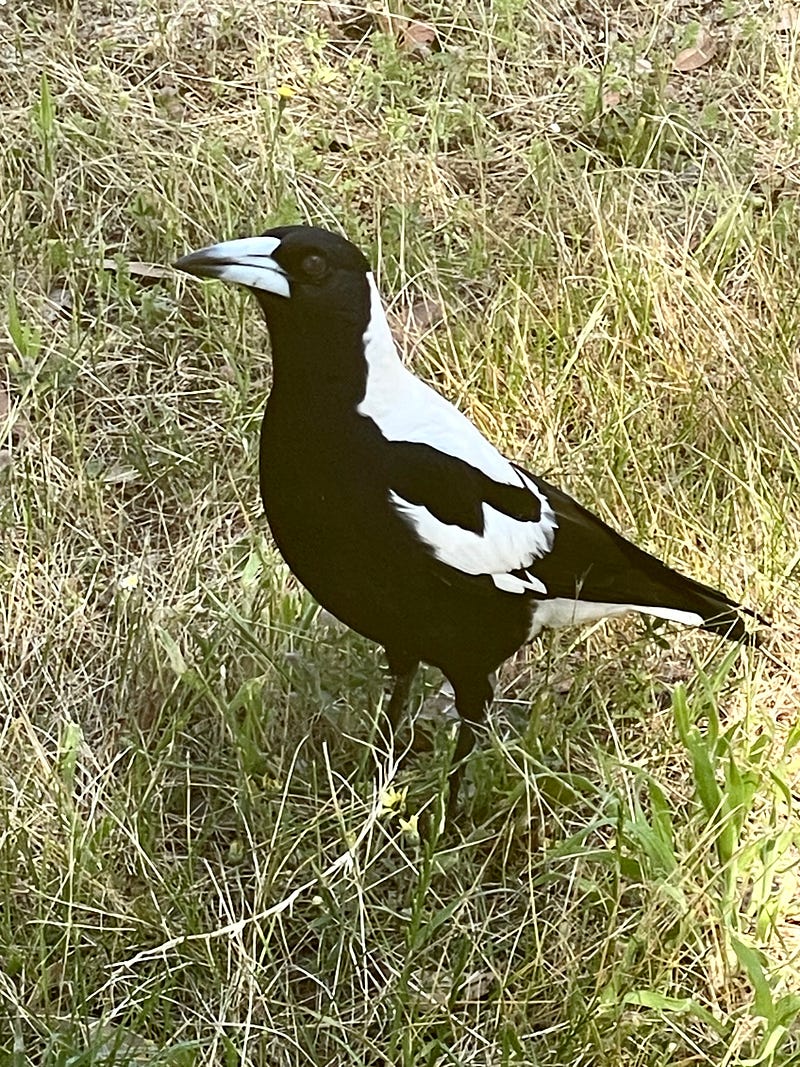
Magpie (photo by author)

We spotted a tiny bird sitting on a tightly constructed nest. It is a Gray Fantail (Rhipidura albiscapa), also known as a Land Wagtail. It is a fast-flying bird that eats bees and dragonflies. It uses stolen spiderwebs to tie grass blades together to make its nest. (source) What a beautiful nest.
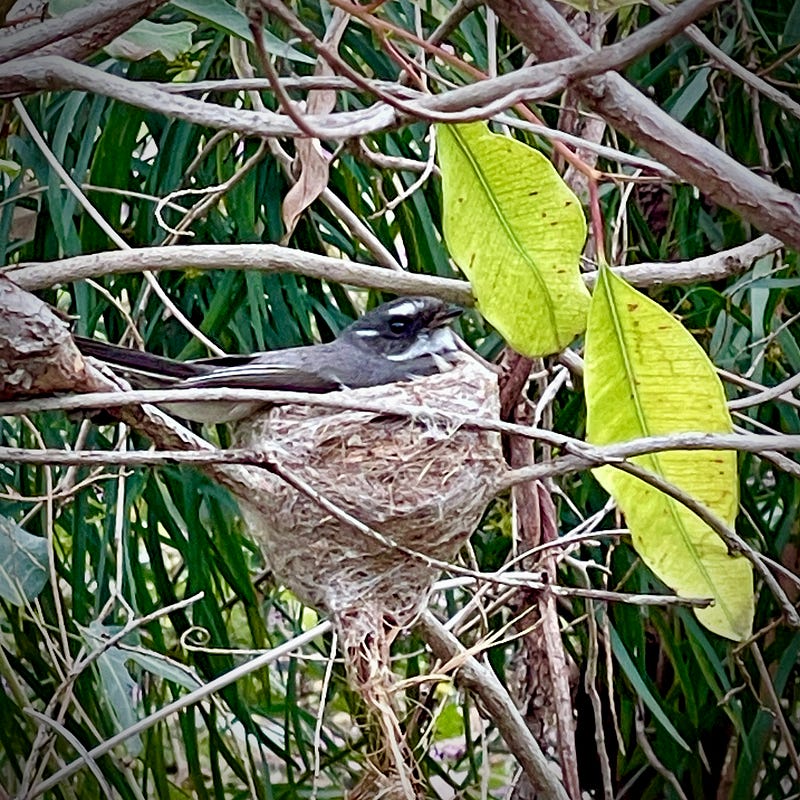
Gray Fantail on its nest (photo by author)

The gardens were beautiful but so were the views of the Swan River and Darling Range in the distance.
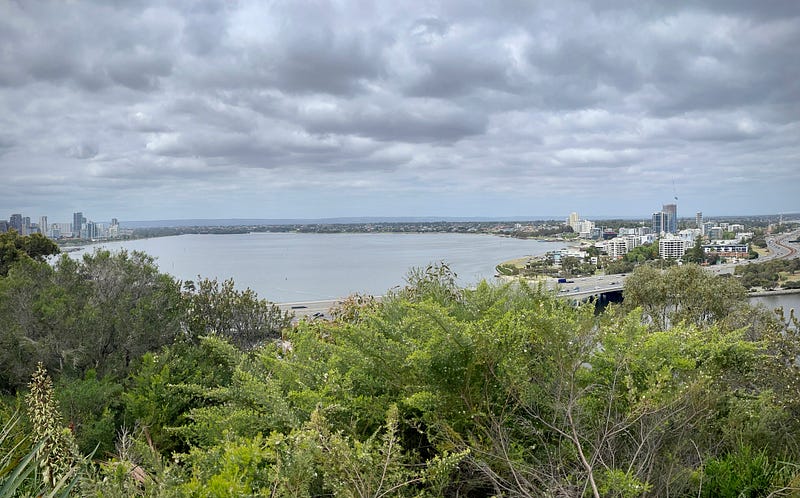
Swan River view (photo by author)

If you get to Perth, be sure to visit Kings Park. Besides the beautiful gardens, you can visit the State War Memorial, the Royal Kings Park Tennis Club, and a reservoir. Plan to spend several hours admiring the flora and fauna and the views.

I’m not the only one enjoying Kangaroo Paw flowers: Marcus saw them growing in Singapore. The Kangaroo’s Paw

Wildflowers
Photography
Nature
Birds
Western Australia
Recommended from ReadMedium