
Trauma informed | Perspective | Writing | Mindfulness | Spiritual Intelligence
Perspectives of the Stories We Tell
Trauma Informed Communication Skills in Social Media
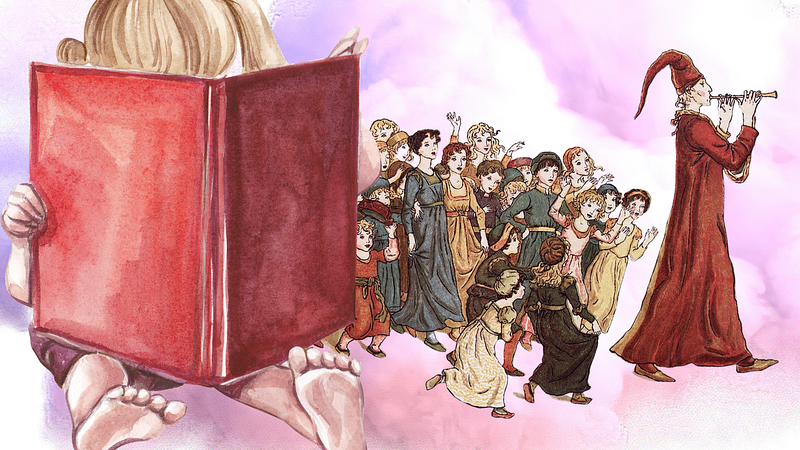
As a writer, I get to choose if I want to be a leader or a follower. Our perspectives, viewpoints, and word choices can affect someone with no notion of what we may trigger or spark within them.
Especially in the land of social media!
Trauma, Triggers, and Mindsets — Oh My!
Stories, movies, and music play a big part of triggers, both good and bad, that affect us. For example, in the scene in the Wizard of Oz, where the group is getting ready to move through the dark forest, they band their arms together and chant, “Lions, Tigers, and Bears OH MY.” As they repeat it, the music and the words get louder and their steps get quicker. It provokes the anxiety response within your body as it taps into three of your five senses.
That is how quickly a trauma response can occur. Seemingly out of nowhere, something so simple can set it in motion. Are you feeling it right now? I am.
Even with as much work as I have done, my body still responds. The rapid heartbeat, shallow breathing, and tense muscles are the clues that the trigger activated the fight, flight, or freeze mode.
The difference is I have a full awareness of it now. Before I did, I would react and then question why I acted the way I did. Now, thankfully, I can take a deep breath, say okay, and choose my response.
Changing Your Mindset
Changing our mindsets is learning to react from a place of growth rather than a fixed fear based place. During my master mindset coach training, four courses comprised the teachings; confidence (which includes fixed and growth-mindset), emotional intelligence, CBT (cognitive behavior techniques) and REBT (rational emotive behavior techniques).
Anyone who has read my earlier stories is aware of my use of the events and scenes from the Wizard of Oz, as it is a core component of my spiritual path and how I have used this technique on my long road to healing.
My journey using the Wizard of Oz started as a way for me to deal with a recurring nightmare I started having as a teenager. It was a fear-filled scene from the movie. When it resurfaced in my thirties, I decided it was time to deal with it once and for all. Little did I know then, it was actually of CBT (Cognitive Behavior Technique) before I knew what that even was.
Many synchronicities occurred during the same time period in my life that introduced me to spirituality beyond the religion-based stories of my childhood. These synchronicities often occurred from my co-dependent 12 step journey and a metaphysical bookstore.

Shame, guilt, and recovery of self
Shame and guilt often get interchanged. However, there is one big difference — mindset. Guilt usually occurs over something we have done, while shame occurs for something we believe we are (or aren’t). I did something bad versus I am bad or I’m not good enough.
Shame and guilt fall into the fixed and growth-mindsets. Shame is a fixed mindset and often puts us in the victim survival mode. Guilt can be a stepping stone toward a growth-mindset. Being aware of the difference between shame and guilt can often cause a shift of perspective about yourself and lead to new actions.
Recovery of self is learning to release the trauma, as it is one of the top contributors of shame. From my experience, this is where spirituality comes into play. Perhaps that is why the first three steps of the Anonymous 12-step programs focus on this. It is the foundation to be laid before we can move into things like emotional intelligence, CBT, or REBT.
Trying to change our behaviors before we realize and trust there is a greater spirit at work beyond our own thinking can leave us searching for things outside ourselves to fix the behaviors. It makes us rely on old, limited emotions and cognitive behavior patterns.
I wrote “When Mindfulness Becomes a Spiritual Homecoming” in September 2021. A lot has happened in that year and a half, but one thing is stronger than ever. My valued belief in Danah Zohar’s 12 principles underlying spiritual intelligence — as I believe it is the essence of trauma informed communication.
Self-awareness: Knowing what I believe in and value and what deeply motivates me. Spontaneity: Living in and responding appropriately to the moment. Being vision- and value-led: Acting from principles and deep beliefs and living accordingly. Holism: Seeing larger patterns, relationships, and connections and having a sense of belonging. Compassion: Having the quality of “feeling-with” and deep empathy. Celebration of diversity: Valuing other people for their differences, not despite them. Field independence: Standing against the crowd and having one’s own convictions. Humility: Having the sense of being a player in a larger drama, of one’s authentic place in the world. Tendency to ask fundamental “Why?” questions: Needing to understand things and get to the bottom of them within yourself Ability to reframe: Standing back from a situation or problem and seeing the bigger picture or wider context. Positive use of adversity: Learning and growing from mistakes, setbacks, and suffering. Sense of vocation: Feeling called upon to serve, to give something back.
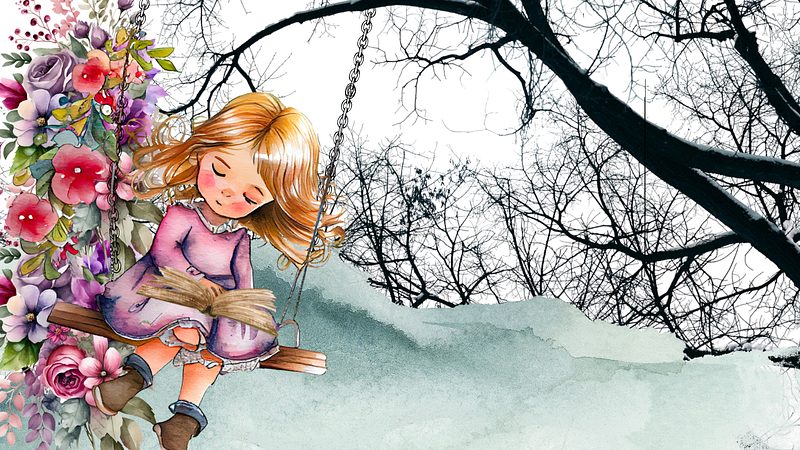
Trauma informed communication is essential in sharing our stories. Rather than using our words to trauma bond with the pain and darkness, we can use our stories to show the beauty of recovering our sense of self. As the picture depicts, instead of breaking chains we hold from the dark, leafless shadow branches of our past, we can use those chains to shift our perspective and swing into the colorful beauty of our present moments. The little boy or girl inside is safe to come out and play and enjoy life again!
Share those moments of hope, growth, and spiritual kindness!
Diana C. this is what I would say “If I had 5 minutes and the whole world was forced to listen”