Personal Research Statement
Dr. Michael Zargham
I aim to address global social and environmental challenges through the most powerful leverage point ever to exist: information structures and flows.
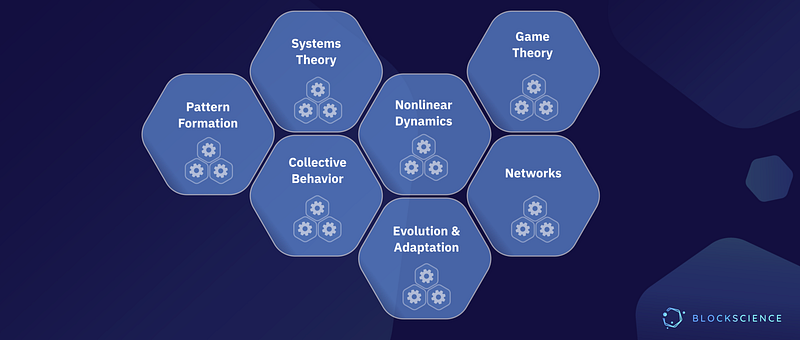
Throughout history the networks of information flows among humans have shifted their topologies and time scales. These network dynamics have been both consequence and source of technological and social innovations.
In our global era information spreads faster than ever and the mixing rates are less coupled with geography than they have been at any point in history. However, faster and more connected is not “better” automatically.
Network dynamics, the invisible ley lines of society, are complex and unintuitive. Rather than build products, I aim to build knowledge which can scale through the products, decisions and even motivations of others. To this end, there are 3 major areas:
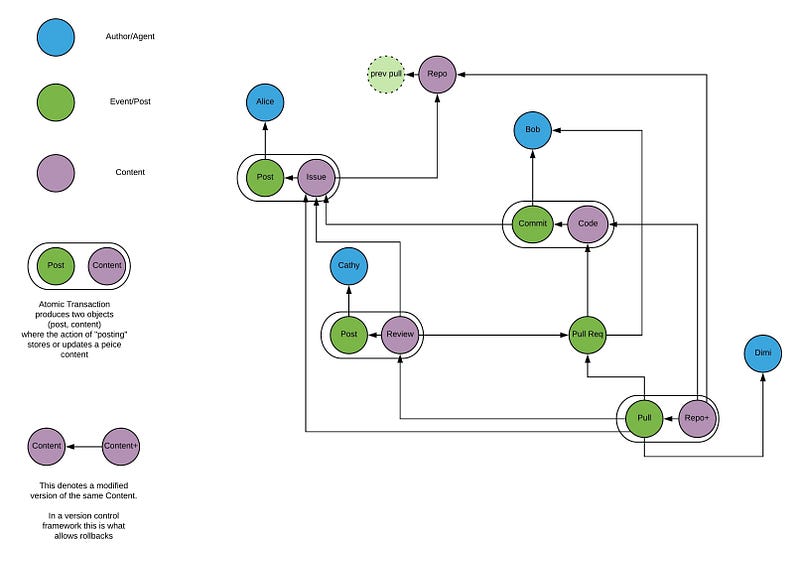
[1] Attestation and Attribution networks: graphs which contain the provenance of information in much the same way provenance of physical goods is traced. IoT, automation, cryptography and more have made this provenance both possible and necessary.
[2] Modernizing the field of economics by revisiting classical theories of value, choice and trade with updated mathematical formalisms more closely aligned with the modern world: value flows as stochastic dynamical systems over networks of networks.
[3] Application of Engineering Ethics to the emerging technologies that are increasingly mediating our social and economic activities. ‘Second order’ thinking is required to reason about the effects of subjective choices of objective metrics being codified into our social and economic infrastructure.
I see global society itself as an emergent phenomena that arises from how humans perceive value. Thinking this way the global economy is a co-creation of epic proportions.
Lasting change cannot be accomplished by anyone person or even an institution. Together we engage in collaborative tinkering to discover a better version of our world.
Re-examining our narratives about change, I believe we can change the world not merely through disruption ‘or’ evolution, but rather seeing change as occurring over a spectrum of frequencies. When we embrace systems change as occurring in many timescales at the same time, this will significantly enhance our ability to discover a sustainable future.
Projects to check out:
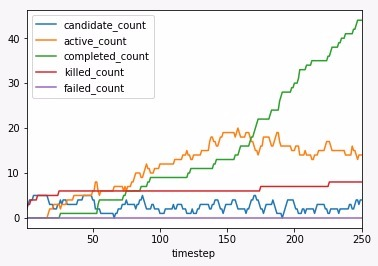
cadCAD: ‘Complex Adaptive Dynamics Computer Aided design’ is a python based unified modeling framework for stochastic dynamical systems and differential games capable of modeling systems at all levels of abstraction from Agent Based Modeling (ABM) to System Dynamics (SD), and enables smooth integration of computational social science simulations and empirical data science workflows. Software is in private beta, building towards open source launch. (Point of contact Jonathan Gabler at BlockScience)
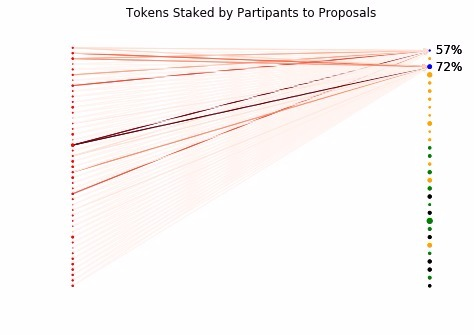
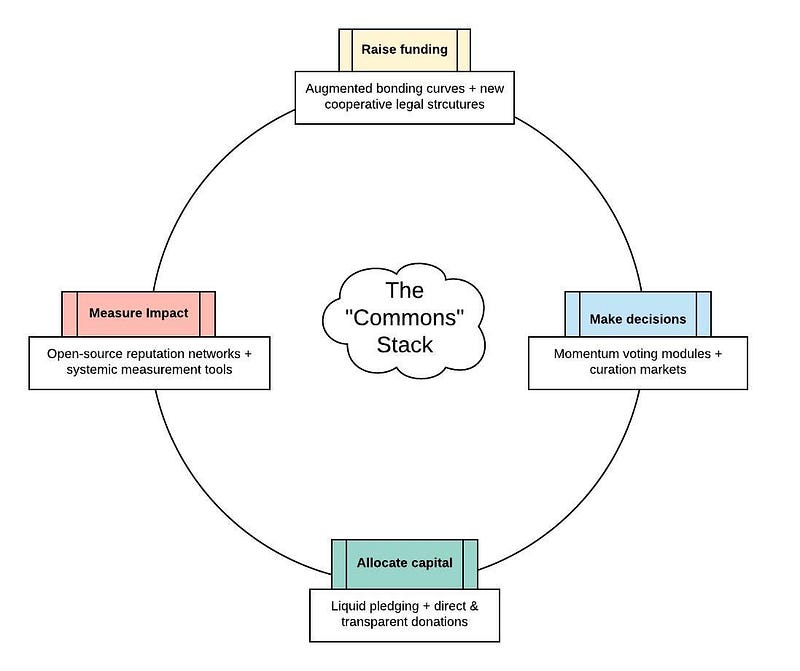
Commons Stack: reference architectures and reference implementations for open collaborative communities building and/or maintaining commons. Notable initiatives within the commons stack include ‘Conviction Voting’ and ‘Augmented Bonding Curves.’ More details to come. (Point of contact Griff Green at @Giveth)
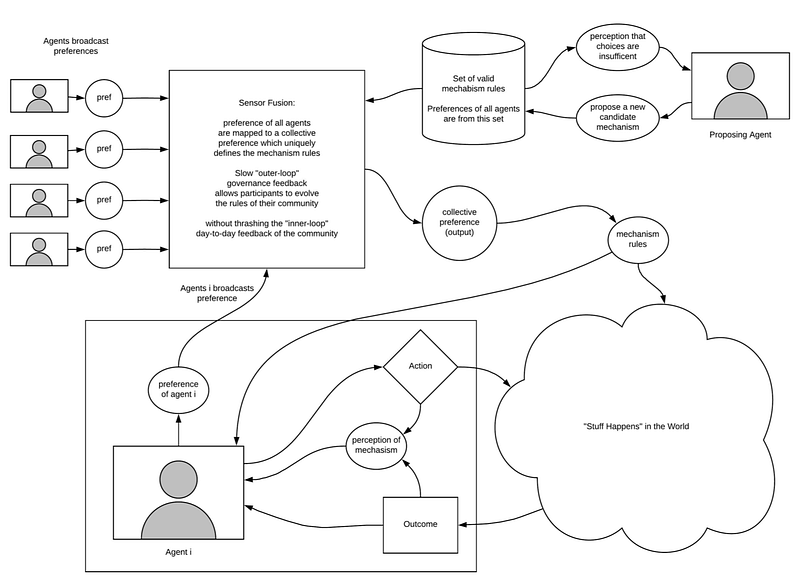
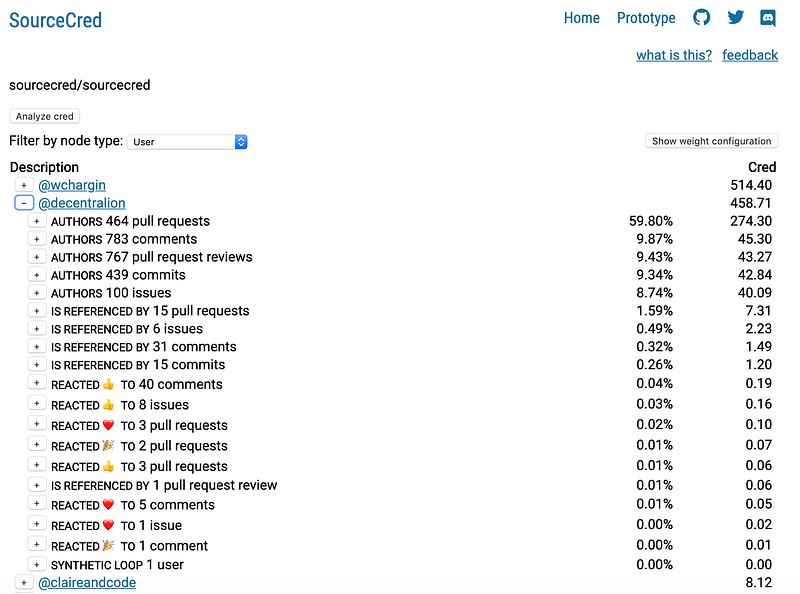
SourceCred: An open source project itself, SourceCred aims to empower open-source developers and communities by creating a project-specific reputation metric called cred. Cred metrics are distillations of network structure which can be customized to fit communities values or adapted to counter gaming of incentives. (Point of contact Dandelion Mané at Protocol Labs)
I have a great many people to thank for contributing to the creation of this statement!
Links and Cross References!
- The BlockScience team produced a two part series introducing the concepts and tools for cadCAD as part of a broader business case: Introducing Complex Adaptive Dynamics Computer Aided Design cadCAD: Filling a Critical Gap in Open-Source Data Science
- cadCAD simulation engine is in private beta but some early tutorials are in a public repo.
- SourceCred introduction article by SouceCred Founder and Project Lead Dandelion Mané.
- Some of my research related to SourceCred in these additional articles: On Subjectivity in Algorithms Network Formation Games
- Commons Stack Introduction Article by Jeff Emmett
- Deep Dive on Augmented Bonding Curves by Abbey Titcomb
- The original research proposal for Conviction Voting.
- A preliminary cadCAD simulation of Conviction Voting.
- Notes and cadCAD on Community-Corporation Substitutability, a Three Sided Market model for Crypto-Cooperatives as alternative for platform Business models.
- A Co-op owned SaaS “discount token” model designed for Sweetbridge.
- Discussion of Engineering Design Practice including Human Impacts and Ethics is a central theme in my series co-written with Charles M Rice: On the Practice of Token Engineering Part 1: Enter the Token Engineer On the Practice of Token Engineering Part 2: Capability and Responsibility On the Practice of Token Engineering Part 3: Something is Missing
- Community Building and Educational Material Curation at #Token Engineering with Trent McConaghy and many others.
- Academic Paper on Blockchain Enabled Economic Systems in the Proceedings of the International Conference on Complex Systems, co-authored with Zixuan Zhang and Victor Preciado.
- Complex Systems Keynote Lecture at Ridderzaal (Hall of Knights), the Hague; hosted by The Dutch Government /DutchChain / Odyssey Open Innovation Program.
Still more links to come as other long term research projects come into the public domain!


