
Perceiving Time — Why Time Speeds up when Aging
And how the perception of time is relative
How a clock measures Time and how you perceive it are totally different. They flow at varying rates. As we grow older, it can often feel like Time goes by faster and faster. Specially when compared to those endless days of childhood that seemed to last so much longer than they do now.
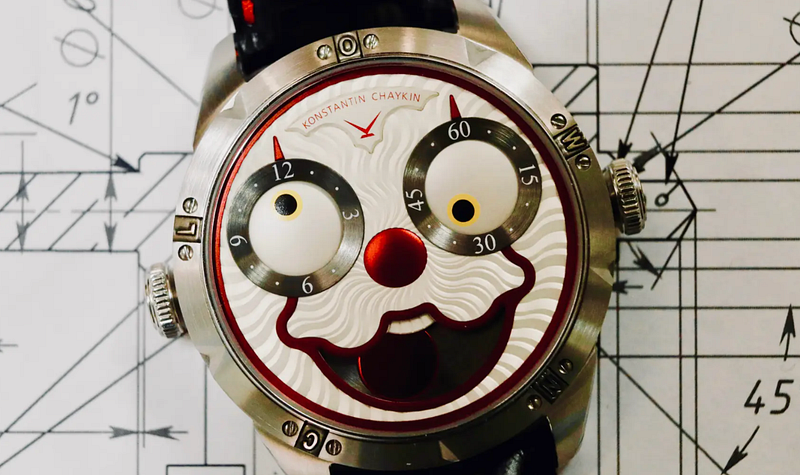
Taking a deep dive into theory, Time is a fascinating phenomen. It is considered to be a fundamental quality of universe that, along with the three known spatial dimensions (length, width and height), makes up what Einstein described as spacetime. Together with its famous relativity theory, Einstein proved that Time is relative and actually slows down due to gravity and acceleration. Thus Time is completely relative, depending on its observer, rather than an immutably fixed constant everywhere in the universe.
However, going back to our daily perceptions and beyond theoretical physics, all humans know intuitively that Time is relative. Who has never felt that Time passes much faster the older we get? According to psychologist and BBC columnist Claudia Hammond, “the sensation that Time speeds up as you get older is one of the biggest mysteries of the experience of Time.” The speeding up of subjective Time with age is well documented by psychologists, however, there is no a main consensus on the causes. So let’s try to shed some light by summaring up some of the potential causes to such effect.
The less you have lived, the more dilated Time is perceived.
Santosh Kesari points out that when we’re children, a year of life amounts to much more Time of existence, percentage-wise. This simple explanation is based on the fact that for a 10-year-old, one year represents a whole 10 percent of their entire life and between the 15 and 20 percent of their conscious memory. However, for an older 50-year-old represents less than 2 percent of their recallable life. Additionally, when we are children, we are constantly being introduced to new things and ideas that leave lasting impressions on our memories. Kesari states that “We gauge Time by memorable events and fewer new things occur as we age to remember, making it seem like childhood lasted longer”.
Children have faster biological rates.
Another intriguing hypothesis is grounded in the fact that children have faster heart rates and faster breathing rates than adults. Therefore, it is likely that their brains electrophysical activity and rythms occur just faster as well. As the study of Sabina Choi shows, the heart’s pacemaker slows the heart’s rhythm as children get older. Just like this heart’s pacemaker slows the heart’s rhythm as humans grow up, it is possible that the brain has a pacemaker as well that slows the perception of Time as people age. Hence, this neural system would provide an internal sense of the passage of Time.
The speed at which images are obtained and processed
A paper published by Professor Adrian Bejan presents an argument based on the physics of neural signal processing. According to Bejan, this apparent temporal discrepancy can be blamed on the ever-slowing speed at which images are obtained and processed by the human brain as the body ages. During the paper he hypothesizes that, as humans grow old, the rate at which our brain processes visual information slows down, and this is what makes Time to speed up as we age. He writes that “People are often amazed at how much they remember from days that seemed to last forever in their youth. It’s not that their experiences were much deeper or more meaningful, it’s just that they were being processed in rapid fire.” Another important side-effect of aging is that our nerves accumulate damage that provides resistance to the flow of electric signals, which further slows the processing Time.
This slower processing times make us perceive fewer frames-per-second — meaning more Time passes between the perception of every new mental image. Thus, Time feels to pass by more rapidily. When we are young, each second of actual Time is packed with way more mental images. Like a slow-motion camera that captures thousands of images per second, Time appears to pass more slowly.
We all live only once!
Whatever causes this Time distortion, it certainly seems like all of us are equally affected. Therefore, there is no much we can do to just keep those endless days of childhood — or at least make them last longer. This is why we should be aware that we only got this one life to live and try to follow the carpe diem philosophy while seizing every singe moment.
Feel free to share your thoughts and experiences in the comments! ✨
You can suscribe to my Medium Newsletter to stay tuned and receive my content. I promise it will be unique!
If you are not a full Medium member yet, just check it out here to support me and many other writers. It really helps :D
Some other nice medium related articles you should go check out! :D