avatarMichael Adelizzi

Free AI web copilot to create summaries, insights and extended knowledge, download it at here

2923

Abstract

</p><p id="3313">Would we get closer to success if we’re willing to suffer for it?</p><h1 id="7bbb">The Hell of the North</h1><p id="2f37">In 2016, a rider of Team ORICA Green EDGE won the <a href="https://www.paris-roubaix.fr/en/">Paris-Roubaix</a>, a single-day professional road cycling race held in northern France every year. The race profile that season, which tends to vary year-to-year, covered 160 miles, nearly 35 of which traversed cobblestones.</p><blockquote id="db00"><p>Forget the bike. Have you driven a car over cobblestones? Menacing.</p></blockquote><p id="f70a">The Paris-Roubaix terrain is so devilish that it earned itself a fitting moniker: “The Hell of the North.” Winning with an official time of 05:51:53, Mat Hayman became Lucifer himself.</p><p id="71c9">Professional cyclists don’t spend the year training only to compete in this race. In another few months, most of them will be competing in the Tour de France. Never mind the races in between. This year, the <a href="https://www.letour.fr/en/overall-route">Tour</a> will cover more than 2,000 miles (3300 km) and <a href="https://www.cyclingweekly.com/news/racing/tour-de-france/the-tour-de-france-in-numbers-50771">68,000</a> harrowing feet (20,700 m) of vertical ascent over 23 days. Cyclists will burn an average of <a href="https://www.businessinsider.com/tour-de-france-cyclist-6071-calories-day-chipotle-pizza-2016-7#:~:text=Tour%20de%20France%20cyclists%20ride,each%20day%20of%20the%20race.">6,000</a> calories per day.</p><p id="06bb">To compete in races like these, you have to work pretty darn hard. I mean harder than a few hours every day working on a jump shot. Harder than hours of blue-line-to-blue-line sprints and stick handling. And even more demanding than the hours spent sharpening speed, agility, and strength at an NFL practice facility.</p><p id="d612">But only to “compete” is to meet your rivals eye-to-eye, hoping to gain an edge over an opponent’s misstep or reactional lag. If you want to <b>win </b>a race like the Paris-Roubaix, you have to <i>suffer </i>for hours — every — single — day.</p><p id="fbea">There is no sport other than cycling that demands its competitors work so hard for so long. There are <a href="https://www.reference.com/world-view/average-length-nba-game-7df1bcf6ed0aa740">48</a> minutes of play in an NBA game. The standard NHL game plays (3) 20-minute periods with 15 minutes of intermission in between. And victim to a running clock, NFL games average a mere <a href="https://qz.com/150577/an-average-nfl-game-more-than-100-commercials-and-just-11-minutes-of-play/">11</a> minutes of gameplay!</p><p id="523b">To get an idea of how hard Hayman worked to prepare, we have to understand how much he suffered to win.</p><p id="1568">A <a href="https://home.trainingpeaks.com/public/workout/UQUUUMD7QCZKWQDRH3FGDCPJXU">look </a>at Hayman’s performance on race day will show he averaged nea # Options rly six hours of Sweet Spot to win the 2016 Paris-Roubaix.</p><p id="45ad">What on earth is Sweet Spot?</p><p id="2725" type="7">“To be a cyclist is to be a student of pain. At cycling’s core lies pain. If you never confront pain, you’re missing the essence of the sport.”</p><p id="c6b9" type="7">U.S. Paralympic Track Cyclist, Jeffrey “Scott” Martin</p><h1 id="ff2f">Measuring Power</h1><p id="c93c">The measure of any cyclist is the duration of steady pedaling power. Serious amateurs to professionals base their training on their most current power output, or Functional Threshold Power (FTP).</p><p id="03f8"><i>FTP is the output of steady power a rider can sustain for one hour.</i></p><p id="dffe">As long as there’s a power meter installed on the bike, any cyclist can see and test their output. And as with any test, it’s essential to <i>try your hardest</i> to produce the most accurate results of your ability. Otherwise, developing a training plan based on your FTP may fall short of helping you reach your true potential.</p><p id="a7ea">That means the FTP test is going to make you suffer; your legs will burn beyond recognition, the lactic acid your body struggles to clear will be damn near bubbling out of your eyes, and you will be gasping for air like there’s none left. And this is just to set the bar for training. You haven’t even started yet.</p><p id="d44f" type="7">“When you want to succeed as bad as you want to breathe, then you’ll be successful.”</p><p id="8768" type="7">Eric Thomas</p><h1 id="0594">Find Your Sweet Spot</h1><p id="b131">If you want to get stronger and build conditioning, many professional cycling coaches recommend Sweet Spot training. Sweet Spot training requires cyclists to ride at about <a href="https://www.trainerroad.com/blog/sweet-spot-training-everything-you-need-to-know/#:~:text=Sweet%20Spot%20training%20is%20completing,)%20and%20amount%20(volume).">90%</a> of their FTP through structured intervals of time.</p><p id="9550">World Tour cyclists like Mat Hayman train with Sweet Spot intervals seven days a week. And not only is it every day, but they’re riding an average of 150–300 minutes of Sweet Spot intervals (depending on which part of the cycling season they’re in) every time they get in the saddle.</p><p id="1049">That means they’re riding at 90% of “trying their hardest” for between two and five hours, every day, just for a training ride. That’s an incredible amount of suffering for success.</p><p id="962e">The most exciting thing about Mat and other cyclists of his caliber is that they know how much suffering they’re in for and do it anyway.</p><p id="bbf8">Too bad for us, we often don’t know the amount of suffering needed for success. We quit before we truly understood what we were in for.</p><p id="d603">To paraphrase Scott Martin’s quote above: If you never confront suffering, you’re missing the essence of success.</p></article></body>

People Work Hard for Success, but Is Anyone Willing to Suffer for It?

What professional cyclists can teach us about how to succeed
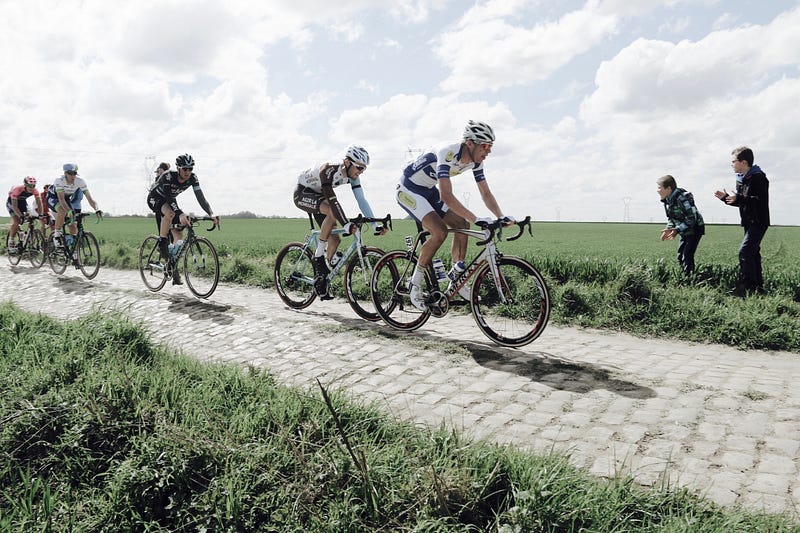
Photo by Simon Connellan on Unsplash

The Recipe for Success

We know what it takes to succeed, right? We know from whom or what source to find good advice, how to craft a coherent plan, and are generally capable of predicting what it’s going to take to get there. Many of us even claim to know its essential ingredients:
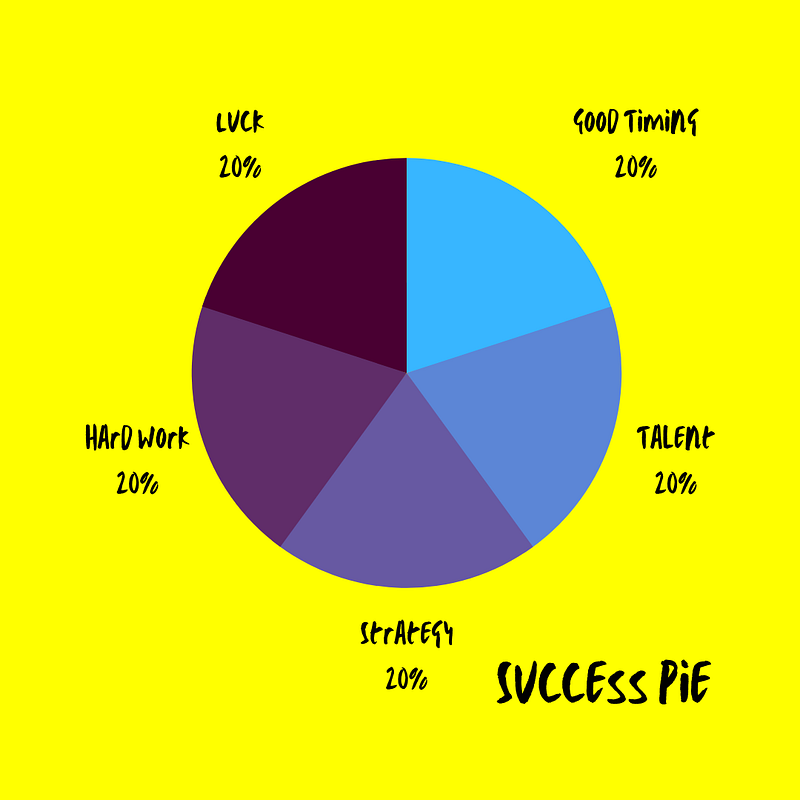
A Hypothetical Success Pie — Author’s Illustration

Still, many of us struggle to find success, as if our understanding of what it takes is all wrong. If we know so much about success, why is it so difficult to attain?

The reasons people fail to find success are as myriad as the number of people looking for it.

Didn’t you get the promotion? Well, it could’ve been bad timing.

Did they pass on your manuscript? Sometimes you need a bit of luck.

Haven’t you shed those stubborn pounds? Let’s take a look at your strategy.

Most of us will agree on the elements that make up success, but even more will disagree about their roles' significance. If you asked a room full of people to draw their own success pie, you’d likely end up with a variation in pies equal to the number of people in the room.

Perhaps your pie looks like this:
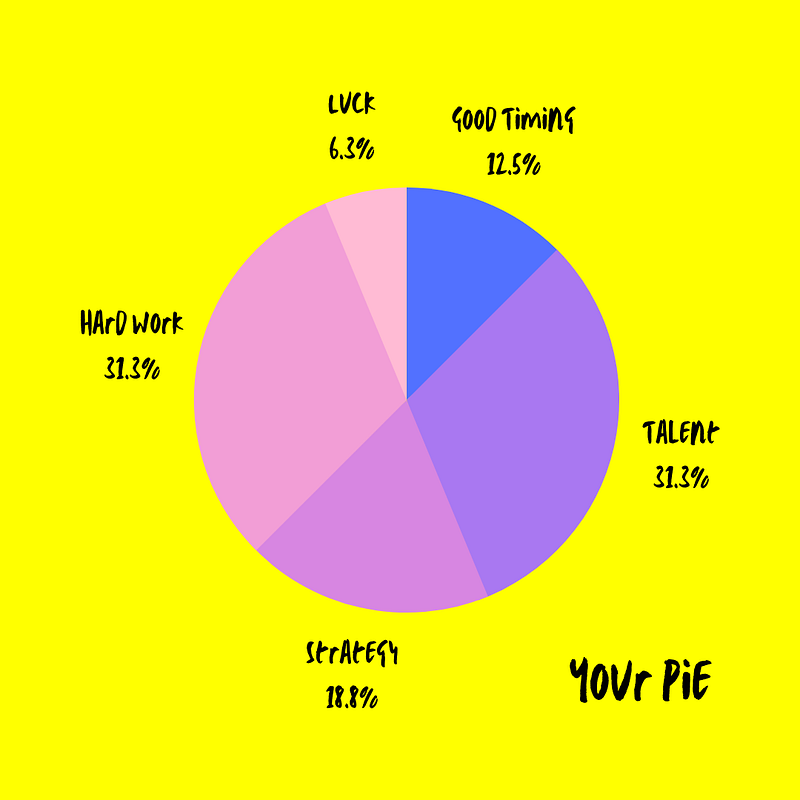
Your Hypothetical Success Pie — Author’s Illustration

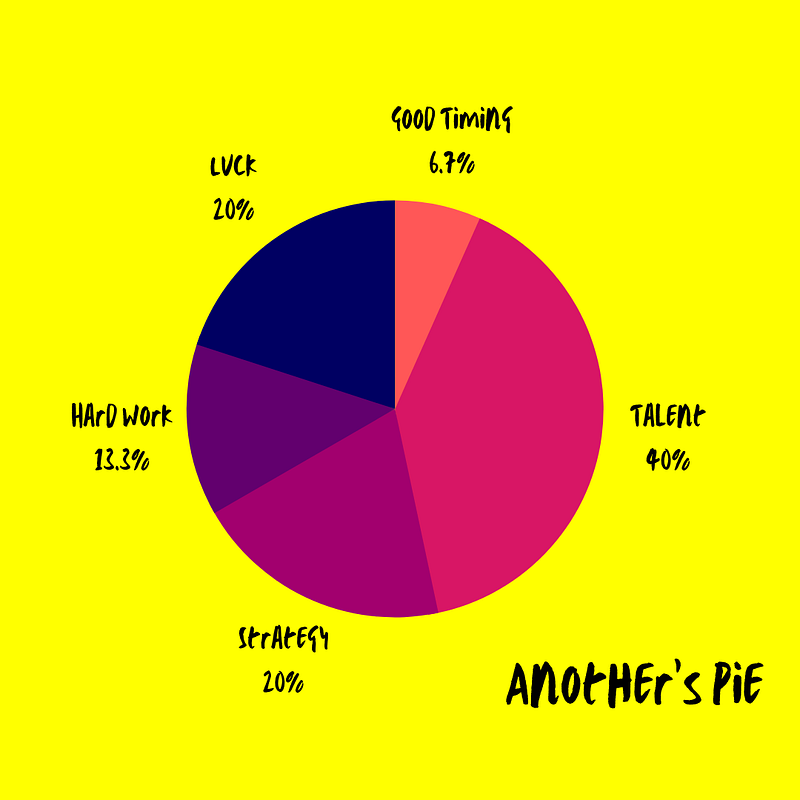
And another’s, this:

Someone Else’s Hypothetical Success Pie — Author’s Illustration

No matter what your success pie looks like, it probably includes the element of hard work, an area we’d all probably admit a greater need for. But I don’t mean adding a little more hard work. I don’t mean a lot of hard work either. What if you increased your level of hard work so much that it becomes something else entirely? What if it became suffering?

Would we get closer to success if we’re willing to suffer for it?

The Hell of the North

In 2016, a rider of Team ORICA Green EDGE won the Paris-Roubaix, a single-day professional road cycling race held in northern France every year. The race profile that season, which tends to vary year-to-year, covered 160 miles, nearly 35 of which traversed cobblestones.

Forget the bike. Have you driven a car over cobblestones? Menacing.

The Paris-Roubaix terrain is so devilish that it earned itself a fitting moniker: “The Hell of the North.” Winning with an official time of 05:51:53, Mat Hayman became Lucifer himself.

Professional cyclists don’t spend the year training only to compete in this race. In another few months, most of them will be competing in the Tour de France. Never mind the races in between. This year, the Tour will cover more than 2,000 miles (3300 km) and 68,000 harrowing feet (20,700 m) of vertical ascent over 23 days. Cyclists will burn an average of 6,000 calories per day.

To compete in races like these, you have to work pretty darn hard. I mean harder than a few hours every day working on a jump shot. Harder than hours of blue-line-to-blue-line sprints and stick handling. And even more demanding than the hours spent sharpening speed, agility, and strength at an NFL practice facility.

But only to “compete” is to meet your rivals eye-to-eye, hoping to gain an edge over an opponent’s misstep or reactional lag. If you want to win a race like the Paris-Roubaix, you have to suffer for hours — every — single — day.

There is no sport other than cycling that demands its competitors work so hard for so long. There are 48 minutes of play in an NBA game. The standard NHL game plays (3) 20-minute periods with 15 minutes of intermission in between. And victim to a running clock, NFL games average a mere 11 minutes of gameplay!

To get an idea of how hard Hayman worked to prepare, we have to understand how much he suffered to win.

A look at Hayman’s performance on race day will show he averaged nearly six hours of Sweet Spot to win the 2016 Paris-Roubaix.

What on earth is Sweet Spot?

“To be a cyclist is to be a student of pain. At cycling’s core lies pain. If you never confront pain, you’re missing the essence of the sport.”

U.S. Paralympic Track Cyclist, Jeffrey “Scott” Martin

Measuring Power

The measure of any cyclist is the duration of steady pedaling power. Serious amateurs to professionals base their training on their most current power output, or Functional Threshold Power (FTP).

FTP is the output of steady power a rider can sustain for one hour.

As long as there’s a power meter installed on the bike, any cyclist can see and test their output. And as with any test, it’s essential to try your hardest to produce the most accurate results of your ability. Otherwise, developing a training plan based on your FTP may fall short of helping you reach your true potential.

That means the FTP test is going to make you suffer; your legs will burn beyond recognition, the lactic acid your body struggles to clear will be damn near bubbling out of your eyes, and you will be gasping for air like there’s none left. And this is just to set the bar for training. You haven’t even started yet.

“When you want to succeed as bad as you want to breathe, then you’ll be successful.”

Eric Thomas

Find Your Sweet Spot

If you want to get stronger and build conditioning, many professional cycling coaches recommend Sweet Spot training. Sweet Spot training requires cyclists to ride at about 90% of their FTP through structured intervals of time.

World Tour cyclists like Mat Hayman train with Sweet Spot intervals seven days a week. And not only is it every day, but they’re riding an average of 150–300 minutes of Sweet Spot intervals (depending on which part of the cycling season they’re in) every time they get in the saddle.

That means they’re riding at 90% of “trying their hardest” for between two and five hours, every day, just for a training ride. That’s an incredible amount of suffering for success.

The most exciting thing about Mat and other cyclists of his caliber is that they know how much suffering they’re in for and do it anyway.

Too bad for us, we often don’t know the amount of suffering needed for success. We quit before we truly understood what we were in for.

To paraphrase Scott Martin’s quote above: If you never confront suffering, you’re missing the essence of success.

Success
Motivation
Self Improvement
Hard Work
Cycling
Recommended from ReadMedium