
People who gain incredible skills after head trauma
Acquired Savant Syndrome is an extraordinary condition
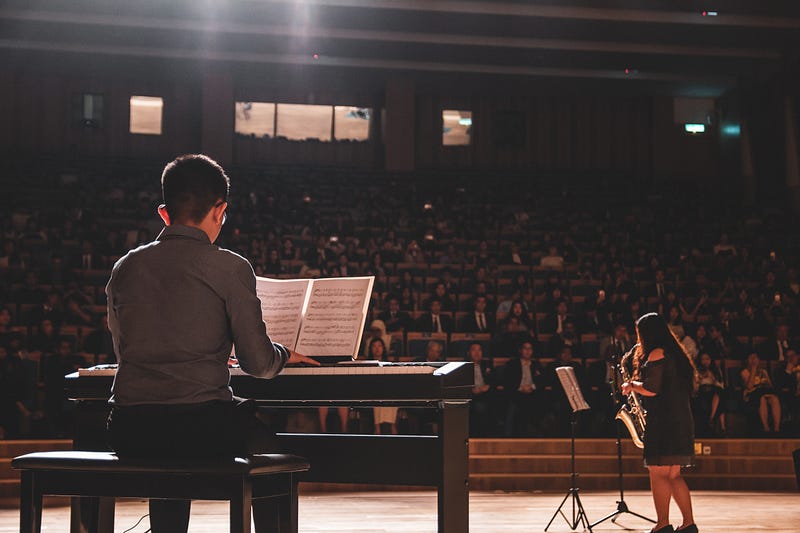
Tales abound of people receiving a blow to the head and the next moment they can play the piano, possess an incredible memory or are suddenly really good at mathematics. How true are they? Amazingly, although rare, stories of brain trauma followed by remarkable skills are true. But it isn’t all good, as the stories of these incredible individuals will show.
Memory and mathematics geniuses
Jason Padgett
In 2002, Jason Padgett was attacked in a bar by two men and woke up in a hospital with a severe concussion. Until that point, Padgett had been a college dropout interested in partying and women. At school, he hadn’t even gotten into algebra class.
However, when he woke up in the hospital he noticed that everything looked a little weird. He could see pixels, patterns, geometric shapes and tangent lines everywhere — spiralling water in a sink, sunlight streaming through trees and everyday objects.
Padgett became obsessed with mathematics. He started to draw intricate geometrical patterns, trying to copy what he could see. One day a physicist caught a glimpse of some of his sketches and recognized them for what they were — incredibly sophisticated representations of complex math relationships. The physicist immediately encouraged Padgett to study mathematics and this time he excelled.
Today, Padgett is still obsessed with mathematics and is famous for his drawings of complicated formulas like Pi. He is also one of the very few people able to draw fractals.
Orlando Serrell
When he was ten years old, Orlando Serrell was playing baseball when hit on the left side of his head by the ball. Unfazed he continued to play.
Soon after, he realized that he could remember exactly what he had been doing on any given date since the accident. He could also name the day and what the weather conditions were.
In addition to a remarkable memory, he also discovered he was able to make lightning-quick mental calculations.
Musical abilities
Derek Amato could suddenly play the piano
When Derek Amato tried to catch a ball while jumping into a pool, he misjudged things. Badly. His head slammed into the pool’s floor and he was never the same again.
He was rushed to the hospital where he was diagnosed with a severe concussion. Amato found he had lost 35% of hearing in one ear, as well as suffering from headaches and memory loss. Other than that, he seemed mostly ok.
Five days later, he was visiting a friend and spotted an electric keyboard. Amato was suddenly overcome with a strong desire to play it. Which was odd, as he had never played the piano in his life. When he was younger he had been in a garage band and had been ok at rhythm guitar but other than that, he’d never been especially musical. He had certainly never had any desire to play the piano.
Undeterred, Amato sat in front of the keyboard and just let his fingers roam. To both his and his friend’s astonishment, he found he could play melodies and chords purely on instinct. He would later describe playing the piano as a need or a compulsion. That first day, as his newfound skill poured out of him, he played for six hours straight.
Ever since he has been driven to play. It has changed his life and he considers it a gift. Even Amato will admit he is no musical genius but it has reshaped his life. He even released an album with the well-known jazz-fusion guitarist Stanley Jordan.
Antony Cicoria becomes a composer and pianist
In 1994, Antony Cicoria was walking through a New York park when he was struck by lightning. He was both lucky and unlucky in that the lightning went through his head but he seemed mostly unharmed.
He got a hospital scan but at first, apart from some memory loss where he forgot the names of a few diseases, he seemed fine.
But then, from nowhere, he got an overwhelming desire to listen to, study and play the piano. Like Derek Amato, it wasn’t an instrument he was particularly interested in. Unlike Amato, he’d actually had a couple of piano lessons as a kid but had then lost interest.
The piano became his passion and he studied and played other people’s music but something wasn’t quite right. He realized the reason for this was that the music he was playing wasn’t the same as the melodies and tunes he found constantly running through his head.
So Cicoria started writing down and playing the music running through his mind and found a release. He is now a pianist and composer as well as being a surgeon.
Artists
Alonso Clemens — sculptor with an amazing memory
When he was a young child, Alonso Clemens had a bad fall resulting in severe brain trauma. He could no longer feed or clothe himself and remains severely disabled to this day.
However, soon after his accident, he discovered a remarkable new ability. After catching the briefest of glimpses of an animal on television, he was able to accurately sculpt a 3D model. Some of his lifelike sculptures take under an hour and he is able to make some completely from memory.
Clemens’s art has earned him renown worldwide and his work features in fine arts galleries across the world.
Jon Sarkin goes from chiropractor to abstract artist
Jon Sarkin was a chiropractor whose brain was damaged by a stroke. While recovering at a hospital he underwent a variety of therapy — including mental therapy, physical therapy, speech therapy and art therapy.
When beginning the latter, Sarking was given a crayon and simply told to draw. From that moment, like the musicians mentioned above, creating art became a powerful urge. It was an itch he had to scratch.
He gave up being a chiropractor and transitioned to being a full-time artist, mostly doing abstract work. Sarkin has found immense success and his work has appeared on album covers and the New York Times. as well as being covered in a Pulitzer Prize-winning author’s book. His art regularly sells for around $10,000.
Creative Genius Eadweard Muybridge
In 1860, Eadward Muybridge was in a stagecoach accident that resulted in him being flung high into the air following by him cracking his head on a boulder.
He awoke 9 days later with double vision, seizures and no sense of hearing, taste or smell. The most notable change, however, was in his personality. Previously he had been a warm and open man who was good at business. Afterwards, Muybridge became eccentric and moody, even shooting dead the man he suspected of fathering his wife’s child. On the more positive side — he also became incredibly creative.
When he had recovered, he decided to return to his native England and became a prolific inventor. While recuperating, he became fascinated with photography.
His most famous invention came about from a bet with a friend. Muybridge was convinced that when horses run, all their legs leave the ground at the same time. His friend disagreed. To prove him wrong, Muybridge rigged 12 cameras along a racecourse and connected them to tripwires that would set them all off automatically.
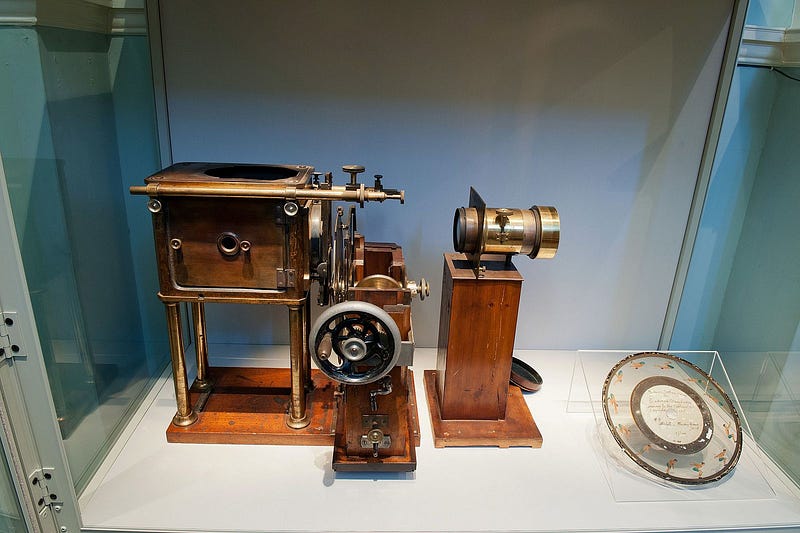
This gave him a series of pictures of a running horse. In order to view these pictures as if ‘in motion’ Muybridge then invented the catchily named Zoopraxiscope. Printing the horse photographs on a disc he was then able to project the ‘film’ and watch the pictures in succession, giving the impression of movement.
It was one of the earliest examples of movie projection and also happened to win Muybridge’s bet.
Why does this happen?
Research is ongoing but there are numerous theories. In the 1960s there was some Nobel Prize-winning research that revealed, generally speaking, the halves of the brain specialize in slightly different things.
The left side is the center of logic and analysis, whereas the right is more creative and intuitive. Unfortunately, the left side tends to be more dominant. This has led to a theory, backed up by numerous studies, that when the left side becomes damaged the right side can suddenly become more dominant. This will mean a burst of creativity.
Obviously, while these almost seem like superpowers, most of those mentioned went through considerable trauma and many have suffered permanently with the side effects. They are to be admired but not envied. Their experiences point to untapped mental abilities still to be discovered.


