
People Today Would Hate a 50s-Style Society
Life wasn’t better then by any stretch of the imagination
.jpg)
Aunt May was my mom’s younger sister and the last of six kids. I loved riding my bike to her home after school. May always told the unvarnished truth about everything, especially after a few cold beers and smokes.
For some reason, May enjoyed having me hang around more than her own children. Maybe it was because I was a girl, and all her kids were boys.
She married Uncle Jay in the mid-1950s when she was 18 and secretly pregnant. Marriage was her escape from her parent’s farm in Central Kansas. Her wedding helped her avoid the scandal of an unwed pregnancy.
My talented aunt graduated from cosmetology college after high school but turned in her shears after she became Uncle Jay’s wife. That’s what 1950s-style housewives did. Women were forced to be utterly dependent on their husbands for everything.
Aunt May didn’t marry up or well
In the mid-1950s, the husband was the primary breadwinner and the absolute head of the family. May and her two sisters either went to cosmetology or secretarial school. The other options were nurses, teachers, or stewardesses (flight attendants).
Even if women had some education, they weren’t allowed to work outside the home once they had a spouse. Marrying well was a woman’s best option. Unfortunately, May married a man who struggled to keep a job drank too much, gambled, and knocked her around.
Because May’s husband struggled to adequately support his wife and six rowdy boys, the entire family whispered about what a loser Uncle Jay was. Eventually, my unhappy aunt got a job at a nursing home as a hairdresser and styled hair for neighbors in her kitchen.
My aunt and her two sisters were classic 1950s housewives. There is ample proof that all three of them hated their lives. They were great examples of what Betty Friedan argued about in her 1963 book The Feminine Mystique: that the suburbs were “burying women alive.”
The myth of the perfect 1950s marriage
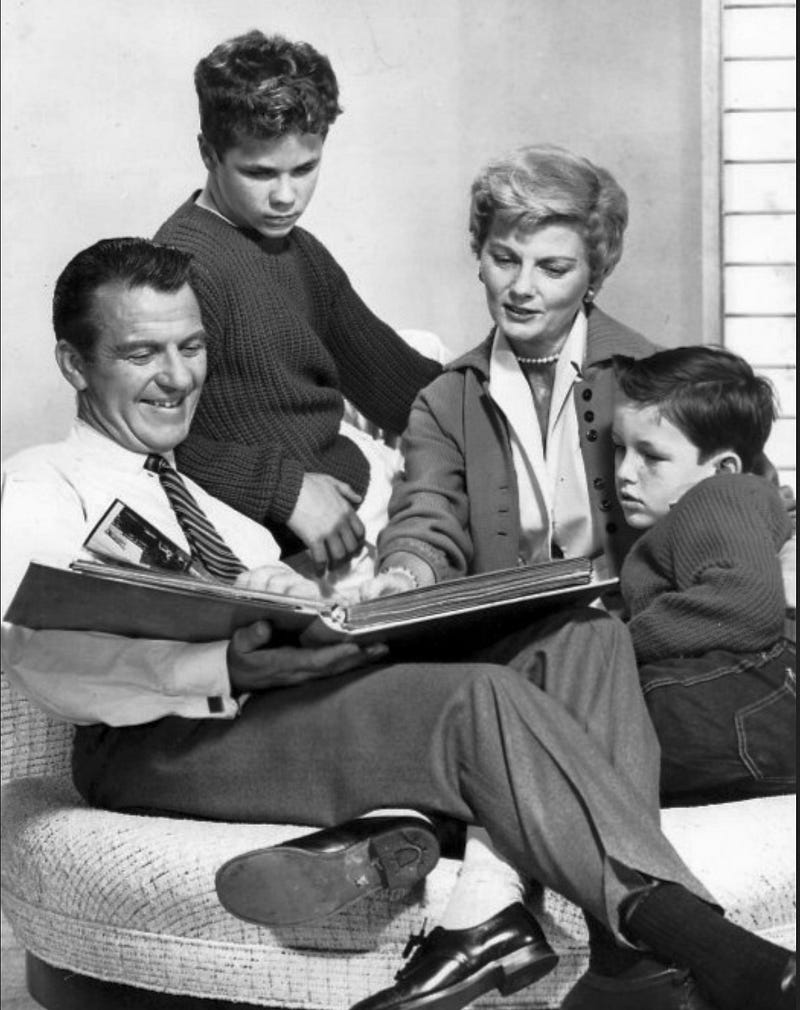
There was no such thing as a doting wife, perfect marriage, or family as portrayed on popular 50s television shows such as “Father Knows Best” and “Leave It to Beaver.”
The 50s television shows were designed to set the near-impossible social standards for men and women. Women’s rights were minimal in that era. They weren’t allowed to make legal contracts or wills, buy or sell property, own or manage money, or get involved in politics.
Although they could vote, holding office was much more complicated. It was rare for women to be successful in politics unless they inherited office from their deceased spouse.
Feminist principles arose as a result of women’s oppression. Many people in 2024 view it as an evil movement, but both men and women have received many positive benefits. Things were bad for the majority of women back in the 1950s, but feminism ultimately has helped everyone.

Shotgun weddings were real
Both of my mother’s two sisters got pregnant out of wedlock. May managed to marry quickly and avoid most of the scandal or her father’s wrath. But the eldest sister, Jenny, was impregnated by a Catholic priest. The resulting scandal was of epic proportions.
My grandfather, who just happened to be a real farmer, didn’t pull out his in either situation. No one got killed or physically injured. But Gramps used his influence to pressure May’s boyfriend to marry her quickly.
He also applied pressure, and a large donation to the Catholic church exiled the guilty priest. Jenny was hidden away and forced to relinquish her baby to adoption. The scandal traumatized the entire family, which reverberated in future generations.
Many people forget that the 50s was the decade before the introduction of The Pill. The Food and Drug Administration (FDA) approved the first oral contraceptive in 1960.
The only birth control available before the revolutionary pill was condoms for men, rhythm or pulling out for good Catholics, or vaginal diaphragms, which were invented in 1842. The lack of accessible and reliable birth control made one-night stands challenging.
It also was an era where sexual practices were a lot more conservative than they are in 2024. People still had clandestine hookups, but it was much more difficult in the 1950s, especially with the risk of pregnancy or catching syphilis or gonorrhea. Many couples in the 50s married the first person they had sex with.
Divorce was a scandal
Divorce was a lot more challenging to achieve back in the 1950s. Many people believed that marriage was “till death do us part,” with divorced women suffering a much worse fate than men.
The 1950s was when people married at a young age. People married their childhood sweethearts. It seems inconceivable today that people would automatically graduate from school and get married, but it was common back then.
Back in the 1950s, divorce was a form of social suicide. One of the women in our Catholic parish got divorced. People stared, pointed, and whispered about her behind her back. Never mind that she was in a horrible marriage where her husband beat her up every Saturday night. Too bad. Divorce was unacceptable, especially in our Catholic neighborhood.
Divorced men suffered, too. It could sink their careers and ruin their social life. Single women were warned not to date or consider marrying a divorced man because they were damaged goods. Maybe they were alcoholics, serial killers, or child molesters.
In 2024, divorced people, especially those who don’t have children, are viewed as very desirable in the dating world. They are seen as people who understand commitments. In today’s world, no one’s life is ruined if they get divorced.
Abortions were illegal and dangerous
My parents were devout Catholics, and the only birth control they had available was the rhythm method. It was highly unpredictable. As a result, they had an accidental pregnancy.
Aunt May told me when my mother got accidentally pregnant with her third baby, my father pressured her to consider a back alley abortion. Raising kids was very hard in the 50s. It was also expensive when there was only one wage earner. My father worked hard, but my parents had to pinch many pennies.
My mother ultimately refused to get an illegal abortion because of her religious beliefs, which caused stress and tension between my parents.
Ultimately, my father always resented the child he didn’t want, and the two of them never had a good relationship.
Mental illness was hidden or stigmatized
It’s been well-documented that middle-class women in the 1950s were miserable in their roles as wives, mothers, and homemakers. The unhappiness was widespread and triggered depression, anxiety, or stress.
This was known as The Housewife Syndrome, which was an umbrella term. My Aunt May dealt with her problems by drinking and smoking heavily. It wasn’t uncommon for unhappy housewives to take drugs, develop eating disorders, or resort to other extreme actions.
One of our neighbors tried to kill herself multiple times by sticking her head in a gas oven. Eventually, she was committed to a hospital for her mental health issues, where she received electric shock treatments. Ultimately, she received a lobotomy and became a shell of a person unable to function.
Barbiturates were popular to help unhappy housewives deal with their lives. The 50s was an era when “mother’s little helpers,” such as the sedative drugs like Milltown (meprobamate in generic form) and Valium, were pushed as the cure for what ailed stressed-out housewives.
Most people would hate a 50s life
Many men hated being the only breadwinner. When men did have a working wife like Aunt May, they felt they were losers and “weren’t enough” to take care of their families.
Healthy, happy couples were few and far between back in the day. Some were trapped in living nightmares. That was their reality.
Even more disturbing was how many 50s men wound up with women who disliked or hated them. People stayed together no matter what. Couples often had a lackluster sex life but had no way to escape. Many were desperate.
Things may be difficult for men today, but society is doing a better job of embracing more empathy and compassion. Both men and women today have so many options that people in the 1950s couldn’t begin to dream of.
You can never turn back the clock
The disruptive lives we all live in 2024 are the result of many factors ranging from greedy corporations, corrupt politicians, the devastating effect of the Pandemic, and a world filled with toxic chemicals.
The answer to current society’s issues is not to turn back the clock. It’s to move forward and figure out how to support one another, regardless of gender. It’s to make it easier for people to get decent pay to afford a home, even if they make minimum wage.
A steady job and financial stability are what we are really lacking, and much of what we’re seeing happen today is a result of that lack. Most people miss that about the past — whether they realize it or not.
It’s easy to look back to the past and glorify it. 2024 may not be a perfect world, but we’ve come a long way compared to where we were back in the 1950s.