Religion Is a Humanism
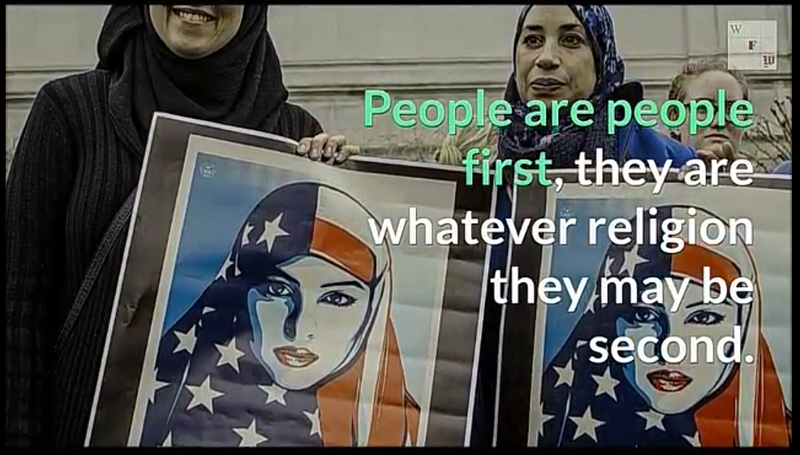
People Are People First
They are their religion second.
I have studied and taught about religion for decades. What has leapt out at me time and time again as I look at the religions of the world are their similarities. Sure, religions differ from each other. They have different creeds, different practices, but there is a basic humanity shared by people in religious traditions.
Human beings want to feel safe. They want to be happy. They want to belong. They love their family and friends. They also fear the unknown and things that may threaten their safety and loved ones. These are all basic human feelings and behaviors. We see them in all aspects of human culture.
Religion is a reflection of human culture and we see these desires and fears expressed in religions.
When I teach courses in Comparative Religions and Philosophy of Religion, I tell my students to keep one principle in mind when studying religion.
People are people first and they are whatever religion they are second.
We are all human beings and our similarities far outweigh our differences. Everything we do is grounded in our humanity. People are whatever their particular religion is after their basic humanity.
Many students are surprised by this idea when I present it on the first day of class. Some are dubious about the idea. They have been raised to focus on differences. Most, though, come to see the reality that people are people first and they see how keeping that in mind helps us understand people and religion.
When we understand that religion is an expression of people trying to understand their world, we ground religion in its cultural environment. We then see religion as a human expression, like numerous other cultural expressions. This opens up religious behavior to our inquiries to see cultural patterns. Regardless of an individual’s particular religion, they express their humanity in their religious behavior.
Religious stories allow people to connect with their history and identity. Religious rituals express people’s hopes for a better future. Religious gatherings and festivals express people’s desire for community. In all of these religious expressions, we see more similarities than differences. A Hindu festival and a Catholic ceremony are essentially the same at their core. They are different expressions with different colors and sounds, but more importantly, they are people being people.
When we forget that people are people before they are their religion, problems arise. Believing that another person’s religion makes them radically different justifies discrimination against them. Taken to an extreme, people in other religions are considered to be less human. They are declared irrational, delusional, and evil. Forgetting that people are people first leads to hostility and violence.
That people are people first extends to all other aspects of human culture. You are a person first then everything else that you are after that: your nationality, your color, your gender, your religion, your politics, and so on and on. If you forget that, you lose your humanity as you dehumanize others.