
People Are Dying to Get Likes on Social Media — Literally
Must we now consider social media as a driver of human evolution?
For most of human history, people avoided risk.
What’s that got to do with dying for likes on social media? — Just a second, I’ll get to that soon.
Risk is part of our animal brain. The amygdala, a very ancient structure of the brain, is the “fear center.” In dangerous situations, the amygdala fires out flight or fight signals. This kept our ancestors alive so that they could reproduce.
We are the direct descendants of those people whose fear center worked properly. This is why most people are risk-averse by nature.
We were programmed to fear.
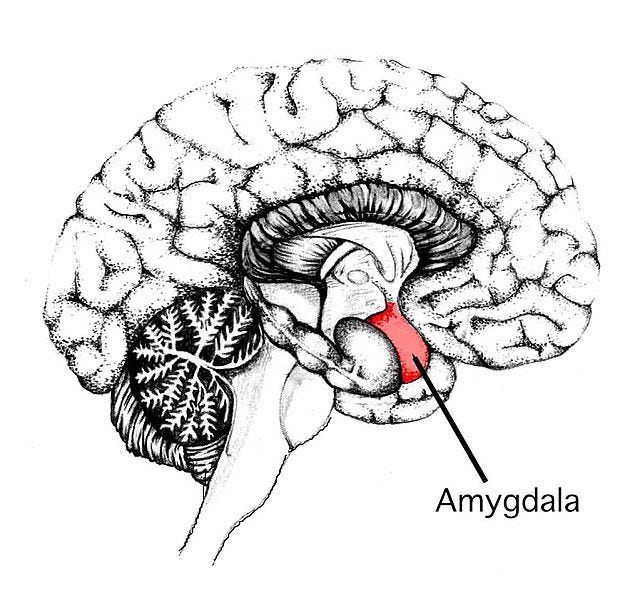
But it seems that the amygdala isn’t working the way it should in some individuals. Because of social media.
Social media has found a way to overcome this programming and aversion to risk. The desire for likes, attention, and fame has hijacked the fear center of the brain of some individuals.
Social media is now one factor in the gigantic, indifferent genetic game of natural selection.
People are now literally dying from social media.
The “Angel of Death” TikTok challenge
I was alerted to a mind-boggling “trend” in Indonesia, where a TikTok gimmick called the “Angel of Death” challenge had become the new it-thing.
What is that you ask?
Well — you jump right in front of a truck and pray for the truck to stop before it hits you. If it stops before it hits you — congratulations, you’ve won the challenge!
If it doesn’t — well — not only have you lost this social media challenge, but you’ve most likely also lost your life. If that sounds like a pretty stupid thing to do, it is.
Case-in-point: someone jumped in front of a truck and got 100% steamrolled. Before you click on the link, you have been warned: The video is extremely graphic and not suitable for work.
What was he thinking?
Was he even thinking? Has our desire to get more likes, more views, and more social validation short-circuited our brain’s instinct to run away from danger?
Is social media making us stupid?
And that’s not even the only case of people dying from social media.
In Hong Kong last year, an Instagrammer with about 20,000 followers or so — known for taking shots of herself in dangerous poses — like hanging off a cliff, fell to her death while trying to snap the perfect waterfall selfie.
In January 2022, yet another hiker fell to his death in Arizona while trying to take a selfie on a mountain peak.
What is going on?
People are dying because they got too obsessed with getting the Insta-worthy photo, to the point that they underestimated the risk of doing that.
I mean no disrespect to the families and friends of these unfortunate people, but Charles Darwin would be having a fit in his grave.
People are literally dying for likes on social media.
Social media exploits human nature and biology
But perhaps, it is not completely their fault.
The thesis that social media is addictive and that it’s not good for you is not new. Back in 2017, Sean Parker, an early Facebook investor, spilled the beans on Facebook. He openly told us that Facebook was built to exploit human psychology; it was designed to be addictive.
And that means that we need to sort of give you a little dopamine hit every once in a while, because someone liked or commented on a photo or a post or whatever, and that’s going to get you to contribute more content, and that’s going to get you more likes and comments. It’s a social validation feedback loop. … You’re exploiting a vulnerabilty in human psychology.” — Sean Parker unloads on Facebook: “God only knows what it’s doing to our children’s brains”
Now it seems like TikTok, the platform created by Chinese company Bytedance may have one-upped Facebook.
Isaiah McCall, citing sociologist Dr. Julie Albright in his article TikTok is Slowly Destroying a New Generation, makes the case that “TikTok is digital crack cocaine with an absurd effect on dopamine and the human brain.”
The result, according to Dr. Albright, is not good news. Our attention spans are getting shorter. We no longer think in terms of years, but months (possibly less).
Social media is rewiring our brains in some not-so-wholesome ways.
May I add to that list a deleterious side-effect: a propensity to risk our lives for that perfect video or photo just to get more likes.
So, now you know. Social media isn’t just toxic. In the wrong hands, it’s literally fatal.
Seeking validation from 150 people or from 7 billion?
Here’s an interesting nugget of information. According to British anthropologist Robin Dunbar, the optimal number of relationships that people can handle is 150.
How did he arrive at this number? By studying the brain size of primates and their group sizes, he posited that there was a ratio or relationship between these two seemingly unrelated factors.
It makes intuitive sense. The larger the brain is, relatively to the body, the more social complexity one can handle. I won’t bore you with the details. In short, Robin Dunbar applies this finding to human society and finds that anthropologically, historically, and psychologically, the magic number is 150.
According to Dunbar and many researchers he influenced, this rule of 150 remains true for early hunter-gatherer societies as well as a surprising array of modern groupings: offices, communes, factories, residential campsites, military organisations, 11th Century English villages, even Christmas card lists. Exceed 150, and a network is unlikely to last long or cohere well. — cited in Dunbar’s number: Why we can only maintain 150 relationships — BBC Future
Some people have challenged this, but let’s go with this theory for the sake of argument.
Now, if Dunbar is correct, what social media has done is to hijack this number: Our brains are now being overclocked to seek validation not just from 150 people, but potentially every single user on social media.
Every single human being on earth.
Imagine the sheer dopamine hit you might get from getting 7 billion likes! Granted, we should eliminate the ones who are too young to be on social media but I’m sure that’s still a pretty number.
Now that’s a challenge worth dying for.
Death is but a moment, but 7 billion likes on social media? — That’s everlasting Eternal Glory!
Yeah…. Right.
No number of likes is worth killing yourself for.
Not 7 billion likes, not 150 likes, and certainly not even a single like.
Don’t let social media platforms fool you. To the platform, you’re just an insignificant number in an uncaring algorithmic construct of zeroes and ones.
Remember this: the next time you decide to impress your friends on social media and it fears you — think again. Fear is not a bad thing — in this case, despite what Yoda says, it won’t lead you to the dark side.
Far from it, it will keep you alive.
Don’t kill yourself just to get another “like.”
Life is more than about getting validated on social media.
The author is an editor of Japonica, a Japan-focused publication, but also writes on a wide variety of topics. His key topics of interest are society, culture, modern work, creator economy, and cryptocurrency, with the occasional fictional story, creative piece, or personal essay. Discover his most-read stories here.
If these topics interest you, why not consider subscribing to receive a monthly digest of new stories via e-mail?


