Penny Ponders On Fizzy Days & Plastic Monkeys
Crewe to Malibu? You can do it the easy way or the hard way
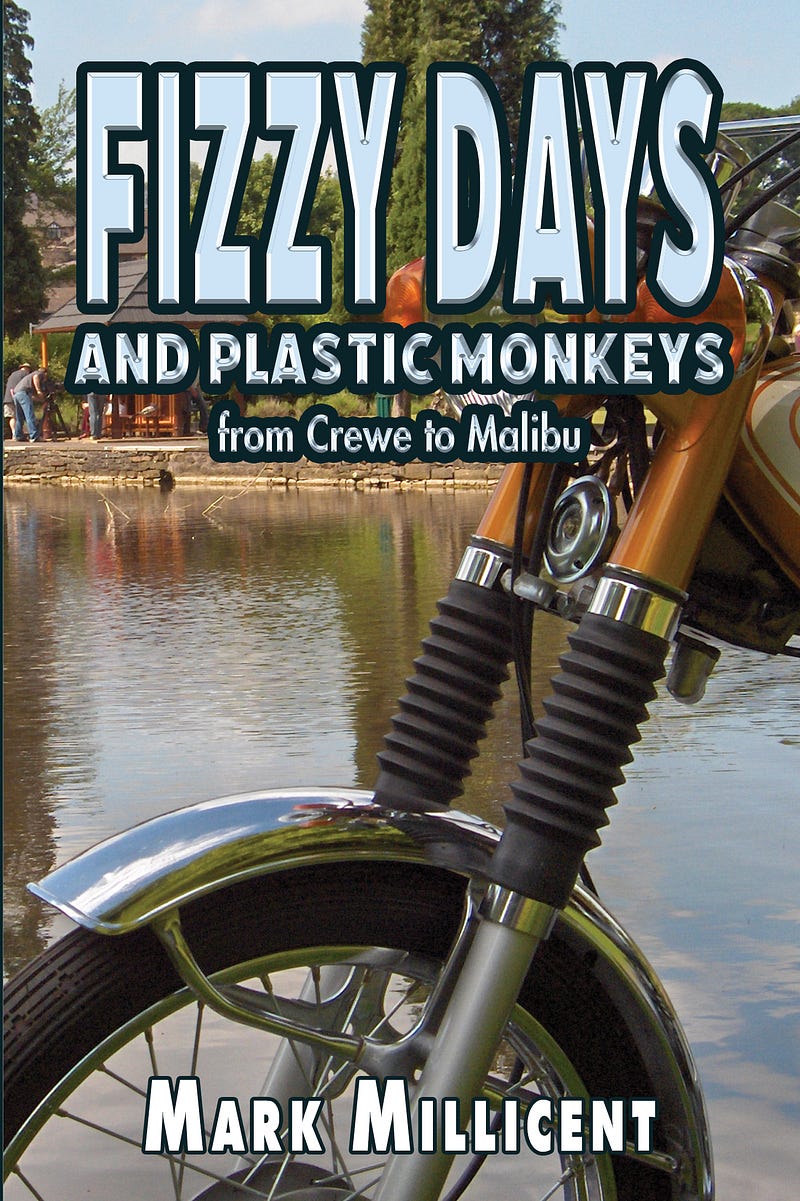
Fizzy Days & Plastic Monkeys by Mark Millicent charts a long journey — not just from Crewe to Malibu — but a journey over many years chasing a dream to make a film.
How NOT to…
When asked to describe his epic journey, Mark Millicent has called it the story of how NOT to make a film, so it seems appropriate that this is NOT a book review, it’s just a bit of a dive into aspects that particularly intrigued me when I read it. This indulgence on my part should be seen as a kind of side salad to the feast that is Fantastic Books Publishing’s
If you want a proper review, I can recommend this one:
I was intrigued by the central concept of storyboarding
When I read this book, I was surprised to find storyboarding at the heart of the filmmaking business. I’ve heard about storyboarding. I knew someone who wrote comic strips years ago — she worked with storyboarders and had some hilarious stories to tell.
As an aside, Mark Millicent also has some hilarious stories to tell, and who better to ask about the role of storyboards in the film process. Here is the question I put to Mark:
Your account brings home how many more steps there are to bringing a film to fruition than a book. For some of the short films you’ve made you seem to have managed all processes along the way. Is it the case that storyboarding gets you to the heart of every technical step in the making of a film?
This is his reply:
We all watch movies, but not all of us know what a storyboard is or what it’s for. It’s not so much that it’s the technical side of production that it helps with. It’s the broader strokes in movie making that it clarifies. Storyboarding is simply a process to see the work on the project or elements to be filmed before the camera rolls. Like a graphic novel: that’s all a set of storyboards are. They are a visual guide; a run-through of the action that is to be involved in front of the camera. Where is the camera going to be when it films the action? Where are the actors going to be? Do we want to see all of them — or just part of them — or maybe just a face in close up, maybe just the eyes? Or do we need sweeping wide shots to show where they are in an environment — are many people in the shot? Are they big in frame or foreground or are they small — are they even in the frame?
Maybe you just want to see the actors from the back and keep a sense of mystery? Are we inside the car or outside? What does the camera cut away to that will add interest and texture to the visual? How does it cut away — is it a move or just a cut? A pan or glide? Do we dolly and track with an actor with a movement? In reality, we may need all of these shots and they all need to be drawn and laid out as a guide, as a plan for the cast and crew to follow under the guidance of the director.
Think of the fantastic spaghetti western The Good, the Bad and the Ugly — wides, close-ups, cutaways, etc. Maybe a narration takes place over an entirely different visual imagery. Do we tease the audience by obscuring what the action truly is to build up tension? Is a fight scene a series of screams and thuds behind a static closed door or is it explicit and simple no holds barred bloody violence. Which is scarier? More dramatic? Each and every way you convey a scene is planned and explored beforehand — through the storyboards.
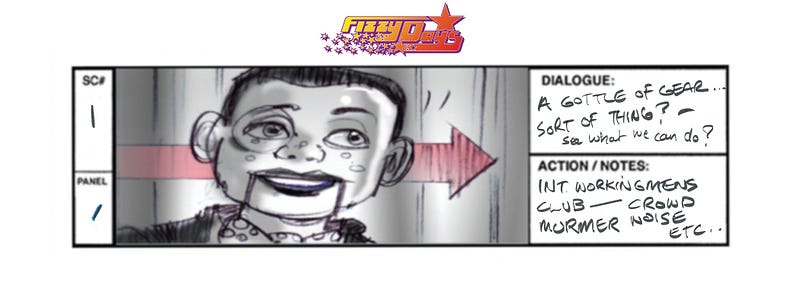
Thank you, Mark. Clearly there is more to storyboarding than I’d appreciated. As an added bonus, each chapter of the book is headed by a storyboard.
I won’t be spoiling anything in the book if I tell you that Mark Millicent is now officially an award-winning filmmaker who has seen his own films featured in film festivals around the world.
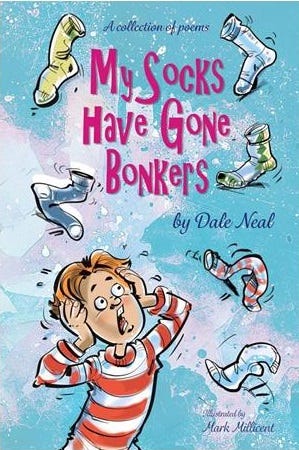
Although Fizzy Days & Plastic Monkeys is Mark Millicent’s first book, he has his name on another book from the Fantastic Books stable, as the illustrator of Dale Neal’s book of children’s verse, My Socks Have Gone Bonkers.
MABLE 2022
Both Fizzy Days & Plastic Monkeys and Mark Millicent are in the spotlight during this autumn’s online MABLE 2022 event that will run during September and October. Do sign up. It’s free and you’ll have the chance to chat with the authors.


