Penetration Test Proposal
What to expect from a penetration test or security assessment proposal from 2nd Sight Lab
~~~~~~~~~~~~~~~~~~~~~~~~~~~~~~~~~~~~~~~~~~~~~~~~~~~~~~~~~
⚙️ Check out my series on Automating Cybersecurity Metrics. The Code.
🔒 Related Stories: Pentesting | AppSec | Secure Code | Data Breaches
💻 Free Content on Jobs in Cybersecurity | ✉️ Sign up for the Email List
~~~~~~~~~~~~~~~~~~~~~~~~~~~~~~~~~~~~~~~~~~~~~~~~~~~~~~~~~
I didn’t get a chance to do a lot of coding or writing this week because suddenly I had to put out a lot of proposals all at once. I was especially happy that some former clients wanted to hire me again. It is a special honor to know someone appreciates your work that much that they want to hire you again.
A penetration test proposal
As I was writing proposals for clients I noticed I had created some proposals in different ways in the past. I sometimes write documents and sometimes slide decks. I don’t remember why I do this differently in some cases, but if I provided one or the other for a client in the past I tend to stick with that format.
I am going to share my slide deck proposal in this story with the blanks I would fill in if you request a proposal from me. If you like it, you can reach out to me on LinkedIn to get a proposal for your next penetration test. A proposal for a security assessment would be very similar. I send the proposal and the contract together. The contract must be signed by a C-Level executive.
Why am I sharing this? Because my proposal process is really straightforward and it makes it easy I hope for people to decide whether they want to hire 2nd Sight Lab or not. I don’t have a lot of variation in my proposals at the moment. This could change depending on how busy I am and how my 2nd Sight Lab services change in the future. So this is a snapshot of a proposal at this moment in time.
I spend very little time trying to close sales because first of all I’m busy. So are my clients.
Secondly, I have found over the years that spending a ton of time on a proposal doesn’t increase or decrease the likelihood it will be signed. Here is what I have learned:
- Either people want my services as I offer them or they don’t.
- My price is within their budget or it’s not.
- They like my qualifications or they don’t.
- They like my approach or they do not.
I try to present the information for them as succinctly and quickly as possible so they can make a decision. I limit time going back and forth by providing everything a customer needs to make a decision at one time — the proposal and the contract — rather than sending a lot of emails back and forth. I can easily adjust the proposal if needed after that point.
I’ll share my slide deck with you but first, let’s clarify one thing.
A penetration test is not a vulnerability scan
A penetration test or a security assessment is not simply a vulnerability scan where I run a tool, it generates some information, and I hand it over. Some people try to pass off that kind of scan as a penetration test. Some auditors may accept that, but others will not if you are trying to obtain compliance. I talked to a company whose auditor rejected their scan report trying to pass as a penetration test when they were trying to get a SOC 2. Some less experienced auditors may not know the difference.
Automation can be used to produce a good report — faster
Although a vulnerability scan is not a penetration test, on the flip side a generated report doesn’t mean it’s not a pentest either. This is where some old-school penetration testers like to point fingers and say any automation whatsoever is bad. That’s not true.
Because I have a background in software engineering I automate some of the things I do repeatedly on every single penetration test report. There’s no sense in me re-writing the same information over and over again or spending a million hours on formatting a document when I could be spending more time reverse engineering and manually testing systems for logic errors.
If you look at my report it may seem automated at first, and it partially is. I automate generation of the initial findings and layout. Then I go through and try to validate each finding, dive deeper, and I remove findings that are false positives. I add steps to reproduce critical findings with manual screen shots and explanations where applicable. I manually review as many findings as possible. I insert manual test findings into my data — and regenerate the report.
If I didn’t have enough time to review every single finding, I don’t exclude it from the report. I note which findings need time to review. I also note where I couldn’t prove something was exploitable but I think it is and why. In addition, I include non-security bugs in the appendix — caused by entry of malformed data or other things I did while testing.
Automation speeds up the busy work so I have more time for the complicated work of trying to exploit, explain, reproduce with specific steps, or eliminate findings that don’t matter.
I also combine the results of multiple tools, including some I’ve written myself, and findings discovered through manual testing and reverse-engineering.
So if someone looks at the report and says, “It’s automated so it’s bad” — then they really don’t understand what the findings mean. If they did, they would understand that the information was not all created by some scanning tool.
I had intended to cover that in my talk at RSA this year. However my talk was only selected as an alternate this year and now I can’t go as I’m too busy. I might produce a video on it anyway as I think there are some misconceptions in this area. Automation is not bad. Automation without any form of manual effort and verification is not a very good penetration test.
Vulnerability scans as a service
To highlight the difference, I am now offering vulnerability scans as a service. Here’s how that works.
You choose one thing you want me to scan:
- One web environment like Azure, GCP, or AWS.
- One web application.
- One IP range (network).
I will run one scanning tool on that environment, application or IP range. My tool will generate a report. I will give you that report without doing anything special to it besides perhaps putting my company logo at the top. It will cost $1500 payable up front (at the moment — if I get too busy, that price might go up). I hand you the report. We’re done.
Here’s what I won’t do for that price. I won’t explain the report to you. I won’t analyze the findings. I won’t make my own personal recommendations on how you can change your process or architecture to better prevent these types of findings. I won’t try to exploit the systems and demonstrate how they can harm your business or lead to a data breach. If you need additional services you can hire me at hourly rates after that point.
Are vulnerability scans bad? No! It’s a place to get started if you have a very low budget and you can’t afford and learn how to use the tools. Some of them cost more than what I am charging and using the out of the box configuration might not actually work or go deep enough to be useful. A report can give you an idea where you stand and what you need to start fixing. It may be a cost-effective way to fix some basic problems so you will get more value out of a penetration test or assessment later.
I wrote about that here:
A penetration test proposal
To show the difference, I’ll share a simple penetration test proposal — for customers who are OK with this format. I can provide this in a document format instead of a slide deck if required. As you can see from this proposal I’m doing a lot more than what is described as a vulnerability scan. I was fiddling with this and I’m in a hurry so I need to re-check it for any spelling or formatting errors. Just wanted to get it out there.
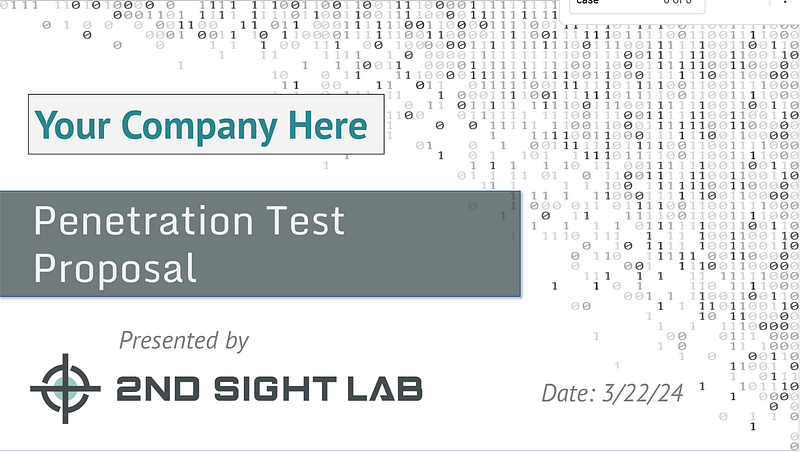
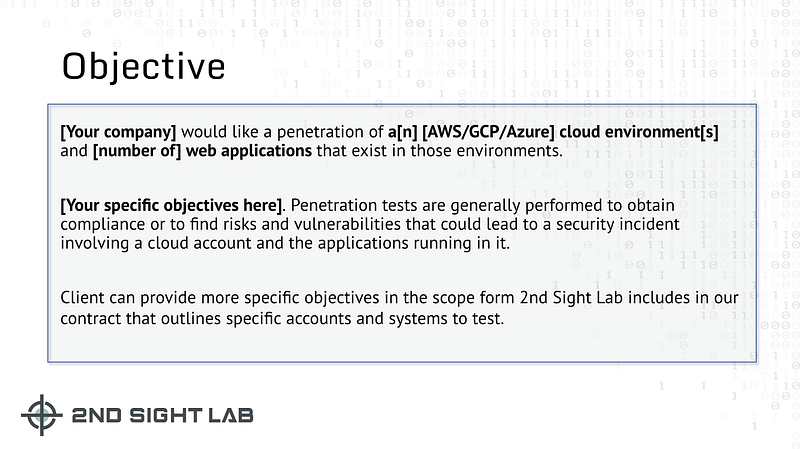
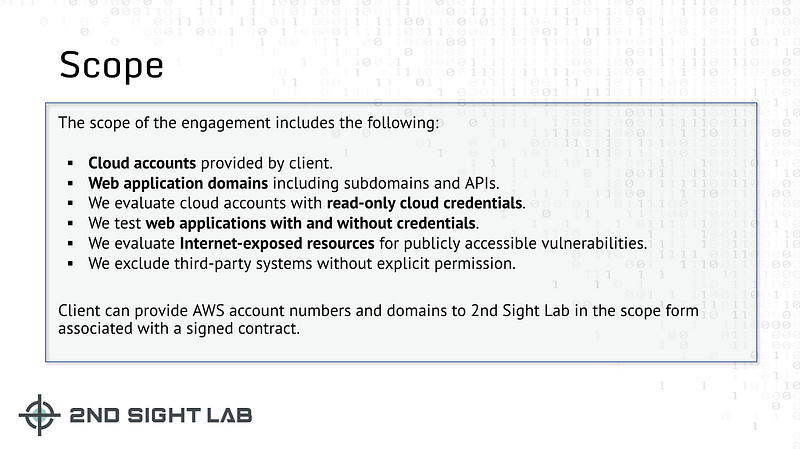
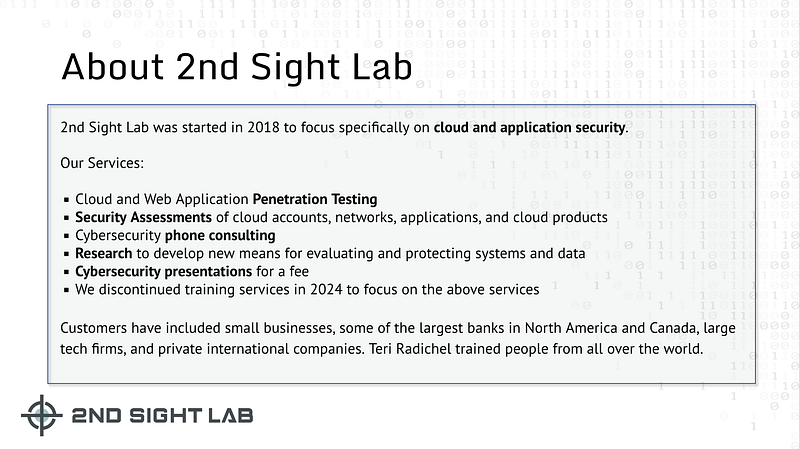
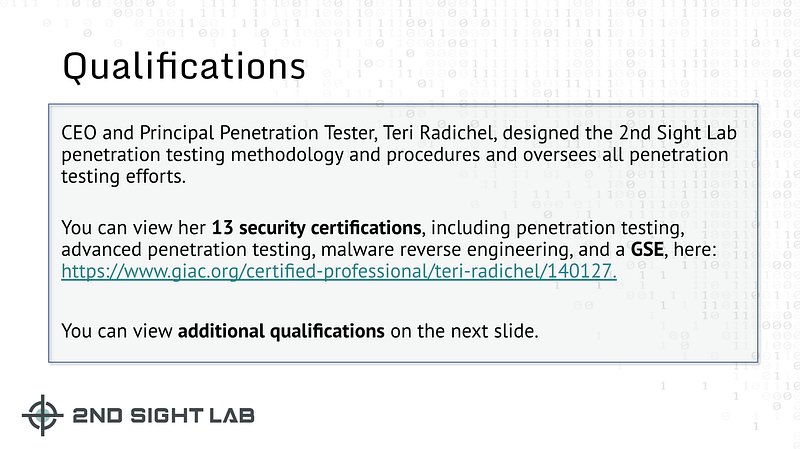
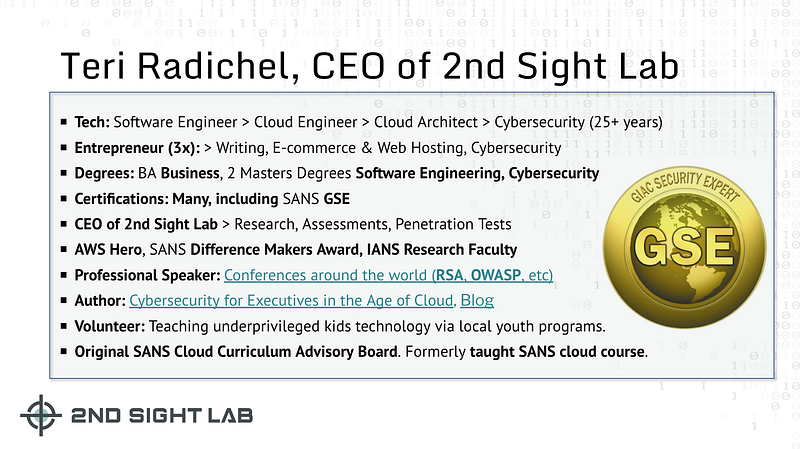
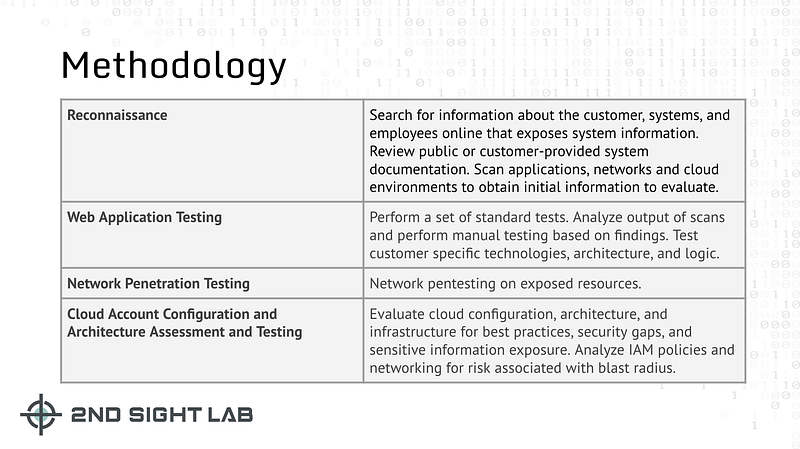
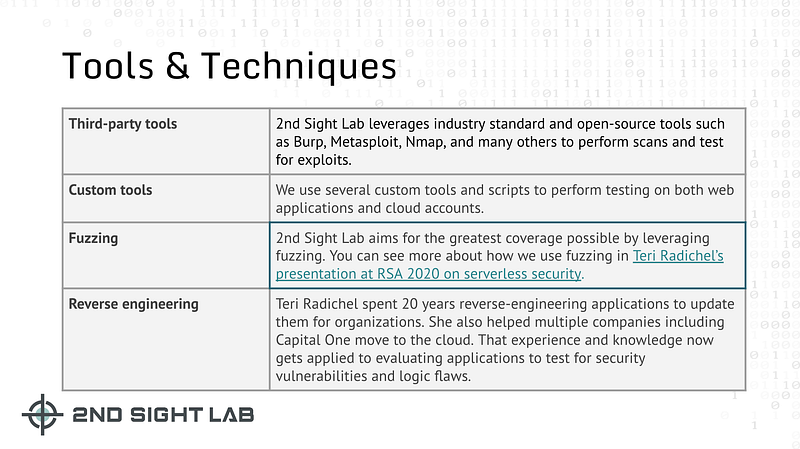
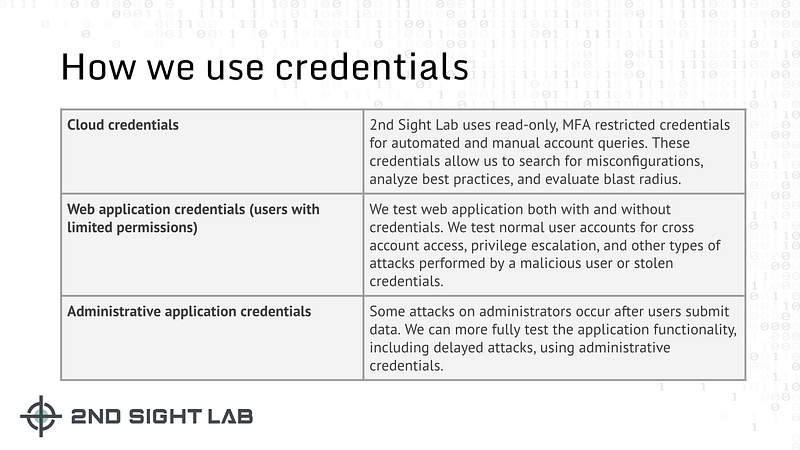
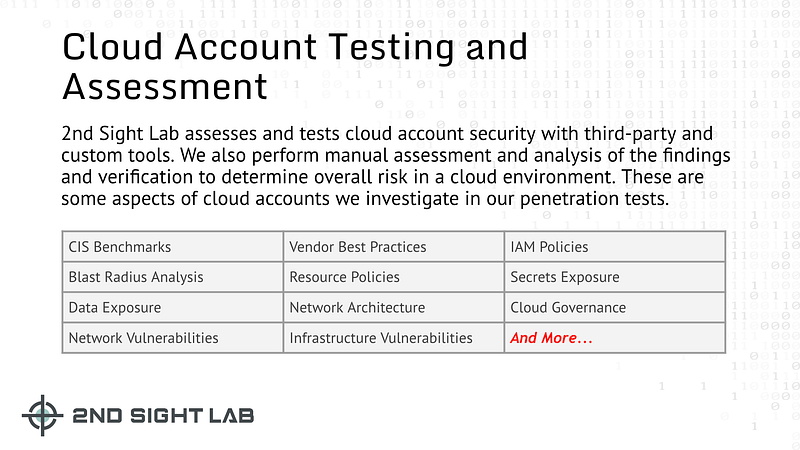
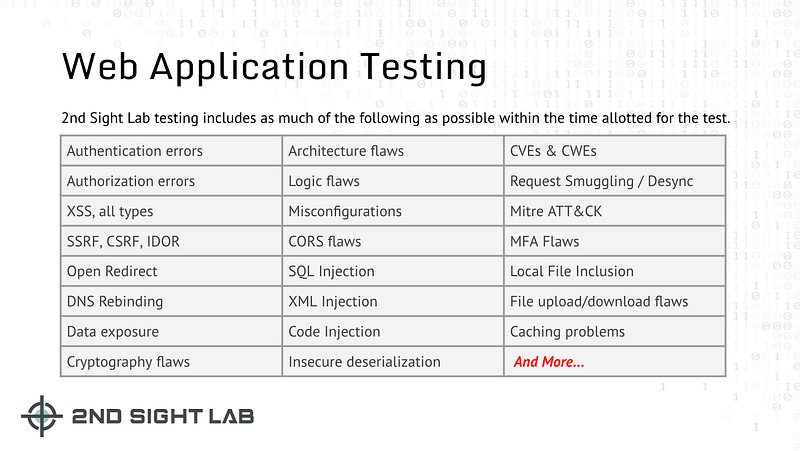
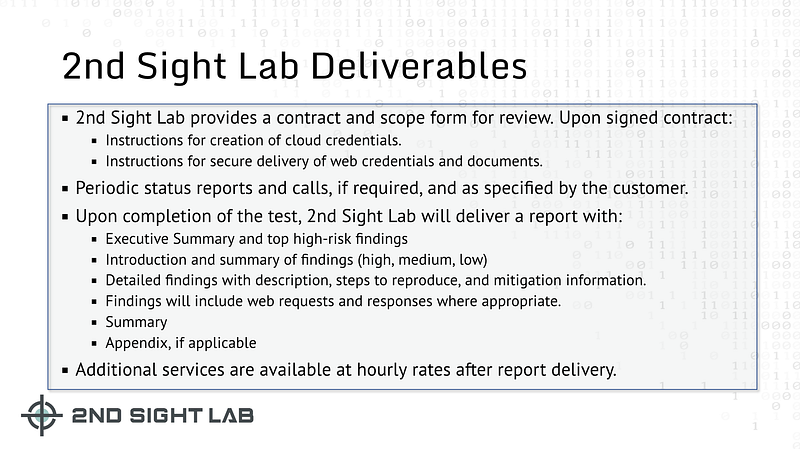
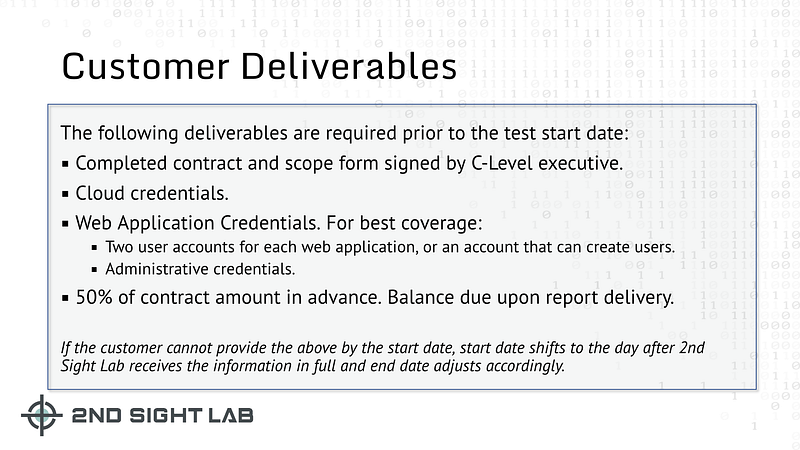
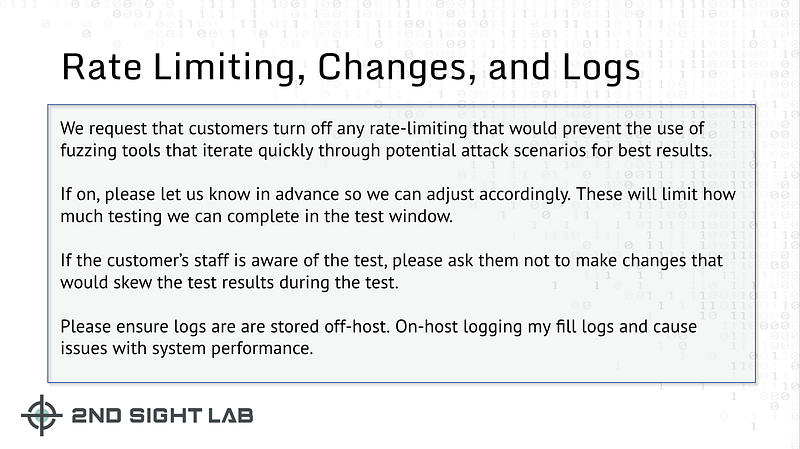
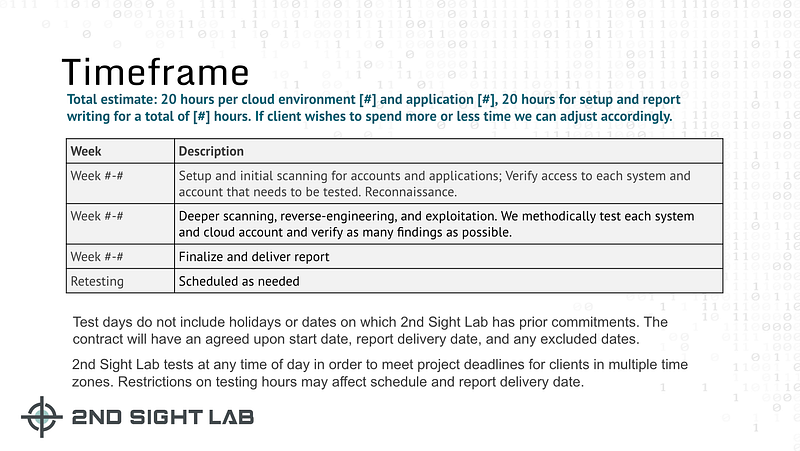
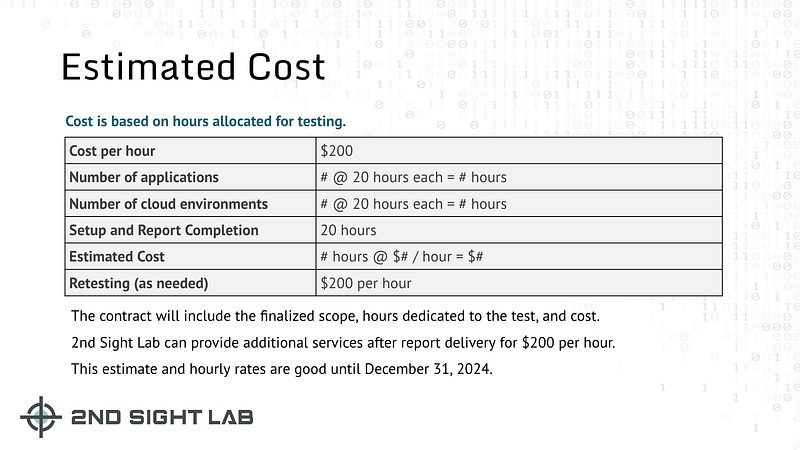
If this proposal interests you and you would like a penetration test, please reach out on LinkedIn using the link below. Note that we only perform penetration tests for US countries at this time with a few exceptions for people I know personally. If you would like a longer document style proposal I can do that too. I’m getting pretty busy this year already so if you want to get on my schedule sooner is better than later.
Follow for updates.
Teri Radichel | © 2nd Sight Lab 2024
About Teri Radichel:
~~~~~~~~~~~~~~~~~~~~
⭐️ Author: Cybersecurity Books
⭐️ Presentations: Presentations by Teri Radichel
⭐️ Recognition: SANS Award, AWS Security Hero, IANS Faculty
⭐️ Certifications: SANS ~ GSE 240
⭐️ Education: BA Business, Master of Software Engineering, Master of Infosec
⭐️ Company: Penetration Tests, Assessments, Phone Consulting ~ 2nd Sight Lab
Need Help With Cybersecurity, Cloud, or Application Security?
~~~~~~~~~~~~~~~~~~~~~~~~~~~~~~~~~~~~~~~~~~~~~~~~~~~~~~~~~~~~~
🔒 Request a penetration test or security assessment
🔒 Schedule a consulting call
🔒 Cybersecurity Speaker for PresentationFollow for more stories like this:
~~~~~~~~~~~~~~~~~~~~~~~~~~~~~~~~~~~~~~~~~~~~~~~~~~~~~~~~~~~~~
❤️ Sign Up my Medium Email List
❤️ Twitter: @teriradichel
❤️ LinkedIn: https://www.linkedin.com/in/teriradichel
❤️ Mastodon: @teriradichel@infosec.exchange
❤️ Facebook: 2nd Sight Lab
❤️ YouTube: @2ndsightlab