
Peka: Croatia’s Rustic Gem of a Dish
How the hell can meat and potatoes be so delicious?
My spidey senses started tingling when our bus turned up at the tavern, or Konoba as they’re called here in Croatia.
Here we were at an unassuming-looking place in the middle of nowhere on the island of Korčula when I spot a big open fire. Hipster-looking chefs with top-knots. Some delicate-looking cocktails on a tray ready to welcome us.
Years of dining at great restaurants piqued my interest. I think these guys know what they’re doing.
Welcome to Konoba Maha. Here’s our signature cocktail made with wild herbs we forage around the local area.
Yep. I’m right. With one sip I can tell these guys care. The drink is not only delicious and has great balance but more than that it has a sense of place. It conveys the local landscape and traditions in every drop.
After some incredible homemade focaccia and a starter of traditional Croatian Makaruni pasta with a sauce of tomato, goat cheese, and a type of pesto made from local herbs, we’re led outside in the rain to the open fire.
And there it is, buried in the glowing coals — Peka.
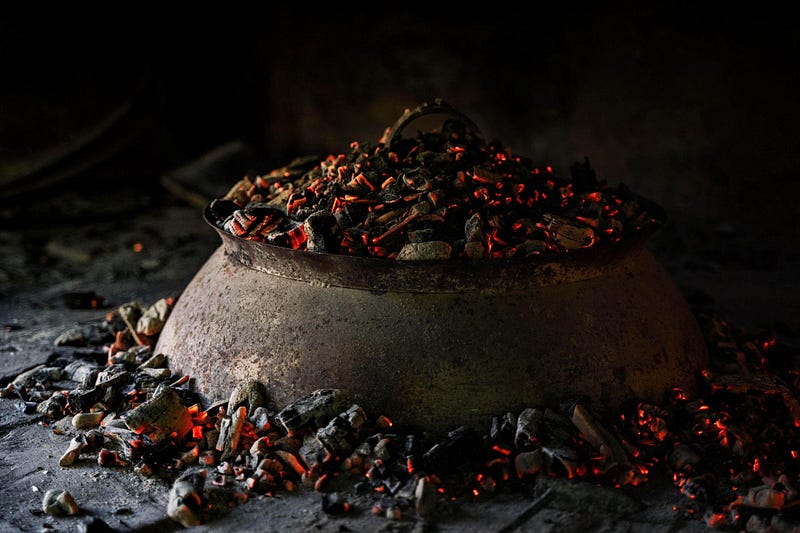
Like so many of the world’s great dishes, Peka refers both to the food itself, and the vessel that it is cooked in. In this case, a large, domed cloche or bell. Hot coals are piled up around, and also on top of the Peka, meaning the food inside cooks from every direction.
Peka is chunks of meat — typically pork, veal, lamb, or a combination of these — slow-cooked in a mountain of potatoes, carrots or other roots, a generous glug of white wine, olive oil, and herbs.
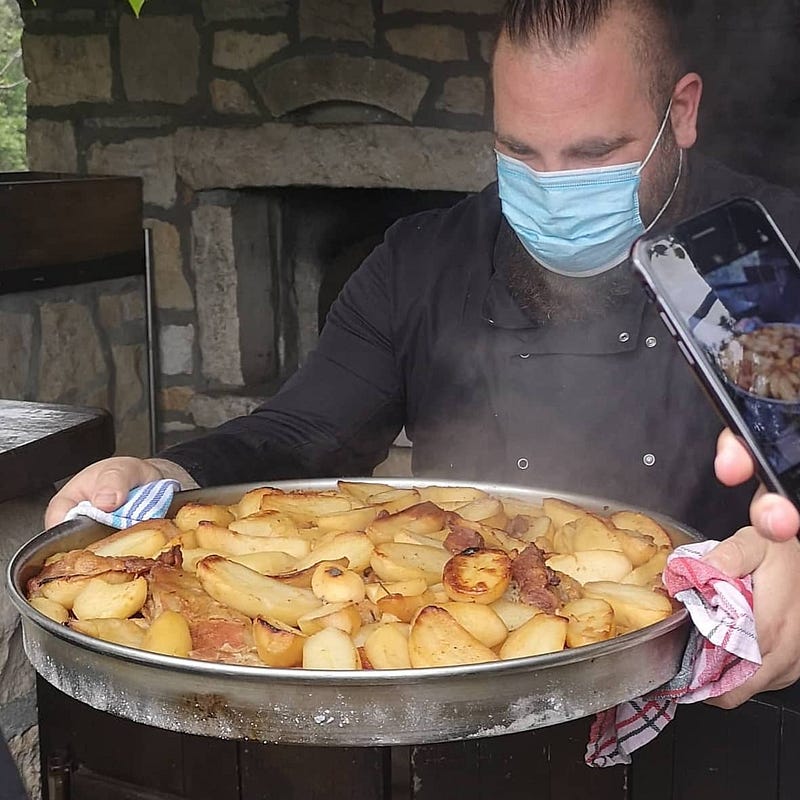
Chef Ivan clears some of the coals, lifts the lid, and carries the huge dish of food towards me.
The smell is intensely, mouthwateringly, meaty.
Back in the Konoba, I’m almost giggling with excitement when Ivan’s brother Jakša brings the food to the table on convivial sharing platters. This is the sort of food that gets the table talking. Everyone trying to strike a balance between taking as much as they really want, and trying to leave enough for everyone else.
Sure enough, the Peka is outstanding. The meat is falling off the bone but still juicy and delicious. But to me, it’s the potatoes that are the real star of the Peka.
They have absorbed all the flavor of the meat, along with the flavors of the wine, olive oil, and herbs that they were cooked with. They’re soft but still firm, with perfectly crisped edges, almost lending a slight caramelization.
They are quite the most delicious potatoes I’ve ever eaten. A humble ingredient elevated to exceptional status thanks to a few hours in the Peka.
This was neither my first nor last Peka during the 3 months I was in Croatia, but Konoba Maha’s was something truly special. The brothers have a level of care, dedication, and love for their craft and for the place they call home that is very rare indeed.
Recipe
If you want to recreate Peka at home, you can achieve a similar effect using a big Le Creuset-style Dutch oven.
Ingredients (serves 6)
1.5–2kg veal, pork, or lamb, in large chunks on the bone (ribs, shanks etc) 2 carrots or other seasonal root vegetables, cut into large batons 8-10 medium-sized, all-purpose potatoes cut into large wedges 6 garlic cloves, peeled A small handful of rosemary leaves Salt & black pepper 150ml dry white wine 100ml water 50ml olive oil
Method
- Put the Dutch Oven into your oven and heat to 180℃/360℉
- Once up to temperature, take your pre-heated Dutch Oven out, grease with a little of the olive oil, reserving the rest
- Add the meat, carrots, potatoes, and garlic
- Season generously with salt & pepper, sprinkle over the rosemary
- Pour over the water, wine, and remaining olive oil
- Put the lid on the Dutch Oven and place back into your oven and cook for an hour
- Carefully turn the meat, basting it with the juices from the dish. Add a little more water if necessary but be careful not to drown everything. By the end of the cooking, you want all of the liquid to have been absorbed with just a bit of sticky sauce left
- Cook for another hour or until the meat is tender and the potatoes are cooked. If you like a bit more color you can take the lid off for the last 15 minutes but be careful not to dry the meat out.
Go to Croatia. Eat Peka.
Croatia really is a very special country.
Its people are warm and welcoming.
Its scenery — and especially the coastline and islands of Dalmatia where Peka comes from — is some of the most beautiful in the world.
Think crystal clear blue waters. Rugged, mountainous islands. Endless olive groves and vineyards.
Croatia’s tourist board used to have a slogan that Croatia was “The Mediterranean as it used to be.”
And they’re not kidding. Although Croatia is now firmly on the tourist map, there’s still an authenticity about it that is rarely found elsewhere in the Mediterranean.
Go to Croatia. Eat Peka. They’ll both win your heart.


