
Pearls of Wisdom from ‘Autobiography of a Yogi’
the timeless memoir of a self-realized Master
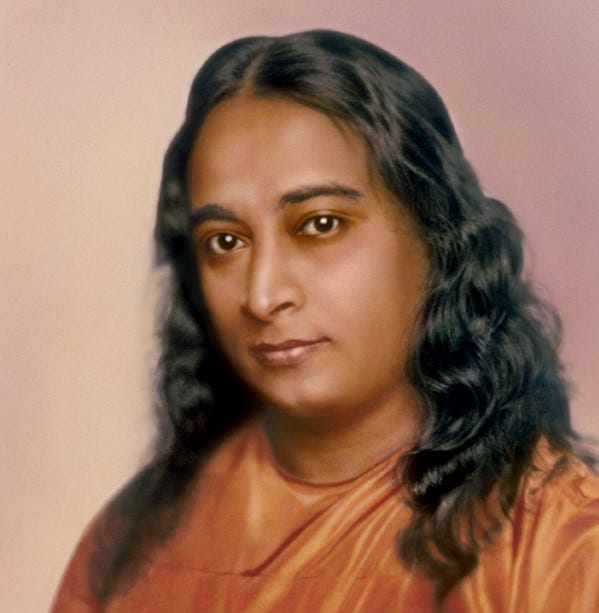
There must be something intriguing about the memoir of much-adored monk Paramahansa Yogananda, that it has been published in more than fifty languages and has sold millions of copies worldwide. Not just that, it has also enjoyed famous advocates from time to time, right from Steve Jobs and Andrew Weil to George Harrison.
So what makes this book so widely acclaimed and sought after?
‘Autobiography of a Yogi’ is a treasure trove of timeless wisdom, enduring life lessons, eternal truths, effective yogic tools and scientific techniques for self-realization; narrated with considerable candour, charm and humour by a charismatic, modern yogi.
Transcending all religious, social and geographical barriers, this book, termed a ‘spiritual classic’, continues to garner widespread admiration.
I remember when I had first picked it up to read, I was hoping that it would not inundate me with lofty philosophy, or with some unattainable ideals. But I soon realized my folly in thinking so.
Not only was it a delightful read, to say the least, with Yogananda’s compelling storytelling ability and remarkable eloquence, it was also surprisingly very relatable and entertaining. This was not about some elusive yogi up there in the mountains, but about a person just like you and me who had an amazing life story to share!
This, therefore, is my humble attempt to share some pearls of wisdom which I imbibed from the book -wisdom which is practical, inspiring, enduring and can be life-altering if applied.
The book brims with precious insights on different facets of human life. I have tried to highlight the key ones.
Presenting a few pearls of wisdom:
On Impermanence
Remember that you belong to no one and that no one belongs to you. Reflect that someday you will suddenly have to leave everything in this world — so make the acquaintance of God now.
These golden words were spoken by Lahiri Mahasaya, one of the great saints celebrated in this book, who influenced and shaped the life of Yogananda. One must realize the temporary nature of human life and thereby stay focused on ‘beholding oneself as the Infinite Essence’; this reality has been emphasized upon time and again in the book.
We tend to misidentify ourselves with the shallow ego and assume we are this ‘bundle of flesh and bones’. Thus, we forget one of our prime duties, which is devotion (bhakti) or remembrance of the Divine. Many people take to the feet of God when this human life is nearing its end and impermanence, by way of death, is staring at their face.
Yogananda, however, aims to jolt us from our stupor, and motivates us to pursue the path of ‘freedom from every form of misery’; by adopting some of the powerful methods prescribed in the book.
On Yoga
Yoga is a method for restraining the natural turbulence of thoughts, which otherwise impartially prevents all men, of all lands, from glimpsing their true nature of Spirit. Like the healing light of the Sun, yoga is beneficial equally to men of the East and to men of the West.
Rightly called ‘Father of Yoga in the West’, Paramahansa Yogananda was the monk who popularized in the West the science of Kriya Yoga meditation, an ancient science of energy, mind and breath control. It is considered an instrument with which human evolution can be quickened and has been explained in the book. Through a devoted practice of this yoga, it is possible for man to attain realization of God and liberation from all forms of bondage.
Yogananda demolished any limited perceptions about yoga, by teaching it in an effective way; not as an esoteric Eastern tradition, but as a practical and usable scientific method. He demonstrated that yogic practices are employable by mankind in general, and just like the Sun, their benefits are available for all.
Through his autobiography, Yogananda also managed to disprove claims made by some writers that the practice of yoga is ‘dangerous’ or ‘unsuitable’ for Westerners. In fact, the West (California, America) was his home for more than thirty years where he worked tirelessly, disseminating valuable teachings of Yoga.
On Karma
To become the friend of God, man must overcome the devils or evils of his own karma or actions that ever urge him to spineless acquiescence in the mayic delusions of the world. A knowledge of the iron law of karma encourages the earnest seeker to find the way of final escape from its bonds.
‘Autobiography of A Yogi’ has maintained that the goal of human life should be to ‘cross over the stormy sea of samsara (the karmic wheel, the recurrence of lives and deaths).’ It inspires man to recognize this truth that ‘man has a body, but is a Soul’-ever free, indestructible, deathless because birth-less. Hence, one should aspire to be free from all bondage and make steady progress towards the Truth.
Karma, as explained, is born from delusion or maya, which causes man to become erroneously identified with the body (instead of with the soul) and perform actions accordingly. This keeps him chained to the results of action. In fact, as the book says, in the present moment too, man is but a ‘puppet of past action (karma)’, and ‘all his intellectual reactions, moods, feelings and habits are merely effects of past causes, whether of this or a prior life.’
The iron law of Karma mentioned is nothing but the law we are all familiar with-“Whatsoever a man soweth, that shall he also reap.” Our good or bad actions draw similar results into our life, and this law is inescapable. In order to escape karmic slavery, man has to transcend the delusion-darkened mind through steady practices of mind-control and yoga, as well as harbor an intense longing to be free. The book lays down ample guidelines for achieving this goal.
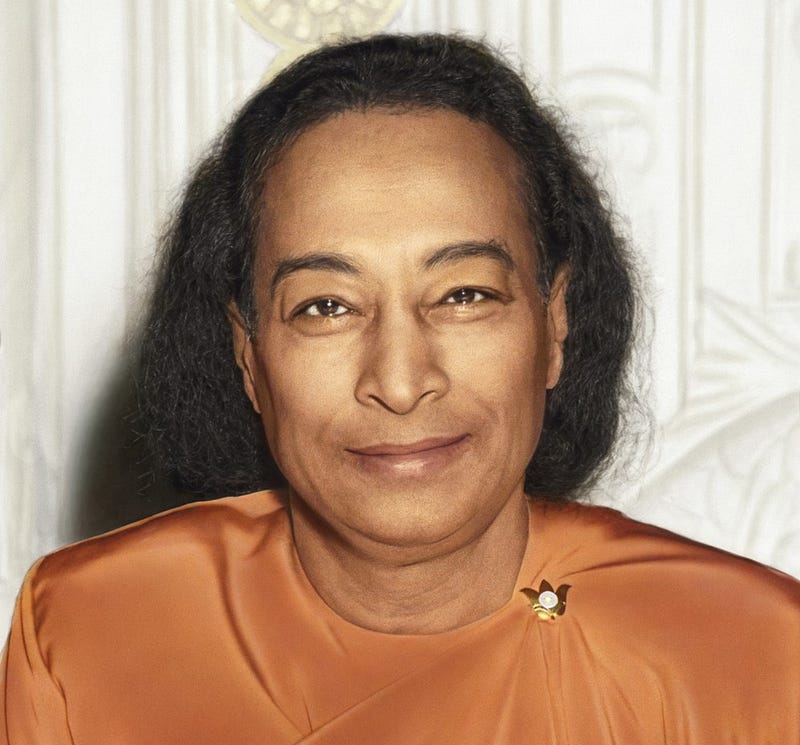
On Life and Death
Life by life, each man progresses (at his own pace, be it ever so erratic) toward the goal of his own apotheosis.
Death is not a blotting-out of existence, a final escape from life; nor is death the door to immortality. He who has fled his Self in earthy joys will not recapture It amid the gossamer charms of an astral world.
Human birth is a wonderful opportunity for man to move closer to Truth, by learning what he is meant to learn and by working out all his accumulated karma. Man’s sincere efforts in this direction would surely be rewarded, we are assured. The book wonderfully puts it in the following words: “It is on the anvil of this gross earth that struggling man must hammer out the imperishable gold of spiritual identity.”
Death, as expounded, does not guarantee the attainment of higher realms or heaven! The focus remains sharp on the actions we perform while here on earth. The good news in this is that we are in control! We always have a choice; whether it is about how we respond to circumstances, the kind of actions we perform, or whether we put in adequate time and effort towards realizing the ultimate goal which is reunion with the Divine.
On God
Ever-new Joy is God. He is inexhaustible; as you continue your meditations during the years, He will beguile you with an infinite ingenuity. Devotees like yourself who have found the way to God never dream of exchanging Him for any other happiness; He is seductive beyond thought of competition.
In these nectar-sweet words, Swami Yukteshwar describes the nature of the Supreme One to Yogananda, he being the spiritual guru of the latter. He goes on to explain that man’s desire for material pleasures is endless and insatiable. In the end, he is always seeking ‘something else’. Man does not seem to understand what that longing is, but it is in fact to become one with the ‘Lord’, who alone can ‘grant lasting joy’!
The book, replete with awe-inspiring accounts about experiences of sages and yogis in Cosmic Consciousness, propels the reader towards finding his/her own inexhaustible supply of Joy and Bliss. The mind, once cleared by Kriya Yoga and meditation of all sensory obstacles, becomes attuned to Divine guidance and thereby to direct perception of God consciousness.
How glorious and truly incomparable to all material experiences the bliss of dissolving into Supreme Consciousness is; Master Paramahansa has tried to explain through this illuminating verse which he penned himself:
Gone forever: fitful, flickering shadows of mortal memory; Spotless is my mental sky — below, ahead and high above; Eternity and I, one united ray. A tiny bubble of laughter, I Am become the Sea of Mirth itself.
Conclusion
There are some books which become part of our prized possession for life. For me, this is one of those books. It has armed me with the tools to live a happier and purposeful life.
The book shares valuable insights and life-changing perspectives on:
- the purpose of life
- limitations and opportunities of human life
- true essence of man as Infinite spirit
- Kriya yoga meditation
- transcending chains of Karma
- self-realization
Also referred to as “the book that changed the lives of millions”, it certainly continues to do so unceasingly.
I would like to leave you with what George Harrison, lead guitarist of the Beatles, has to say about it:
“I keep stacks of Autobiography of a Yogi around the house, and I give it out constantly to people. When people need ‘regrooving,’ I say read this, because it cuts to the heart of every religion." -George Harrison
You can read more about Autobiography of a Yogi here.
To learn about the life and teachings of Paramahansa Yogananda, you could check the official website of The Self-Realization Fellowship.
Thank you for reading and hope you have a lovely day!