
Peace, Love, and Flower Power in Costa Rica’s Cloud and Rainforest
Exploring the beauty of nature in the land of Pura Vida.
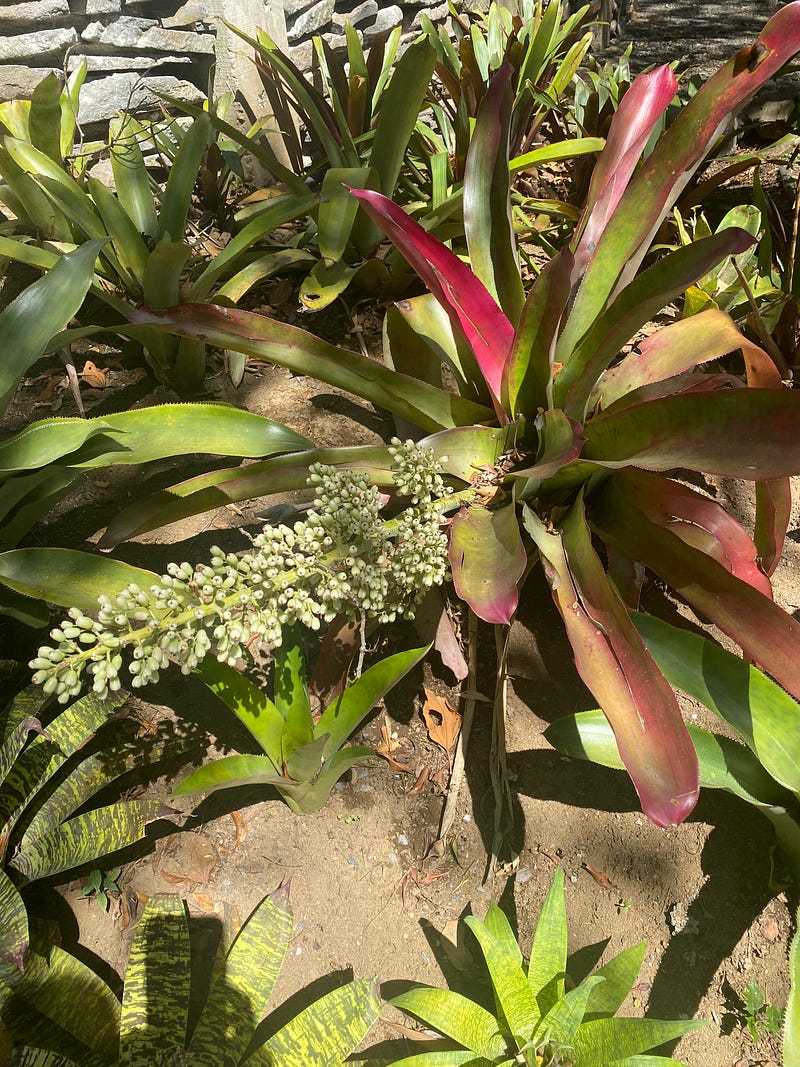
To start this story, I had to begin in the quintessential Costa Rican way.
Pura vida!
People who have spent five minutes in the peace-loving country of Costa Rica will understand why.
“Pura Vida” translates to “pure life” or “simple life.”
It is a popular expression that reflects the country’s laid-back, friendly, and optimistic culture.
The driver who took us from San Jose to La Fortuna instructed us to use this phrase liberally. It applies to almost everything, so it was a quick way to ingratiate ourselves with our hosts. People also always smile and say it back.
Our first stop was in the rainforest in La Fortuna. If you’ve never been in a rainforest, this is what it sounds like.
Even though we went during the dry season, it rained. They don’t have four seasons as we do in New Jersey. They have various degrees of wetness. So dry season means the least amount of wet.
We enjoyed temperatures in the high seventies. The air got humid right before it rained, and then sweet relief. Pura Vida!
I studied to be a master gardener here in my home state. Since then, I have been besotted by flowers and all things green. Costa Rica is an ideal location to feed this fever. I took many photos of flowers and plants that I thought would only benefit me until I saw that my passion corresponded with this month’s Globetrotter challenge.
While Jillian Amatt - Artistic Voyages already featured Costa Rican flowers in her article “The World Has a Neverending Variety of Flowers,” I plan to add a few more. Can there ever be too much of a good thing? That’s what I thought. Pura Vida!
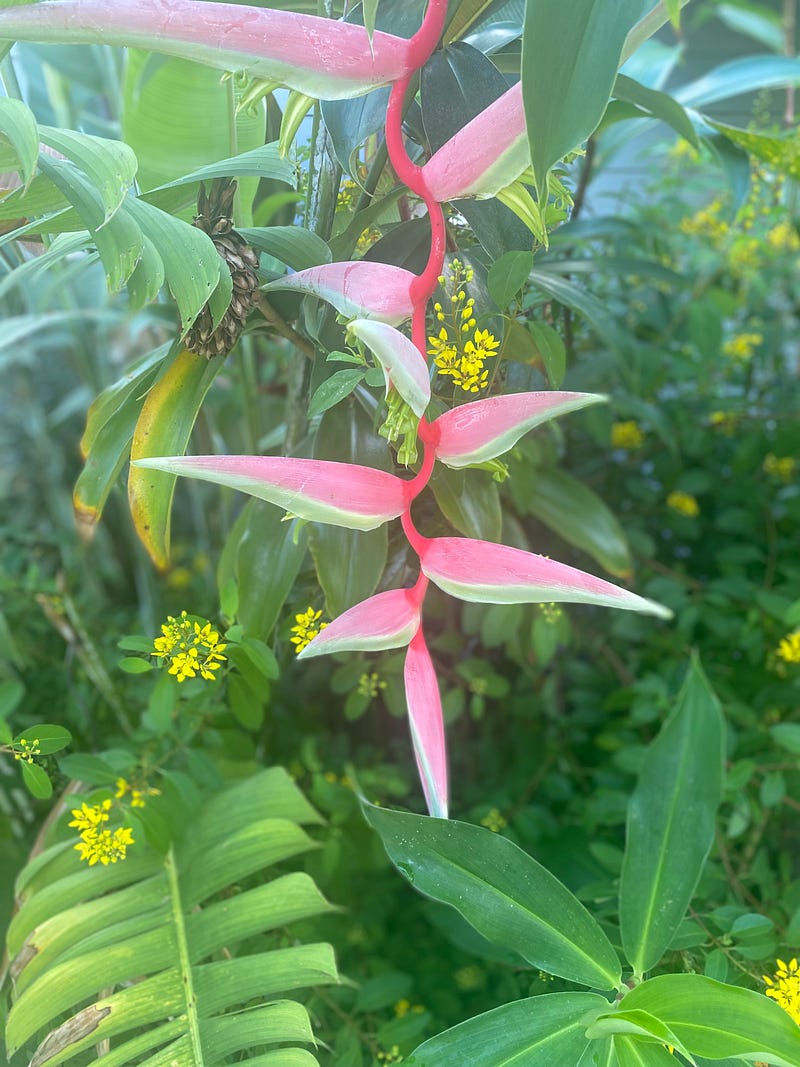
This beauty is a Heliconia Rostrata, the hanging lobster claw or false bird of paradise. Below is another variety.
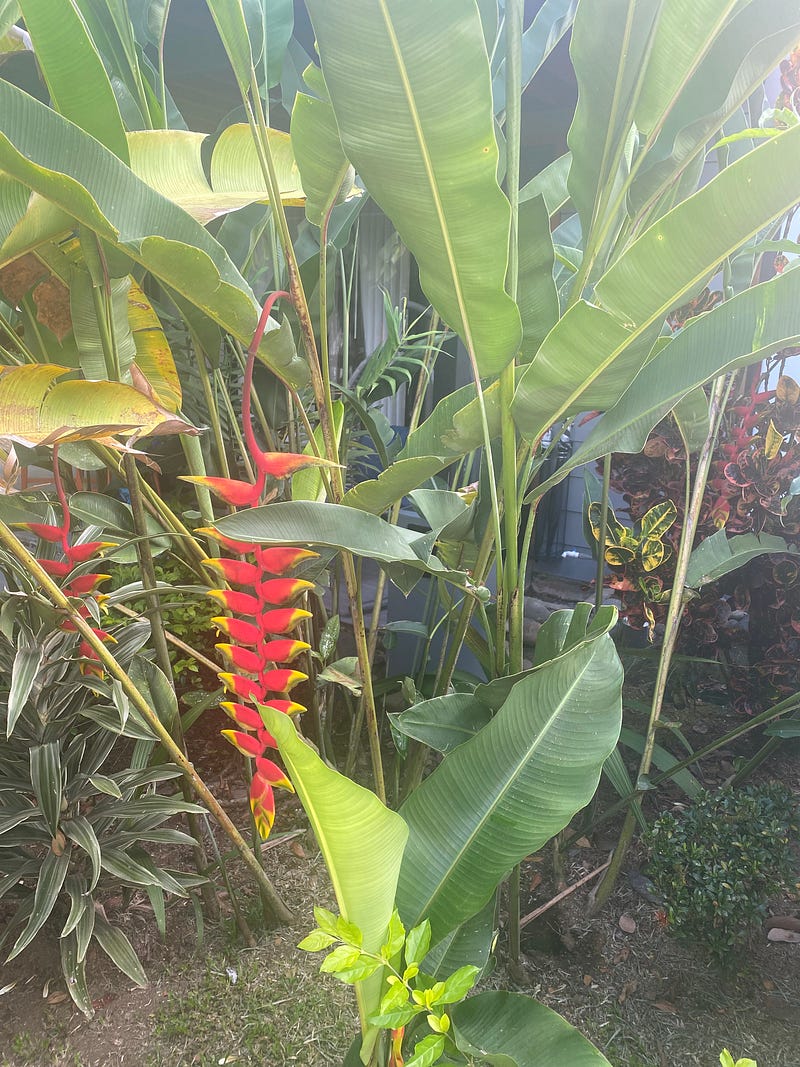
These flowers are so fancy, exotic, and elaborate; they look like expensive Christmas tree ornaments. I was in awe every time one crossed my path.
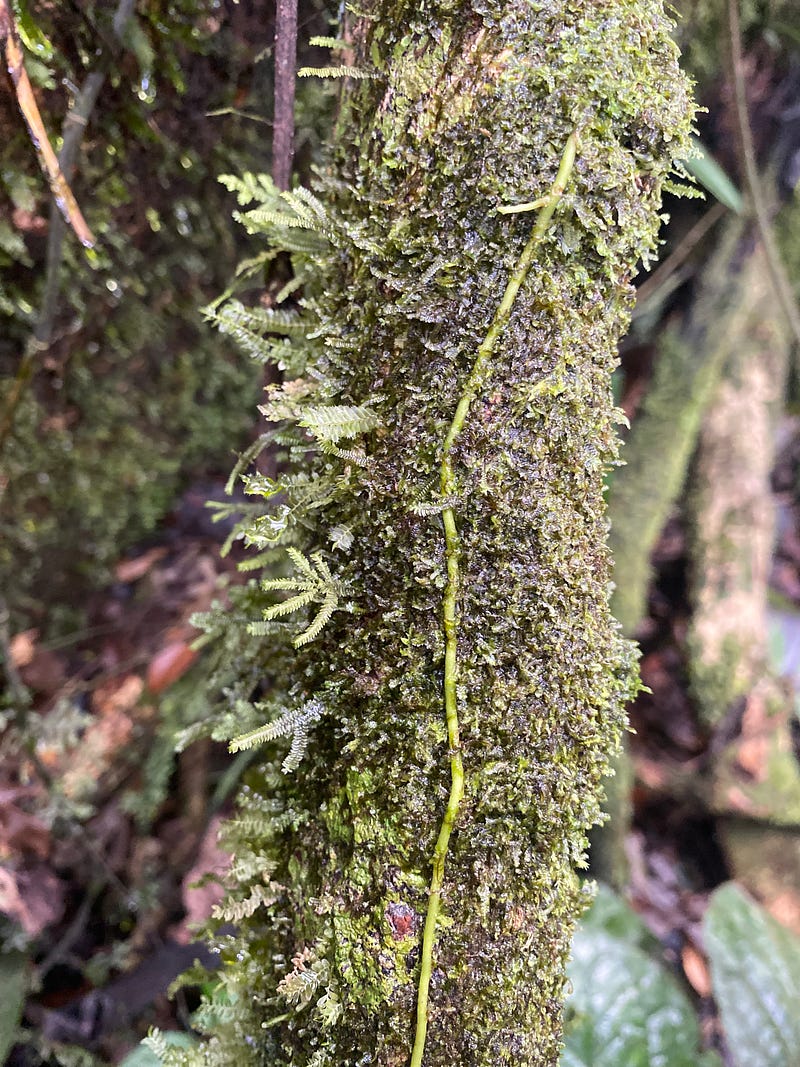
We spent part of one day walking through the rainforest. Here moss grows on all tree surfaces, not just on the North side, typical in cooler, dryer climates. You can’t see it here, but the moss actually had tiny little white flowers sprouting on it.
We were lucky to see snakes, sloths, lizards, beetles, howler monkeys, and a tarantula.
We never made it to the famous Arenal Volcano. I felt bad about missing it until I read TRAVEL STORIES BY GABE’s thoughts in his article, “Things You Are Allowed to Do As A Tourist.” With only three days available, we decided to forgo the volcano and concentrate on ziplining, whitewater rafting, and exploring the rainforest instead.
We never rented a car in Costa Rica and were glad we didn’t.
The Costa Ricans, aware their roads are perilous, fondly refer to them as “special.” That’s code for your-rental-car-will-get-charged-a-damage-fee. There are huge potholes, bottomless craters, blind curves, and crazy drivers galore.
To get to our next location, we took a van from La Fortuna to Lake Arenal with a forty-five-minute boat ride to the other side. Our van driver, Rollo, one of the more fun-loving drivers, took us the rest of the way to Monteverde.
During the hour-and-a-half ride, Rollo told us that we could tell we were in a town by the presence of these three things: a church, a school, and a soccer field. Interestingly, he never said post office, grocery store, hospital, or police station.
Not even a CVS.
He drove our van over the “Oh-My-God” bridge, which looked like a flimsy plank over a ravine. I squeezed my eyes shut for the five seconds I thought we would die.
Rollo also drove us through a river, which we could only do because it was the dry season. During the wet season, you can’t drive through it and must make your way around a 2.5-hour detour to get where you’re going.
Monteverde, sitting on the continental divide, means green mountain. It is 4,662 feet above sea level and hosts the Monteverde Cloud Forest Reserve.
The main town is called Santa Elena.
The weather was mild, with highs in the 70s and dipping into the 50s at night.
When we arrived, we had to wait a bit because our room wasn’t ready. We decided to lay out by the pool.
The strangest thing happened while we were reading on our chaises. The sun was warm in the blue sky, yet we started to feel like we were getting wet. Barely perceptible, it was raining but not in the way we were used to. We felt moisture, but we didn’t need an umbrella.
It wasn’t until the next day that I discovered that type of cloud forest rain was called “cat hair” because of its shape.
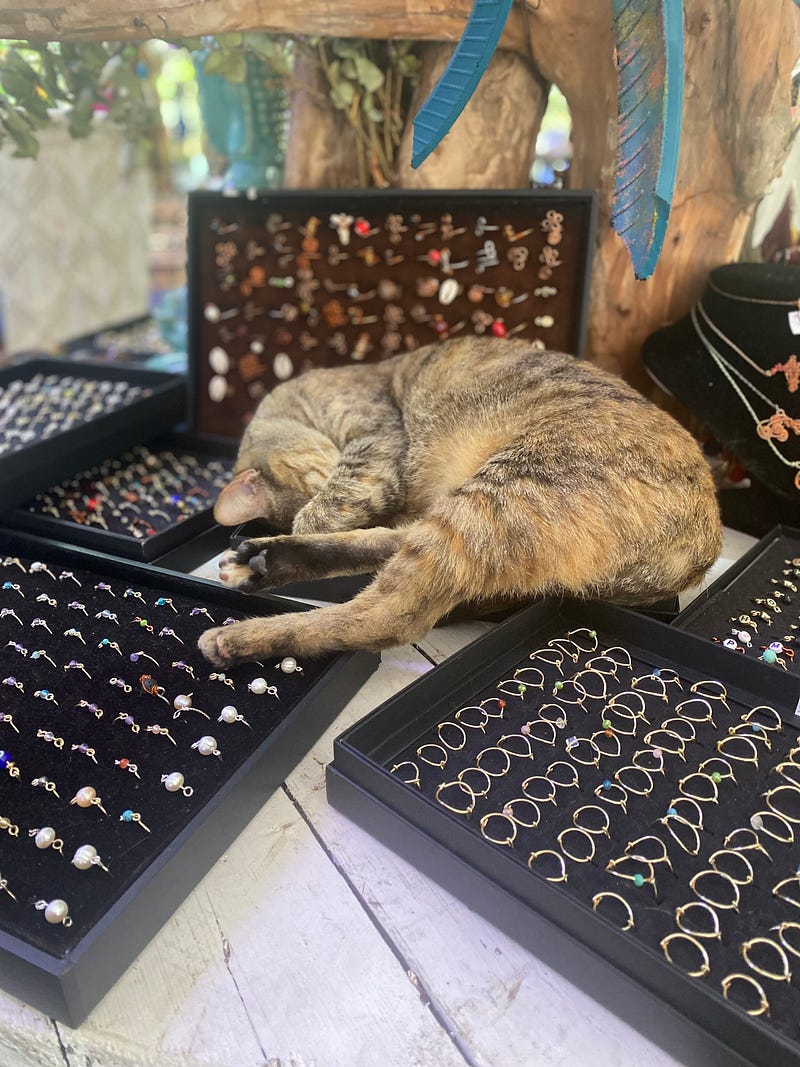
To get a good visual, here is a Santa Elena cat showing off its rain-hair. I wouldn’t dare do it, but if you pulled out one tiny little hair from a sleeping kitty, you’d have a good idea of what each rain droplet looked like that day by the pool.
Thankfully, no one wanted to buy the items serving as our model’s pillow.
Being that high up in the clouds meant we were subject to getting wet at any given time.
On our first evening, we took a night tour in the rain — the pouring down kind. We went at night because diurnal animals are hunkering for their evening rest, so they’re easier to find.
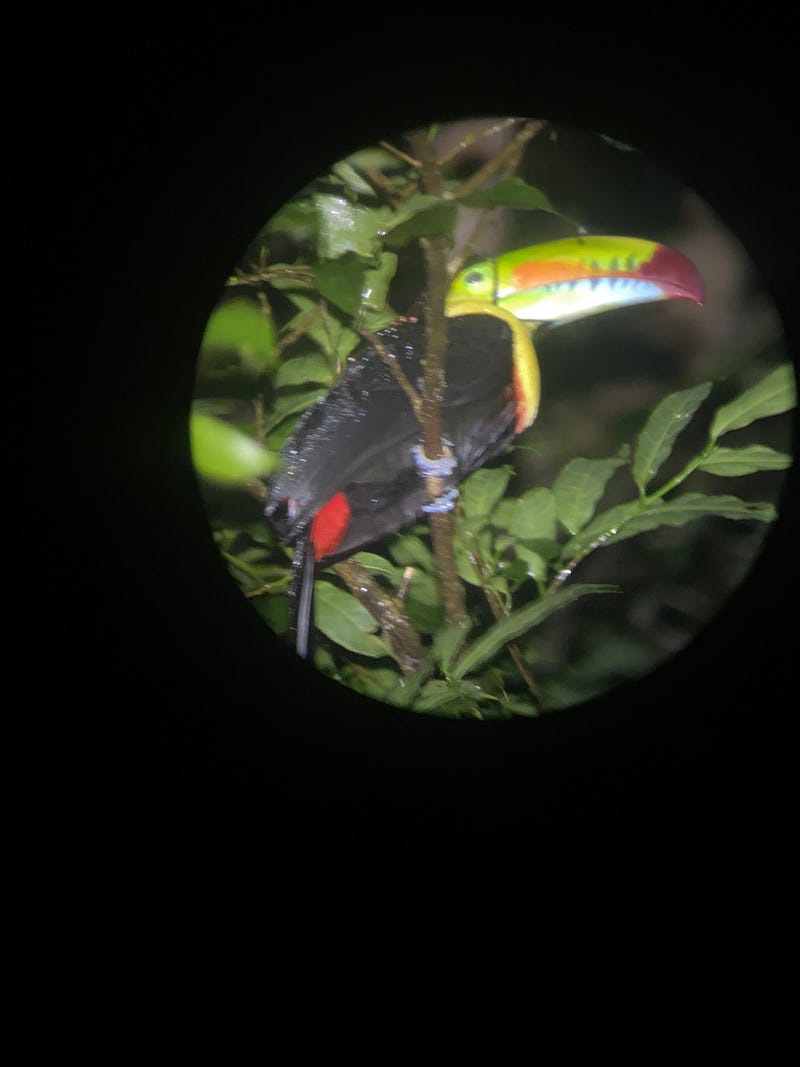
The most amazing animal we saw was the toucan. I always believed the toucan was a congenial bird that mostly ate fruit pulp and, when available, cereal. Unfortunately, our Fruit Looped feathered friends eat lizards and raid other birds’ nests for eggs and baby birds. They’re kind of ruthless that way, like blue jays.
But look at its spectacular bill!
The next day I explored our hotel’s gardens.
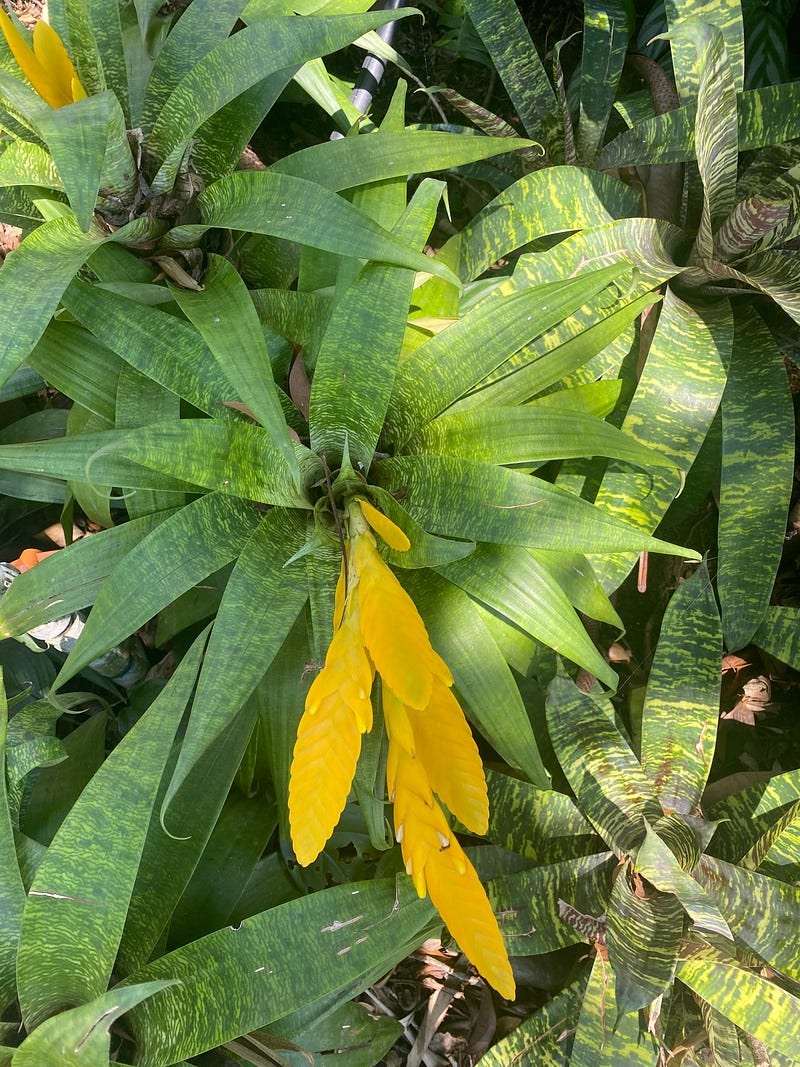
The above Vriesea is one of forty different kinds of bromeliads. I have this plant at home, but a more anemic version. Here in the cloud forest, they grow with abandon. The pattern on its leaf is exquisite as well. Mine misses its home of origin and doesn’t like the cold, dim winters in my living room in the Northeastern United States.
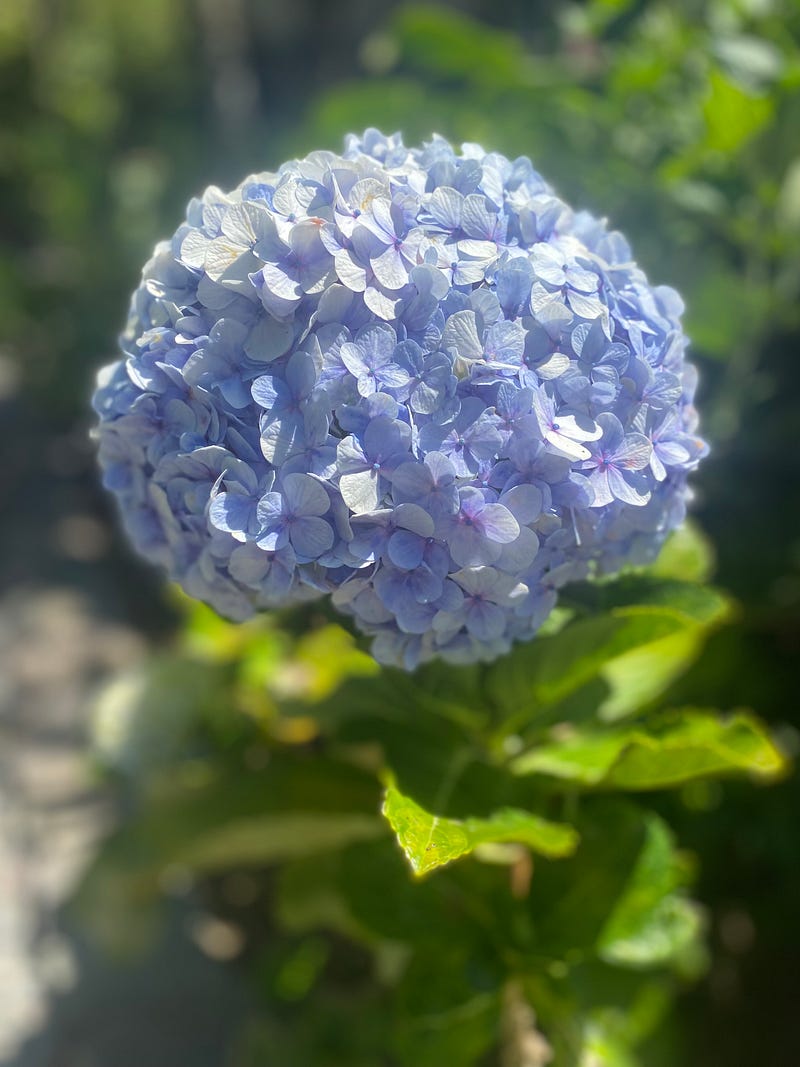
I was surprised to see a miniature version of a plant I have growing in my garden at home. This blue hydrangea, while gorgeous, had only a small, wiry stem to support it. The ones in the cloud forest are much smaller than the ones I am accustomed to seeing. At home, the hydrangea bushes grow huge and lush. I guess they don’t call New Jersey the Garden State for nothing!
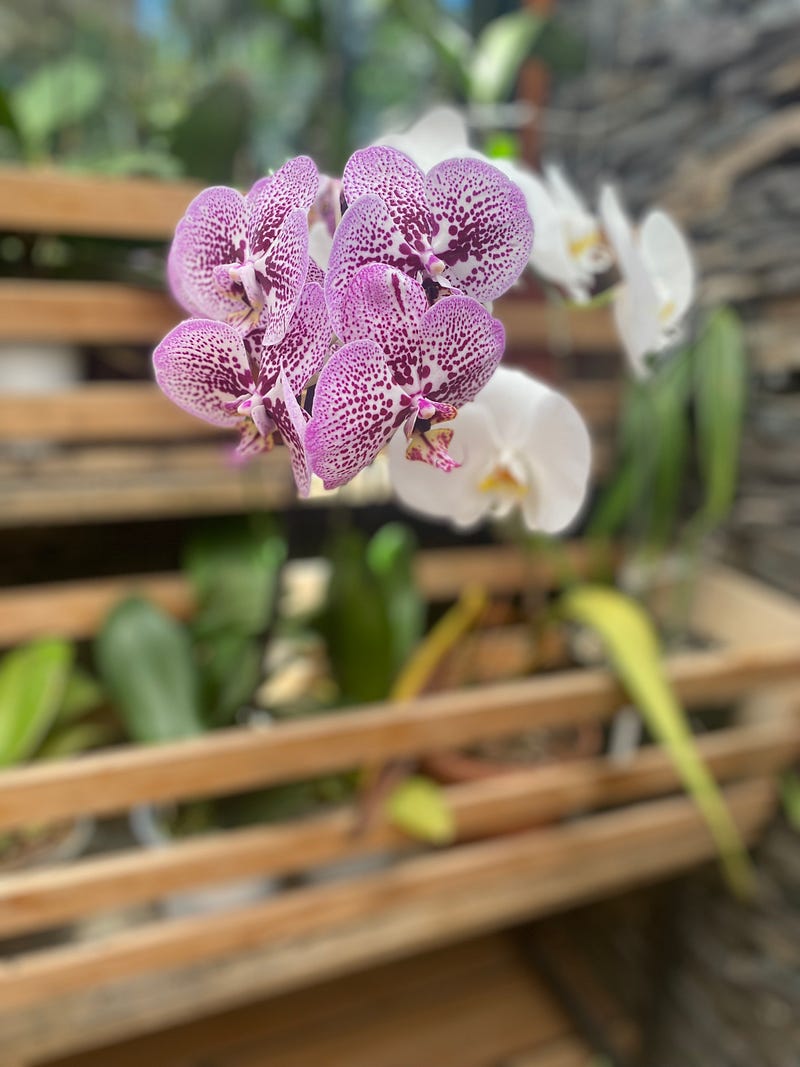
Orchids love the rainforest and cloud forests. This gorgeous creature lived in a special room dedicated to orchids in the hotel. Many grow in this region outdoors, thriving on tree trunks and perched on branches. I have a couple of my own growing begrudgingly in a terrarium.
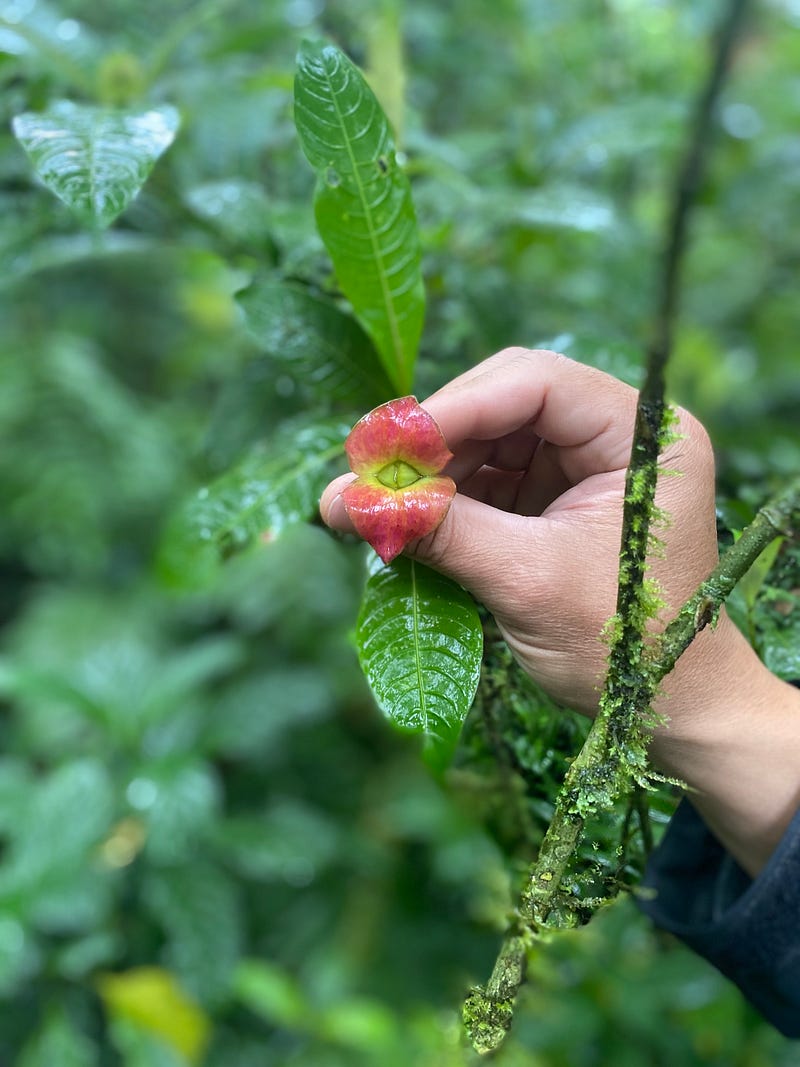
No, it’s not Angelina Jolie’s lips, but I can see why you’d think that. It’s a Hot Lips Flower or Psychotria Elata that we found in the Monteverde Cloud Forest Reserve.
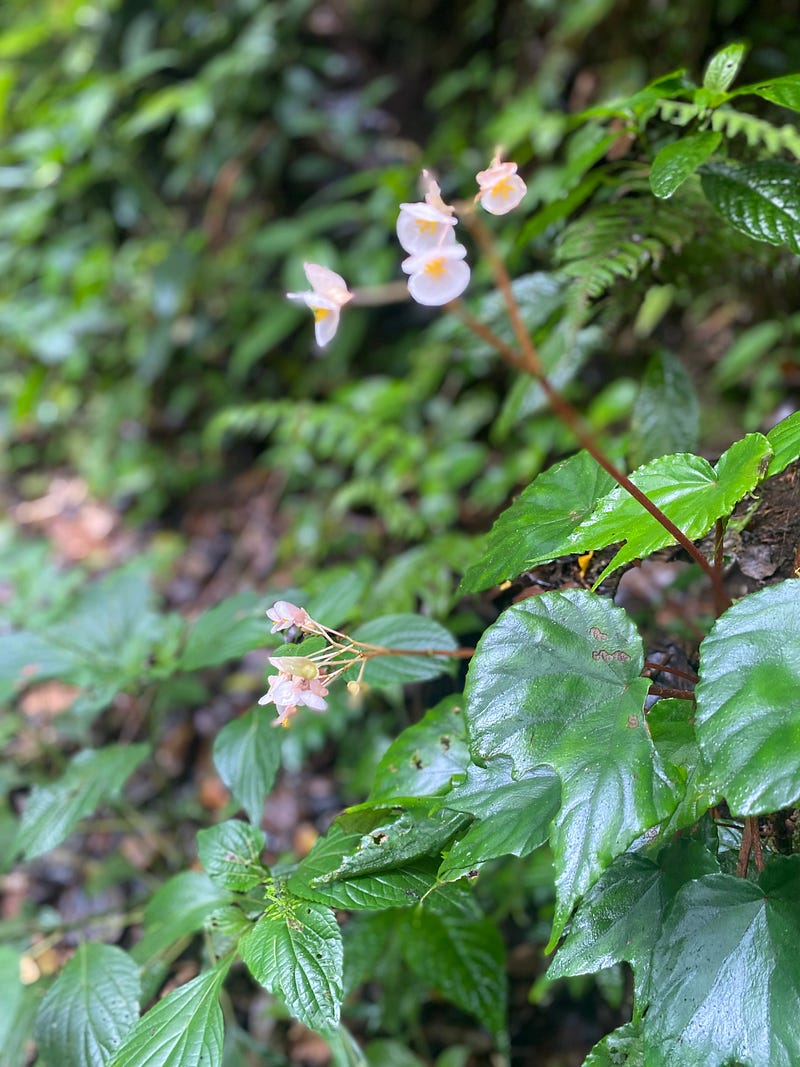
We also found this dainty begonia being so sweet.
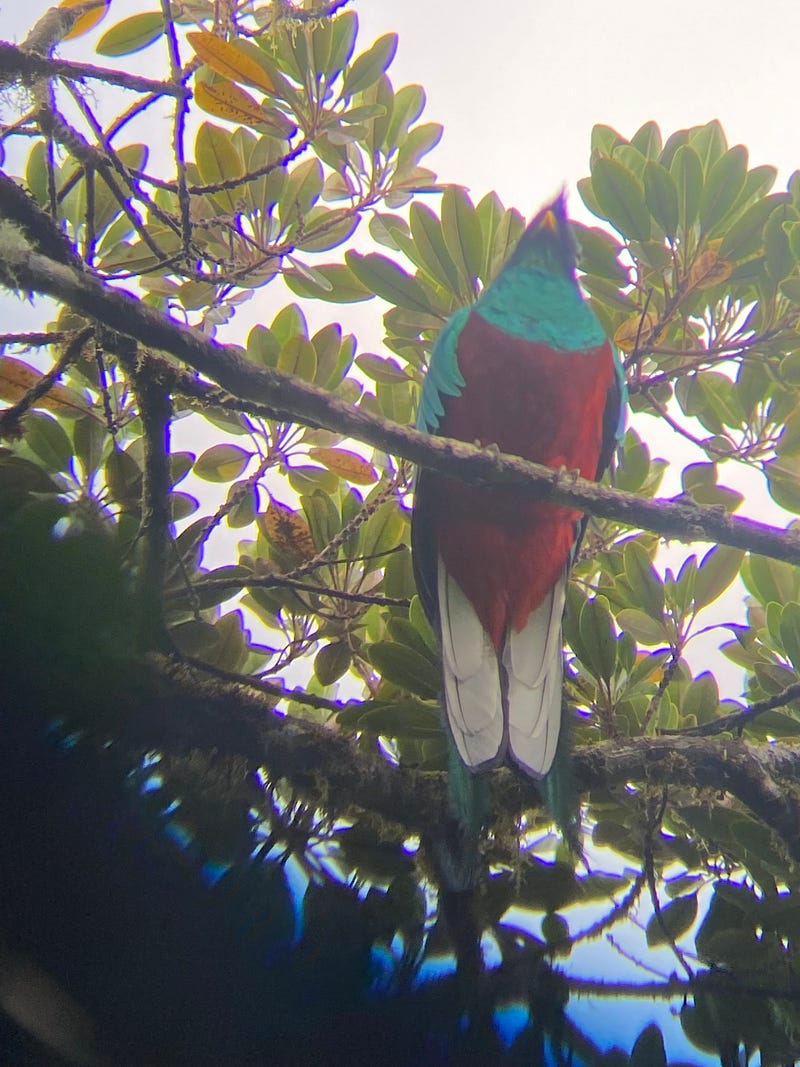
We were rewarded during our nature walk with a spectacular show of several Resplendent Quetzals, an endangered species. Our guide Eliar said he had been there the day before with another group and hadn’t seen any. Lucky for us, we saw several.
While this bird is not a flower, it is too spectacular not to share.
Besides the Resplendent Quetzals, we saw another tarantula, the slingshot spider, hummingbirds, snakes, and lizards.
I love nature wherever I go, but I will never forget the flora and fauna in Costa Rica.
Flower lovers should not miss visiting the places where they grow year-round. La Fortuna and Monteverde are two of the most beautiful and pristine spots on the planet, but they are in danger of extinction because of the damage humans have caused our planet.
You can feel the love of the Costa Ricans for Mother Earth as they fight to preserve their corner of the planet.
When we harm nature, we harm ourselves.
Can you do one thing today to help the environment? Earth Day or not, we need to take action now.
We owe future generations the right to witness beautiful rain and cloud forests. Pura vida!


