
Paying Less for Flight Tickets — 3 Insider Tips from a Former Airline Specialist
During years I worked for the world’s greatest airline, developing ways to increase their profitability. Now I will help you to pay less. Much less.
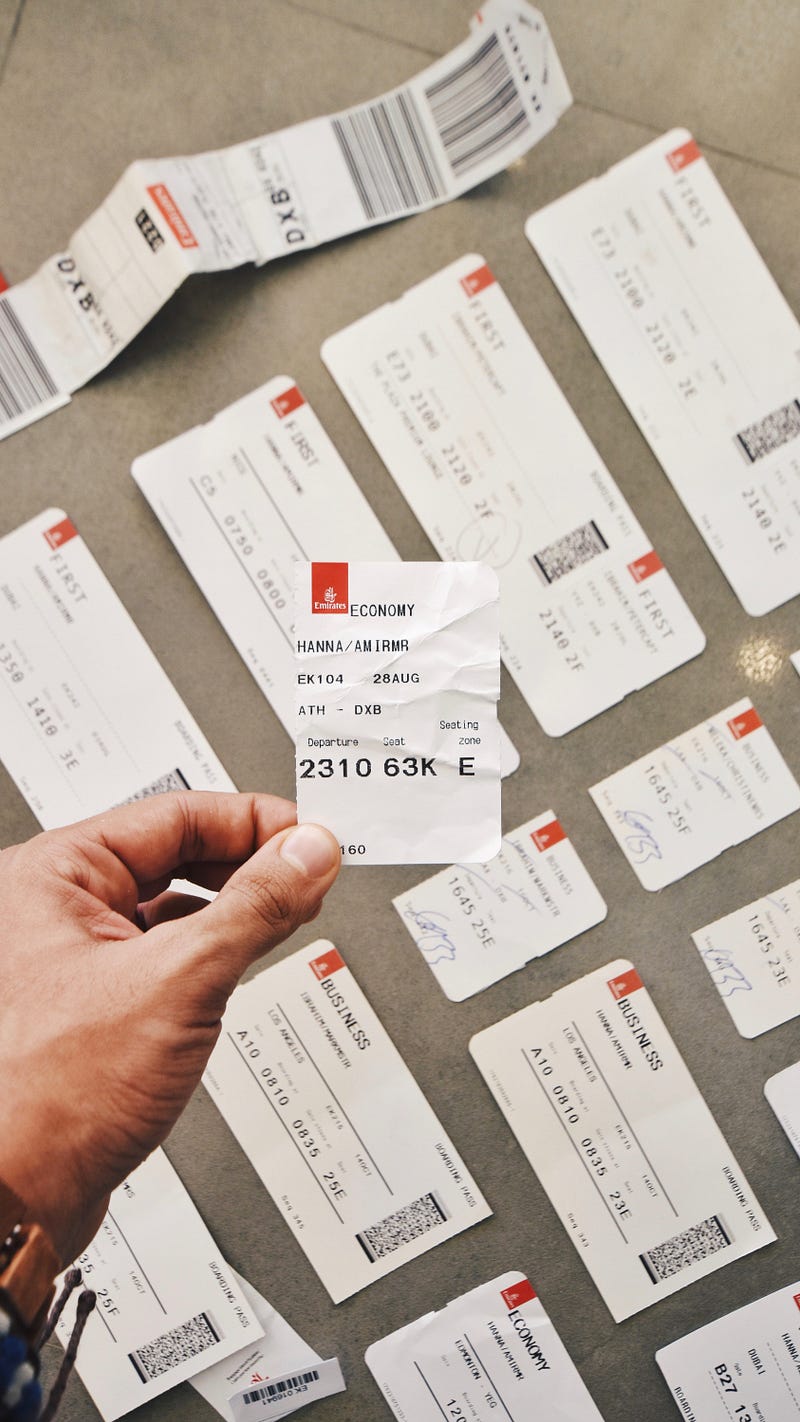
Airlines are by far the place with the most developed tools for customer segmentation, using advanced science to determine the willingness to pay of their customer and which ancillaries (extras) have the biggest revenue potential.
The airline I worked for, together with few other global companies, sponsor a research consortium in the MIT (Massachusetts Institute of Technology).
At this consortium, they develop the cutting-edge science behind their prices and market practices. During my last 2 years working for airlines, I taught new analysts and specialist part of those techniques — although I am not among the brightest minds in this sector full of geniuses.
While all this science is intended to help airlines survive in a hyper-competitive market and keep profitable, there are ways for you — the passenger — dribble it and pay less for your next flight. 3 of them are below. Many others you can find in my book Budget Travelers, Digital Nomads & Expats: The Ultimate Guide.
Starting from the science itself: Revenue Management.
Revenue Management is everywhere now
Revenue Management (or RM) is the set of techniques using data and analytics to optimize product availability and price, with the final goal of maximizing revenue. In other words, is the scientific approach to consumer behaviour regarding price and product offer. Smaller prices when the demand is low, bigger prices when the demand is high (it is not always like that, but this is a good simplification).
This is the reason that air ticket prices change so frequently.
RM is also the area I worked during most of my career, and airlines are using it for decades already. How each company applies those methods can be the difference between a bankrupt and a profitable carrier.
With techniques developed by some of the greatest airlines in the planet, it was a matter of time until other industries adopt RM for themselves. Nowadays it is in businesses like:
● Hotel and Tourism
● Rail and Bus transportation
● Concerts and Festivals
● Theatres, Stadiums and Sport Events
● Restaurants
● Cinemas
When you see a festival offering cheaper early-bird prices, or a cinema charging more for weekend tickets, this is RM. The reason all those industries use Revenue Management is that all of them have a limited number of seats/rooms/tables to sell, and as a consequence, they need to sell it for the ideal price to avoid the flight/show/dinner/movie starts with empty places. You will not see a chocolate company using RM because if they have a period with lower demand for white-chocolate, they will just produce less of it (or make more if the demand is higher).
But why I gave you all this explanation?
To make clear the reason for our hack: As a rule of thumb, and with very few exceptions, RM favours anticipation. Consumers buying tickets earlier allow the company to plan better their future. For this reason, to stimulate early buying, they offer better prices.
If you ever searched for train or bus tickets with DB (Germany), Amtrak (USA) or FlixBus (Europe and USA) you already realized how the prices fluctuate across time. The same happens with major hotel chains.
Notably with touristic packages and hotel rooms, sometimes the best prices will be in the last minute. This allows great opportunities for travellers (as we explained in a previous hack). On the other hand, with air tickets, concerts, festivals and land transportation it is a safer bet to simply buy earlier.
The hack to not pay for excess luggage

In one of my previous hacks, I wrote about ways to travel light. Still, sometimes it is not possible. Sometimes we just need to carry a major amount of stuff because we will be longer in a place where certain items are needed (like your vinyl’s if you are an old-school DJ).
Certain people opt to just pay the airline excess baggage charges. In Europe, this is around 60 euros per 23 kg bag[1], while in American Airlines it costs whooping 150 dollars[2].
If you think that this amount is not a problem, I bet you are either transporting something extremely valuable and necessary or probably your bank account has many more 0s than mine. For those that prefer to pay less and wait a few days more, there are great options.
Options costing less than what airlines charge. They also cost less than traditional delivery companies like FedEx or UPS. Still, for some reason, many people don’t know about it.
I am talking about 3 shipment services providers:
● Eurosender, which works across most European countries.
● Lugless, available in the United States
● Luggage Forward, operating in countries all over the world (and likely more expensive than those above).
Those services are not usual transportation companies, but rather platforms connecting customers (individuals and companies) looking for a logistic provider. Something like Uber but for baggage. With Eurosender, you can send a bag to another European country for 20 euros. Lugless, inside the United States, have similar rates.
What to do with all the money you will save in airline fees? I suggest buying my other book, which complements this one: Moving Out, Living Abroad and Keeping your Sanity. A thank you is also fine!
[1] https://upgradedpoints.com/lufthansa-baggage-fees/
[2] https://www.lugless.com/airline-baggage-fees/american-airlines-baggage-fees/
Take advantage of the flight imbalance
This is a very interesting trick I learned during my years working at airline headquarters.
When a big event (like the Super-Bowl or the Olympics) or a special holiday (like Carnival in Brazil) approaches, airlines dedicate extra flights to those destinations and touristic companies organize charters. They do that because there is demand and people are willing to pay more. For those wanting to travel for big dates, tickets can be pricey.
However, there is something called “flight imbalance”, which gives to date-flexible travellers a great advantage.
To understand it, first we need to know that every time an airplane is flying, it creates costs for the airline. Considerable costs like fuel, which may represent near 40% of all company expenses. Therefore, an airplane must have as many passengers as possible to offset the costs of the very act of flying (and spending fuel).
Even for higher prices, it is easy to sell a ticket to travel to Brazil for carnival. It is also easy to sell a ticket to the host city of the Olympics just one day before the opening ceremony. So, even for higher prices, all those extra-flights and charters are crowded in the way to there. But an airplane will rarely stay grounded in the airport during the entire Olympics or carnival, so they usually fly back to their original bases.
That is what we call Imbalanced: a flight with a huge demand in one way, but minimal demand on the way back.
Since one passenger is better than no-passenger, to avoid planes coming back empty, airlines offer great deals and special prices in the opposite direction. That is where your opportunity lies.
Example: The Venice Carnival of 2019 started in 16 of February. Airlines and tourism companies offered flights to the Italian city departing from all over Europe. You can expect a salty price to go to Venice during Carnival. In the other hand, a flight departing from Venice on 16 or 17 of February can have very low prices, because the number of people willing to fly out of the city during the carnival is not even near the number of people flying into the city. To not have empty airplanes returning, airlines offer discounts.
Bottom line: If your city is hosting a big event (sports, conferences, etc) or have a special holiday, there is a good chance that to travel out from there during this day (and return to your city when everyone is leaving it) will save you a considerable amount of money.
Final Thoughts
By buying earlier (generally more than one month before departure), cutting unnecessary ancillary expenses, like excess luggage, and using the flight imbalance in your favour, it is possible to turn your next travel into a bargain.
What do you think? Do you have any other tip to fly cheaper?
Author: Levi Borba, founder of Colligere Expat Consultancy, former RM specialist for the world´s greatest airline, writer of the books Moving Out, Living Abroad and Keeping Your Sanity and Budget Travelers, Digital Nomads & Expats: The Ultimate Guide. You can check some of his articles here.
Subscribe here, for free, to my email list and receive the digital book 20 Essential Hacks for Saving Money While Travelling. Discover the way to cheaper flight tickets and even an upgrade to Business Class! Written by an author that worked during years in some of the best airlines of the planet.


