
“Paying for the Party” Book Review Part One: Campus Life Experiences for are Driven by Stratification and Systemic Racism
by Rebeca Bonilla and Dr. Benjamin M. Drury
Colleges are often perceived as bastions of equality and opportunity in American society. Even abroad, people are raised learning that American college degrees hold endless value and possibility. Upon closer examination, however, people find themselves immersed in a complex landscape of disparities, particularly for students from lower-income backgrounds.
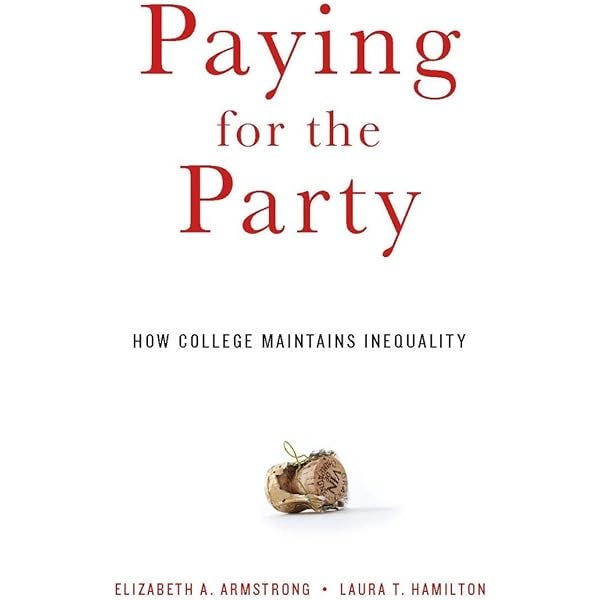
In their insightful 2018 book “Paying for the Party: How College Maintains Inequality,” Elizabeth A. Armstrong and Laura T. Hamilton shed light on how colleges inadvertently perpetuate social and economic inequalities.
Armstrong and Hamilton conducted a study centered on a fictionally named Midwest University (MU). primarily, their goal was to understand the intricate dynamics of class projects and organizational imperatives within colleges.
By categorizing students into distinct paths based on class and gender, colleges inadvertently shape students’ experiences and socioeconomic trajectories long after graduation. What these two scholars learned is that higher education does more to create a fertile ground for people who know where to find resources to grow.
Reality suggests that not everyone comes to campus with the same degree of understanding of different valuable resources students need to take from their experience in addition to what they are learning in the classroom.
One striking example highlighted in the book is the “Food Fights” episode from Malcolm Gladwell’s Revisionist History podcast series. Gladwell investigates how funds are allocated at private colleges like Bowdoin and Vassar, revealing how the meals served reflect organizational imperatives and class projects that benefit specific student groups.
Gladwell’s nuanced exploration underscores the need for colleges to critically assess their organizational structures and funding priorities to ensure equitable opportunities for all students, regardless of their socioeconomic backgrounds.
Colleges must strive to create environments that foster inclusivity and provide support to students from diverse socioeconomic backgrounds to truly embody the ideals of equality and opportunity in higher education. Armstrong and Hamilton wrote their book over 5 years ago…before the pandemic.
Realities related to education have certainly changed, and yet inequality and disparities in access to high quality education remain.
By truly investing in allowing racialized and minoritized students to create their own learning environment and spaces where they can truly feel comfortable and authentic with their learning experiences, students at these elite colleges and universities will continue to experience a whitewashed educational experience that prioritizes normalcy over diversity.