
Paul Gauguin's Journey From a Stock Broker to a Master Painter!
Paul Gauguin 1848–1903 was a French post-impressionist painter known for his distinctive style and influence on modern art. Born in Paris, Gauguin started his artistic career as an amateur before dedicating himself to painting. He is best known for his use of bold colors, simplified forms, and his interest in the exotic.
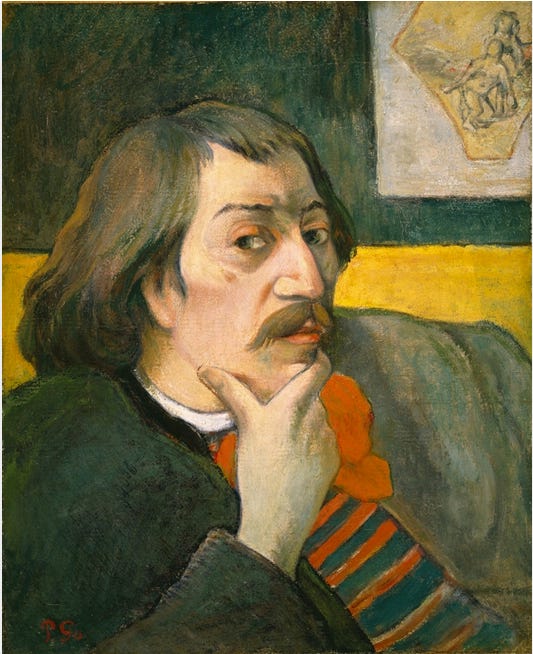
Paul's parents were Clovis Gauguin and Aline Chazal. Clovis Gauguin, his father, was a journalist and a political activist. He was of partial Breton descent. Aline Chazal, his mother, was of Peruvian and French-Peruvian descent. Paul was born on June 7, 1848, in Paris, France, into this multicultural and diverse background. His upbringing and family heritage played a role in shaping his identity and artistic interests.
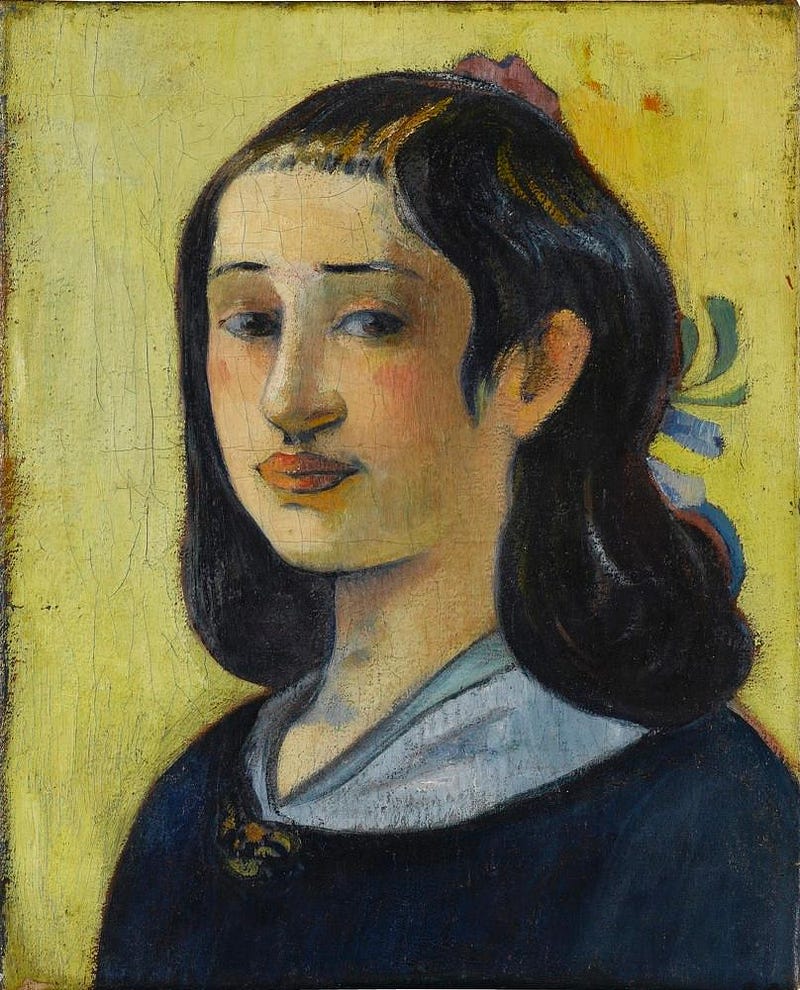
Paul had two sisters, Marie She was Paul's older sister and Pauline
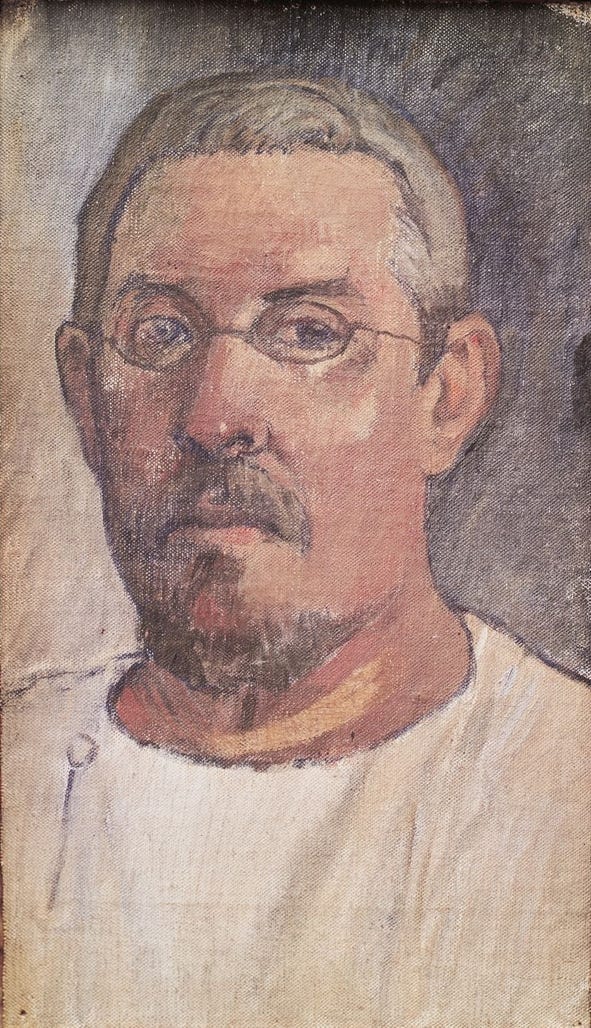
Paul married Mette-Sophie Gad in 1873. Mette-Sophie was a Danish woman, and they had five children together: Émile, Aline, Clovis, Jean René, and Paul Rollon. The family initially lived in Copenhagen, Denmark, but they later moved to Paris.
Despite being married, Paul faced challenges in his personal life, including financial difficulties and strained relationships. His artistic pursuits often led him to travel extensively, and his marriage ultimately faced strains due to his unconventional lifestyle and commitment to his art. The couple separated in 1885, and their marriage ended in divorce in 1891.
After his separation from Mette-Sophie, Paul went on to have relationships with other women during his travels, especially during his time in Tahiti.
Paul initially worked as a stockbroker in Paris before fully committing himself to art in his mid-thirties. He was initially associated with the Impressionist movement and exhibited his work in some of their shows. However, he later distanced himself from Impressionism and sought a more independent artistic path.
Paul was of partially Breton descent, and this heritage influenced some of his artistic themes, such as his interest in Celtic mythology. Paul is known for his bold use of color, flat forms, and innovative compositions. He often used simplified shapes and exaggerated colors to express emotion and meaning. Paul, along with Émile Bernard, developed a style known as synthetism, which sought to synthesize the visual and emotional aspects of art. This style was characterized by simplified forms and bold colors.
One of the most significant periods in Paul's life and art was his time spent in Tahiti from 1891 to 1893 and later from 1895 to 1901. During this period, he created many iconic paintings inspired by Tahitian culture and landscapes.
Paul was not only a painter but also a writer. He wrote several manuscripts, including his autobiographical works, providing insights into his thoughts on art and life. Paul's work had a profound impact on the development of modern art. His rejection of traditional artistic norms and exploration of new forms influenced subsequent movements such as Fauvism and Expressionism.
Paul faced financial difficulties throughout his life and often struggled to make ends meet. He even worked on ceramics and woodcarvings to supplement his income. Despite his troubled life, Paul left a lasting legacy, and his paintings are highly valued today. Some of his works have fetched record prices in art auctions.
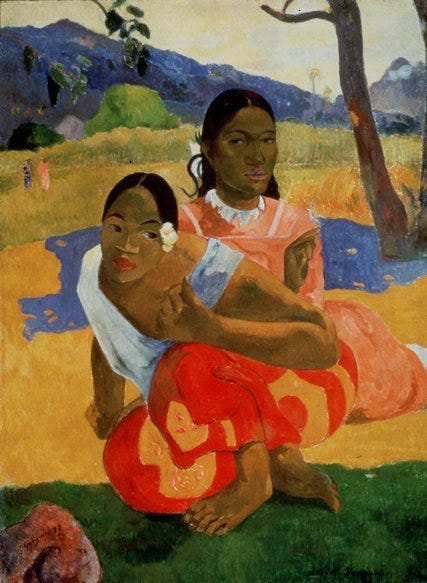
In 2015, the Doha Museum in Qatar purchased Paul Gauguin's Nafea Faa Ipoipo's title, When Will You Marry?, for $300 million dollars. The seller was Rudolf Staechelin
Some of Paul’s notable works include “The Vision After the Sermon” (1888), “Tahitian Women on the Beach” (1891), and “Where Do We Come From? What are we? Where Are We Going?” (1897). Paul was closely associated with the Symbolist movement and sought inspiration from primitive art and non-Western cultures.
Paul had a tumultuous and famous friendship with Vincent van Gogh. The two artists met in Paris in 1887 and quickly formed a close bond, sharing similar artistic aspirations. They both were seeking alternatives to the traditional artistic conventions of the time and were drawn to experimenting with color and form.
Paul and Van Gogh spent some time working together in Arles, France, in 1888. However, there were a lot of disagreements and creative clashes during their collaboration. Their different approaches to art and life led to heated arguments, and their personalities clashed. One of the most infamous incidents occurred in December 1888, when Van Gogh reportedly cut off part of his own ear during a heated argument with Paul.
Despite the conflicts, Paul and Van Gogh’s friendship had a profound impact on both artists’ work. They influenced each other’s styles and techniques, and their time together in Arles produced some significant artwork. Notable paintings from this period include Van Gogh’s “The Night Cafe” and Paul’s “The Yellow House.”
The friendship ultimately ended, as Paul left Arles in 1888, and the two artists never saw each other again. Van Gogh’s mental health deteriorated, leading to his tragic death in 1890.
There is speculation that when Vincent’s brother’s wife went to Paris to sell Vincent’s artwork after Theo and Vincent’s deaths, Paul copied one of Vincent’s sunflowers, which was later sold as Vincent’s painting. A life insurance company in Japan, Yasuda Fire and Marine Insurance Company of Tokyo, bought it in 1987 for $39.9 million.


