
Patient Education: From medical paternalism to patient-centred care
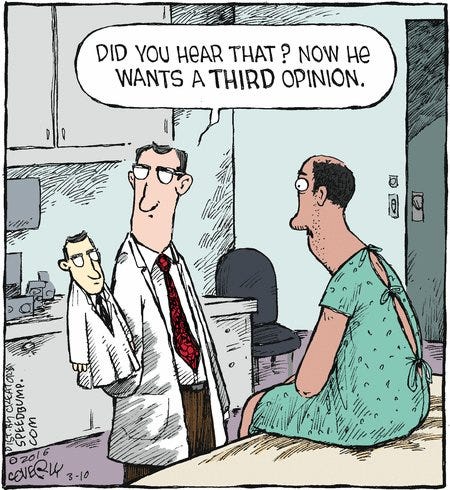
Patients should obey their surgeons implicitly in everything appertaining to their cure.
- Henri de Mondeville
This quote is part of the “morels and etiquettes of surgeons” which dates back to 1306 and reflects very well the attitude surgeons and doctors had towards the treatment of their patients at this time. But also hundreds of years later in the 18th century Benjamin Franklin who is considered to be one of the founding fathers of America as well as the founder of the American Psychiatry had a very superior opinion towards the doctros-patient relationship:
“Doctors should avoid sacrificing too much to the taste of (their) patients. Yield to them in matters if little consequence, but maintain an inflexible authority to them in matters essential to life.”
The guiding principle of western medicine has been known as “medical paternalism” since the time of Ancient Greece. This principle is based on the idea that doctors have intrinsically superior insights which should be followed and lived by patients undoubtedly. This approach was defined by Hippocrates, a Greek physician of the Age of Pericles, who insisted that physicians’ superior knowledge has to be self-reinforcing because the knowledge of a patient is simply worth nothing.
He even proposed that medical institutions should ensure that patients are being kept in the dark and unaware of their own full medical conditions.
Those who are already surprised by this attitude should know that this is the same person who penned the Hippocratic Oath. The oath obliges physicians to prescribe only beneficial treatments, according to his abilities and judgment; to refrain from causing harm or hurt; and to live an exemplary personal and professional life.
The rise of technologies enables patients to educate themselves and become part of the conversation
With the rise of disruptive developments around 1990 the pace of technological innovation has had a huge impact on the evolution in health care. The up until then massive information gap between patients and physicians has been bridged by technology and is democratising medicine again. With smartphones becoming a device in almost every persons pocket and access to all the information on the planet via Google, patients can educate themselves on their health status. Michael Specter, staff writer at The New Yorker in the area of digital health summarises it precisely:
“The era of paternalistic medicine, where the doctor knew best and the patient felt lucky to have him, has ended.”
This brings us to the point that we are right now in the middle of a transformation. We currently experience the shift from medical paternalism to patient-centred care.
With ancient doctrines becoming less and less acceptable for patients and also for many physicians we see a positive trend when it comes to putting patients and their needs first.
The times where it was common practice to withhold information about the health status of patients is over. A direct outcome of this development are Pickers eight principles of patient centred care. The principles are based on the scientific findings of a wide range of focus groups — recently discharged patients, family members, physicians and non-physician hospital staff — combined with a review of pertinent literature, researchers from Harvard Medical School, on behalf of Picker Institute and The Commonwealth Fund.
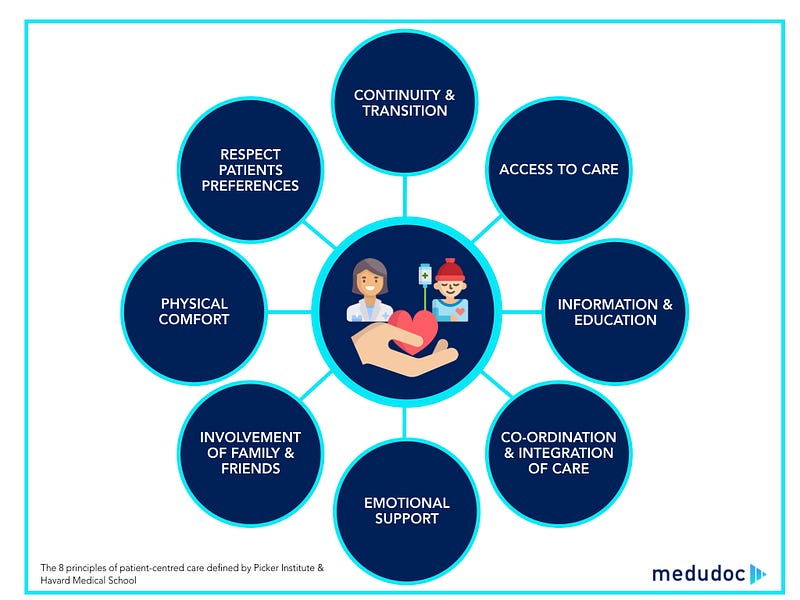
Physicians have come a long way from keeping patients in the dark and insisting on the medical supremacy. Today they are not only involving the patient but also the whole family and educating him about his health status and the respective procedures that will be undertaken to heal him. Of course there is still a lot work to be done when it comes to educating patients properly and on eye level, but considering our history we are on the right track.
If you want to know more about the challenges that patient education is facing today check out this article:
Sources:
Eric Topol (2016): The Patient Will See You Now: The Future of Medicine Is in Your Hands


