

‘Passages’ Review — Pleasure, performance, and fantastic fashion
A review of the romantic drama, on MUBI now
The first time I saw Passages, I watched it at this summer’s incarnation of Outfest, the Los Angeles LGBTQ+ festival. While you might expect such a crowd to be discerning, I saw it with an audience who apparently thought Passages was hysterical. To my utter dismay, most of the people around me found the film laugh-out-loud funny, and they cackled uproariously throughout the entire runtime. Anything too mannered, too European, too melodramatic, was met with loud guffaws. As I left, I overheard a girl say, “Everyone was cracking me up with all their reactions!” Her friend agreed, exclaiming, “It made the movie so much funnier!” This confirmed my suspicion that the loudest among us were belly-laughing performatively, making sure everyone else knew they thought it was hilarious.
The movie has a sense of humor; don’t get me wrong. It’s clever and cruel, meant to amuse as often as it’s meant to titillate. But cackling at the movie’s exploration of sexuality and desire misses just how intricate and well-guided its shifts in tone are. The performances here are often deeply sad, full of aching, human moments that deserve more than to be scoffed at. In other words, director Ira Sachs is working in a far more nuanced register than the Outfest audience was willing to allow. It was a disappointing experience, and I was eager to revisit the movie on my own, without people in my ear calling out, “Ooooooooooh!” — like a third-grader whose friend had been called to the principal’s office — any time a character misbehaved.
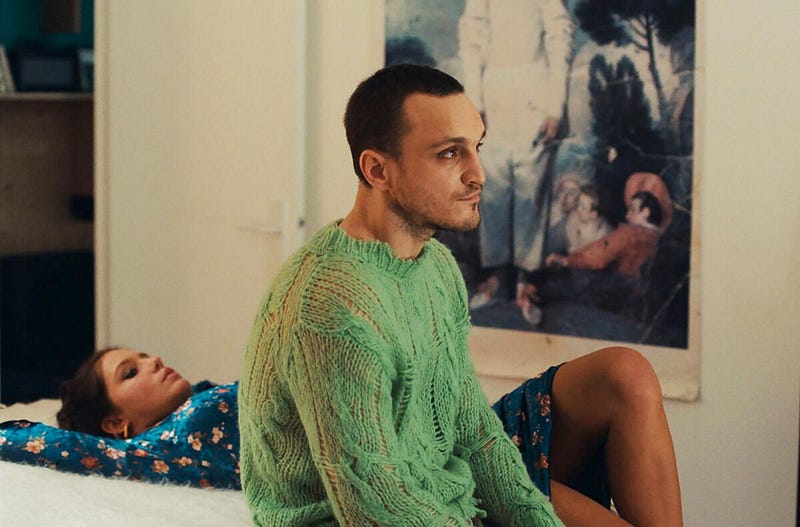
And, boy, do these characters misbehave. Well, one character, really; everyone else is just trying to keep up. Passages is the story of Tomas (Franz Rogowski), a narcissistic film director who moves through life like a tornado, leaving a path of destruction in his wake. He’s married to Martin (Ben Whishaw), an unassuming man who runs a print shop, though their relationship has become less exciting than it once was. At the wrap party for Tomas’s new film (also called Passages), he meets Agathe (Adele Exarchopoulos); before either of them know what’s happening, a night of dancing has led Tomas to Agathe’s bed.
“Do you know what I was doing last night?” Tomas asks Martin the next morning. “… I had sex with a woman.” He’s thrilled by the experience, not really noticing or caring how much it hurts his husband to hear. At first, Martin tries to be supportive, but as Tomas and Agathe continue to see one another, it becomes clear that Martin has been left behind.
What unfurls is a passionate, exquisitely-performed film about a charismatic man and the people trapped in his orbit. Franz Rogowski has such an interesting face and imbues Tomas with such a magnetism that it’s easy to see why people would fall under his spell, would want his attention; no matter how much they try to deny it, they desperately crave his gaze. Tomas, meanwhile, just wants to be loved, even if he seems fundamentally unable to understand that his nihilistic pursuit of pleasure has real consequences for the people he interacts with.

The way Sachs films said pleasure is one of the biggest draws of the movie. Passages was given an NC-17 rating thanks to its explicit sex scenes, though they chose to release the film without a rating to avoid making any cuts. That uncompromising approach to sexuality is refreshing, and it means that the camera delights in these lithe bodies exploring one another. Sex here is a means of connection, an intimacy that means different things to different people at different times, and Sachs trusts that the audience will be able to interpret what the characters take from each erotic encounter… even as we are invited to luxuriate in the pleasures of watching beautiful people on screen. I’ve now seen more of Ben Whishaw than I ever expected to, and you won’t hear me complaining.
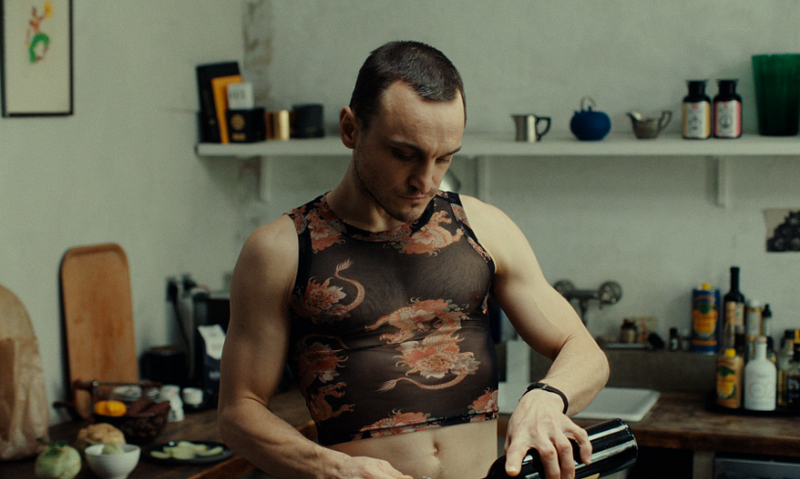
Passages is also a delightful example of characterization through costuming. We learn about the characters through when and why they remove their clothes, but we also learn about them through what it is they put on. The fashions are fabulously European, and each of the three main characters dresses in a way that says something about them. Martin is the most reserved of the three, and his clothes are the most “normal” of the bunch; still, we notice the fiercely-red robe he wears while trying to seduce Tomas, and the way that robe travels from character to character. Agathe is often clothed in vibrant jewel tones that reflect the intensity of her passion, while Tomas dresses in skintight mesh shirts and ass-hugging pants that highlight his figure and demand the attention of everyone around him.
It’s also refreshing to see the film recycle looks, and to notice what that means. At first, each of Tomas’ outfits is exciting and intriguing, just as we are excited to learn more about who he is. As the film progresses and the other characters grow tired of his bag of tricks, Tomas begins to wear things multiple times. To adapt a cliché, the bloom comes off the slutty little crop top.
By the end of the film, as Tomas has spiraled out of control and the effects of his experimentation have become clear, Passages asks that we not just pity him but empathize. Sure, he’s spent the film’s entire runtime treating people poorly, but there’s nevertheless something enviable about the way he rushes headfirst into whatever it is he wants. This is a man who demands pleasure from the world, and who expects that someone will be there to catch him when he falls. He’s desperately unhappy, but he resolutely believes that the solution to all his problems lies just around the next corner. Doesn’t that sound nice?
At a Q&A after that Outfest screening, Ira Sachs seemed surprised by a question that framed Tomas as “a character we love to hate.” “I love Tomas,” he insisted.
I do, too. Sure, I’d hate to know him in real life, but what a compelling screen creation. I’ve thankfully seen the film several times now, and I’m sure I’ll be watching Tomas try to find happiness many, many times more.