
Pass the Fentanyl
If Trump doesn’t kill us, carcinogens will.
Every time I watch CNN, my heart rate spikes. When you consider that our toxic POTUS is the person tasked with setting the policies that keep our country “safe,” how can you not cringe in fear?
But, as much as I fear the “real” Donald Trump, there is something that frightens me even more: Carcinogens. Cancer-causing agents. Because they’re everywhere.
Last night, I watched the movie, “Wine Country” on Netflix. Six old friends take a weekend trip to Napa Valley to celebrate their friend’s 50th birthday. Directed by Amy Poehler, who is surrounded by her real-life buds and former SNL cohorts, it’s an escapist romp of a chick flick.
I enjoyed the move immensely. Admittedly, much of it was derivative and, well…very white. I don’t think I saw a black face in the cast. Also, even though we women of a certain age are supposed to relate to the middle-aged, meds-popping ladies in the film, for most of us, a luxe mini-vacay in California’s lush wine country is way out of our reach. No matter. It was fun, and got me out of my head for ninety minutes.
Here, though, is some of what I was thinking as I watched: The wine flowed. Oh, did it flow. And oh, did I want some. But since I’ve been trying to cut back, I stuck to my Pu-erh tea.
Normally, I would have popped the cork on a bottle of Cabernet and thrown down with the chicas. However, I just finished two books that I thought would help me on my journey to “partial sobriety.” Blackout, by Sarah Hepola and This Naked Mind, by Annie Grace.
Both books demonize alcohol. Especially, This Naked Mind, where Grace solemnly tells us that even one drink can cause cancer. Not to mention fucking up our cerebral cortex, heart and every other organ in our bodies.
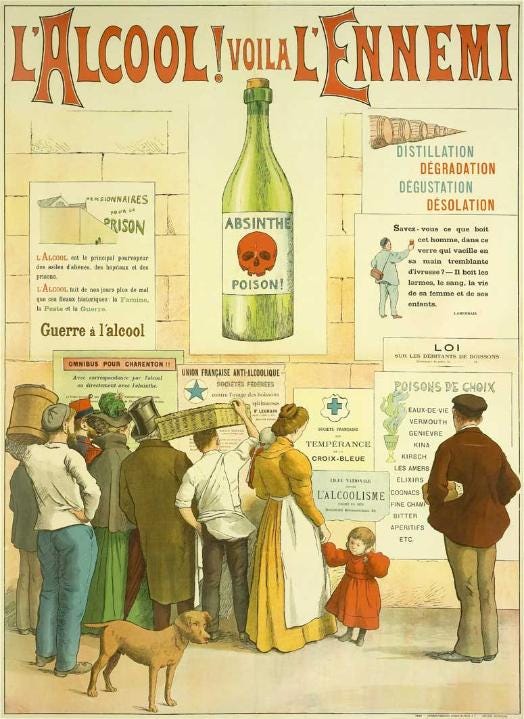
Yes, my friends. Apparently, wine is not good for us, as we’ve been led to believe. It does not boost our immune system or increase bone density or lower cholesterol or reduce the risk of stroke or pump new life into our floundering libidos or any of that shit.
Now I don’t know what to believe. For years, I’ve been sucking down the vino while telling myself, “Hey! This is good for you, Sherry. Vodka may not be your friend, but wine is made from grapes. And everyone knows grapes are healthy!” Except when they’re not.
We’re constantly barraged by conflicting information. Fats were bad. Now they’re great. Keto fanatics are pounding down the meat, bacon, butter, cheese and every other fat-laden food they can get their greasy hands on.
Coffee was bad, now it’s good. Whole grains, no grains. What the fuck?
I didn’t particularly like This Naked Mind. If you read it thinking you’ll get tips on how to moderate your drinking, as is one of the book’s premises, you’ll feel cheated. Because, as I said, we’re told that even one drink can lead to premature death. According to Grace, every sip is “poison.”
Booze, we’re told, is comprised of ethanol and sugar. Who the hell would want to put THAT in their body? ME. That’s who.
Nah. I just don’t know, anymore. As a breast cancer survivor, I shouldn’t be drinking at all which is ironic, because the very thing that helps me forget I had the disease, can cause the disease. Alcohol can increase the hormone estrogen. Too much estrogen is what caused my body to turn into a self-destructive mechanism.
I remember early on I had a talk with my oncologist about alcohol. I particularly recall him telling me, “Well, have one glass of wine on Friday and one on Saturday.” After scooping my jaw off the floor, all I could do was nod like a marionette. “Okay, doc. Sure.”
Carcinogens. God. Even the word sounds toxic. Like the fallout from a nuclear blast, they hover over us, as we, ever-hopeful, like a kid who still believes in Santa Clause, choose to believe the good news over the bad.
The truth, however, is bad. Cancer-causing chemicals are found in the food we eat, the lotions we slather on our bodies, the solutions we use to clean our homes, the crap we spray on our weeds, and on, and on.
How do we protect ourselves? Even the very sun, that warms our bodies and nurtures our souls can cause cancer. This year alone, roughly 97,000 people are expected to be diagnosed with melanoma.
When I was a teenager, I sucked up the sun like an aardvark sucks up angry termites. During the summer, my friends and I hung out at the beach every day. Reflectors made from album covers were a thing. That, and baby oil ensured a rich, bronze hue that made me look and feel like a babe. Like J.Lo, without the ass.
Now, I fret over every freckle, every mole, every brown spot, etcetera, ad nauseam.
Am I paranoid? Hell, yeah. Care to join me? C’mon, I don’t want to do this alone. Here, from Web Md, are ten, common carcinogens that we should be aware of. A few of them, like tobacco, are no-brainers, yet people still huddle outside, in front of restaurants and office buildings sucking on their cigs. Nicotine is that addictive.
As if the reality wasn’t sufficiently dim, keep in mind: The following list only scratches the surface. There are at least 115 known substances that are carcinogenic to humans.
Tobacco
Duh. As we are now aware, at least 70 chemicals in tobacco are known to cause cancer by damaging our DNA. It doesn’t matter if we’re the ones doing the puffing, or the unfortunate soul who’s breathing in someone else’s fuck-up, this can kill us.
Radon
The number 1 cause of lung cancer in non-smokers. Radon occurs in small amounts in nature, where it’s harmless. But if Radon builds up indoors, it can break down the lining of our lungs.
Asbestos
An especially nasty carcinogen, the tough, tiny fibers in asbestos help strengthen products like roof shingles, ceiling tiles, and car parts. Yet if these fibers break free and we breathe them in, they get lodged inside our lungs.
Crispy, Brown Foods
Give the Colonel a dishonorable discharge! Even when some vegetables, like potatoes, are heated to high temps, they give off a chemical called acrylamide. In experiments, rats who took in acrylamide in their drinking water got cancer, so researchers think humans do, too. If you must fry food, fry lightly.
Formaldehyde
Not just for the preservation of corpses anymore, from plywood to fabrics to beauty products, this chemical is virtually everywhere. Studies on lab rats and people who are around formaldehyde at their jobs show it can cause cancer.
Ultraviolet Rays
When ultraviolet (UV) rays, whether from the sun or a tanning bed, get absorbed into our skin, they can damage the cells there. Most skin cancer cases are due to UV rays. Sunscreen: Don’t leave the house without it.
Alcohol
This is like a shot to the heart, but studies show that the more we imbibe, the greater the likelihood that we can develop the following cancers:
- Head and neck
- Esophageal
- Breast
- Liver
- Colorectal
One reason for this may be carcinogenic chemicals produced when beer, wine, and hard liquor are made. Experts suggest women have no more than one drink each day and men no more than two.
Processed Meat
Bacon, salami, pepperoni, sausage — any meat that’s been preserved or flavored raises our colon cancer risk. Over 800 scientific studies support this.
Engine Exhaust
Trucks, buses, trains, and even some cars run on diesel fuel. The gas and soot in diesel engine exhaust are believed to cause lung cancer and other types of cancer.
Pollution
A biggie, and given the state of our climate, especially frightening. Aside from exhaust, polluted outdoor air contains dust and traces of metals and solvents that can lead to cancer. Data collected from over 1.2 million people across the U.S. supports this.
As I said, this list is only the tip of the iceberg, so what are we to do when all the kale in the world won’t keep us safe? Hide under our beds? Subsist on organic green tea and gummies? Or do we just say “fuck it,” and throw caution to the winds?
There’s another option: We could just check out, before we’re checked out. Score a script for an opioid like Fentanyl and take a wee bit too much. But I’m not ready for that. I doubt you are, either. At least, I hope not. There’s still so much to do. At the very least, we have to stick around to see that bastard in the White House finally get what’s coming to him.
Hell. That’s reason enough to raise a glass.
Sherry McGuinn is a longtime Chicago-area writer and award-winning screenwriter. Her work has appeared in The Chicago Tribune, Chicago Sun-Times and numerous other publications. Sherry’s manager is currently pitching her newest screenplay, a drama with dark, comedic overtones and inspired by a true story.
Thanks for reading. If you enjoyed this piece, please check out the following:


