
Part Two: The Events of al-’Isrā’ wal-Miʿrāj: Prophet Muhammad’s (ﷺ) Night Journey and Ascension to the Heavens
The Events of al-’Isrā’ wal-Miʿrāj
Part Two
We now turn our attention to al-’Isrā’ wal-Miʿrāj and attempt to discover what took place during this journey. The classical sources offer two possibilities for the event: 1. a real event for the Prophet (ﷺ) including both in body and spirit, the dominant opinion; 2. it was a dream that came to the Prophet (ﷺ) and not involving physical motion on his part, the minority opinion. Both possibilities regard the event as a form of revelation and even the dream since prophetic dreams are considered a form of divine communication to prophets. A clear example of this can be seen in the narrative of the Prophet ʾIbrāhīm (ﷺ) in which he saw himself sacrificing his only son; he set about doing so until Allah intervened to save the child and ordered an animal to be offered in his place.
Some have argued that the sequence of al-’Isrā’ wal-Miʿrāj have taken place more than once in the life of the Prophet (ﷺ), one time in body and spirit and another time in a dream while in a state of sleep. The majority of Muslim scholars have taken the position that it took place only once, and in both body and spirit. They offer verse one of chapter seventeen as categorical textual evidence for their opinion. The scholars maintain that since the verse begins with “Glory be to Him,” which is used for a matter of great significance, not a mere dream. Furthermore, Quraysh would not have raised any objections if the Prophet (ﷺ) had said, “I had a dream in which I took a night journey to Bayt al-Maqdis and back in a short period of time.” However, Quraysh used the incident in an attempt to discredit the Prophet (ﷺ) and his followers. The fact that it was a miracle in body and spirit made the episode of al-’Isrā’ wal-Miʿrāj so difficult for Quraysh to accept that they embarked on testing the Prophet’s (ﷺ) knowledge of Bayt al-Maqdis. The sources mentions that the Prophet (ﷺ) answered every question they had about Bayt al-Maqdis, and provided specific description of the city and the roads leading to it.
Another critical issue which has caused disputation among Muslim scholars is whether the Prophet (ﷺ) saw Allah with his own eyes or not. The first opinion is that of ʿAbd Allāh ibn Abbās who affirms the seeing of Allah by the Prophet (ﷺ) and with his own eyes. The second originates with ʿĀʾishah bint Abī Bakr who argued that it was a seeing, but by the means of the eye of the spiritual heart, and not through the naked eye. Furthermore, ʿĀʾishah cited the Qur’anic verse, “We appointed the vision which We showed you as a test for mankind,” maintaining that the prophet did not make al-’Isrā’ wal-Miʿrāj in his body; but only in his spirit. In support of this, ʿĀʾishah testified that the body of the Prophet (ﷺ) was not absent at any point during the night of al-’Isrā’ wal-Miʿrāj. However, the scholars did not accept ʿĀʾishah’s testimony as decisive on this point since at the time of the events. The scholars maintain that ʿĀʾishah was not yet married to the Prophet (ﷺ) and did not share a bed with him until after the migration to Medina, which means that her testimony must have been based on a third-party report that was left unidentified by her. ʿĀʾishah’s position therefore conflicts with the dominant opinion and the verse cited by her cannot be regarded as a sufficient proof to negate the miraculous nature of al-’Isrā’ wal-Miʿrāj.
On the same issue, ʿĀʾishah also cited verse 103 of chapter 6 of the Qur’an stating: “Vision comprehends Him not, but He comprehends all vision,” which might imply the impossibility of humans seeing God with their own eyes. To this Imām al-Nawawī and ibn Ḥajar al-ʿAsqalānī have responded that the verse speaks of the ability to comprehend and encompass Allah, which is impossible for any human, but does not negate the prospect of seeing him which, in the view of both scholars, is something made possible by His permission on judgment day, the verse does not constitute proof of absolute impossibility. Furthermore, Imām al-Nawawī commented that ʿĀʾishah’s statement was not based on any ḥadīṯh she had from the Prophet, because if she had had one she would most certainly have used it. For al-Nawawī, ʿĀʾishah’s position is based on her istinbāt (inference or deduction) from the Qur’anic verse, and a number of companions have disagreed with her on the subject. Accordingly, the issue becomes one of Usul (principles of jurisprudence), since the expressed position of a given companion is challenged by another companion endowed with understanding; the earlier opinion loses its validity and is no longer admissible as evidence. The position of ʿAbd Allāh ibn Abbās is straightforward and has several ḥadīṯhs to support that the Prophet (ﷺ) saw his Lord during the al-’Isrā’ wal-Miʿrāj. Ibn Abbās is reported to have said: “As for us, the children of Banī Hāshim, we say that Muhammad has seen his Lord twice,” a statement he supports with various narrations of ḥadīṯh and statements by companions. This is the position taken by the majority of Muslim scholars.
Ḥadīths Describing the al-’Isrā’ wal-Miʿrāj
Ḥadīth collections include several narratives of the event with some clear differences present among the reports, on the basis of which a number of conflicting conclusions have emerged among the scholars. In order to represent the most widely accepted narration of al-’Isrā’ wal-Miʿrāj, we will use the ḥadīṯh appearing in Ṣaḥīḥ al-Bukhārī as the foundation and then indicate differences from other reports. The decision to use Ṣaḥīḥ al-Bukhārī is due to the fact that it is the most widely accepted collection of ḥadīṯh and is recognized, at least among Sunni scholars, as containing the most authentic narrations of prophetic reports. In doing so, we are only attempting to narrow the field and deal with a manageable set of reports, not to exclude or discount others. The following ḥadīṯh describing the events of the al-’Isrā’ wal-Miʿrāj appears in Ṣaḥīḥ al-Bukhārī:
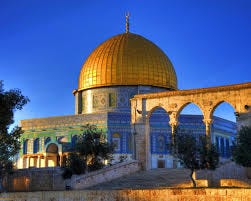
“Anas bin Mālik said that the Messenger of Allah (ﷺ) said: “al-Burāq was brought to me. It was a white animal somewhat taller than a donkey, but smaller than a mule. Its step covered a distance equal to the range of its vision. I mounted it and rode until I was brought to Bayt al-Maqdis. Then I tied it to the ring which the prophets use. Then I entered the mosque and prayed two rak’at there. I came out and Jibrīl brought me a vessel of milk and a vessel of wine. I chose the milk and Jibrīl said, ‘You have chosen the fiṭrah.”
“Then he went up with me to the first heaven. Jibrīl asked for it to be opened and a voice said, ‘Who is it?’ He replied, “Jibrīl.” The voice replied, “Who is with you?” He replied, “Muhammad.” It said, “Was he sent for?” He replied, “He was sent for,” and the door opened for us. I found Adam who welcomed me and prayed for me. Then we went up to the second heaven and Jibrīl asked for it to be opened. A voice said, “Who is it?” He replied, “Jibrīl.” It said, “Who is with you?” He replied “Muhammad.” It said, “Was he sent for?” He replied, “He was,” and the door was opened for us. There I found my cousins, Īsā ibn Maryam (Jesus) and Yaḥyā ibn Zakarīyā (John the Baptist). They welcomed me and prayed for me. Then we went up to the third heaven and the same thing happened. It was opened for me and there was Yusuf (Joseph). He had been given half of all beauty. He welcomed me and prayed for me. Then we went up to the fourth heaven and the same thing happened. I found ʾIdrīs, and he welcomed me and prayed for me. Allah said, “We raised him up to a high place.” (Ch. 19, V. 56) Then, we went up to the fifth heaven and the same thing happened. There was Hārūn (Aaron) who welcomed me and prayed for me. Then we went up to the sixth heaven and the same thing happened. There I found Mūsā (Moses) who welcomed me and prayed for me. Then we went up to the seventh heaven and the same thing happened. There I found ʾIbrāhīm (Abraham) leaning against the Frequented House (Al-Bayt al-Ma‘mur). Every day, seventy thousand angels enter it and do not emerge.
“Then he took me to the Lote-tree of the Furthest Limit whose leaves are like the ears of elephants and whose fruits are like earthenware vessels. When a command from Allah covers it, what is covered undergoes a change, which no creature is capable of describing due to its sublime beauty. Then Allah revealed to me what He revealed, and He made fifty prayers every day and night obligatory for me. I came down to Mūsā and he asked, “What did your Lord make obligatory for your people?” I replied, “Fifty prayers.” He said, “Go back to your Lord and ask Him to lighten it. Your community will never be able to do it. I have tested the Banu Israil and know by experience.” So, I went back to my Lord and said, “My Lord, lighten it for my community!” So, He deducted five prayers. I went back to Mūsā and said, “He deducted five for me.” He said, “Your community will not be able to do that, so go back and ask Him to lighten it.”
“I kept going back and forth between my Lord and Mūsā until Allah said, “Muhammad, they are five prayers every day and night. Each prayer counts as ten, so that makes fifty prayers. Whoever intends to do something good, and then does not do it, a good action will be written for him. If he, does it, then ten will be written for him. Whoever intends to do something bad and does not do it, nothing will be written against him. If he, does it, then one bad action will be recorded.” Then I went down to Mūsā and told him about that. He said, “Go back to your Lord and ask Him to lighten it.” The Messenger of Allah (ﷺ) said, “I have gone back to my Lord so often that I am ashamed before him.”
In his work, al-Sirāj al-Wahhāj fi Ḥaqā’iq al-’Isrā’ wal-Miʿrāj, Abū Isḥāq al-Nuʿmānī al-Shāfiʿī narrates a total of 14 ḥadīṯh on the subject, each slightly different from the others. Taken together, they constitute a well-authenticated collection on the subject. Abū Isḥāq also mentions at the end of his work the presence of two complete and extensive ḥadīṯh collections on the subject, one by ‘Abd al-Ghanī ibn ‘Abd al-Wāḥid al-Maqdisi and the second by Sheikh Sulaymān bin Sulaymān al-Busti entitled, Shifāʼ al-ṣudūr. Ibn Kathīr also narrates a number of ḥadīṯhs relating to these events that differ from that cited above and add more details. The ḥadīṯh related from Anas bin Mālik by Ibn Kathīr (cited by Abū Isḥāq as well) has the following additions in the beginning:
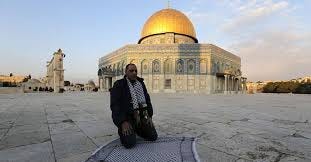
“we (the Prophet (ﷺ) and Jibrīl) ended up in al-Bayt al-Muqaddas and Jibrīl offered me three containers [in another version of the ḥadīṯh it says only two containers, and another mentions four], one with milk, one with water and one with wine, and I drank the milk, and Jibrīl said you have chosen the fiṭrah. … Then Adam and the rest of the prophets after him were sent forth and he (ﷺ) led them in prayers on that night.”
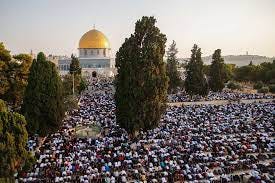
The above ḥadīṯh is taken from Ibn Kathīr’s commentary on the first verse of chapter seventeen. It seems that the ḥadīṯhoriginating with Anas bin Mālik has a number of variants resulting from different chains of transmission, as we can see from the two mentioned above. Al-Bukhārī ḥadīṯh takes precedent over that used by Ibn Kathīr since one comes from a muḥaddith (specialist in ḥadīṯh), while the other is from a commentary on the Qur’an. Since the muḥaddith is concerned with establishing the authenticity of the ḥadīṯh his narration has higher consideration than all others outside of the field. However, if the ḥadīṯh of Ibn Kathīr is also found to be authentic, then it is admissible as evidence and may not be rejected as a description of what took place in al-’Isrā’. The addition in Ibn Kathīr’s ḥadīṯh does offer another important element, the gathering of all the prophets for a meeting and a group prayer led by Prophet Muhammad (ﷺ). It is this aspect that is often cited as providing evidence of Prophet Muhammad (ﷺ) having received the trust of the land of Bayt al-Maqdis from all the earlier prophets.
When we examine the text of the ḥadīṯh cited above, it seems that we are dealing with two distinct parts: one being the prophet’s own narrative of what took place and the other someone else’s report: “Then Adam and the rest of the Prophets after him were sent forth and he (peace and blessings upon him) led them in prayers on that night”. In al-Bukhari’s ḥadīṯhwe see an immediate transition from the drinks test to a meeting with Adam in the first heaven and other prophets in the second, third, fourth, fifth, sixth and seventh, with each time a prayer being offered by the resident of the particular level visited. It might be that this prayer was confused with the initial stage of the al-’Isrā’ and a collective prayer was included in the first stage of the episode.
Link to Part One: https://medium.com/%40drhatembazian/al-isr%C4%81-wal-mi%CA%BFr%C4%81j-prophet-muhammad-s-night-journey-and-ascension-to-the-heavens-a75c3144222f
Link to Part Three: https://medium.com/%40Prof.hatembazian/part-three-al-isr%C4%81-wal-mi%CA%BFr%C4%81j-prophet-muhammad-s-%EF%B7%BA-night-journey-and-ascension-to-the-heavens-2adb225e5923