Part Three: al-’Isrā’ wal-Miʿrāj-Prophet Muhammad’s (ﷺ) Night Journey and Ascension to the Heavens
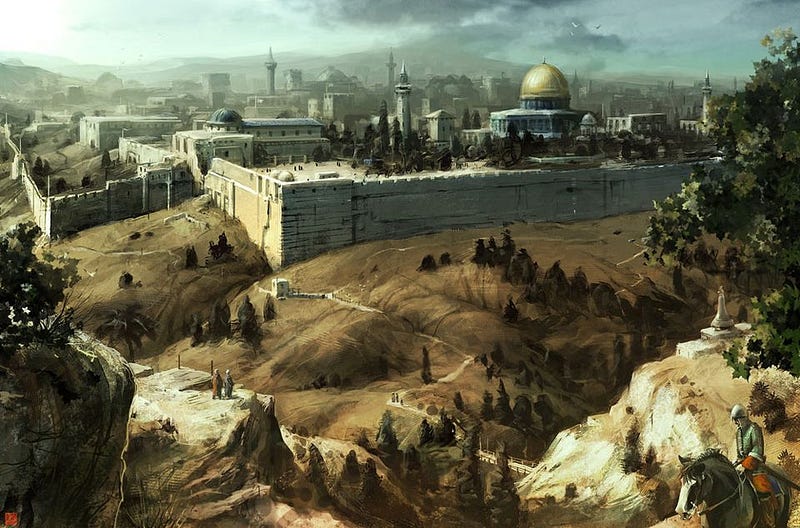
In the second major ḥadīṯh collection, Ṣaḥīḥ Muslim, the ḥadīṯh concerning the al-’Isrā’ has the prophet reaching Bayt al-Maqdis, “entering the mosque and praying two rak‘at then going out.” In terms of ḥadīṯh collection, Ṣaḥīḥ Muslim is ranked high, but has slightly less authority, for purpose of legal judgments in Islamic jurisprudence, than Ṣaḥīḥ al-Bukhārī. However, a ḥadīṯh ranked as authentic and meeting the criteria of both al-Bukhārī and Muslim has much higher authority as evidence than either of them individually. Thus, from Ṣaḥīḥ Muslim we derive an authentic ḥadīṯh that shows the prophet praying in Bayt al-Maqdis, which does not appear in al-Bukhārī’s collection. Another reference to this prayer is found in Mujīr al-Dīn al-’Ulaymī al-Ḥanbalī’s book, Uns al-Jalīl bi-Taʼrīkh al-Quds wa-al-Khalīl (The glorious history of Jerusalem and al-Khalil), where he quotes another ḥadīṯh which goes farther than the one cited by Ibn Kathīr. There the Prophet is reported to have said:
“When I entered the mosque (al-Aqsa) I found the Prophets and messengers had assembled there for me, having emerged from their graves. They were sitting in rows awaiting my arrival and they greeted me. I said, ‘O Jibrīl who are they?’ He said, ‘they are your brothers, the prophets and messengers. Quraysh claims that Allah has partners, the Christians claim that He has a son, so ask these prophets does Allah have any associates?’ Then he (Jibrīl) read “And ask all other prophets whom We sent before you if We have ever appointed any other gods to be worshiped beside the Beneficent.”(Qur’an, Chapter 43, Verse 45) Then Jibrīl assembled them for prayers and advanced me and I led them in a two rak‘at prayer.
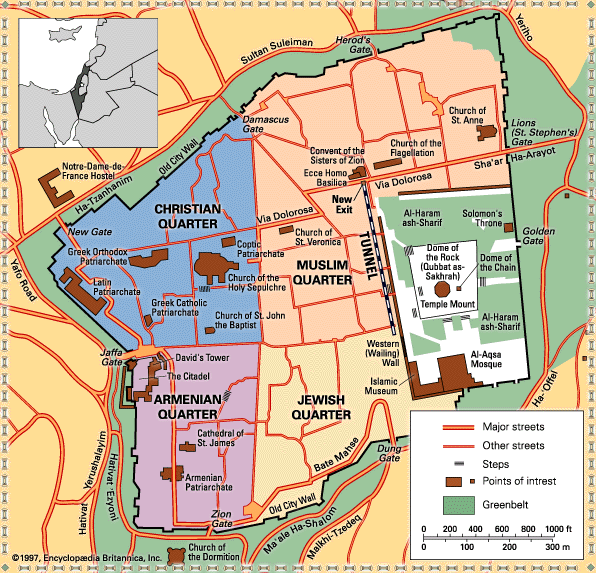
In Mujīr al-Dīn’s account, we see all the prophets being “assembled” for an important encounter with Prophet Muhammad (ﷺ) who is being guided by Jibrīl and called upon to ask them if “Allah have any associates.” Jibrīl answers the question with a verse from the Qur’an, which is understood to have been revealed in al-Aqsa mosque in al-Quds on the occasion of the al-’Isrā’. The end of the ḥadīṯh cited by Mujīr al-Dīn has another marked difference with al-Bukhārī’s narration, which has the prophet is seen leading all the prophets in prayer and being advanced to this role by none other than Jibrīl himself. The significance of this for the Muslim understanding of the events of al-’Isrā’ and the status of Bayt al-Maqdisis obvious.
Leading all the prophets in prayer meant that the Prophet’s role was not limited to being the designated leader of the Muslim community, rather in this episode he was also chosen to lead all the prophets in prayer, thus confirming his high rank. It seems from the ḥadīṯh that all the prophets were agreeable to being led in prayer by Prophet Muhammad (ﷺ), for they all were gathered there for his sake and by Allah’s permission. In general, leading others in prayer often is a sign of the spiritual rank of the one assigned the role, as indicated in this case by the Prophet being forwarded to it by Jibrīl. Also, we may understand this to mean that the role of Prophet Muhammad (ﷺ) is to abrogate the revelations of earlier prophets and any claims by their followers to continuity of mission since the prophets accepting to pray behind him is a clear act of affirmation to the new prophetic reality represented by him.
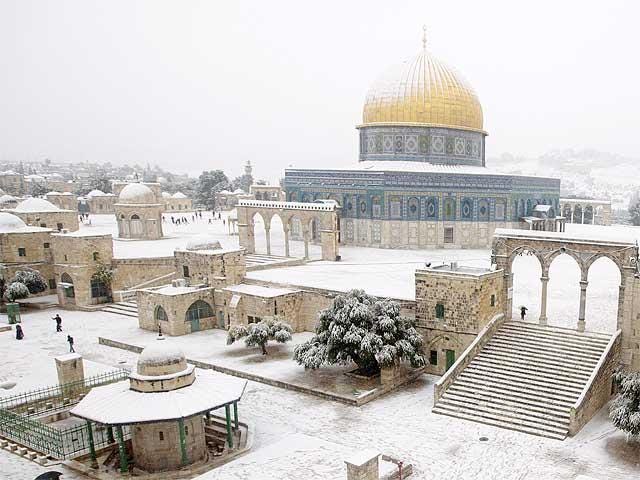
The Prophet’s prayer in Bayt al-Maqdis and at al-Aqsa mosque is central to Muslim spiritual affinity and connection to the location. Al-Aqsa stands apart from all other mosques, for it is the location where the Prophet led his predecessors in prayer, and the spot from which his ascension to the heavens began. The two factors have combined to produce a lasting imprint on the hearts and minds of all Muslims without exception. One possible meaning for the prayers in which he led all the other prophets might be a transfer of title to Bayt al-Maqdis and al-Aqsa mosque, not in a real material sense, but in the spiritual sense, to the last prophet and what he represents. In such a case, the title of owner is held by the last vicegerent on earth who is given authority to rule, by the permission of Allah, over the sacred territories in Mecca and Bayt al-Maqdis, which are explicitly linked in al-’Isrā’ wal-Miʿrāj episode According to Islamic understanding, real title to and true ownership of any and all parts of this earth (and the entire universe for that matter) belong to Allah and He has the authority on what is to be done with them. Therefore, a spiritual title to a sacred site held by a community is always subject to Allah’s continued approval of the holding of a given title and allowing it to be asserted. It is therefore possible for a spiritual title to be held by a community, but not allowed to be continuously asserted, for a purpose that Allah alone knows.
Further, praying behind the prophet is an indication, for Muslims at least, that the earlier prophets were surrendering to the last vicegerent and accepting to be his followers, for the prayer has the highest rank in terms of agreeing to follow someone beyond that of a temporal position. Prayer is a relationship of humans to Allah and accepting to follow someone in the expression of that relationship is a far more precious undertaking than any worldly protocol.
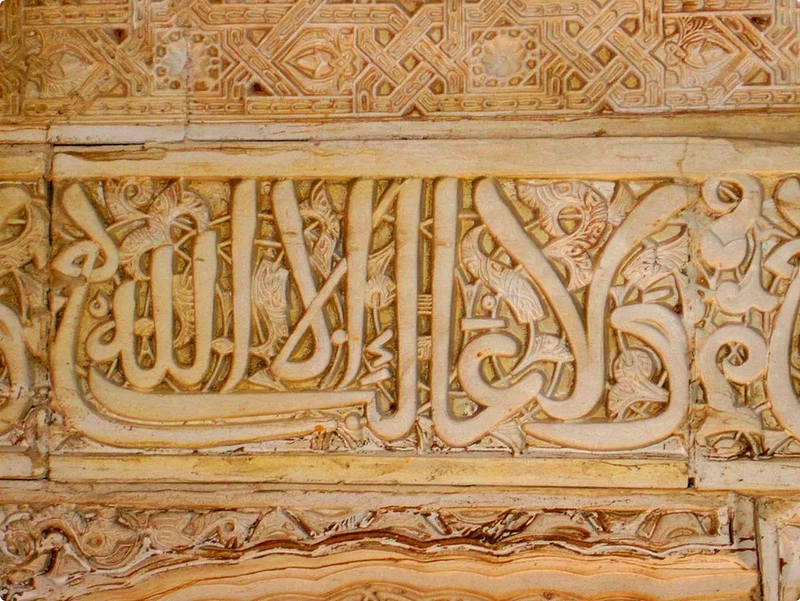
Al- Imām al-Nawawī, a Shāfiʿī scholar, in response to the question whether it is firmly established that the prophet did actually lead all the prophets in prayer, remarked: “Yes, it is firmly established that the prophet did lead all the prophets (may Allah blessings be upon them all) in prayers on the night of al-’Isrā’ in Bayt al-Maqdis. It is possible that this took place before his ascension to the heavens, and it is also possible that it took place after his descending from the heavens.” In al-Nawawī’s mind the prayer in Bayt al-Maqdis is thus firmly established, but its precise timing is open to dispute. In addition, whether it took place before or after the ascension will affect the question of precisely what the prayers consisted of. As can be seen from the long ḥadīṯh in Ṣaḥīḥ al-Bukhārī, the prayers of Islam were prescribed in the heavens, and thus if the Prophet (ﷺ) led all prophets in prayers before the ascension then some other kind of prayer must have taken place.
For Imām al-Nawawī, the prayers were obligatory before al-’Isrā’ episode, given clear evidence in the Qur’an calling on the Prophet (ﷺ) to remain awake during the night for prayers. However, the word prayer in Arabic (Ṣalāh) has a specific and a general meaning: the former is a set of motions and actions mandated by the Sharīʿa and the latter encompasses every form of worship and supplication to God without any clearly defined characteristics. If the prayer led by the Prophet (ﷺ) took place before the ascension, it would have been of the general kind, and if after, of the specific formulation recognized in sharīʿa.
In addition to al-Nawawī, al- Imām al-Suyūṭī in his book, al-’Āyatu Al-Kubrā fī Sharḥ Qissat al-’Isrā’, maintains that the prayer actually took place when the Prophet (ﷺ) descended from the heavens to Bayt al-Maqdis. Al-Suyūṭī argues that when the Prophet (ﷺ) first came to Bayt al-Maqdis his intention was to attend to the purpose of his coming, namely, to enter the divine presence; in this spiritual context the prayer can be seen as delaying the encounter. Also, the Prophet (ﷺ) is seen asking Jibrīl in each level of the heavens about the prophet who was meeting him; if he had already prayed with prophets in Bayt al-Maqdis, he would have had no need to inquire, for they would already have been known to him.
It might be that they were so numerous at the prayer gathering in Bayt al-Maqdis that it was impossible for him to recall all of them. However, it seems that the main prophets mentioned in the ḥadīṯh would have been in close proximity to the Prophet (ﷺ) during the prayers. For al-Suyūṭī, the most likely narration is the one that places the prayers at the end of the episode, not the beginning, appropriately so considering that the Prophet (ﷺ) had been summoned to a meeting with Allah and anything else would have served as a delay from the purpose of the journey. After the meeting with Allah and being recognized as the servant of Allah, the Prophet (ﷺ) returned to earth to take his place as a leader of all prophets; he was forwarded to lead them in prayer by Jibrīl, who only fulfills Allah’s commands. It was His intention for the Prophet (ﷺ) to be the Imām of all earlier prophets.
The ḥadīṯh cited above, in addition to a number of Qur’anic verses, establish the veracity of the al-’Isrā’ wal-Miʿrājepisode in Islamic sources. In addition to chapter 17 of the Qur’an, chapter 53 is largely dedicated to this episode and all the explicit and implicit significance it ascertains. Commentators on the Qur’an have maintained that chapter 53 encompasses the complete meaning of submission to Allah, based upon the comprehension of what is revealed to mankind through the agency of the Prophet (ﷺ). The unifying theme of chapter 53 is the contrast between following the God’s revelation in contrast to basing one’s life on mere supposition and desires.
The al-’Isrā’ wal-Miʿrāj event was a defining moment for those who believed and those who had weakness in their hearts. When the Prophet (ﷺ) told the people of Mecca about what had happened to him the night before, they mocked him and called him names. A number of those who believed in his message committed apostasy because they could not bring themselves to accept this miracle. On the other hand, Abū Bakr, when confronted by the leaders of Quraysh about what the Prophet had said, proclaimed: “If he said it, I believe it.” Abū Bakr after this event came to be known by Abū Bakr al-Ṣiddīq, a name that refers to the one who confirms the truth, which means that the first Caliph had earned his well-known title from the al-’Isrā’ wal-Miʿrāj episode as well.
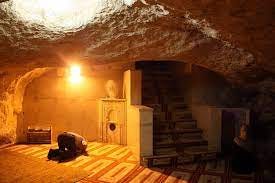
In the ḥadīṯh, the Prophet (ﷺ) had the honor of leading all the previous prophets in prayer. For the prophets to pray behind the final messenger signifies on their part the recognition of his role as an abrogator of rights that had been accorded by them to their respective communities. In a famous ḥadīṯh, the Prophet (ﷺ) is reported to have said to ʿUmar ibn al-Khaṭṭāb, that “if Mūsā (Moses) were alive today, he would have no choice but to follow that which I brought forth.” It is in this abrogation of earlier prophetic dispensations that the significance of the congregational prayer in al-Quds lies. Furthermore, this prayer happened as part of the Prophet’s (ﷺ) journey, which included al-Miʿrāj, and an encounter with the Allah. The prayer of the Prophet (ﷺ) also stands in fulfillment of verse 81 of chapter three, which states:
“When Allah made His covenant with the prophets, (He said): “Here are the scriptures and the wisdom which I have given you. And afterwards there will come to you a messenger, confirming that which you possess. You shall believe in him, and shall help him.” He said: “Will you affirm this and accept the burden I have laid on you in this matter?” They answered: “We will affirm it.” He said: “Then bear witness; I will bear witness with you.” (Qur’an, Chapter 3, verse 81)
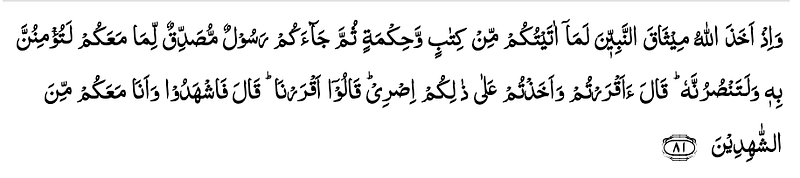
The verse above constitutes a foundation of belief, for it conveys the fact that every prophet has foretold his followers the future coming of the last Prophet (ﷺ), Muhammad (ﷺ) and asked them to believe in and support him. For Muslims, Islam represents the final revelation, and Allah in the Qur’an says that He does not accept any other path to him except al-Islam, and all the prophets, as seen in the verse above, have accepted the covenant from Allah. All the prophets praying behind Muhammad (ﷺ) is a further amplification of the covenant and provide the textual proof that the only acceptable path to Allah henceforth would be Islam.
Thus, the episode of al-’Isrā’ wal-Miʿrāj with the Prophet’s (ﷺ) prayer in Bayt al-Maqdis, the meeting with all the prophets, the ascension to the heavens and his encounter with Allah, are all monumental events which have had a profound impact on the consciousness of Muslims. The effect of the al-’Isrā’ wal-Miʿrāj is far reaching and provides a rich connection to the first prophet, i.e. the first human, Adam, mediated by all the prophets who proclaimed the same principle, to glorify the One and Only God. The details of al-Miʿrāj provide a view of the unseen world, paradise, hellfire and the heavens, together with all that they contain. It might be observed that the details concerning Bayt al-Maqdis are few by comparison. This is true but does not lessen the significance of those details for the sacred status of Bayt al-Maqdis and al-Aqsa. The miraculous al-’Isrā’ wal-Miʿrāj episode cement the temporal link between the two Islamic sacred sites, Mecca and Bayt al-Maqdis, and the gateway to Allah’s Throne that was opened to the Prophet (ﷺ) and through him and because of him to his community and humanity as a whole (And We have not sent thee except as a mercy unto the Worlds (Qur’an, Chapter 21, Verse 108).
Link to Part Two: https://medium.com/@drhatembazian/part-two-the-events-of-the-al-isr%C4%81-wal-mi%CA%BFr%C4%81j-prophet-muhammad-s-night-journey-and-ascension-to-572947ac7681