
Part II: 12 Ways to Actually Make a Difference in a Divisive, Hostile World
Instead of pulling the covers over your head or complaining about all the horrible people and the bad stuff that’s happening, it’s better for your heart and soul to DO something.
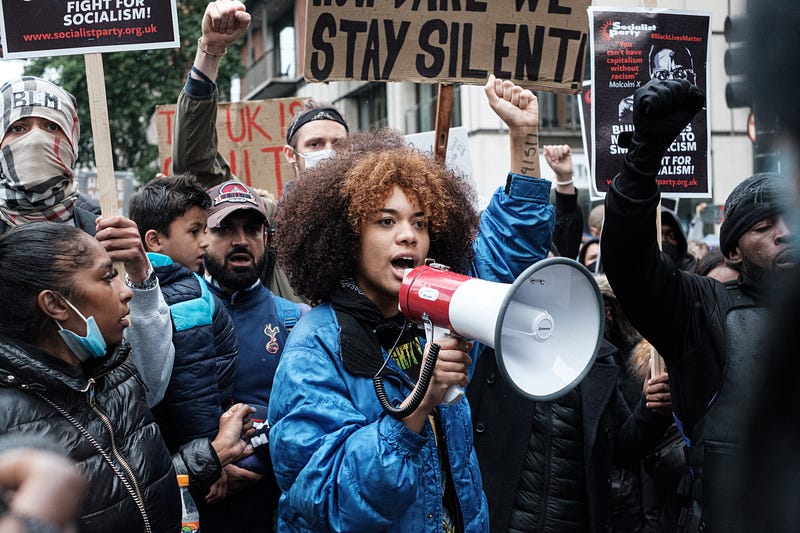
Part I of this piece, lays out the problem: Not only is antisemitism on the rise, so is racism and xenophobia — fear of otherness. Hate crimes are more common than ever, spreading in the U. S. and throughout the world. And it’s not just a Jewish or Black or Asian problem; it’s everyone’s problem.
Part II —below — proposes possible solutions.
No Silver Bullet
Granted, the issues at hand are complex — a many-headed hydra, sprung from various roots and causes, nurtured by random and planned events, fueled by haters and bigots. This, I fear, might be more than a journalist who specializes in relationships should take on. I am not a political writer nor have I spent decades researching and writing about bias and hate.
But like you, I have a stake in what’s happening in and to the world. Writing about it is something I can do.
Last February, Jonathan Greenblatt, CEO of the Anti-Defamation League — a man who is qualified to address these issues in depth — testified before the House of Representatives Homeland Security Committee regarding the January 6 attack on the U.S. Capitol:
Right now, many policymakers and pundits are looking for a silver bullet — a one-size-fits-all approach that will solve the challenge of domestic terrorism. Unfortunately, we know from our extensive work and analysis in this field that no such panacea exists.
Addressing the inequities in society and finding ways to tone down the rancor and rhetoric, bridge the divisiveness, and stop the spread of hate, especially online, requires a multi-pronged approach. The ADL has its approach; many other organizations are working towards the same end. We need all of them — the cooperation of lawmakers, social media companies, and grass-roots community groups.
However, it’s not just the big “systems” that have the power to set policies and call for justice. We can, too, on a personal level — by paying attention, speaking out, and helping others. Anyone who cares about democracy and has a conscience can makes a difference. We can monitor what’s happening in our own lives — in our families, at work, wherever we play and pray. We can talk and teach. We can pitch in.
As I wrote in Part I: “You’re Not Jewish. You Think Anti-Semitism Doesn’t Affect You?:
The xenophobic, hate-mongering radicalism of our time will not miraculously go away or morph into something better. History unfolds, it doesn’t just happen.
We humans have to nudge history in the right direction. “We” — the hopeful and the even-handed — must be willing to listen and take action to affect change.
12 Strategies: What YOU Can Do
Below are strategies culled from experts and researchers on the front lines — and a bit from my own experience as a social observer. Read all; do what feels comfortable. As Albert Einstein reminds us:
We are part of the whole which we call the universe, but it is an optical delusion of our mind that we think we are separate. This separateness is like a prison for us. Our job is to widen the circle of our compassion so we feel connected with all people and situations.
Some of these suggestions below might seem to be a step away from civic involvement. However, they’re all about not separating ourselves, not falling prey to that “optical delusion.” Each strategy will help you stretch and strengthen the “muscle” that will help you become an independent thinker and a compassionate person who finds ways to help when needed.
1. Educate yourself.
You read the papers; you remember history; you want to stamp out racism, antisemitism, bias of any kind. But do you know the details — how hate groups work and spread? Can you quote facts? If not, read Jonathan Greenblatt’s eye-opening book, It Could Happen Here: Why America Is Tipping from Hate to the Unthinkable―And How We Can Stop It or others like it.* If you’re pressed for time, tool around the websites of Anti-Defamation League (ADL) or the Southern Poverty Law Center (SPLC). Both have a wealth of information culled over the last 40 years. The ADL, for example, offers a database of hate symbols, the better to comprehend covert messages. The SPLC provides a map of hate groups across the U. S., the better to know what’s going on nearby. Reading blogs and research reports by psychologists, sociologists, lawyers, and other anti-hate professionals will not only deepen your understanding, it will increase the likelihood that you’ll figure out a way to be part of the solution.
* Feel free to leave other recommendations in the Response section of this piece.
2. Look into your heart and mind.
Most of us are at least little bit biased, even in small, innocuous ways — against redheads or Deadheads or fathers who shout at Little League games. Whether we broadcast our opinions in public (“Immigrants don’t belong here!”), whisper them conspiratorially to close friends (“I hate women who think they’re smarter than men!”), or secretly harbor hate in our hearts, beliefs affect what we say, do, and think. The trick is to make the unconscious conscious. Whenever you feel yourself taking a step back or recoiling from someone, ask yourself why. What person or event influenced you? Maybe something in childhood hardened your heart or frightened you, as it did me. Reimagine that incident now. Can you see it in a different light?
3. Step out of your social safety zone. Be interested in people who aren’t like you.
Don’t “stick to your own kind,” as the Anita warned Maria, the Latina who fell in love with the white boy in West Side Story. Instead, go beyond your familiar. Make acquaintances in other neighborhoods, with random travelers on your daily commute, with people who do different kinds of work and don’t look like you. These “consequential strangers” offer a different perspective than close family members and friends and are surprisingly important for broadening your worldview. Having a variety of connections tunes you into a greater swath of humanity — new stories and unexpected struggles, different ways of thinking. Most important, you’re more likely to appreciate difference than fear it.
4. Work on being more empathic.
We sometimes make assumptions or, worse, judge people we don’t know based on appearance or accent or where we meet them. Empathy — the ability to step into another person’s shoes and imagine what it’s like to be him or her — can help bridge differences between people. It comes more naturally to some than others, but empathy also can be developed. Don’t assume. Ask questions, especially about feelings. Share honestly. Even if you come from different places (literally or figuratively), find common ground — that you’re both women, that you both love Elton John or soccer, that you are traveling on the same train. When you allow yourself to be open and curious about others, you usually discover that you are really not that different underneath!
5. Listen, listen, listen.
The act of listening — really taking in what others say — enriches us. We connect to the Whole. Personality and life experience gives some of us a greater capacity for listening — I had much older siblings and listening helped me survive. But you can also practice being present and engaged. If your mind wanders, bring your attention back. Stay in the moment; don’t worry about what to say next. And if listening is a challenge, try to figure out why. Are you interested in people? curious? receptive? warm? What are your pitfalls? impatience? interrupting? wanting the last word? For me, a fast-thinking New Yorker who grew up in a family of talkers and now dispenses advice for a living, I try to remember to slow down in conversation, not to anticipate or assume that I know what the speaker is about to say — or wants from me.
6. Join a group project that involves crossing boundaries.
Having to cooperate and work with people you hardly know takes you to a next level of awareness. The project needn’t be ambitious or even long-term. You’ll be surprised at how much you learn about near-strangers (for better and worse!) when you decorate a gym together or stuff envelopes! But let’s say you do more: join an anti-hate organization or take on a labor-intensive project that ends with a performance or a publication. The greater the commitment, the greater the benefit. For example, the “magic” that happens in a program like the Jerusalem Youth Chorus, which brings Israeli and Arab youngers together to sing and talk, is in their seeing “other” as a real person.
7. Anticipate what you might do if you find yourself in a situation that smacks of unfairness or bias.
You’re at work, at school, at a cocktail party. Someone says something nasty or uncivil or just gives you the creeps. What do you do? In his book, Jonathan Greenblatt, recommends “a simple but powerful framework ADL developed to help individuals find their voices and respond to hate.” Greenblatt notes that the three Ss idea — Speak Up, Share Facts, Show Strength — was designed to help staffers and volunteers “respond quickly and effectively when people ask them how to combat hate.”
- Speak up means when you see something, you say something, even if it’s uncomfortable. Muster the courage to step up and step out, even if you’re alone.
- Share facts means grounding your response in evidence and data. If you’re engaging online, speak as calmly and respectfully as you would if the conversation were occurring face to face.
- Show strength means digging deep and boldly defending yourself but also looking out for those in need of protection. Stand up for yourself and serve as an ally in situations when hatred doesn’t affect you directly.
8. If you see it, say it.
Whether or not the people in charge — the powers that be — are open to hearing about bias and hate depends largely on the company you work for, the school you attend, the city or community where you live. At the very least, you can fill out a report on the ADL site, which encourages visitors who “have experienced or witnessed an incident of antisemitism, extremism, bias, bigotry or hate,” to submit an incident form.
9. Take care of yourself.
This might seem like an odd suggestion. What does getting enough rest, eating well and minimizing stress have to do with activism? Because solving problems requires you to develop new relationships, which takes time, energy, and persistence — even more so when you reach across the proverbial aisle. If you neglect your own needs and overextend yourself, you risk what psychologists call ego depletion. Simply put, you don’t have it to give. You’re not only less likely to be patient and generous toward others, you’re more likely to fear, judge, even lash out at them.
10. Find the right “fit.”
Figure out what type of civic involvement suits your personality and circumstances. Be honest with yourself. How available do you want to be? How willing are you to devote time? energy? What kinds of volunteer work have you done or want to try? Is this a way to connect with like-minded souls?
11. Start small.
All kinds of help is needed to right the world, and every effort counts. Whether you write a check or make phone calls to fund-raise, help with clerical work, or make a deeper, long-term commitment to participate, you’re doing something. And don’t compare. Just because a close friend loves volunteering in an inner-city food bank doesn’t mean it suits you. To see what’s out there, log on to the ADL or SPLC websites. Or, Google “social justice organizations near me,” which will take you to a range of local possibilities.
12. Enjoy the unexpected rewards.
It’s well established that doing good makes you feel good. Numerous studies have shown that altruism and volunteering have a profound effect on mind/body health and can even mediate the toll of stress. People who volunteer have lower levels of cortisol, lower blood pressure. Some experience “helper’s high.” I’d call that a win-win.
If you like reading me…
Subscribe to my Medium articles — you’ll get an email when I publish. If you’re not already a member, you can join Medium with my referral link. I earn a whopping $2.36 (or so) monthly if you do!
Follow me on social media via LinkTree.


