
Paris Museum Pass: use it wisely to maximize its benefits
I love Paris and I love museums. This can be a dangerous combination!
Fortunately, I have been to Paris eleven times, spanning my first visit in 1986 to my last one in 2019. While I’m nowhere near being a pro, I know my way around and I know what I enjoy doing with my time when I am there. Visiting museums is always part of my plan.
My first bit of advice for any museum-lover considering a visit to Paris is to plan on being there at least a week, if you can possibly manage that. My visits have ranged from seven days to a full month. The month-long visit, in 2017, was especially amazing, in that I did a home exchange with a Parisian. It very definitely gave me the freedom to keep a relaxed pace, not having a heavy agenda to push.
This post is based on the 2018 visit I did with my partner, when we were in Paris for eighteen days on yet another home exchange. Home exchange!!! Three cheers for a free place to stay in Paris!
The up side to visiting Paris is that it is chock full of places to visit. The down side to visiting Paris is that it is chock full of places to visit. How can you possibly make your decisions when there are so many places to see and things to do? This time my main goal was to make the visit enjoyable for my partner, since it was his first time there.
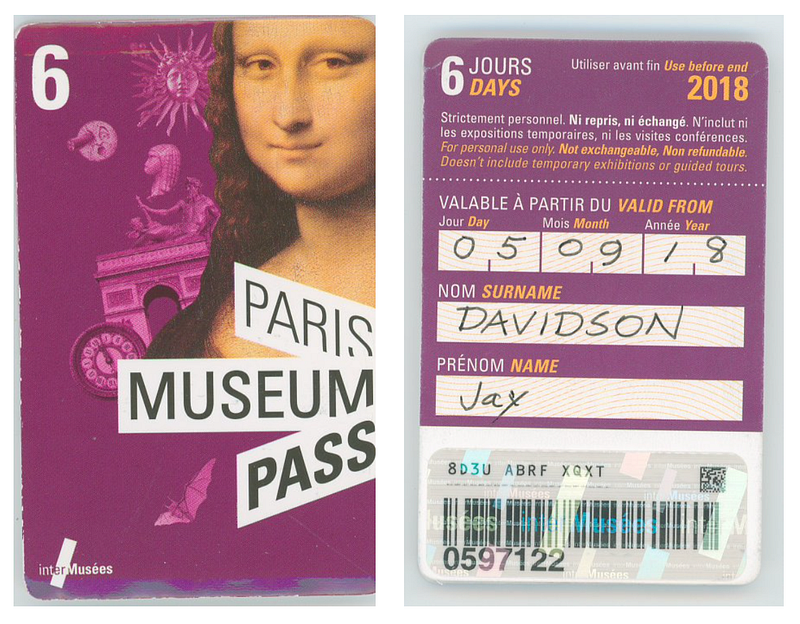
I decided that we would buy a museum pass in order to maximize the number of museums and historic sites to experience. These passes come in three different lengths of time: two, four, or six days.
If I ruled the world — which I have no hope of ever doing — I would make one major change to the system as it now exists. The powers that be have determined that each of the visiting days for the pass must be consecutive! That’s what I would change. I would make it, for example, two days within a range of four; four days within a range of six; six days within a range of nine. Museum-goers need to have a break!
But since there’s no sense in fighting either reality or French bureaucracy, I set upon a way of figuring out how to make these six consecutive days as enjoyable and stress-free as possible. In doing so I had to be judicious in the venues we were going to visit. That itself was not easy, considering that the pamphlet accompanying the pass lists a grand total of 55 destinations on offer. 55 is a lot!!!
Having been to many of the destinations already, I decided to group together at least one smaller and one larger venue for most of the days. This meant, for example, not making the mistake of attempting to see both the Louvre and the Musée d’Orsay on the same day.
In addition to planning carefully, I decided to keep track of the individual entry fees, as a means of gauging the value of buying a six-day museum pass for €74, as opposed to paying for separate admissions to each venue.
In addition to having one’s admissions already paid, there is another huge benefit to holding your museum card: it allows you to walk to the head of a long line to gain entry. This is particularly advantageous in the more crowded locations.
To give you a sense of how we used our card, the following was our six-day visiting schedule:
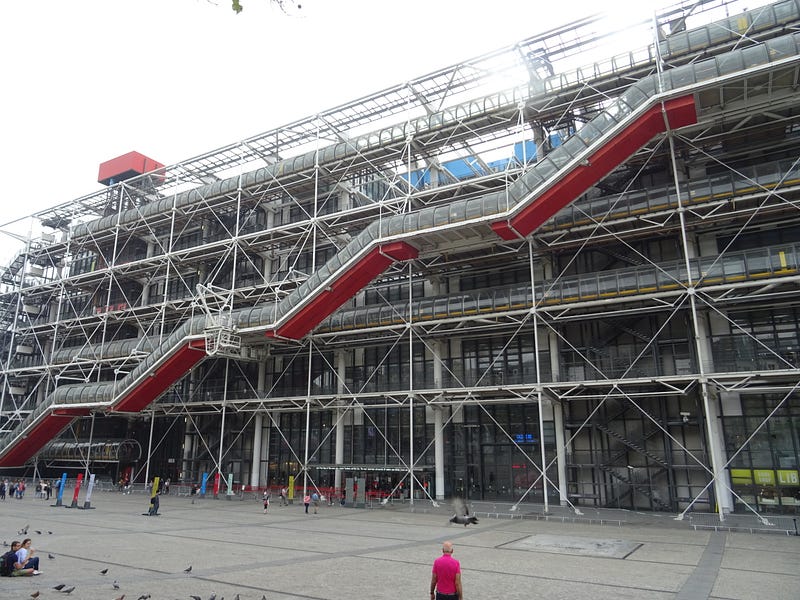
Day 1 — Our larger destination was the National Museum of Modern Art, located in the Centre Pompidou; the smaller one was the Picasso-Paris National Museum. The latter is not exactly small, especially since the expansion that doubled its size between 2009 and 2014.
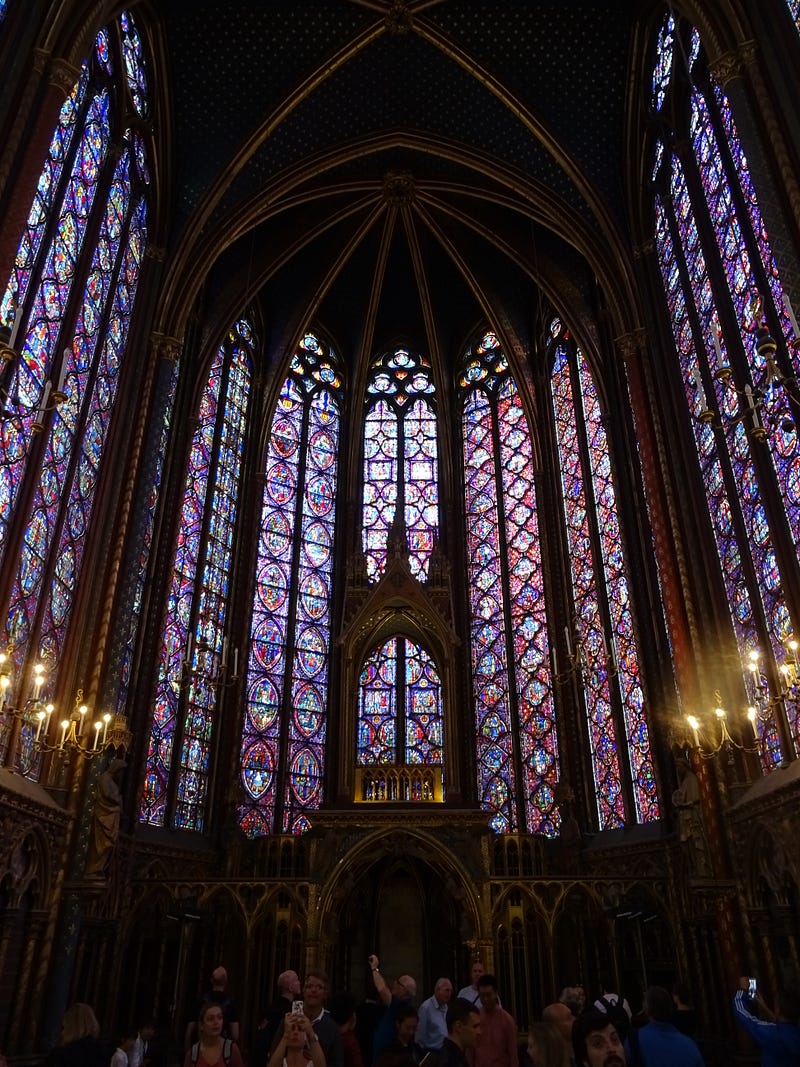
Day 2 — We got a tour of the Notre-Dame Cathedral, which we counted as the major site for the day, considering how much queueing up we had to do, and how much waiting time it took. The smaller locations, on the same island as Notre-Dame, within an easy walking distance, were the Crypte Archéologique du Parvis, where the original ramparts of the island were discovered in 1965; Conciergerie, the first royal palace (under King Philip the Fair), which also eventually served as a palace of justice and then a prison during the French Revolution, and hiding place of Marie-Antoinette; and Sainte-Chapelle, a building with an upper and a lower chapel, housing magnificent stained glass windows in the Gothic style.
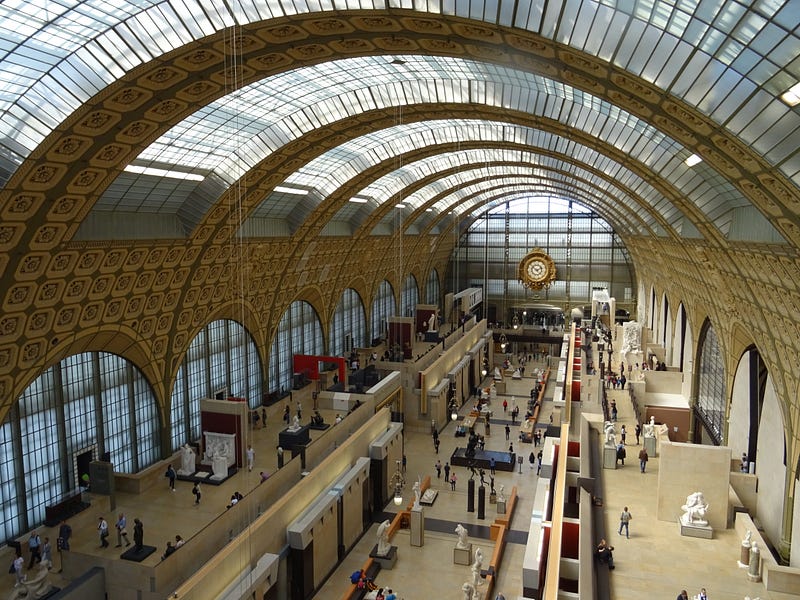
Day 3 — Our major museum was the magnificent Musée d’Orsay, a stunning building that had once been a train station and now houses vast works by the Impressionists, as well as Art Deco furnishings and galleries for short-term exhibitions. Our smaller location was the Arc de Triomphe, where we climbed our way to the top in order to see the views.
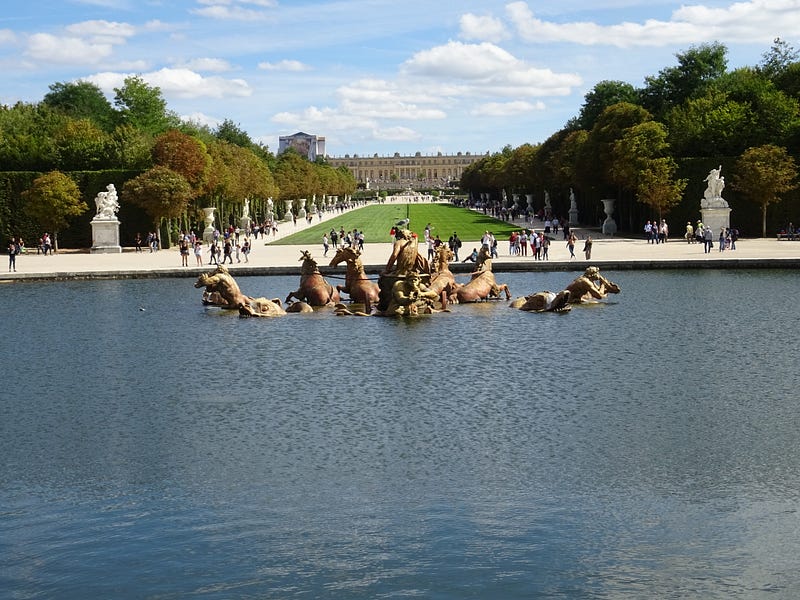
Day 4 — Because Versailles is located outside of Paris, takes a fair amount of travel time in each direction, and attracts huge crowds to its building and grounds, that became our sole destination for the day.
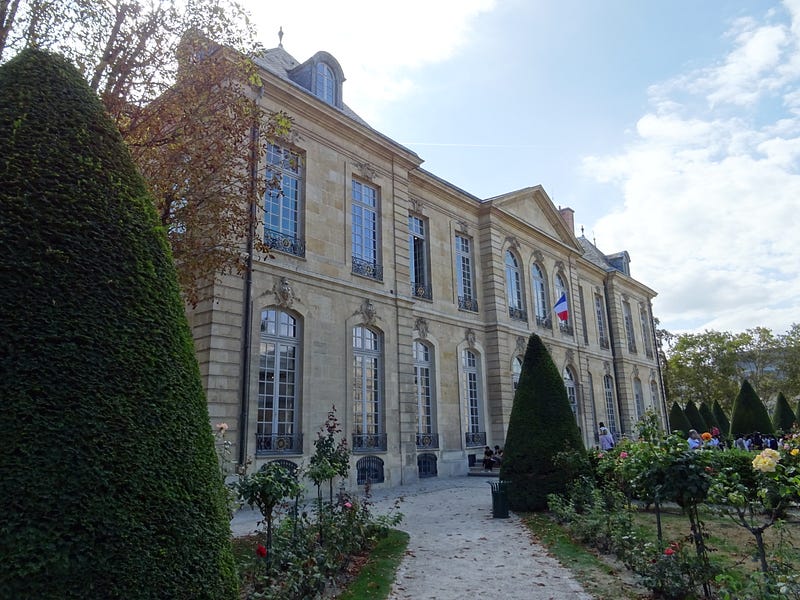
Day 5 — We divided our time among three smaller locations: Musée des Arts décoratifs, a design museum that is housed within the confines of the Louvre, but with a separate entrance and entry fee; the Rodin Museum; and the Panthéon, final resting place of many French notables.
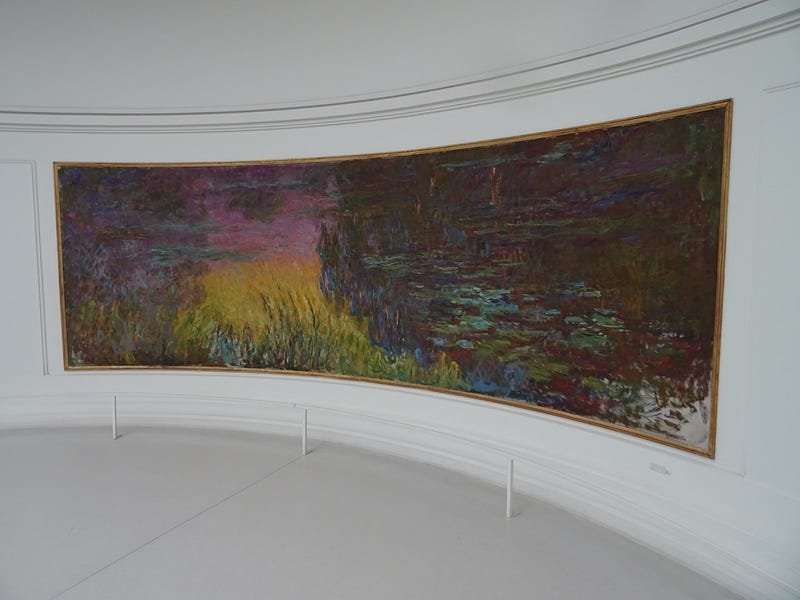
Day 6 — We began by visiting the Musée de l’Orangerie, principally to see the large expanses of paintings with Monet’s water lilies. It’s a relatively small museum. From there, we decided that Kevin could not leave Paris without at least seeing the interior of the Louvre.
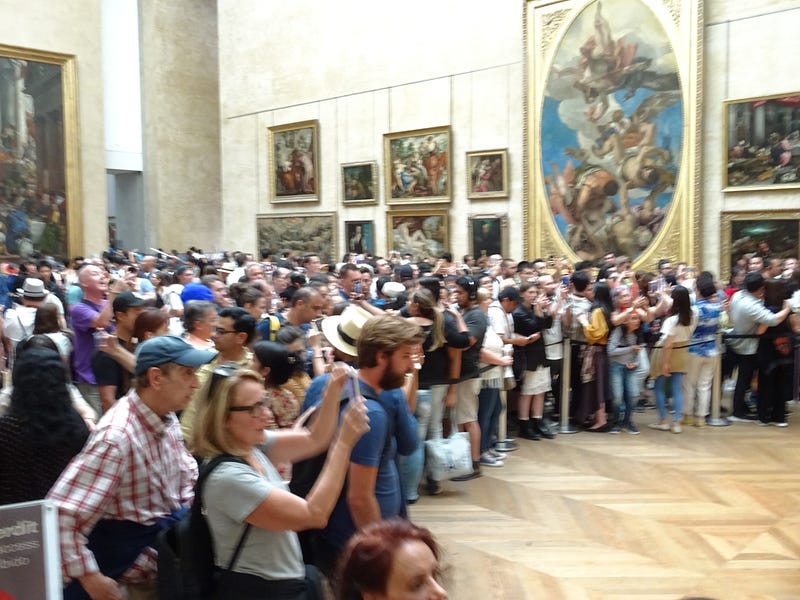
Warning: do not underestimate the enormity or ensuing frenzy of this, the largest and most-visited museum in the world! Just to give you an idea, several visits ago, I decided to try an experiment. I positioned myself at one end of the museum and walked along the street to its other end, counting my steps as I walked. When I got home, I stood at my front door and started walking, counting out the same number of steps. When I reached that number of steps, I was four blocks from home!
Our greatest advantage in having the museum pass was our ease in eliminating the wait in line. We never intended our visit to be comprehensive, which was a good thing, considering that the crowds immediately began to drive us crazy.
We retreated to the gallery of Islamic Art, housed in what was once an internal open-air courtyard. Ever since my first visit in 1986, the Louvre has been taking these formerly useless spaces and converting them into light-filled expanses in order to display sculpture and other treasures.
Our six days over, it was time to tally up the results. When I added up all the individual prices I would have paid on separate visits, I got a grand total of €157.50. Do the math and compare that to the €74 cost of the six-day pass.
My conclusion is that with careful planning, you can very easily get terrific value from your museum pass, as well as being able to see some of the most iconic — as well as lesser-known — places in Paris.