
PERSONAL ESSAY
Paris, in the Springtime
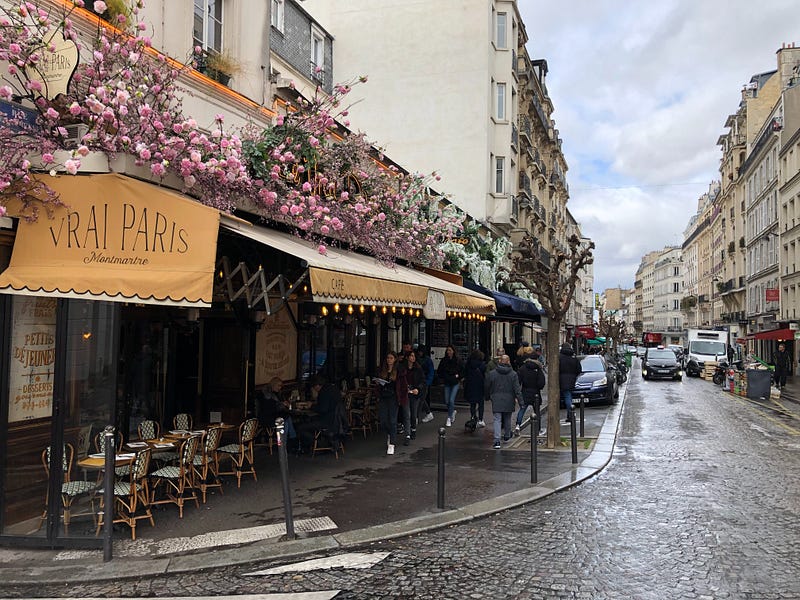
All winter of the year my father left for Paris, between sips of rough nouveau beaujolais, in the dim light of his seedy Left Bank apartment he read and re-read my tear-stained letters begging him to come home, please, Daddy. All winter I listened and waited, wondering why my mother cried every night, wondering why my aunt kept whispering that Dad would never come back for us. All winter, my Jesus-loving auntie preached to my mother about those wine-guzzling European heathens and their sinful women, those temptresses who flaunted their ample cleavage and never shaved any part of their bodies.
All winter, I wanted to feel my father’s loving arms around me, and I wouldn’t even have minded his scratchy beard on my cheek. All winter my mother ignored me, preferring to dote on my kid brother who reminded her of our dad. All winter, I studied hard in seventh grade, math and science my favorites because my dad said I was very smart and would grow up to become a scientist. All winter my mother said I should be a secretary until I married a nice man and then I would have a good life. All winter I kept my passport safe, my prettiest dress clean and ironed, my patent leather shoes shined to perfection, because I wanted him to feel proud to sit by me on the flight to Paris. All winter I waited, knowing he would come for me.
Then, as spring arrived with warmth and hope, my mother became very ill — rheumatic fever, she said, claiming to be too weak to drive to the doctor’s office for a diagnosis. The very next day, my dad appeared at the door — my mother having known well ahead of time when he’d be there — his navy blue jacket pocket stuffed with twenty-dollar bills and plane tickets, his scratchy beard like a sweet caress, his broad smile filling my eyes with tears of joy. But all winter my mother’s Southern Baptist sister had repeatedly reminded Mom that she really didn’t want to go live with all those foreigners and expose her young children to all that, which set up a tsunami of internal conflicts that eventually incapacitated my mom.
And that day in spring, Mom told my father she was too ill to travel, and “No, the children are staying here with me.” Those impossible words, cast-iron sledgehammers shattering my little life, landed like silken threads on my aunt Sarah as she stood gloating in the corner of the room. My ashen-faced father muttered, “That’s too bad,” got up from Mother’s bedside, avoiding eye contact with the sorceress-sister, and departed.
A part of me died that day, that part that believed in a beneficent deity, a kind and forgiving god who loved children, who answered a young girl’s prayers, that part of me who trusted, who believed, who loved, who could ever forgive her mother. I did not see Paris that summer, nor the next, nor the next. Nor did my mother ever see Paris, nor did any of my maternal relatives. But I did, later, many times, every year for decades. I saw Paris in the spring, felt Dad’s scratchy beard, blossomed in his warmth and kindness, and together through the rest of his life we sipped rough nouveau beaujolais.
Author’s note: This week I’m attending the Port Townsend Writers Conference, hosted by CENTRUM.org. In case you’ve noticed my absence from Medium lately, a whole lot of life has gotten in the way of my writing, but I’ll soon be back. Today is a good start.
Yesterday I met with a well-known poet who reviewed my manuscript of poems, and she asked me if I thought I might be hiding behind my poetry. I don’t write dark, depressing, deep, angst-filled poems. I much prefer to play with words rather than use them as swords. But, as she suggested, is playfulness a type of protective mask?
This week I’m studying with Melissa Febos, a writer of brilliant, short personal essays, and she’s forcing us to go deeper, to expose those dank, wormy depths and let our secrets out. It’s working.
I’ll continue to post here this week whatever is publishable. Hang in there with me, folks. It’s going to be an interesting journey. Well, interesting to me, at least! xoxo