
Parenting Horrors
Momma in her midlife spills the tea on the scariest part about being a parent.
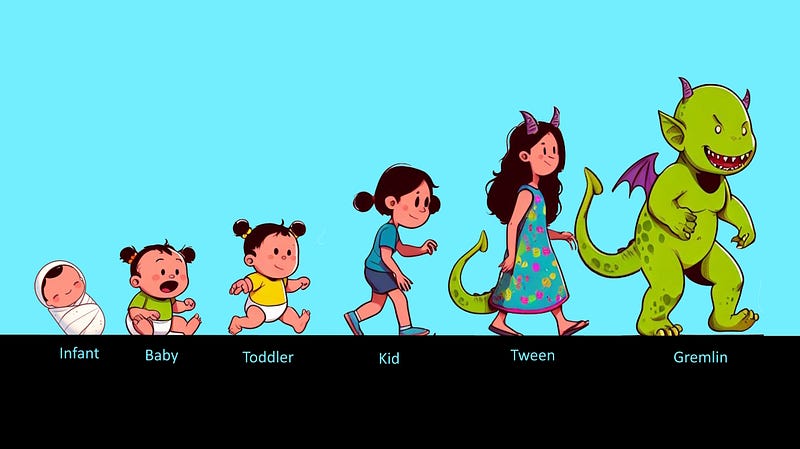
Teenagers. The End.
.
.
.
.
.
.
.
.
.
.
.
.
.
Ok, there’s more to it than just teenagers. Right now, I’m dealing with an angry teenager and it’s exhausting. Going into parenthood you never imagine that one day your beautiful little baby will hate your guts for being alive. I’m not going to lie, it hurts. When you decide to have children, you’re usually focused on giving your love to child that you and your partner created, or you’re ready to dedicate your love and time to a child who needs parents. We get excited about all the possibilities. We’re not going to be like our parents were… until you hear yourself say something your mother always said a million times. Somehow, we forget how we were as kids, or we pretend that we weren’t that bad. You get pregnant or adopt, get prepared, then you hold that precious child in your hands. First, they poop, eat, and sleep. You’re always tired and stressed, but it’s blissful. Next, they learn to move. You’re still tired and stressed but it’s so cute. Then they speak… it’s all downhill from there. (I’m kidding — mostly.) Babies don’t come with a manual. Sure, there are parenting books, but kids aren’t one size fits all. To better understand parenting, let’s examine the most difficult ages and why they’re the most difficult, how to deal with the difficulties of parenting, and what to do in certain circumstances (like an angry teen.)
There are five stages of childhood including, infancy, toddlerhood, preschool, elementary school, and adolescence. Each comes with their own challenges. There’s a huge learning curve with infants and they take a lot of time and energy. Toddlers are learning independence and going through tantrums. Don’t even get me started on the challenges of potty training. Preschool kids are learning social skills and how to regulate their emotions… then the trouble start.
The tweens and teens. Let’s all have a moment of silence for those parents who’ve survived the 10 -16 years olds of the world, and another moment of silence for those still stuck in the era of the teens. We all know that this is the age of the emotional and physical turmoil of puberty. After puberty, the I-know-everything-now age begins. Let’s look at why teens go from sweet little Mogwai Gizmos to flesh eating Gremlins in the blink of an eye.
Hormones: Hormones cause mood swings, irritability, and gremlin like behavior. Parents are often faced with the futility of trying to interpret the gremlin language when the hormones invade.
Independence: Teens tend to revert to the 2-year-old phase of seeking independence… only they are bigger, stronger, and more stubborn. Don’t forget that they now know everything.
Cognitive Development: The brain is still forming well into our 20s. Teens tend to struggle with decisions and impulse control.
Communication Issues: Along with that cognitive immaturity, teens struggle with communication. They start speaking in tongues and the gap between generations becomes wider. For example, when I got flustered when the pharmacist was flirting with me, my child said, “Bruh, you got mad sick rizz. Why’re you so pressed?” Translation: “Mom, you’re good at (talking) flirting with people. Why are you so stressed?”
Identity: I admit finding one’s identity used to seem easier. We didn’t have a lot of options way back when. Now, society is far more open and honest. Teens struggle to figure themselves out. One day your teen is a straight cis girly girl, then they’re pansexual non-binary. As a parent we try to support our kids finding their identity, but at times it can be confusing.
Relationships: The teen years are when they start to form all kinds of relationships. Along with those relationships comes the emotional issues. Teens aren’t always prepared for the loss of a relationship whether platonic or romantic.
With all these difficulties it’s easier to understand why our teens become hellish spawn for a time. For our own sanity, we need to have some coping skills and techniques for dealing with them. (Preferably that won’t eventually lead to prison time.) I don’t know about you, but my butt is too old to be digging graves in my backyard. Here are a few easier (less back-breaking) ways to deal with your teenager.
Be Patient: I know… it seems so simple. But when you’ve had a long exhausting day, your dog pooped all over the carpet, your cats are fighting and drawing blood, and your mom just spent four hours talking your ear off about her latest urinary tract infection, keeping your patience when you teen gets in the car and starts talking about how you don’t validate her feelings about why the cello is better than the trumpet despite the fact that you stopped everything so they didn’t have to walk home in the pouring rain, you’ve made them cookies for an after school snack, and you just bought them the random shirt they’ve been bugging you about for the past week… wait… where was I going with that… oh yeah… patience. It’s a struggle. Just remember, this is (hopefully) a phase that will pass. Deep breathing helps.
Open Communication: Do your best to keep open communication with them, whether you understand them or not. Listen to them. Support them. Try and help where you can. Try to remain unjudgmental and ask questions.
Battle Lightly: Choose your battles. Sometimes fighting over why they’ve watched the entire Sponge Bob Square Pants Series three times over, doesn’t matter. Let it go. Now when they’ve decided to use you as an emotional punching bag because they got a bad grade for lack of studying because they were watching Sponge Bob for the thousandth time… that’s a battle worth having.
Be Empathic: Try to understand their struggles. Go back… way back… and try to remember the hardships you faced when you were their age. Give them hope that they too will survive.
Boundaries: Just like you should have done with your mother and her 4-hour phone call, set healthy boundaries with your teen. Let them have control of the important things but set limits on what they can and can’t do. Let them help set the rules. Kids who have a say in their lives tend to stick to the boundaries better than those who don’t.
Get Them Help: Keep an eye and ear on your kid’s behavior. Some problems need professional help. Good mental health is essential to teens. Know the signs of depression and anxiety and talk to their doctor when you see those signs. They may need therapy or medication to help regulate their mental health.
These are a few techniques that may help you survive the teenage years. However, you’ll always have moments that become too much. As I mentioned earlier, my teenager is angry. She’s been venting that anger on me. I’ve asked her what I’ve done to cause said anger, but she said it wasn’t me. I’ve always been the parent that helps with the emotional stuff, which tends to make me a target. I finally had to tell her that I’m not an emotional punching bag, and we need to figure out what is really going on. Here are a few ways I’m dealing with the situation.
Wine: Good robust red wine.
Stay Calm: I often need to remind myself that she’s going through something, and she doesn’t mean it when she lashes out at me. I try to understand where her anger is coming from without letting my own feelings get involved.
Validate Feelings: Don’t assume they’re just being moody. Validate that their feelings are real. Remind them that they are allowed to be angry, but they need to try and figure out where the anger is coming from. Emotions are always valid. The reactions to the emotions aren’t.
Give Them Space: When they’re erupting like Mount Vesuvius don’t be Pompei. Leave them alone for awhile to cool down. Make sure they have a safe space to go and vent on their own. Remind them that you’ll be there when they’re ready to communicate minus the explosive lava.
Remind Them That You’re Human Too: You have feelings too. When they blow up at you, you don’t’ deserve it. Use “I” statements to express that they’ve hurt you. Listen to what they have to say, but that doesn’t mean taking abuse.
I’m almost through with the teen years. My daughter finally told me she’d like to talk to a therapist, so we’re setting that up. Don’t forget you’re not alone as a parent. The Gremlins will eventually grow up, although they’ll never be cute little Mogwai’s again. Hang in there!