
SELF-DISCOVERY
Pare Necessities of a Sobered Clothes Horse
The pandemic vaccinated and boosted my consumer ethics

Like many great things in recent years, it started with the pandemic. I owe a lot to COVID-19. Not sure if it’s the bats or the wet market in Wuhan, the scientists that accidentally dropped the vials in the labs, or the entrepreneur who patented the cultures and had the virus released, I owe a gift basket to someone for improving my shopping habits.
The seed was planted in 2019. I was doing research on textile and green technology when I dug a hole for myself learning about the Global South. Without breaking into a long lecture, the context of my interest in the Global South is in regards to the excessive dumping of fabric waste (discarded used, new and rejected clothes).
By definition, the Global South refers to countries — although by no means all — in the Southern Hemisphere, largely in Africa, Asia and Latin America. A short but general description, these countries have higher levels of income inequality, suffer lower life expectancy, and harsher living conditions compared to the Global North — nations that are located mostly in North America and Europe, with some additions in Oceania. Do note that this definition is becoming less accurate as the months go by. More countries in the Global South are becoming supernations while geopolitically, the Global North is weakening at its core.
My attention was focused on how excess clothes from the Global North are dumped in the Global South. The garments are then sorted out, sold another round, like a hand-me-down among siblings. Items that are rejected (spoiled or soiled beyond repair) are then dumped in sites that are gradually overwhelming the locals.
While the North has a place to dump their waste in the South. The South, however, has no other avenues to discard their waste but to accumulate the burden. It doesn’t sound like a fair trade, does it? That’s because it isn’t. It’s a different version of colonialism.
But this isn’t about history. It’s about fashion.
It’s interesting how a piece of garment is produced, distributed, and redistributed in the modern world. In layman’s terms we use the word recycle to connote an item that goes from one point to another in a sustainable loop. The term gives us a sense of peace and philanthropy, knowing we didn’t discard our clothes into the bin when someone else can “still wear them.” Alternatively, they can find ways to be reimagined like sewn into a bag or made into a quilt out of old t-shirts. We call that endeavor repurpose.
A sustainable loop is what we think, we say, and we advocate, except there really isn’t one.
For the big boys (capitalists), the idea of this mythical loop helps with their greenwashing campaigns. They use fancy words like circular economy and upcycling. Big brands like Nike and Hennes & Mauritz (known as H&M to consumers) have worked closely with green washers to project an impression that sustainability loops are doing something impactful toward climate change awareness. Their “newer” sustainable products are by no means more special than they were before. Just a different package, from a four-legged racehorse to a three-legged donkey.
Green washers have shallow social and moral conscience. They’ve created a new business out of an old one. A business making clothes out of plastic for consumers to wear, with a narrative that you’re helping the planet with recycling and repurposing waste (reducing plastic, they say). By doing so, you’re doing a bid for the circular economy while protecting the ocean and marine life. Such a campaign makes you feel altruistic, while giving a leg up in the environmental fight against climate change.
Guess what? You’re not.
You’ve downgraded yourself from wearing quality natural fibers like cotton to wearing plastic. Corporate giants gaslight you by saying cotton is bad because plantation sucks up the water supply from villagers. With polyblends (synthetic fibers) you don’t need to iron your clothes anymore. You save time. You’re also spending more on clothes than ever before without realizing it. You’ve been helping the big boys make more money in the fossil fuel industries. Congratulations, in Southeast Asia we say, that’s how you cook rice and turn it into porridge.
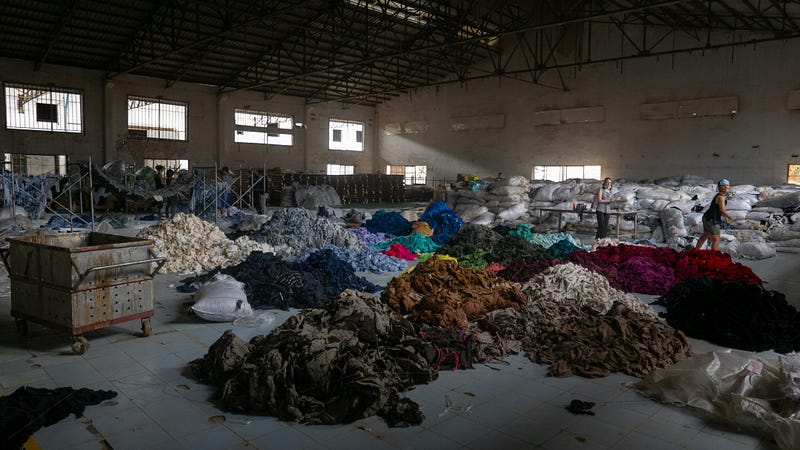
In the textile world, wastage is a problem, from time, energy to resources. After watching videos about the wastage in the Global South I was inspired to sew. Many experts suggested we take proactive measures with our own garment wastage at home. That made perfect sense, I thought. Be part of the solution, not the problem.
I purchased a small sewing machine meant for mini projects. I decided to repurpose old clothes to make something basic and functional, like blankets, pillow cases, placemats and napkins. They’re practical, easy to sew without complicated patterns, and can easily be given away as gifts to my siblings for their home.
It was a good idea on paper. It sounded better in my head. Turns out I am terrible at sewing.
It became evident in the three months I dedicated to the project, I didn’t inherit the seamstress genes from the women folk in my family. If my ancestors were alive and saw my workmanship, they’d unalive themselves.
I did discover something about myself. I was more obsessed with learning about the sewing machine from YouTube videos, and in cleaning the mess I made from all the threads and fabric particles flying about. I just wasn’t as invested in the product. I’d sew one decent pillowcase and the subsequent would be a disaster. Never mind the third pillowcase. By the fourth it resembled a thick sausage.
“But you’re good at other things,” my assistant tried to console me as I took out the vacuum and cursed the floor with it. “You’re built for understanding the science and business of sewing. You’re about rocket science.”
I took my napkin and placemat samples to a local tailor to get feedback on ways to improve. She scrutinized it and asked, “Who made these?” Before I could answer, she added, “That person should stop.”
Point taken.
My mother was more consoling. “I’m surprised the sewing machine lasted that long. You’re more like your father.”
My father is a renowned legal expert in Malaysia and lectures on the federal constitution, but he can’t cook or make a pot of coffee. Thus, I’m not sure which end of that spectrum my mum is alluding to me.
I felt disheartened at first not because I couldn’t sew. I wanted to find a better way to alleviate the conundrum of fabric wastage. If I can’t upcycle, perhaps I should recycle.
My next decision addled my close friends.
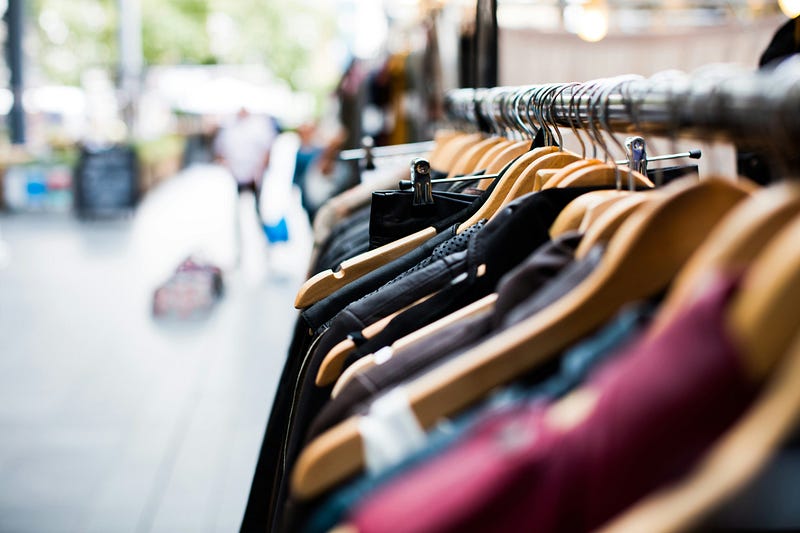
“I’m not buying new clothes. From now on it’s all pre-loved.” I told my friends about my new resolution.
“Is this a break up thing? Perhaps you’ve been single for too long.” They gave me the disparaging look as if I’d lost my marbles.
I explained the Global South crisis and their eyes had more glaze than Krispy Kreme doughnuts. My friends are like the Global North, all things new and consumptive. I was their Global South. Unknown to them, my research was only warming up.
I spent months visiting bundle stores and consignment outlets to study their supply, quality and provenance. It bothered me that there was no proper price and quality control. It was all up to the store owner.
Some of the consignment shops called themselves vintage offering low quality goods but flashed price tags that surpassed first-hand retail outlets. Another issue was recognition. A second-hand store begins with a humble price list but the moment it becomes viral on social media, the owners hike up the price. That’s when a friend recommended an outlet that was nestled in the outskirts of the city, areas where you’d find the folks living below the poverty line.
Jalan Jalan Japan (JJJ) is a pre-loved store that carries items directly from Japan. Japan is well-known for strict quality control. It also has a unique business proposition that later taught me about product exclusivity, substance, and controlled price points.
The Japanese take pride in high quality goods, clothing made from natural fibers, and locally-sourced products. Clothing, to the Japanese, is about philosophy and self-reflection. I like that there was a proper structure to the way things were done at JJJ.
After two hours of heavy scrutiny, visiting aisle after aisle, I purchased a suede handbag, a pair of leather shoes, and a linen shirt for less than $20. I was curious to observe the wear and tear of these items. How long before the leather handle on the handbag starts flaking? How many washes before the linen shirt begins to lose shape? How much walking before the heels become brittle and fall apart? Were they comfortable?
While much about new businesses discusses product innovation, there’s plenty to discover in existing products. How they fall apart teaches you how to create better. This is the phase that fascinates me. It’s not the pursuit of perfection, it’s the process. In Design Thinking there’s a research tool called service safari that helps designers develop interesting insights and inspirations by experiencing a service in first-person. When I read that Japan’s quality control was stringent, I wanted a better understanding of their gold standard.
And then there was volume. Inspired by the KonMari method by author and organizing consultant Marie Kondo, I agreed that joy was a necessary component in organizational management.
For every item I purchased it meant one item in my wardrobe had to be set aside for recycling. The math is simple: if I have 30 items in my wardrobe, it has to stay at 30. The aim is not to balloon the figure. Subtraction is welcomed, not addition. Every six months, unused items will be set aside for recycling. Every thirteen months, a good spring cleaning will be in order.
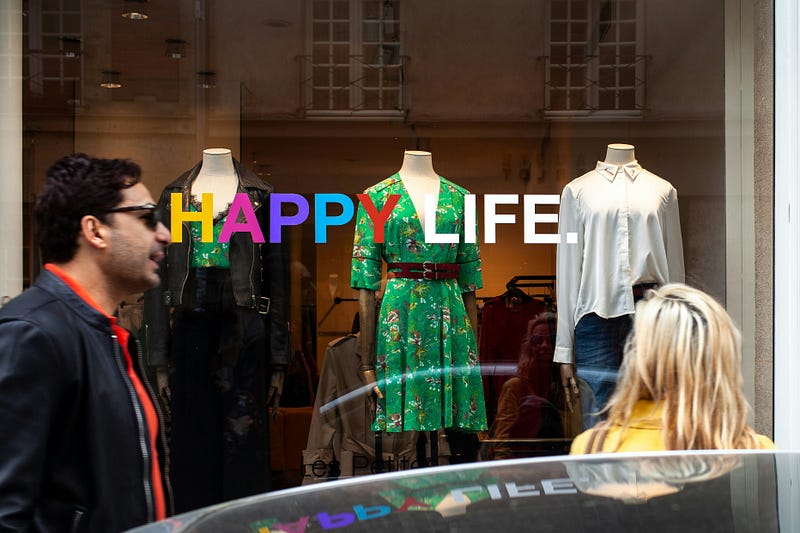
There were new rules added to boost my new lifestyle. No polyester or poly blended garments is allowed. Only natural fibers namely silk, linen and cotton. This forced me to study labels and to touch fabric more intently.
When your awareness is attuned, you gain clarity. Slowly, everywhere I went I only saw polyester clothes. It was mentally and visually suffocating. I was horrified to discover popular clothes made out of heavily coated fabric, some were suited for lightweight tents. Slowly, I started to boycott brands I used to love as a teenager.
These synthetics would not only choke your skin but were coated to make them more durable to both abrasion and UV, with coatings such as acrylic, polyurethane (PU) or silicone. They’re cheaper, but consist of polymer systems. They’re toxic in the long run for both you and the environment.
As for the greenwashing campaign, if you want to avoid plastics, it’s not about reducing plastic bags at the supermarket or avoiding plastic straws, it’s what you’re duped into thinking is trendy and durable. It’s resisting the urge to splurge. I knew my friends had leveled up when they could spend a few hours at a mall and walk out empty handed. Not everyone is into pre-loved clothing and I won’t hold it against them just because I like them. Consumerism is about choice.
Granted, silk, linen and pure cotton are not cheap. That’s where you really have to ask yourself about quality. Are you into quantity or quality? And when I say quality, I’m not stating high-end brands. Branding has nothing to do with quality. It’s not the designer, but the fabric you should be concerned about, and how a garment is processed. For me it’s always about provenance. Where is a product from? Material source? Who are the people or community behind it?
It’s been years since I shopped in a mall or department store. I’m not a fan of online shopping. I prefer to walk to get to what I need.
Most of what I own today are from second-hand stores. Ironically, they look expensive because natural fibers have an alluring beauty about them when properly taken care of. If they were new items, they would be pricey. The fabric breathes and rests on your skin, and complements your skin tone. Perfume notes can linger wonderfully for days on natural fibers. Like an orchestra, every instrument works its magic to create harmony. More importantly, I’m supporting products from within Asia.
Before I embarked on this textile project, clothes were about aesthetics. Thanks to the pandemic, I was put in a corner to assess how my attire represented my values, not just how I look in the mirror. My discovery led me to champion the cottage industries, the “little guys.” I see myself as one of them. It also taught me to make effective, informed decisions, and stay level-headed:
Will you be comfortable with 50 pieces of high quality garments as opposed to 500 of polyblends? What truly matters when it comes to your wardrobe? How would your clothing items reflect on you and your principles about life?
When people talk about the economics of fashion, I think of it as inspirational science. I wear shoes with no labels as I source directly from the suppliers. I traded my former blazers with pre-loved handmade cotton and silk kimonos as jackets. Due to the beauty and texture of natural fibers, the colors I wear are now muted and subtle with simple engineered lines instead of fancy patterns and frills that only work best with polyester.
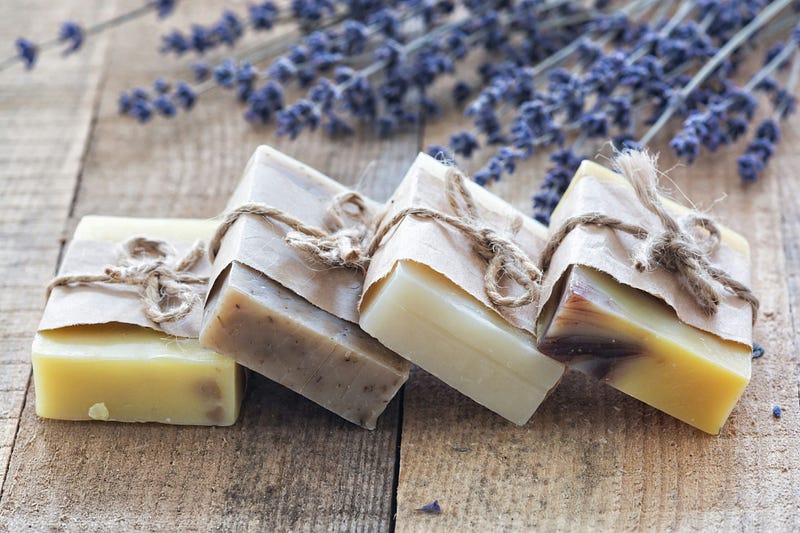
I shower using loofah soaps handmade by hobbyists who are passionate about artisanal crafts. I reduce the number of items needed for skincare and cosmetics. Skincare is five minutes but fortified, and nothing beyond ten minutes required for makeup. My hair today is kept short to save the complexities and unnecessary cost and time of hair management. It’s not about being calculative, but being practical. It’s not about being obsessive, it’s being in control of your decisions.
There’s a lot about fashion that makes little sense. Ironically, it’s still an industry where decisions are made by men in suits. Fashion wastage, on the other hand, is not complicated. And it remains a growing problem. I don’t have a magic wand to undo the mess, but I can roll up my sleeves and clean up my room as a starting point.
The pandemic gave me time to reflect, to resist buying, and to increase my awareness on who makes my favorite things. The real people, not the machines, not the suits, or the big boys. When you know the source, you know what’s worth paying for. Everything else becomes mindless advertorial chatter. I’m a capitalist nightmare — a consumer who did her homework, and says, nah not interested.


