
ADVOCACY
Pardon Me? — The Pardoning of Susan B. Anthony
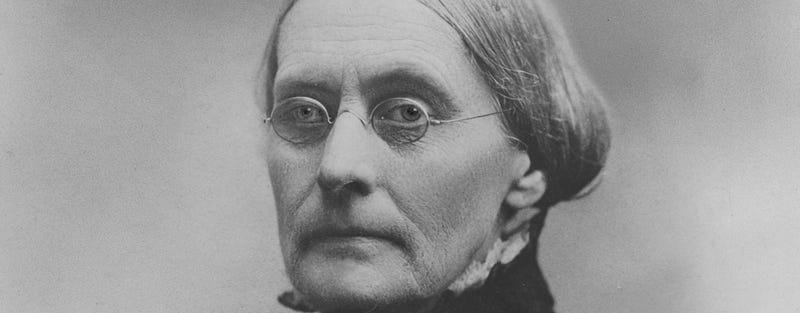
“Failure is Impossible” — Susan B. Anthony
President Trump posthumously pardoned Susan B. Anthony one hundred years after the installation of the 19th Amendment. Surrounded by the First Lady and the Women’s Suffrage Centennial Commission, he signed a Presidential Proclamation commemorating the 100th anniversary of the 19th Amendment which guaranteed women the right to vote.
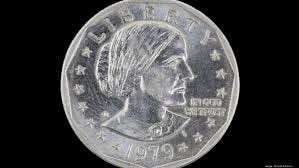
Some only recognize her from a coin. Yes, in 1979, more than 70 years after her death, the U.S. Federal Reserve minted a one-dollar coin in honor of the women’s rights activist. However, for Susan B. Anthony, her currency was her influence.
What did she accomplish? Who was she? What did she stand for?
For starters, she fought against slavery in a time when it was unheard of. Her ultimate goal was to secure rights for women. It’s hard to imagine living in a time when women did not have the right to vote. Anthony lived in that era and for her, the suspension of the right for women to vote was unacceptable. It was actually against the law.
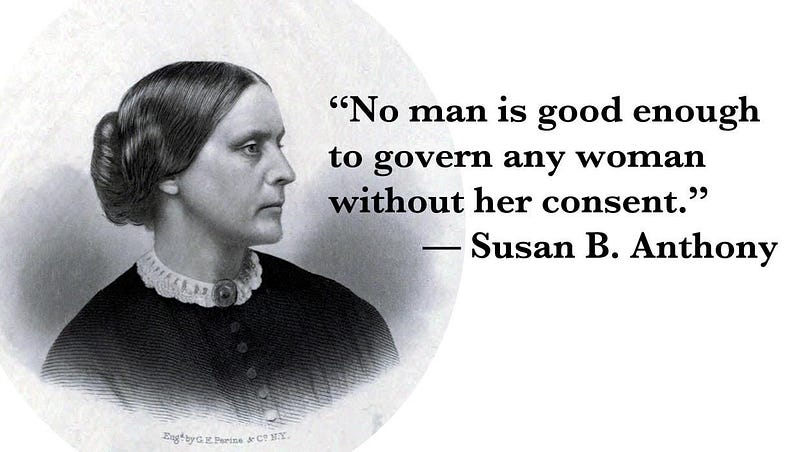
The crusader for women’s rights was born in 1820, in Adams, Massachusetts, into a community of abolitionist Quakers. Quakers who believed in the importance of education. She was shocked to discover that the education of women was not important to the rest of the world. But rather were subjected to the notion of being subservient to men.
It was in her DNA to fight for herself and the civil rights of others. In order to make a real impact on the world and create much-needed change, she knew that women had to have a voice.
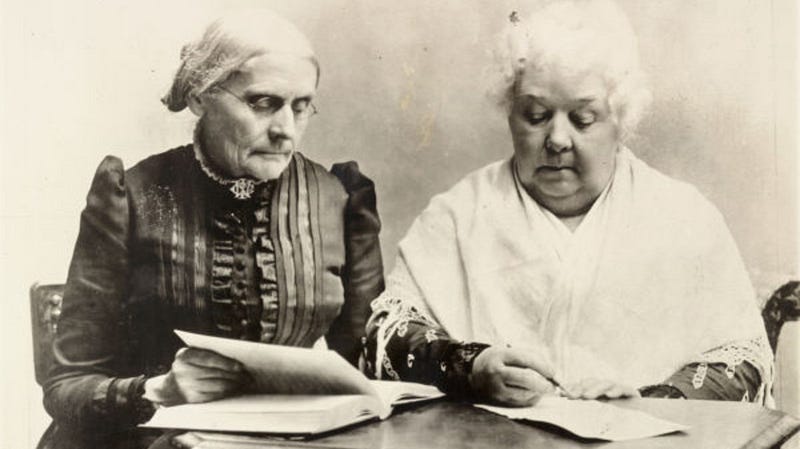
In 1851, Susan B. Anthony created an alliance with the famed writer, suffragist, social activist, and abolitionist, Elizabeth Cady Stanton. Elizabeth was the pen behind the movement. She was an intellectual with a clear vision of the road ahead for women’s rights.
The ensuing battle for the rights of women to vote was long and arduous. Adorned in her signature shawl, Anthony stood before critical crowds giving up to one hundred speeches per year. She appeared in front of every congress from 1869 to 1906. Her activism came with a hefty price tag. In 1872 she was arrested for voting in the presidential election. Her vote did not count but she got great publicity out of the action of voting. Anthony’s arrest made national headlines. However, she used this news to push her message and fight forward.
Suffragists were actually the first to picket at the White House. Susan B. Anthony sent her message to President Wilson. Amused by the protesting women, the President offered them coffee. However, his hospitality didn’t last. The women were eventually arrested for obstructing traffic.
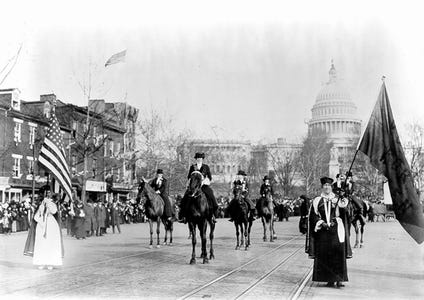
Unfortunately, women didn’t win the right to vote until 1920. Just 14 years after Anthony’s death. Anthony paved the way for women’s rights. As we commemorate Susan B. Anthony and her important activism, we, as women, should recognize that it is our responsibility to further the fight for equality today.